
It takes time, care, and the right tools and methods to make titanium plates look as smooth as a mirror. A polished titanium plate changes a dull, matte surface into a bright, reflective one that can be used for building installs, boat parts, and airplane parts. This process carefully prepares the surface, chooses the grit gradually, and buffs the titanium while keeping its natural strength and making it look better. Titanium is harder than most metals, so it needs special finishing methods to keep it from breaking when it gets hot, dirty, or scratched.
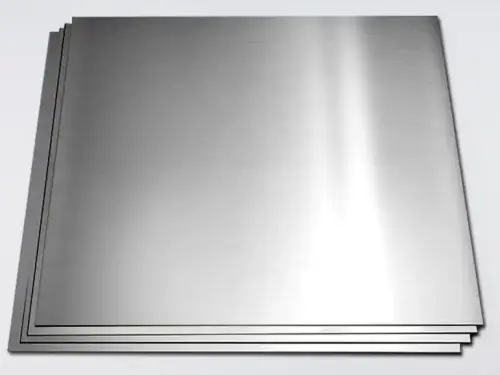
Understanding Polished Titanium Plate and Its Unique Properties
Find out more about polished titanium plate and what makes it unique.
What Defines a Polished Surface on Titanium
There are two ways to clean titanium: chemically or mechanically. The first way makes the surface smooth and shiny. The level of reflection goes from smooth to mirror-grade. Surface roughness values (Ra) of mirror finishes are less than 0.1 micrometers. To get this finish, you have to clean it more than once with abrasives that get smaller each time. When metal is cleaned, its natural oxide layer keeps it from rusting and makes it look great. This is different from painted or covered surfaces. ASTM B265 standards are often used by industry standards to talk about what kinds of smooth finishes are okay for commercial-grade titanium goods.
Key Properties Affecting Polishability
Because titanium is so different from other metals, it shines very well. The material doesn't spread heat well, so when it's polished, heat builds up where the two surfaces touch. This could change the color of the surface or cause oxides to form. Titanium is very stiff, but it can bend and spring back when it touches an abrasive. This makes it hard to regularly remove material. The naturally occurring titanium dioxide layer keeps growing back when it comes in contact with air. Cleansers and abrasives will not stick to the surface as well or cut as well because of this. Grade 2 titanium is less hard and more pure than Grade 5 (Ti-6Al-4V) metal, so it is easier to clean. Aluminum and vanadium, which are found in Grade 5 metal, make the surface harder and less likely to break down.
Titanium Versus Other Polishable Metals
Titanium is different from stainless steel and aluminum in a number of ways. It is easier to clean stainless steel because it moves heat around better and has chromium in it, which makes the surface more stable. Without any protective layers, aluminum is easy to scratch and rusts fast. But it shines up quickly. When salt is present, titanium doesn't rust as easily as stainless steel 316. Because of this, polished titanium is great for use in the marine industry and in chemical processes. Polished titanium plates are used in airplane structural parts where every gram counts because of their strength-to-weight ratio and the fact that they are about 45% lighter than steel. Procurement teams often choose titanium when the higher initial cost is worth it in the long run.
Challenges in Polishing Titanium Plates: Root Causes and Solutions
Common Surface Defects During Polishing
Surface scratches are still the most common problem when polished titanium plates are being cleaned. These show up when the wrong grit builds up without going through the middle steps. They leave deep holes that smaller abrasives can't fix. Blue, purple, or gold metal layers show up where heat has changed the color. When there is too much pressure and not enough cooling, this takes place. When iron-based cleaning tools scratch the surface, they leave behind galvanic corrosion sites that look like rusty spots. If you heat titanium above 480°C without a neutral environment, the alpha case will form. The top is very hard and brittle, and there is a lot of air in it. It makes it hard to clean the surface any further and lowers the mechanical strength.
Material and Process Variables to Control
It depends on several important things how well finishing works. It is important to pick abrasives that are strong enough for titanium. Aluminum oxide and silicon carbide are good at cutting titanium, while lighter materials are only good for smoothing the surface. It's important to carefully adjust the polishing speed. Too much RPM leads to heat and smearing, and not enough speed makes the process take longer without improving the end quality. How fast something is taken during cleaning depends on how much force is used. Too much force causes heat and surface damage, while not enough pressure makes cutting less effective. Mineral oil or water-based lubricants work as coolants to get rid of swarf bits that would damage the surface if they were left on it.
Strategies to Overcome Polishing Obstacles
For titanium cleaning to go well, problems need to be fixed in a planned way. By building up the grits in stages, from 120 to 3000, the surface can be fine-tuned over time without skipping any important steps. By keeping the contact angles of the tool the same, you can stop uneven material loss that causes low spots or wavy lines. If you only clean with titanium-made tools, you won't get metals on your titanium. When you clean in an argon or nitrogen environment, hot activities don't cause rusting to happen. This is very important for plates with a thick part that need longer polishing processes. With directed lighting, you can see flaws on the surface that you wouldn't be able to see with general lighting. This lets the flaws be fixed before going on to the next level of finishing.
Step-by-Step Process to Achieve a Smooth Mirror Finish on Titanium Plates
Surface Preparation and Initial Cleaning
The first step in grinding to a mirror finish is to make sure the surface is ready. To begin, we recommend cleaning the surface with alcohol or an alkaline solution to get rid of oils, cutting fluids, and organic waste from earlier production steps. If you clean something with a mix of hydrofluoric and nitric acids, the mill scale and the alpha case layer come off, leaving a flat base surface. After chemical cleaning, mechanical preparation with 120-180 grit silicon carbide paper gets rid of any surface flaws that are still there and sets the basic shape of the surface. There are scratches, mill marks, and edge damage that can be seen. This step gets rid of them so that the next steps of cleaning work better.
Progressive Sanding Techniques
You have to carefully move through rough grit steps to get mirror-finish polished titanium plates. In general, this is how things work:
• Coarse Grinding (120–240 Grit): Gets rid of heavy stock and deep scratches from cleaning the surface. We keep our strokes going in the same direction so that we can make even scratch marks that will be erased later. The water stops the surface from getting too hot at this time, which could work-harden it.
• Intermediate Sanding (320–600 Grit): Gets rid of the scratches left over from coarse grinding and makes the surface smoother. Each grit level must work in a way that's not the same as the last scratch. This makes it simple to get rid of the bigger marks before going on. The titanium's surface goes from being matte to being slightly shiny at this point.
• Fine Sanding (800–2000 Grit): This leaves very small scratches on the surface that can be easily fixed with finishing products. It gets the surface ready for the final cleaning. The finish is smooth, and as the grit number goes up, the sparkle shows up more.
If you go through the grit steps too fast or use too much pressure, you can make scratches that are deeper and can't be fixed without going back to rougher abrasives. This methodical method needs patience. You should do each step until you can't see the scratch pattern from the last one.
Mechanical Polishing Methods and Compounds
Mechanical polishing takes a surface that has been scraped and makes it shine like a mirror using special tools and chemicals. Because their wheels are soft, belt sanders can handle tough jobs and keep the pressure even. Rotary polishers with foam pads that you can hold in your hand let you work on edges and forms with great accuracy. Vibrational finishing tools can work with groups of smaller plates, but it takes longer.
Final Buffing and Quality Inspection
To clean something one last time, soft cotton or linen rubbing wheels are used. These wheels spin at 1500 to 2000 RPM with little pressure. By burnishing the surface, this step gets rid of any small scratches that are still there. This makes the surface fully shiny. Right now, the sanding solution has very small abrasives mixed in with the wax. These leave a protective film that stops rusting as soon as you clean them.
Aerospace Case Study Application
A big aerospace business needed Grade 5 titanium plates that were smooth as glass for panels inside airplanes that had to look good and not rust. All 1.5 mm thick sheets had to have the same finish for the job, and the surface had to be less than 0.08 Ra rough. We picked it up with acid, sanded it seven times with grits ranging from 180 to 2000, polished it three times with diamond compounds, and then cleaned it with cerium oxide to end the process. When they were done, the screens looked great and had a reflection of 0.06 Ra. In addition, they were the right weight for a flight. This project proved that the right way to polish can keep mistakes in measurements to within ±0.05mm and create surfaces that are good enough for use on high-visibility airplanes.
Comparison of Polished Titanium Plate with Other Metal Finishes
Polished Versus Brushed and Anodized Titanium
Surface finish makes a big difference in how it looks and how well it works. Adding linear grain patterns to brushed titanium finishes with an abrasive pad gives them a stylish matte look that hides small scratches and fingerprints. These finishes work well for building projects where strength is more important than brightness. Iron that has been anodized goes through an electrical process that makes the oxide layer thicker. This changes the electrons, which makes bright colors. Anodizing the surface makes it stronger and less likely to rust, but it costs more and limits the kinds of things that can be made afterward. A polished titanium plate is the most shiny and shows off its natural silver-gray color. This makes it great for art projects, medical tools, and parts that need to be checked for surface contamination.
Performance Comparison with Stainless Steel and Aluminum
A lot of things need to be weighed against each other when picking out materials. Polished stainless steel 316 costs less than titanium and can be done the same way to make it look like a mirror. Titanium is better at resisting pitting in places with a lot of salt. This is important for marine platforms and processing equipment because stainless steel can rust in some places. Polished aluminum is lighter than titanium, but it needs to be coated or anodized to keep it from rusting, which dulls the shine. Aluminum is designed to rust when mixed with other metals near the coast, but titanium stays solid. With a tensile strength of over 900 MPa, Grade 5 titanium is stronger than aluminum or stainless steel. This means that it can be used to make smaller and lighter forms. Due to the lighter weight, this helps to cover the higher cost of the products.
Grade Selection for Specific Applications
By choosing the right types of titanium, you can be sure that the material's properties meet the needs of the job. That's because Grade 2 titanium is commercially pure and easy to shape. It can be used for things like building siding and tanks for chemical processing that need complex shapes and smooth finishes. It's easy to clean to a mirror finish because it's not too hard, but it's still strong enough for moderate-pressure settings. If the mechanical loads are too high for Grade 2, Grade 5 titanium metal is the best choice for medical implants, underground drilling tools, and parts of airplanes.
Procurement Considerations for Polished Titanium Plates
Supplier Evaluation Criteria
There are a few things you should really think about to find reliable companies that sell polished titanium plates. When something is made, licenses show that a quality method is being used. It can handle the production process, for instance, if it has ISO 9001:2015 certification. It also has PED 2014/68/EU certification, which means it follows the rules for European pressure equipment. Suppliers are checked to make sure they can meet volume needs, and companies with automatic cleaning lines make sure that all large orders have the same finish. Chemical testing with optical emission spectroscopy, mechanical testing according to ASTM B265, and ultrasound checks for flaws inside the product should all be part of the quality assurance process. How reliable a seller is in your field can be seen by references from businesses with similar application needs.
Leading Manufacturers and Market Availability
A few key production hubs that are known for quality are at the center of the world's supply chain for titanium. Suppliers in North America usually keep common types and sizes in stock, so people in the area don't have to wait as long. European companies usually offer a lot of license paperwork that is in line with strict European rules. Chinese makers, especially those that work with Belt and Road Initiative countries, offer good costs and better quality standards that are backed up by certifications from other countries. Customers who don't have the skills to do their own cutting and finishing can find it easier to buy from sellers through distribution networks, which help them reach more customers.
Pricing Dynamics and Order Parameters
The price of polished titanium plate is not just based on how much the base material costs. The price is greatly affected by how complicated the finish is. Mirror finishes cost 30–60% more than mill-finish plates because they need a lot of work. Thickness changes both how much things cost and how hard they are to clean. Plates that are 10 mm or more thick take longer to work with and need special tools. The price per unit changes based on how many units are bought. This is called economies of scale. A lot of the time, the lowest amount you can buy is between 100 and 500 kilograms. Most grades and sizes have lead times of 4 to 8 weeks. For special specs that need special mill orders, lead times are 12 to 16 weeks. When you buy something special, you usually have to pay a down payment. After it's been looked over and approved, the rest is due before it ships.
Custom Services and Technical Support
Services that add value make sellers stand out and make the buying process easy. Suppliers with waterjet or laser cutting tools can make plates that are cut to net measurements and have smooth edges. Custom sizes get rid of the need for extra work. Thin-gauge materials can have tolerances of ±0.1mm if the provider controls the rolling process. But for accurate uses, tolerances that are tighter than the normal ASTM standards work well. Technical advice services help buyers make specs and pick the best types and finishes for the different situations they will be used in.
Conclusion
If you want to sharpen polished titanium plates to a mirror finish, you need to know how the metal works, follow a set process, and be careful when picking a service provider. You need to use finer and finer abrasives, pick the right formulas, and keep a close eye on quality to go from a rough mill finish to a shiny surface. Titanium doesn't rust easily, is strong for its weight, and is biocompatible. These properties make smooth surfaces useful in medicine, chemical processing, airplanes, and the marine industry. When you buy something, you should not only look at price, but also at the supplier's qualifications, production skills, and availability of expert help. It's worth the extra money to get titanium plates that are made well because they last longer, need less maintenance, and work better in tough situations.
FAQ
Which titanium grade achieves the best mirror finish?
Pure titanium grade 2 generally has a better mirror finish for polished titanium plates than grades that have been alloyed because it is less hard and has a more regular substructure. We can't make a fine surface design with Grade 5 metal because it doesn't have any alloying elements. This means that the polishing rate doesn't change from stage to stage. Also, Grade 2 is more flexible, so it doesn't get as hard when it's ground, which can make finishing jobs harder.
How long does achieving a mirror finish take?
What kind of plate it is, how big it is, and how smooth you want it to be all affect how long it takes. A 1-meter-square plate needs to be ground, cleaned, and rubbed for 6 to 12 hours on average to go from mill finish to mirror finish. While batch processing in vibratory finishers makes the process take longer, it also makes it possible to finish several pieces at once with consistent results.
Can polished titanium withstand outdoor exposure without coatings?
Even if you leave the polished titanium outside without any coats to protect it, it will always look the same. It can do this because the titanium dioxide layer on top of it fixes itself right away if it gets broken. Even though marine and industrial settings may dull the mirror finish over time, the material won't rust and can be re-polished to get its original look back without losing any of its strength.
Partner with LINHUI TITANIUM for Premium Polished Titanium Plate Supply
LINHUI TITANIUM has many items that can help people who are in charge of buying things find dependable companies that sell polished titanium plates. Our Xi'an plant has high-tech tools for polishing and strict quality control rules that have been passed by TUV Nord, PED, DNV, ABS, and other classification societies. We have polished titanium plates in Grades 1 through 5 that can be made exactly the way you want them in terms of size, thickness, and shine. There are well-known companies in the oil, gas, chemical, marine, and aerospace industries that have worked with us. This shows that we can meet strict technical standards and tight delivery times. Our expert team can be reached at linhui@lhtitanium.com if you need to talk about your wants for polished titanium plates, get samples of approved materials, or get full quotes. We are a well-known business that has been exporting polished titanium plates to those countries for more than 60 years. We can give your project the quality, papers, and help it needs.
References
1. American Society for Testing and Materials. (2020). ASTM B265-20: Standard Specification for Titanium and Titanium Alloy Strip, Sheet, and Plate. West Conshohocken, PA: ASTM International.
2. Boyer, R., Welsch, G., & Collings, E.W. (2021). Materials Properties Handbook: Titanium Alloys. Materials Park, OH: ASM International.
3. Donachie, M.J. (2019). Titanium: A Technical Guide, 3rd Edition. Materials Park, OH: ASM International.
4. Peters, M., Kumpfert, J., Ward, C.H., & Leyens, C. (2018). Titanium and Titanium Alloys: Fundamentals and Applications. Weinheim: Wiley-VCH.
5. Schutz, R.W. & Watkins, H.B. (2022). Surface Finishing Techniques for Titanium and Its Alloys. Journal of Materials Engineering and Performance, 31(4), 1823-1840.
6. Veiga, C., Davim, J.P., & Loureiro, A.J. (2020). Properties and Applications of Titanium Alloys: A Brief Review. Reviews on Advanced Materials Science, 58(1), 442-456.