
To find the best ASTM B863 titanium wire suppliers, you need to be thorough and think about quality, compliance, and operating efficiency. When purchasing titanium wire for important uses in aerospace, chemical processing, or energy infrastructure, buyers must look at sellers' certifications, manufacturing skills, supply chain security, and how quickly they respond to technical support requests. Not only does the choice affect project schedules and costs, but it also has long-term effects on operating safety and product performance. To choose a good supplier, you need to know the specs of the materials, check the certifications of third parties, figure out how much can be produced, and set up clear communication lines that can handle the complex needs of industries across foreign markets.
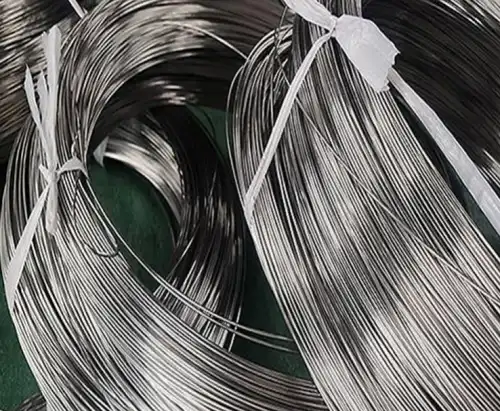
Understanding ASTM B863 Titanium Wire and Market Requirements
ASTM B863 sets the standard for titanium and titanium alloy wire. It includes different types that are best for different work conditions. The standard includes widely pure grades like Grade 1 and Grade 2, which are very good at resisting corrosion and being easy to shape, as well as higher-strength alloys like Grade 5 (Ti-6Al-4V), which has better mechanical qualities for tough structural uses.
Key Material Grades and Their Applications
Grade 1 titanium wire is the most resistant to rust, but it has a lower tensile strength. This makes it perfect for chemical handling equipment that is often in touch with aggressive media. Grade 2 is the standard material for most industrial uses because it has a good mix of strength, flexibility, and resistance to corrosion. Grade 5 titanium alloy wire has aluminum and vanadium added to it, which greatly improves its strength-to-weight ratio. This makes it the best choice for aircraft parts, offshore drilling equipment, and high-performance naval gear. The chemical makeup of an object directly affects how it acts when it is under practical stress. Grade 2 titanium wire usually has at least 99.2% titanium and limited amounts of iron, oxygen, nitrogen, and carbon. For Grade 5, the exact amount of aluminum must be between 5.5 and 6.75%, and the amount of vanadium must be between 3.5 and 4.5%. There are tight limits on impurities that make sure that the mechanical traits are the same from batch to batch.
Industries Driving Titanium Wire Demand
Titanium wire is used by aerospace companies to make safety-critical fasteners, control lines, and structural reinforcements. Less weight directly leads to better fuel economy. In chemical processing plants, titanium wire is used in heat exchangers, reactor tanks, and piping systems that are exposed to chlorides, acids, and high temperatures that eat away at other metals in months. Biocompatible titanium wire types are used to make surgical implants, orthodontic tools, and heart devices that can stay in human flesh for decades without causing any problems. Titanium wire is used in oil and gas operations for underwater tools, wellhead parts, and drilling systems that work in sour service conditions with hydrogen sulfide and big changes in pressure.
Common Procurement Challenges
When buying titanium wire from other countries, quality uniformity is still the most important thing. Changes in the quality of the raw material, the way it is heated, and how the surface is finished can lead to wire that meets the size requirements but breaks under load because of microstructural irregularities or contamination. Uncertainty about lead times throws off project plans, especially for unique grades that need custom production runs. When a project is being carried out, suppliers who don't have enough inventory backups or flexible manufacturing capacity find it hard to meet pressing orders or changes to specifications.
Verification of certification compliance for ASTM B863 titanium wire suppliers is hard when sellers give paperwork from testing labs or quality management systems that aren't well known around the world. Buyers need to know the difference between real third-party certifications and self-issued quality statements that only give a weak guarantee of material conformance.
Core Criteria for Selecting ASTM B863 Titanium Wire Suppliers
To find trustworthy titanium wire makers, you need to carefully look at them across several factors that show how well they can do their job and how committed they are to quality excellence.
Certification Credentials and Quality Systems
Real suppliers keep their ISO 9001 certification up to date with regular audits by a third party. This shows that they follow written quality management methods. The PED 2014/68/EU approval shows that the equipment meets European safety standards, which is very important for companies that work with the energy and chemical industries around the world.
Classification society permits from DNV, ABS, CCS, BV, and Lloyd's Register for ASTM B863 titanium wire suppliers prove that a product meets the necessary standards for use in marine and offshore environments where strict rules require independent checking. Suppliers who are members of ASTM International and have their labs accredited by groups like A2LA or UKAS show that they are committed to keeping their testing skills up to date with international standards.
Material traceability systems should keep track of each output lot from the time the raw materials are received until the last check. They should do this by connecting test records to specific coils or spools of wire. Digital traceability platforms are used by advanced sellers so that customers can access full material genealogy and certification papers through safe online sites.
Product Range and Customization Capabilities
A wide range of products shows that the company has been making things for a long time and knows how to respond to the market. Suppliers who give different types of titanium, diameters ranging from 0.5mm to 6mm, and different surface styles show that they can produce items that meet a wide range of project needs without taking a long time to develop.
Customization options go beyond standard sizes and include things like tight straightness limits, specific surface conditioning needs, and packing layouts that work best with certain manufacturing processes. When compared to wholesalers who just recycle generic goods, suppliers who invest in wire drawing technology, heat treatment ovens, and precise measurement equipment offer better surface quality and tighter tolerances.
With technical advice services, you can tell the difference between capable sellers and transactional vendors. Expert metallurgical engineers should help buyers choose the right material grade, figure out what the application needs, and suggest changes to the specifications that will improve performance while keeping costs low.
Pricing Transparency and Commercial Terms
Competitive price means that businesses are running efficiently, not that quality has been reduced. Reliable sellers give thorough quotes that include the costs of the base materials, processing fees, testing fees, and logistics costs. This makes it possible to make accurate budget projections and compare costs from different sources.
Volume-based price systems encourage long-term partnerships and bulk purchases while keeping fair margins that encourage ongoing investment in quality. When you pay extra for normal services like material approval, packing, or regular testing, you might not be getting the best deal. This makes buyers less likely to trust your business.
Payment terms should balance the buyer's need to control risk with the supplier's need for cash flow. For example, letters of credit can be used for large orders, progress payments should be tied to production milestones, and net terms should be used for long-term relationships where delivery success has been proven.
Supply Chain Reliability and Logistics Competence
On-time delivery is a basic responsibility of the provider that keeps project plans safe and keeps expensive expediting fees from happening. When you look at provider delivery measures over several transactions, you can see trends that show which partners are reliable and which ones have problems with production or planning.
When buying from other countries, global transportation skills become very important. Border delays and compliance issues that throw off shipment plans are less likely to happen when suppliers have established freight forwarding relationships, know how to clear customs, and are good at export paperwork. Putting warehouses in strategic places near transportation hubs or major industry hubs speeds up delivery to end users and lowers the cost of freight.
Transparency in production capacity lets buyers figure out if providers can increase output when demand goes up without lowering quality. Facility tours, capacity audits, and open conversations about how much space is being used at the moment boost trust in suppliers and show possible problems before they affect important projects.
Comparing ASTM B863 Suppliers: Practical Evaluation Methods
To compare suppliers effectively, you need to collect both objective performance data and subjective signs that can be used together to predict the success of the relationship in the future.
Leveraging Customer References and Market Reputation
When looking at new providers, customer reviews from well-known stars in the field are very important. Referrals from major EPC firms or companies like PETRONAS and PEMEX show that suppliers have been able to handle strict quality checks, complicated technical requirements, and tight delivery schedules while being closely watched by companies around the world.
Third-party reviews on industry platforms and buying networks give you an unbiased view on how quick suppliers are, how consistent products are, and how well they solve problems. Patterns found in multiple reviews show whether rare complaints are caused by one-off events or widespread problems that suppliers need to avoid.
If a titanium supply company has been around for a long time, it means that it is stable and has a lot of experience that new companies can't match. Suppliers that have been in business for at least 20 years have seen the ups and downs of the market, put money into ongoing growth, and gained a lot of technical knowledge that helps customers by letting them make smart decisions and solve problems before they happen.
Assessing Technical Support and Service Quality
How quickly technical support responds to questions during the request phase can be used to predict service quality throughout the span of the relationship. Suppliers who answer all of your specific technical questions within 24 hours show that they are knowledgeable and committed to the customer. On the other hand, replies that are late or skimmed over suggest that the supplier lacks resources or isn't interested in complex projects.
Transactional sellers and strategic partners for ASTM B863 titanium wire suppliers are different when it comes to their engineering collaboration skills. Suppliers who offer help with material testing, application engineering advice, and support after delivery go above and beyond just providing basic materials. They help buyers improve specs and solve problems in the field.
After-sales service plans that cover things like non-conforming material, guarantee claims, and urgent replacement orders are very important for lowering risk. When problems come up out of the blue, they can be quickly fixed by following clear processes with clear response times and decision-making power.
Examining Warranty Terms and Return Policies
A full warranty shows that the source trusts the quality of the product and the consistency of the producing process. Standard warranties should cover flaws in the material, problems with the dimensions, and changes in the mechanical properties for a fair amount of time after delivery, usually between 12 and 18 months or until the material goes into the manufacturing process.
Return policies for non-conforming material need to protect both the buyer and the seller from misuse claims in a fair way. Effective policies spell out testing procedures for resolving disputes, how to split the costs of returning items and getting replacements, and when to file a claim. These rules encourage finding problems quickly instead of waiting too long.
Quality conflict settlement methods that use third-party testing laboratories that are agreed upon by both sides stop arguments that last for a long time and hurt relationships and cause projects to be late. Suppliers that have been around for a while keep working relationships with well-known testing facilities that can do fair research that works for both sides.
Procurement Strategies for Buying ASTM B863 Titanium Wire
Strategic buying methods lower the total cost of acquisition while addressing the quality and delivery risks that come with getting titanium wire from other countries.
Volume Purchasing and Price Negotiation
When buyers group their purchases for longer periods of time or across multiple projects, they have more bargaining power and can get volume prices that make the project more profitable. Annual blanket orders with planned releases balance the costs of keeping inventory with lower unit prices and the security of a steady supply during times of market stress.
When the market opens and closes has a big effect on prices, because titanium sponge costs, production capacity usage, and changes in currencies all cause prices to change all the time. By keeping an eye on market signs and talking to sellers when demand is low, you can lock in good prices that will stay in place even when the market gets tight again.
Sample Verification and Quality Confirmation
Before committing to big production numbers, sample orders are a good way to see what the seller can do. By asking for samples from specific production lots instead of pre-selected display materials, you can get a more accurate picture of the quality and see how consistent it is across usual manufacturing variation.
Without depending only on test results given by the seller, independent testing through accredited labs makes sure that the chemistry, mechanical properties, and microstructure of the material meet the requirements. This step of checking is especially helpful when working with suppliers you don't know or when getting supplies from places with different quality control standards.
International Payment Security and Trade Terms
In foreign deals, a letter of credit protects both parties by requiring payment to be based on proof of shipment and quality compliance. Buyers are reassured that they will only be paid when suppliers meet their contractual responsibilities. Suppliers, on the other hand, get bank promises that lower the risk of not getting paid by foreign customers they don't know.
Picking the right Incoterms combines controlling costs, managing risks, and making things easier for logistics. With DDP (Delivered Duty Paid) terms, all of the buyer's shipping, insurance, and customs duties are taken care of by the supplier. On the other hand, EXW (Ex Works) pricing reduces the supplier's duties but makes it harder for buyers to coordinate complex foreign logistics.
Differentiating ASTM B863 Titanium Wire Suppliers: Key Market Insights
Understanding the factors that set one company apart from others helps buyers find providers that offer better value packages that match their business needs and strategic goals.
Comparing Related Titanium Standards
ASTM B863 is only for wire goods, while ASTM B348 is for bars and billets that are formed in different ways and have different microstructures and property profiles. Sheet and strip goods that have rolling-induced anisotropy that changes their directional qualities are governed by ASTM B265. ASTM B861 lists the types of seamless pipe and tubes that need different tools and quality checks for production.
Suppliers who offer a wide range of products that meet different ASTM standards make it easier to find what you need and show that they can make more things. However, buyers should make sure that each type of product gets the attention it needs and not too much attention is spread out among too many products.
Manufacturing Process Advantages
When you use diamond dies, precise lubrication systems, and controlled tension with advanced wire drawing technology, you get a better surface finish, more accurate measurements, and more regular mechanical properties than with traditional methods. Cold working processes make things stronger by strain hardening them, but they also make them less flexible, so they need to be carefully controlled to get the right mix of properties.
Heat treatment knowledge sets elite providers apart, allowing them to improve microstructures through carefully controlled annealing cycles. Stress relief annealing gets rid of stresses left over from cold working, recrystallization annealing makes the metal flexible again, and solution treatment plus age makes heat-treatable alloys like Grade 5 as strong as they can be.
Export Capabilities and Global Reach
Understanding the ASTM B863 titanium wire suppliers market requires recognizing that export businesses that have been around for a while and have shipped goods to North America, Europe, the Middle East, and the Asia-Pacific area can show that they know how to handle logistics and the rules that apply to international trade. Suppliers that work with more than 60 countries have mature organizations and the ability to adapt to different cultures, which makes it easier for customers from these areas to talk to each other and solve problems.
Strategic placement of the Belt and Road Initiative gives Chinese suppliers better access to new markets while keeping trade routes open to developed industrial economies. This location blends low production costs with better shipping systems that speed up delivery and give buyers around the world more options for where to buy.
Conclusion
When looking for good ASTM B863 titanium wire suppliers, you need to think about a lot of things, such as their certifications, manufacturing skills, quality systems, and pricing. A good buying strategy focuses on carefully evaluating suppliers, checking samples, and building relationships that will help the union work for a long time. Leading providers in the industry, such as LINHUI TITANIUM, show that they are dependable by offering a wide range of certifications, different types of production, global shipping options, and customer references. When procurement professionals put source security, technical knowledge, and track records of past performance at the top of their list of priorities, they set their companies up for practical success while handling the quality and delivery risks that come with finding unique materials.
FAQ
What certifications should ASTM B863 titanium wire suppliers possess?
Suppliers with a good reputation keep their ISO 9001:2015 quality management certification, PED 2014/68/EU compliance for European pressure equipment, and classification society approvals from DNV, ABS, Lloyd's Register, or similar groups. Through independent third-party auditing, these certificates prove that the quality system works and that the materials are compliant. This gives customers more confidence than just what the seller says.
How can buyers verify titanium wire chemical composition and mechanical properties?
Independent laboratory testing at approved sites makes sure that test results from suppliers are accurate. Buyers should ask for approved mill test results that can be linked to specific production lots. For important uses, buyers should also think about getting third-party testing on a regular basis. Suppliers with a good reputation allow third-party checks and keep working with trusted testing labs.
What lead times should buyers expect for bulk ASTM B863 titanium wire orders?
Standard grades in common widths from ASTM B863 titanium wire suppliers usually ship within 4 to 6 weeks from reputable sources who keep a store of popular sizes. Depending on production plans and the availability of raw materials, it may take 8 to 12 weeks for custom grades, special dimensions, or big orders. Suppliers whose titanium product lines are all bundled together can often deliver faster because they can better plan their production and distribute their materials.
Partner with LINHUI TITANIUM for Your Titanium Wire Requirements
You can trust LINHUI TITANIUM as a supplier and maker of ASTM B863 titanium wire. They offer high-quality products and have a lot of foreign certifications, such as PED 2014/68/EU, ISO 9001:2015, and approvals from DNV, ABS, CCS, BV, and Lloyd's Register. Our main office in Xi'an is a global distribution hub that has sent hundreds of thousands of tons to major energy companies in over 60 countries, including PETRONAS, PEMEX, and PETROVIETNAM. Our all-in-one titanium products store sells Grade 1, Grade 2, and Grade 5 wire in a range of specs, along with full tracking documents and quick expert support. Get in touch with our team at linhui@lhtitanium.com to talk about your project needs, ask for samples of our materials, and find out how our 25 years of manufacturing excellence can give your business the quality, dependability, and relationship it needs.
References
1. ASTM International. (2021). ASTM B863-21: Standard Specification for Titanium and Titanium Alloy Wire. West Conshohocken, PA: ASTM International Publishing.
2. Boyer, R., Welsch, G., & Collings, E.W. (2019). Materials Properties Handbook: Titanium Alloys. Materials Park, OH: ASM International Press.
3. Donachie, M.J. (2020). Titanium: A Technical Guide, Third Edition. Materials Park, OH: ASM International Publishing.
4. Peters, M. & Leyens, C. (2018). Titanium and Titanium Alloys: Fundamentals and Applications. Weinheim, Germany: Wiley-VCH Verlag.
5. Lütjering, G. & Williams, J.C. (2017). Titanium: Engineering Materials and Processes, Second Edition. Berlin, Germany: Springer-Verlag Publishing.
6. Froes, F.H. (2015). Titanium: Physical Metallurgy, Processing, and Applications. Materials Park, OH: ASM International Press.