
The global pricing for ASTM B265 Titanium Plate ranges from $15 to $45 per kilogram, based on the grade, the thickness needed, and the state of the market. Grade 2 economically pure titanium costs about $15 to $25/kg, while high-performance alloys like Ti 6Al-4V cost $25 to $45/kg more. Changes in the market, seller certifications, and volume agreements all have a big effect on the end prices of buying things for industry uses in the energy, chemical processing, and aerospace sectors.
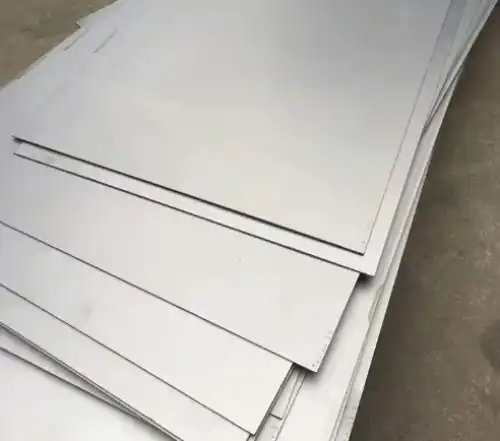
Understanding ASTM B265 Titanium Plate: Specifications & Properties
ASTM B265 is the most important standard for buying titanium and titanium alloy strip, sheet, and plate products around the world. This important standard, put out by the American Society for Testing and Materials, spells out exact chemical make-up, mechanical properties, and size ranges that make sure quality is the same in all production settings.
Grade Classifications and Mechanical Properties
The standard covers a number of types, each of which is designed to meet certain performance needs. Grade 2 economically pure titanium has a minimum tensile strength of 345 MPa and a yield strength of 275 MPa. It is very resistant to weathering. This balance makes it perfect for tools used in chemical processes where aggressive media contact happens all the time. Ti 6Al-4V (Grade 5) is the standard in the aircraft business because it has high tensile strengths (more than 895 MPa) and is very strong for its weight. The aluminum-vanadium metal gives better wear resistance, which is very important for structural parts that are loaded and unloaded over and over again.
Chemical Composition Standards
High-quality titanium goods can be told apart from lower-quality ones by strict rules on interstitial elements. The carbon content stays below 0.08% to keep the material from breaking, and the nitrogen content stays below 0.03% to keep it flexible. To keep hydrogen from weakening materials during service, the hydrogen level must not go above 0.015%. This is especially important for aerospace uses. Different grades have different amounts of iron. Commercially pure grades keep their iron levels below 0.20%. On the other hand, alloyed grades may allow higher percentages based on the mechanical property needs. These exact chemical controls make sure that performance is consistent in a wide range of working conditions.
Thickness Range and Dimensional Capabilities
Thicknesses can range from 0.3mm to 4.76mm thanks to modern production techniques. This makes it possible for a wide range of uses, from making lightweight aircraft parts to strong chemical processing equipment. Precision rolling methods keep the size differences between pieces to within ±0.05mm for important uses, such as ASTM B265 Titanium Plate, that need exact measurements. Several passes of hot and cold rolling are used in the production process. This is followed by controlled heat treatment cycles that improve the grain structure and mechanical qualities. This careful method makes sure that the quality of each production batch is the same, meeting the strict requirements of the aircraft and medical device industries.
Factors Influencing the Cost of ASTM B265 Titanium Plate
Material prices for titanium plates are affected by a lot of factors, such as the supply of raw materials, the difficulty of making them, and changes in the market. Procurement professionals have to be smart about how they handle these factors. Understanding these cost drivers helps you make more accurate budget predictions and come up with better ways to negotiate with suppliers.
Raw Material and Processing Considerations
Titanium sponge production is the most expensive part, making up about 40 to 50 percent of the price of a final plate. Customers have to pay more for the Kroll process because it uses a lot of electricity and special tools. Manufacturers pass these costs on to customers. Processing is very different for each grade. Commercially pure grades need fewer alloying additions but still have to meet strict purity standards. For example, Ti6242 (6Al-2Sn-4Zr-2Mo) needs exact additions of alloying elements and longer working times, which is why they are priced higher than other metals.
Manufacturing Scale and Certification Requirements
The amount of production has a big effect on unit prices, and savings of scale become clear when orders go over 5 tons. Small-batch production has higher setup costs and less efficient use of tools, which means that custom orders cost 15–25% more than regular orders. Certification standards raise costs while adding a lot of value. For example, ISO 9001:2015 quality management systems, PED compliance for pressure tank uses, and aircraft certifications like AS9100 need a lot of paperwork and strict testing rules. These certificates are necessary to make sure the quality of the product, but they add 8–12% to the end price.
Global Market Dynamics and Supply Chain Factors
Policies for international trade, changes in currencies, and the cost of shipping all add to the variety of prices. Recent problems in the supply chain have shown how important it is to have a variety of regionally varied buying methods. To reduce risk, many buyers have started working with more than one area provider. Titanium packages have very different freight costs depending on where they are going and how they are being shipped. When shipping a lot of items, sea freight is cheaper, but it takes longer to get to the destination, and air freight is faster, but costs more. For urgent orders, DHL and FedEx rush services usually charge an extra $3 to $5 per kilogram.
Comparing ASTM B265 Titanium Plate with Other Materials for Cost Efficiency
For complete material selection, you need to look at the total cost of ownership instead of just the cost of purchase. Titanium's special qualities often make up for higher initial costs by extending the life of products and lowering the need for upkeep.
Lifecycle Cost Analysis Against Alternative Materials
At $3 to $6 per kilogram, stainless steel 316L, which is often used in acidic conditions, costs a lot less at first. Titanium, on the other hand, doesn't rust, so it doesn't need protective coatings, ASTM B265 Titanium Plate, or to be replaced often. This means that naval and chemical uses often have lower 20-year lifetime costs. Aluminum metals are strong for their weight and don't cost too much—aerospace types usually cost $2 to $4 per kilogram. But titanium's ability to stay stable at high temperatures and not wear down easily makes it better in high-stress situations where aluminum would need bigger parts or more frequent inspections.
Grade-Specific Performance Comparisons
Ti-3Al-2.5V is a good compromise between widely pure grades and high-strength alloys. It makes the material stronger while still being easy to shape. This grade usually costs 20–30% more than Grade 2, but it has a 40% higher yield strength, which makes it a good choice for structural uses. Ti 6Al-4V ELI (Extra Low Interstitial) is the most expensive option on the market, costing 25–35% more than regular Ti 6Al-4V. Its higher purity makes it better at withstanding fatigue and biocompatibility, which are important for medical implants and important aerospace parts that can't fail.
Manufacturing and Fabrication Considerations
Because titanium is so special, it needs to be made using special techniques that affect the total cost of the job. For welding, you need to use an inert gas mask and carefully control the heat. For machining, you need to use specific tools and follow certain cutting guidelines. These things make it 15–25% more expensive to make than stainless steel, but they let you make patterns that would not be doable with regular materials. Because the material is so resistant to rust, it doesn't need to be finished by painting or plating, which lowers the cost of long-term upkeep. This benefit is especially useful for uses that are used offshore, where upkeep is hard to get to, and coating failure could have terrible results.
Where and How to Buy ASTM B265 Titanium Plate: Procurement Insights
To buy titanium successfully, you need to carefully evaluate suppliers and know how the market works so you can get the best prices and options. By building relationships with qualified makers, you can be sure that you will have access to certified products and expert help throughout the lifecycle of a project.
Supplier Qualification and Certification Verification
Leading titanium makers keep a full list of certifications, such as approvals for naval use from DNV, ABS, CCS, and GL. These approvals show that the product meets international quality standards and give users peace of mind for important tasks where a failure of the material could have terrible results. With TUV Nord AD2000-W0 certification and PED 2014/68/EU compliance, LINHUI TITANIUM sets the standard for best testing methods in its field. Their 21 years of experience making things in two plants with 30 production lines show that they have the size and skill to work reliably with others in the supply chain.
Pricing Structures and Volume Considerations
Price models for titanium are usually based on kilograms, ASTM B265 Titanium Plate with breaks in volume at 1, 5, and 10 tons. Manufacturers often offer extra discounts for customers who agree to buy a certain amount every year. Customers who form long-term partnerships can save 5–10%. Custom cutting services add value and might even lower the cost of trash. Cutting precisely to the right size removes waste and cuts down on the work that the customer has to do, but there may be setup costs for complicated shapes or close margins.
Logistics and Delivery Options
When shipping titanium around the world, you need to pay close attention to wait times and shipping methods. International deliveries by sea freight usually take 3–6 weeks, but they are cheaper for big orders. Air freight cuts travel time to 5–7 days, but it costs $3–5 per kilogram more to ship. Express transport services, like DHL and FedEx, are great for small or pressing needs because they can deliver from door to door in two to three days. When production plans can't work with normal shipping lead times, these premium services save money.
Maximizing Value: Best Practices for Purchasing ASTM B265 Titanium Plate
Strategic buying methods help buyers get the best deals on both price and quality, while also setting up reliable supply lines for ongoing operations. Making thorough buying plans lowers risks and makes a business more competitive in the long run.
Technical Specification Alignment
Precise material specifications stop over-engineering, which raises costs for no reason. Grade 2 titanium is cheaper than high-strength metals and can be used in most corrosive environments. Ti 6Al-4V, on the other hand, should only be used in situations where better mechanical qualities are needed. Choosing the width has a big effect on the price, and normal thicknesses are usually cheaper than custom measurements. Planning projects around the sizes that are available (1.0mm, 2.0mm, 3.0mm, and 4.0mm) can help keep material costs low while still ensuring good performance.
Supplier Relationship Development
When you have long-term relationships with qualified makers, you can get better prices and be given first choice when supplies are low. The fact that LINHUI TITANIUM can produce 800 tons of titanium every year and already has relationships with big oil companies shows that it is stable, which is good for key customers. Premium suppliers are different from basic suppliers because they offer technical help. Having access to mechanical knowledge, application engineering, and testing services is valuable in and of itself, as it leads to better designs and project results.
Quality Assurance and Testing Protocols
Testing all of the materials, ASTM B265 Titanium Plate, thoroughly makes sure that they meet the needs of the project and the rules. Mill test papers are necessary for keeping track of things, and third-party proof through groups like SGS, TUV, or DNV adds extra security for important uses. Traceability of the heat lot is especially important for uses that need testing or approval after delivery. Keeping accurate records makes it possible to quickly fix problems with quality and helps with following rules in medical and military settings.
Conclusion
To figure out how much ASTM B265 titanium plate costs, you need to look at the grade specs, the market conditions, and the total cost of ownership. Prices vary from $15 to $45 per kilogram based on grade and volume, so strategic buying choices need to weigh the beginning costs against the long-term benefits in terms of performance. Smart buyers don't just look at price; they also look at supplier certification, expert support, and the dependability of the supply chain. They know that titanium's special properties often explain higher costs by extending service life and lowering the need for upkeep.
FAQ
1. What determines the price differences between titanium grades?
Grade standards have a direct effect on prices through the costs of alloying elements and the difficulty of making the product. Commercially pure Grade 2 titanium costs $15–25/kg because it is easier to work with. On the other hand, Ti 6Al-4V costs $25–35/kg because it needs more expensive alloying and more time to be worked with. Because of their complicated chemistry and small production numbers, specialty types like Ti6242 cost $35 to $45/kg.
2. How do thickness requirements affect ASTM B265 titanium plate costs?
Standard width sizes (1.0mm, 2.0mm, 3.0mm, and 4.0mm) usually have the best prices because they are the easiest to make. Custom widths may cost 10–20% more because they have to be rolled in a certain way, and there aren't as many economies of scale. Very thin sizes (less than 0.5 mm) cost a lot more because they are harder to work with and produce.
3. What certifications should buyers require for critical applications?
Some important certificates are ISO 9001:2015 for quality management, PED compliance for pressure tanks, and approvals specific to the industry, such as DNV for marine uses. For aerospace uses, approval to AS9100 is needed, and for medical uses, compliance with ISO 13485 is needed. Third-party inspections by groups like SGS, TUV, or Lloyd's Register give important projects extra security.
Contact LINHUI TITANIUM for Premium Titanium Solutions
LINHUI TITANIUM is ready to help you get titanium. They offer approved ASTM B265 titanium plate options and have been making high-quality products for 21 years. Our wide range of grades, which includes Ti 6Al-4V, Ti 6Al-4VELI, Ti-3Al-2.5V, and Ti6242, lets you choose the best material for your needs. With 30 production lines and a yearly capacity of 800 tons across two factories, we offer solid supply chain partnerships for industries with specific needs. Get in touch with our knowledgeable staff at linhui@lhtitanium.com to talk about the details of your titanium plate needs and get price quotes from a reputable company that cares about quality and customer satisfaction.
References
1. ASTM International. "Standard Specification for Titanium and Titanium Alloy Strip, Sheet, and Plate." ASTM B265-20a. West Conshohocken, PA: ASTM International, 2020.
2. Boyer, Rodney R., and Harold L. Gegel. "Titanium and Titanium Alloys: Processing, Properties and Applications." Materials Park, OH: ASM International, 2019.
3. Donachie, Matthew J. "Titanium: A Technical Guide, 2nd Edition." Materials Park, OH: ASM International, 2018.
4. Peters, Manfred und Christoph Leyens. "Titanium and Titanium Alloys: Fundamentals and Applications." Weinheim: Wiley-VCH, 2017.
5. Lutjering, Gerd, and James C. Williams. "Engineering Materials and Processes: Titanium, 2nd Edition." Berlin: Springer-Verlag, 2016.
6. International Titanium Association. "Global Titanium Market Analysis and Price Trends." Broomfield, CO: International Titanium Association, 2023.