
Custom Titanium Tubing manufacturing involves sophisticated processes that turn pure titanium metals into precisely designed tubes. These methods include extrusion, smooth forming, and advanced cold drawing. The process of making something starts with choosing the right material from Grade 1-23 titanium alloys. Next, the part is shaped using special techniques like rotary forging and pilgering. Finally, it is finished perfectly by heating it and following quality control rules. These detailed steps in the making process make sure that every tube meets strict aerospace, medical, and industry standards. They also make sure that the tubes stay strong and don't rust, which is important for many different industries.
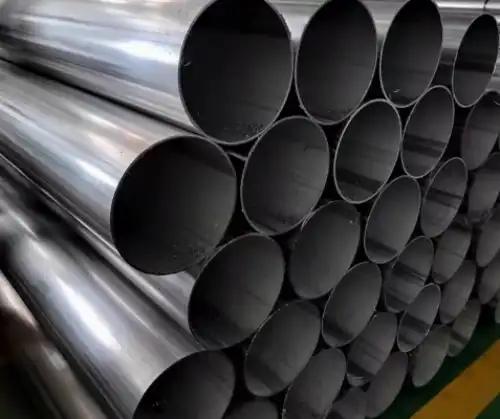
Understanding Custom Titanium Tubing: Key Concepts and Benefits
Custom Titanium Tubing is a one-of-a-kind way to make things that solves specific technical problems by having exact measurements, metal ratios, and mechanical qualities. Unlike standard inventory items, these tubes are made to exact specs. They have certain outer diameters, inner diameters, wall thicknesses, and geometric shapes that allow them to fit perfectly into complex systems where standard ASTM sizes don't work.
Defining Custom Manufacturing Specifications
To start the customized process, exact measurements are needed, which usually means limits of ±0.05mm or less. These specs solve important technical problems by making sure that the weight is optimal, the dimensions are compatible, and the alloy is unique in a way that standard goods can't. Precision sizing gets rid of extra material in custom tubes, which maximizes the power-to-weight ratios needed for aircraft uses and makes sure they work seamlessly with current systems. When engineers do custom production, they have to choose from different grades of materials, such as Ti-3Al-2.5V (Grade 9) for its high fatigue strength or Ti-6Al-4V (Grade 5) for its better structure performance. Each metal has its own benefits. Grade 2 is great for heat exchanges because it is very flexible and doesn't rust. Grade 9 is great for airplane systems because it can be shaped into complicated hydraulic routing.
Superior Performance Characteristics
Titanium tubing has unique qualities that make it much better than other materials in a number of performance measures. Titanium is about 45% lighter than its steel counterparts, with a mass of 4.51 g/cm³, while still being stronger. Because of this amazing strength-to-weight ratio, engineers can make lighter systems without sacrificing their structural integrity. Rust resistance is another important benefit. Titanium naturally makes a passive oxide film that protects it from corrosion in air, saltwater, and harsh chemical conditions. In marine uses, chemical processes, and offshore energy systems, where material degradation can cause severe breakdowns, this trait is very useful. The material keeps these protective qualities even at very high and very low temperatures. For normal metals, it can stay strong at temperatures as high as 600°F (315°C).
Industry Applications and Customization Benefits
The importance of tailoring in making titanium tubing is shown by aerospace uses. For commercial and military airplanes, high-pressure hydraulic lines need tubes that can handle pulsing pressures and vibration while keeping the weight of the structure as low as possible. For these uses, AMS 4943 Grade 9 tubing is usually chosen because it has a high stress strength and can be made into complicated routing shapes without breaking. Biocompatibility and precise measurements make sure that medical devices are safe to use with human bodies. This is another way that customization can help. Orthopedic implants and surgery tools need surfaces that are very clean and meet exact specs, which normal tubing can't provide. Custom production gives you exact control over material purity, surface finishes, and dimensional tolerances, all of which are important for medical uses.
The Manufacturing Process of Custom Titanium Tubing
From old-fashioned ways of making titanium tubing to cutting-edge modern methods, this is a huge step forward in technology that solves problems in the past with accuracy and cost-effectiveness. Traditional methods had trouble keeping measurements consistent and wasted a lot of material, which made them unsuitable for high-performance uses. Modern ways of making things use complex process controls and high-tech tools to get consistent results while making the best use of materials.
Primary Manufacturing Methods
Modern Custom Titanium Tubing is made using a number of different specialty methods, each chosen based on the needs and performance expectations of the product. The process of making seamless tubes starts with solid billets that are hot-extruded to make hollow profiles. This gets rid of the need for weld gaps, which could lower the pressure ratings or wear performance of the tubes. This method is very important for hydraulic systems in spacecraft and high-pressure industry settings where the structure's integrity cannot be harmed. Pilgering is a specialized way to shape metal that lowers the width and thickness of tubes by gradually deforming them. This method gives you exact control over the distribution of wall thickness and the accuracy of dimensions. It is especially useful for uses with thin walls in medical and aerospace devices. Manufacturers can make complicated cross-sectional shapes with this method that they couldn't make with regular drawing tools.
Critical Manufacturing Stages
Choosing the right materials is the first step in making sure the products are of high quality. This is done by using X-ray fluorescence spectroscopy to check the chemicals that make up the materials. This test makes sure that the standards for titanium, aluminum, vanadium, and intermediate elements are followed to the letter by ASTM and AMS. Traceability of raw materials is necessary for uses that need to follow rules for medical devices and aircraft. Quality control is the last and most important step, and it includes full non-destructive testing methods. Ultrasonic testing finds cracks, laminations, or inclusions inside the walls of tubes, making sure that they are structurally sound for use in pressure applications. Eddy current testing finds flaws on the surface or close to the surface, like cracks or pinholes, that could affect how well something works. Using laser micrometers for dimensional checking ensures that the limits are met.
Process Selection Guidelines
Choosing the best manufacturing methods relies on a number of things, such as the alloy grade, the size standards, and the expected order volume. Grade 2 and Grade 9 metals can be cold shaped very well, which means they can be used for drawing and pilgering. Because they are so strong and hard to shape at room temperature, Grade 5 metals usually need to be hot-formed. The standards for wall thickness have a big effect on the process choice. For thin-walled uses, pilgering is often needed to get a regular thickness spread. For thick-walled tubes, extrusion and machining may be enough. Process choice is also affected by the quality of the surface. For example, drawn tubes have a better surface quality than extruded goods.
Comparing Titanium Tubing with Other Materials for Informed Procurement
To make choices that balance performance needs with budget limits, procurement workers need to compare a lot of different materials. Custom Titanium Tubing has clear benefits over other materials like stainless steel, aluminum, and carbon fiber alloys. However, each of these materials has its own unique qualities that make it useful for certain tasks.
Performance Comparison Analysis
Corrosion protection is one of the most important ways in which titanium is better than other materials. In many situations, 316L stainless steel is good at resisting corrosion. However, titanium's passive oxide film is better at stopping chloride stress corrosion cracks and crevice corrosion. This benefit is especially useful in harsh places like the ocean, chemical processing, and hospital settings, where failure of the material could have serious effects. Titanium's outstanding performance qualities can be seen in its strength-to-weight ratios. It is possible for grade 5 titanium to have tensile strengths higher than 895 MPa while still having great wear resistance. This mix makes it possible to build walls that are smaller, which lowers the general weight of the system without affecting its strength. Carbon fiber composites may be lighter, but they aren't strong enough to withstand impacts or stable enough in temperature for many commercial uses.
Lifecycle Cost Analysis
The initial cost of materials is only one part of the total costs of ownership. Titanium is very strong and doesn't rust, so it usually lasts longer and costs less to maintain, which makes up for its higher starting cost. Systems made of stainless steel may need to be replaced often because they rust, but setups made of titanium can last for decades without breaking down. Total prices are also affected by manufacturing and construction issues. Titanium is very easy to weld and shape, so it can be used to make complicated shapes without the need for special joining methods that are needed for some combination materials. Titanium parts can be joined using standard welding techniques, which makes the process easier and lowers the costs.
Customization and Fabrication Capabilities
The choice of material has a big impact on the ability to customize and the freedom of production. Titanium is very easy to shape after being annealed, which lets you do complicated bending and shaping processes that make complex routing configurations. This adaptability is useful in aircraft uses where tubes need to go around existing structures without losing their pressure ratings. Different materials have a lot of different surface treatment choices. Titanium can have its surface anodized, polished, or chemically scraped to get certain effects without changing its ability to fight rust. These processes can improve the way something looks or how it works, for example, by making the surface smoother so fluids can flow more easily.
Practical Guidelines for Buying Custom Titanium Tubing
To successfully buy Custom Titanium Tubing, you need to create detailed specifications that spell out the technical needs, quality standards, and delivery deadlines. Well-defined specs get rid of confusion when comparing quotes and make sure that the products supplied meet operating needs without having to be changed or delayed, which can be expensive.
Specification Development
The dimensions for the custom titanium tube must include the outside diameter, the inside diameter, the wall thickness, and the length standards, along with the right ranges of margins. Tighter tolerances make production more difficult and cost more, so specs should be based on real, practical needs instead of limits that are too strict. The requirements for surface finish should include hardness levels and standards for how it looks, which affects both performance and appearance. Quality standards and certificates must match the needs of the product and the needs of legal compliance. For aerospace uses, AMS standards and material certifications are common. For medical uses, ASTM F67 or F136 compliance is needed. Depending on where the application is happening and how it will be used, pressure vessels may need ASME or PED approvals.
Supplier Evaluation Criteria
Supplier evaluation starts with a review of the supplier's ability to make things. Suppliers should show that they have worked with similar projects before and have the right tools for the manufacturing processes that are needed. To make sure the supply chain works reliably, production capacity must match order amounts and shipping schedules. When an application is complicated and needs programming help, technical support skills become important. Suppliers who know a lot about metals can help you choose the right materials, get the best results from heat treatment, and figure out how to join them. This help is useful during the product creation and fixing stages.
Procurement Optimization Strategies
Order number optimization finds a balance between the costs of keeping goods and the benefits of buying in bulk. Larger sales usually get better prices, but it's important to carefully predict demand so that you don't end up with too much product. Blanket purchase orders with planned releases can help you save money on prices by buying in bulk while still letting you change your inventory as needed. Coordinating delivery schedules makes sure that the supply of materials matches the plan for the project. Custom making usually needs 8 to 12 weeks of lead time, so these longer timelines must be taken into account when planning procurement. Standard configurations can be delivered faster by suppliers who have inventory plans for popular specs.
Conclusion
Custom Titanium Tubing production is an advanced mix of advanced metals, precision engineering, and quality control that creates high-performance solutions for important uses. Changing from old-fashioned methods to more modern ones in the production process has made it possible for more accuracy, consistency, and flexibility to meet the needs of many industries, such as aerospace, medicine, energy, and cars. When procurement workers understand these manufacturing processes, they can make choices that improve both performance and cost-effectiveness. Titanium's great qualities, like its high resistance to corrosion, high strength-to-weight ratios, and amazing temperature stability, make it a good investment when you look at its lifetime costs and operating reliability needs. To do buying right, you need to pay close attention to creating specifications, evaluating suppliers, and order optimization strategies that make sure that technical needs are met while also meeting business goals and making sure that mission-critical applications can depend on the supply chain.
FAQ
What is the difference between seamless and welded titanium tubing?
Seamless tubing is made by extruding solid billets. It has a constant strength distribution and no weld seam, which makes it perfect for high-pressure aircraft uses. A welded tube is made from strip material that is welded along a seam. It has better wall thickness uniformity and is cheaper to make for general industry uses. With the right heat treatment, both types can reach about the same level of strength.
How long does custom titanium tubing manufacturing typically take?
Depending on the difficulty and requirements, making custom titanium tubing can take anywhere from 8 to 12 weeks from the time the order is confirmed until it is delivered. It might take 4 to 6 weeks for simple changes to standard sizes, but 12 to 16 weeks for complicated shapes that need special tools. Delivery times are also affected by how the production is planned and how readily available the raw materials are.
Which titanium grades are most commonly used for tubing applications?
Grade 2 (commercially pure) is great for heat exchanges and chemical processes because it doesn't rust and is easy to shape. Grade 9 (Ti-3Al-2.5V) is stronger and easier to shape, making it useful for hydraulic lines and aircraft uses. Grade 5 (Ti-6Al-4V) is the strongest for building uses, but it needs to be shaped in a certain way.
Partner with LINHUI TITANIUM for Superior Custom Titanium Tubing Solutions
LINHUI TITANIUM is ready to take your specs and turn them into precision-engineered titanium tubing solutions that work better than expected. With 21 years of experience making things and 30 specialized production lines, we can guarantee steady quality and on-time delivery for your most important uses. We know what the aerospace, medical, energy, and automobile industries need because we're a trusted Custom Titanium Tubing seller to big names in the field like PETRONAS and PEMEX. Email our technical team at linhui@lhtitanium.com to talk about your unique needs and find out how our wide range of production services can help your next project succeed.
References
1. Boyer, R.R., Welsch, G., and Collings, E.W. "Materials Properties Handbook: Titanium Alloys." ASM International, 1994.
2. Donachie, Matthew J. "Titanium: A Technical Guide, 2nd Edition." ASM International, 2000.
3. Peters, M., Kumpfert, J., Ward, C.H., and Leyens, C. "Titanium Alloys for Aerospace Applications." Advanced Engineering Materials, Vol. 5, No. 6, 2003.
4. Schutz, R.W. and Thomas, D.E. "Corrosion of Titanium and Titanium Alloys." ASM Handbook Volume 13: Corrosion, ASM International, 1987.
5. Welsch, G., Boyer, R., and Collings, E.W. "Materials Properties Handbook: Titanium Alloys." ASM International Materials Park, 1993.
6. Zwicker, U. "Titanium and Titanium Alloys: Physical Metallurgy, Processing, Applications." Springer-Verlag Berlin Heidelberg, 1982.