
High-strength Gr5 titanium tube is the pinnacle of modern materials engineering in defense and aircraft uses that need to be completely reliable for mission-critical tasks. These Ti-6Al-4V metal tubes have an amazing strength-to-weight ratio, great corrosion resistance, and heat stability that other materials just can't match. In aerospace settings where a broken part can have disastrous results, Gr5 titanium tube solutions give hydraulic systems, engine parts, and defense equipment that work in harsh conditions the structural stability and long life they need.
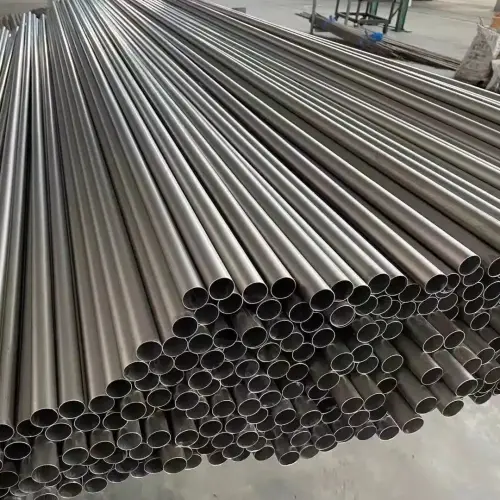
Understanding Gr5 Titanium Tube: Properties and Composition
Grade 5 titanium tube is the best choice for the aircraft business because it is made of a complex alloy called Ti-6Al-4V. Titanium is the main metal, and 6% aluminum and 4% vanadium are added to it. This exact mechanical balance makes a material that stays structurally sound at temperatures ranging from very cold (cryogenic) to very hot (400°C). The aluminum presence makes the solid solution stronger while lowering its bulk. The vanadium stabilizes the beta phase, which makes the material more flexible at room temperature and stronger at high temperatures.
Mechanical Properties and Performance Characteristics
Because of their unique mechanical qualities, Ti-6Al-4V tubes are perfect for difficult aircraft uses. These tubes are stronger than regular steel ones because they have a tensile strength of 895–1000 MPa and a yield strength of 828–965 MPa. They are also 43% less dense than regular steel tubes. The material is very resistant to fatigue, with durability limits close to 500–600 MPa. This is very important for parts that are loaded and unloaded many times in airplane structures. Temperature stability is still an important factor, and Gr5 titanium tubes keep their mechanical qualities over a wide range of temperatures without breaking down as steel metals do. This thermal stability is very important in aircraft use, where parts' temperatures change quickly during takeoff, cruise, and landing.
Corrosion Resistance and Environmental Durability
Gr5 titanium tubes are better at resisting rust because they can form a steady, adherent oxide layer that fixes itself when it gets broken. This passive film does a great job of protecting against rust from the air, sea, and chemicals from fuel systems and hydraulic fluids. In marine settings and coastal aircraft sites, these tubes keep their structural integrity, while stainless steel tubes would rust and crack from stress corrosion.
Comparing the Gr5 Titanium Tube with Other Materials
When reviewing material choices for aerospace uses, Gr5 titanium tubes regularly show better performance ratings when compared to more common options. The comparison shows big benefits in terms of weight reduction, resistance to corrosion, and lifetime costs, all of which have a direct effect on how well the system works and how much upkeep it needs.
Gr5 Titanium vs. Stainless Steel Performance
Stainless steel has been used in aircraft for many years, but Gr5 titanium tubes have clear benefits in key performance areas. Getting rid of weight is the most obvious benefit. Titanium tubes are 43% lighter than stainless steel parts that are otherwise the same. This weight loss directly leads to better fuel economy, more cargo space, Gr5 titanium tubes, and better performance qualities for the aircraft. Titanium has a much better strength-to-weight ratio than any other metal. For example, Gr5 tubes have specific strengths that are almost twice as high as those of aerospace-grade stainless steels. Titanium is more resistant to corrosion than even the best types of stainless steel in chemical and marine settings. This means that protection coatings are not needed, and long-term upkeep costs are lower.
Material Selection Considerations
To choose between the different grades of titanium, you need to carefully think about the needs of your unique purpose. Gr2 titanium is less expensive and has better corrosion protection and shapeability, but it doesn't have the high-strength properties needed for structural aerospace uses. Although Gr9 titanium isn't as strong as Gr2, it is still easier to weld than Gr2. This makes it a good choice for less demanding uses where cost is more important than performance. Aluminum metals are lighter and cheaper than titanium, but titanium is better at withstanding high temperatures and corrosion in harsh settings. In the end, the selection matrix supports Gr5 titanium tubes when long-term dependability, weight reduction, and operational performance are more important than initial material prices.
Application Insights: Why Gr5 Titanium Tube Excels in Aerospace & Defense
Gr5 titanium tubes are used a lot in aircraft and defense for tasks where safety, reliability, and speed all need to work together. These tubes are now an important part of modern airplane design. They play important roles in hydraulic systems, fuel lines, weather control systems, and structural parts where there is almost no room for failure.
Aerospace Applications and Performance Benefits
Modern airplane hydraulic systems depend on Gr5 titanium tubes to keep the pressure stable while keeping the system's weight as low as possible. These tubes can handle working pressures higher than 3000 psi and stop wear cracks from spreading when they are loaded and unloaded many times. Because the material is compatible with hydraulic fluids, there are no worries about galvanic corrosion. This means that service intervals can be extended, which lowers upkeep costs and makes airplanes more available. Another important place where Gr5 tubes work really well is in engine bleed air systems. These systems send hot, pressurized air from the engine fans to the cabin's systems that keep it warm and prevent ice buildup. Ti-6Al-4V metal stays strong and stable at high temperatures, so it works reliably throughout the flight range. It also helps the engine work better by reducing weight.
Defense and Military Applications
When it comes to defense uses, where operating conditions can include high temperatures, corrosive atmospheres, and ballistic dangers, performance requirements are even higher. Gr5 titanium tubes are used in missile guidance systems, radar units, and parts of military ships where they need to be clear to electromagnetic waves and not rust. The fact that the material isn't magnetic is very important in sensitive electrical systems where magnetic interference could hurt the mission's effectiveness. Titanium is especially useful in naval uses because it doesn't rust in salt water, while other materials would need to be replaced often and have strict upkeep plans.
Procurement Guide: How to Source High-Quality Gr5 Titanium Tubes
To successfully purchase aerospace-grade Gr5 titanium tubes, you need to carefully check the skills, quality systems, and certification compliance of the suppliers. To make sure the project is successful and follows the rules, the buying process needs to take into account technical requirements, shipping needs, and the stability of the supply chain over the long term.
Supplier Qualification and Certification Requirements
Aerospace purchases require sellers to have strict quality management systems that are approved to AS9100 standards. These standards go beyond ISO 9001 requirements and add quality controls that are specific to aerospace. LINHUI TITANIUM has been making titanium for 21 years and has ISO, SGS, and TUV certificates that show they can handle quality in a wide range of situations. For aerospace uses, these certificates make sure that the material's qualities stay the same and that it can be tracked and has the right paperwork. Advanced process controls, material testing labs, and statistical process control tools must all be able to be used in manufacturing. With two plants and 30 production lines, LINHUI TITANIUM can make 800 tons of metal every year. This gives them the scale and freedom they need for both small prototype runs and full production runs.
Quality Verification and Testing Protocols
Chemical composition analysis, mechanical property tests, and non-destructive examination data must all be included in material certification packages. For every batch of Gr5 titanium tubes, the tensile strength, yield strength, elongation, and decrease of area must be checked to make sure they meet ASTM B338 standards. Eddy current checking and ultrasonic testing can find internal breaks and surface flaws that could affect how well something works in service. Traceability paperwork connects produced goods to where the raw materials came from, how they were processed, and the results of quality control tests. This paperwork is very important for aerospace applications that need to keep track of the past of parts for safety investigations and regulatory compliance checks.
Future Trends and Innovations in Gr5 Titanium Tube Usage
The aircraft industry is always looking for better, more eco-friendly, and more high-tech solutions. This is leading to more uses of Gr5 titanium tubes in new areas. Additive manufacturing technologies make it possible to make shapes that were previously impossible to make with traditional methods. Also, improved surface treatments improve performance qualities beyond the basic properties of the material.
Advanced Manufacturing and Design Trends
Additive manufacturing changes the way titanium tubes are made by letting combined designs be used instead of joints. This cuts down on weight and improves dependability. When you use electron beam melting and selective laser sintering, you can make complicated internal shapes that are best for heat transfer and fluid dynamics while still keeping the great qualities of the Ti-6Al-4V alloy. Surface engineering techniques like ion implantation, laser polishing, and advanced finishes make Gr5 tubes even better at what they do. These processes can make the material more resistant to wear, lower friction, and give the surface specific qualities without changing the way the material itself works.
Sustainability and Lifecycle Considerations
Environmental sustainability is becoming more and more important when choosing materials. Titanium's ability to be recycled and last a long time supports green production efforts. Because Gr5 titanium tubes last longer, they don't need to be replaced as often and don't need to be thrown away as often. This has a smaller effect on the world than traditional materials that need to be replaced more often. Losing weight is good for energy economy because every kilogram of weight saved means less fuel used and less pollution released. Titanium tubes have lower lifetime costs because they need less upkeep, can be serviced more often, and are more reliable, which is good for both the economy and the environment.
Conclusion
High-strength Gr5 titanium tubes are the best material for aircraft and defense uses that need performance, reliability, and efficiency that can't be compromised. The Ti-6Al-4V metal has a very high strength-to-weight ratio, is very resistant to rust, and stays stable at high temperatures, all of which are important for mission-critical systems. Aerospace workers can use these advanced materials to get better performance results while lowering costs and increasing operational efficiency. To do this, they need to have a deep understanding of the materials' properties, comparative benefits, and the best ways to buy them.
FAQ
1. What makes the Gr5 titanium tube superior to stainless steel for aerospace applications?
Compared to stainless steel, the Gr5 titanium tube is 43% lighter, has a better strength-to-weight ratio, and is more resistant to rust. The material keeps its mechanical qualities over a wider range of temperatures and gets rid of the problems caused by galvanic corrosion in assemblies made of more than one metal. This means that the engines use less fuel and need less upkeep.
2. How do I verify supplier certifications for aerospace-grade titanium tubes?
Aircraft suppliers must keep their AS9100 certification, which adds standards for aircraft to ISO 9001. Check certifications with reputable organizations and ask for material test records that list the chemical makeup, mechanical qualities, and paperwork for tracking. LINHUI TITANIUM has been in the aerospace business for 21 years and has ISO, SGS, and TUV standards.
3. What customization options are available for large-scale aerospace projects?
Customization choices include diameters from 6mm to 219mm, different wall thicknesses, different surface finishes, and different length needs. Advanced production techniques allow for complicated shapes, merged designs, and changes that are specific to an application, all while meeting ASTM B338 standards and aircraft quality standards.
Partner with LINHUI TITANIUM for Superior Gr5 Titanium Tube Solutions
LINHUI TITANIUM offers aerospace-grade Gr5 titanium tube options that are backed by a wide range of certifications, proven production skills, and knowledge of global logistics. Our two plants can make up to 800 tons of goods each year, which means that your important aerospace and military projects will have solid supply chain support. We've been making titanium for 21 years and have partnered with big names in the industry like GE Aviation and PETRONAS. This gives us the quality control and technical know-how that your projects need. Get in touch with linhui@lhtitanium.com right away to talk about your needs and find out why top aerospace companies trust LINHUI TITANIUM as their Gr5 titanium tube provider.
References
1. Donachie, Matthew J. "Titanium: A Technical Guide, Second Edition." ASM International, 2000.
2. Boyer, Rodney R. "An Overview on the Use of Titanium in the Aerospace Industry." Materials Science and Engineering: A, vol. 213, no. 1-2, 1996.
3. Peters, M., Kumpfert, J., Ward, C.H., and Leyens, C. "Titanium Alloys for Aerospace Applications." Advanced Engineering Materials, vol. 5, no. 6, 2003.
4. Lutjering, Gerd and Williams, James C. "Titanium: Engineering Materials and Processes." Springer-Verlag Berlin Heidelberg, 2007.
5. American Society for Testing and Materials. "ASTM B338-18 Standard Specification for Seamless and Welded Titanium and Titanium Alloy Tubes for Condensers and Heat Exchangers." ASTM International, 2018.
6. SAE International. "AMS 4943 Titanium Alloy Tubing 6Al-4V Annealed Seamless." SAE Aerospace Material Specification, 2019.