
These days, industries are very picky, and GR2 titanium tubes have become the best choice for heat exchangers and power plants. When it comes to corrosion resistance, heat stability, and longevity, these commercially pure titanium tubes are unmatched. Other materials just can't compare. Because of its special features, Gr2 titanium tubes are needed for important structures that can't fail. They provide engineers and buying professionals with a dependable solution that makes equipment last longer and costs less to maintain.
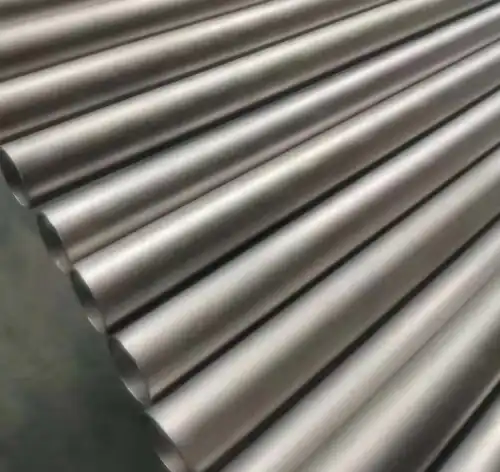
Understanding GR2 Titanium Tube: Properties and Benefits
When it comes to widely pure titanium grades, GR2 titanium strikes the best mix between purity and mechanical performance. The material with the name UNS R60702 doesn't have many alloying elements; titanium makes up more than 99% of its makeup. To get the strength-to-weight ratio that is wanted, interstitial elements like oxygen (0.25% maximum), iron (0.30% maximum), and nitrogen (0.03% maximum) are carefully controlled. This exact chemical makeup makes sure that the qualities of the material are the same from batch to batch. This makes it perfect for use in mission-critical situations where dependability cannot be compromised. The amount of clarity in Grade 2 titanium has a direct effect on how well it resists corrosion.
Titanium makes a stable oxide layer that heals itself right away when it gets broken, unlike stainless steel alloys that depend on chromium for protection. Because they can fix themselves, GR2 tubes are almost immune to pitting, crevice corrosion, and stress corrosion cracks in harsh settings. Engineers like GR2 titanium because it has great engineering qualities that make it both strong and easy to work with. The material can withstand a minimum tensile strength of 345 MPa and still be very flexible, stretching only 20%. This mix lets complicated shaping processes happen without affecting the strength of the structure. The yield strength of 275 MPa is high enough to keep the material from deforming under practical loads, and its wear resistance makes sure it will work well for a long time under cyclic loading conditions. Another important benefit of Grade 2 titanium tubes is that they can handle a wide range of temperatures. It keeps its mechanical qualities over a wide temperature range, from very cold temperatures (below 300°C) to very hot temperatures (above 300°C). This temperature stability stops changes in the metal that could hurt performance, so the equipment will keep working the same way for as long as it's used.
Strict attention to international standards is needed to make sure the quality of GR2 titanium tubes. ASTM B338 sets the standards for both smooth and welded titanium tubes, and ASME SB338 adds more requirements for use in pressure vessels. Specialised certificates, such as PED 2014/68/EU, prove that products meet European pressure equipment guidelines. ISO 9001:2015 certification makes sure that production processes are consistent. When working with important applications, being able to track materials becomes very important. Each batch of tubes comes with a full mill test certificate that lists the chemicals used, their mechanical qualities, and the results of any non-destructive tests that were done. This paperwork gives buying teams the confidence they need to ask for a titanium tube to be used in dangerous situations.
Why GR2 Titanium Tubes Are Ideal for Heat Exchangers and Power Plants
When designing a heat exchanger, there are many problems that regular materials can't solve well. Chemical surroundings that are aggressive, temperature changes, Gr2 titanium tube, and mechanical stress can all cause materials to fail in ways that can have disastrous effects. These problems can be solved by GR2 titanium tubes, which have a special mix of qualities that make them better than other materials in harsh circumstances. Corrosion stress is one of the main ways that heat exchangers break down. When cycle stress and acidic media are mixed, they speed up the cracking and spreading of weak materials. Titanium doesn't corrode easily, so this way of breaking down isn't needed. This means that tools can work safely at higher stress levels and longer repair intervals.
Materials are put through some of the toughest situations in industry settings in power plants. When water, steam, and chemicals are added at high temperatures, the choice of material becomes very important for the process to go smoothly. GR2 titanium tubes work really well in these situations because they keep their protective oxide layer even when there is a lot of heat flow. The low thermal expansion rate of the material makes heat exchanger tube bundles less stressed when they get hot. This feature lowers the chance of tube-to-tubesheet joint failure, which happens a lot with materials that expand more quickly. Because there is less thermal stress, wear life is also longer, sothe equipment can go through more thermal cycles before it needs to be fixed. Industry experience with titanium heat exchangers shows that they make operations much more reliable and lower the cost of upkeep. Power companies that use titanium condenser tubes say that they last more than 25 years, while copper alloy options only last 8 to 12 years.
The longer service life means fewer outages and cheaper lifecycle costs, even though the original investment in materials was higher. Titanium heat exchangers have also been used successfully on offshore platforms that work in harsh seawater conditions. The material is resistant to rust caused by microbes and changes in the chemistry of seawater, so it will keep working well for as long as the platform is in use. These installations show that titanium is useful in situations where the cost of repair is much higher than the material price.
Comparing GR2 Titanium Tube with Other Materials for Informed Decision Making
Choosing the right material often means picking between different types of titanium based on the needs of the application. In some places, GR5 titanium (Ti-6Al-4V) is less resistant to rust and costs more than other types of titanium. When mixed with different metals, the aluminium and vanadium added to Grade 5 can cause galvanic corrosion problems. For these reasons, GR2 is the better option for mixed metallurgy systems.GR7 titanium is more resistant to rust because it has palladium added to it, but it costs a lot more than Grade 2. Because it contains palladium, GR7 is perfect for the harshest chemical environments.
However, the cheaper GR2 choice works just fine in many power plant and heat exchanger uses. Because it is the best mix between price and performance, Grade 2 titanium is the best choice for most commercial uses. Many heat exchangers are made with stainless steel tubes because they are less expensive to buy and have established supply lines. But titanium's better resistance to rust often makes up for the higher price by requiring less upkeep and lasting longer. In chloride conditions, even high-grade metals like 316L can get pitting and stress corrosion cracking, which are very bad for stainless steel. While aluminium tubes are lighter and better at conducting heat, they are not strong enough or resistant to rust for demanding uses. Because the material easily rusts when mixed with steel parts, it can't be used in very complicated heat exchanger designs. Titanium is compatible with most building materials, so these galvanic issues aren't a problem. It also has better mechanical qualities. Titanium has a very high amount of strength to weight, which lets engineers make heat exchangers that are lighter while still working better.
This weight decrease is especially helpful for offshore and mobile uses, which can have a big effect on building needs and shipping costs. Because the material is very strong, it is possible to make the wall parts thinner, which improves heat transfer while still meeting pressure rating standards. When choosing titanium over copper, thermal conductivity is the main thing that you give up. Titanium doesn't transfer heat as well as copper does, Gr2 titanium tube, but the fact that it can have thinner walls and closer tube spacing often makes up for this. Modern heat exchangers use titanium's resistance to rust to get the most heat transfer surface area without worrying about the material breaking down.
Procurement Guide: Sourcing High-Quality GR2 Titanium Tubes for Bulk Industrial Needs
Getting titanium tubes that work well starts with carefully evaluating the suppliers' production skills and quality control systems. When planning big projects, production capacity is very important because making titanium requires special tools and skilled workers. Suppliers should show that they have the ability to meet project deadlines and keep quality standards high throughout the production run. Quality management methods show how reliable and consistent a company is. ISO 9001:2015 certification is the basic quality standard. Certifications specific to an industry, like NADCAP for aircraft uses, show that the company can do better in terms of quality. Acceptance of third-party inspections from groups like DNV, SGS, and TUV shows that a provider is trustworthy in foreign markets.
The skills of the manufacturing process have a direct effect on the quality of the product and how well it is delivered. To meet the standards for surface finish and size limits, seamless tube production needs high-tech tools and process control. To get the best mechanical qualities and microstructure stability, the cold rolling and annealing steps need to be carefully managed. Titanium tube prices are based on the complicated manufacturing processes and high costs of raw materials that go into making titanium. The base price of titanium sponge usually changes with the market, and the cost of processing depends on the size and finish needs. For big jobs, bulk order rates become important. Usually, you need to order at least 1-2 tons to get a real price cut. Customisation needs can have a big effect on prices and delivery times. The most cost-effective price is for standard dimensional ranges and wall thickness choices. On the other hand, extra processing steps are needed for special dimensions or tight tolerances. The end price of a product is affected by its heat treatment needs, surface cleaning, and non-destructive testing requirements. Because of the unique methods needed, making tubes out of titanium takes longer than making tubes out of other materials.
Getting the raw materials, planning the production schedule, and checking the quality of standard goods usually takes 8 to 12 weeks. Custom specs make the time frames even longer. To keep projects from being held up, it's important to plan buying efforts well in advance. To protect products and follow the rules, global shipping operations need to be carefully coordinated. Titanium tubes need to be carefully packed so they don't get damaged during transport, and the paperwork needs to meet both export rules and customer needs. To make sure the job goes smoothly, experienced providers offer full logistics support, which includes clearing customs and keeping track of deliveries.
Enhancing Trust and Confidence in Your GR2 Titanium Tube Purchase
Building trust in business-to-business titanium buying depends a lot on qualifications that can be checked and industry recognition. Track records of suppliers working on big foreign projects show how well they can meet complicated needs on time. References from well-known clients in the oil and gas, power generation, and chemical processing industries show that the product has worked well in difficult situations. Independent approvals from well-known organisations back up what suppliers say about their quality control and manufacturing standards. Classification groups like ABS, DNV, and Lloyd's do checks of manufacturing processes and quality systems that are not connected to the company itself.
These certificates are especially important when providing materials for use in pressure vessels, where rules must be followed. For quality assurance in titanium purchase, a complete recording of the material is the basis. Complete chemical analysis, mechanical property verification, and non-destructive testing data must be on mill test papers. Material traceability from the source of the raw material to the end finishing step makes sure that everyone is responsible and lets any quality problems be looked into. Heat treatment records and process paperwork show that the production process is controlled and consistent. The end product's quality is affected by annealing temperature profiles, cooling rates, and checks that happen after processing.
When suppliers keep detailed records of the whole process, Gr2 titanium tube it shows that they care about quality and gives customers faith that the materials will be the same across different production batches. When titanium solutions are used in new situations, ongoing expert support is very helpful. Suppliers with a lot of experience offer advice on welding, construction, and fixing problems to make sure that the job goes smoothly. When switching from standard materials to titanium options, this ability to support becomes even more important. Material flaws and problems with the way the product was made are covered by warranties and replacement plans. Suppliers with a good reputation back up their goods with full guarantees that cover both material and workmanship flaws. Clear policies for dealing with quality issues and replacement processes give customers even more faith in the stability of their suppliers.
Conclusion
GR2 titanium tubes are the best choice for heat exchangers and power plants that need high rust resistance, temperature stability, and dependability over the long term. The unique qualities of the material make it able to solve important problems that regular materials can't. Its longer service life and lower upkeep needs make the higher initial investment worth it. Procurement teams can use titanium's benefits to make big practical changes and save money over the lifecycle of equipment by carefully choosing suppliers and writing clear specifications.
FAQ
1. GR2 titanium tube technology is mostly useful for chemical processing, making electricity, and oil sites in the ocean. Titanium's resistance to corrosion is used in the chemistry business to work with strong substances like acids, bases, and organic solvents. Titanium is used in condensers, heat exchangers, and cooling water systems in power plants because it is stable at high temperatures and doesn't rust. Materials used on offshore platforms must be able to withstand the harsh conditions of the ocean and maintain their structural integrity.
2. Up to 300°C, grade 2 titanium keeps its shape very well, which makes it a good choice for most heat exchanger and power plant uses. The alpha-phase crystal structure of the material stays steady in this temperature range, which stops metallurgical changes that could weaken its mechanical qualities. It can handle heat cycling better than most stainless steel options, which makes it safer to use in situations where temperatures change often.
3. Titanium tubes can be customised in a lot of different ways to meet different performance and performance standards. For standard uses, wall thicknesses run from 0.5mm to 4.5mm. For pressure tank uses, special processing makes it possible for walls to be up to 120mm thick. The inside width can be changed from 2 mm to 219 mm, which is large enough to meet most heat exchanger tube needs. The surface finish specs can be changed to improve the efficiency of heat transfer and the ease of cleaning.
4. Compliance with ASTM B338 for chemical and size standards is an important approval, as is ISO 9001:2015 for quality management systems. For European markets, pressure equipment needs to be certified according to PED 2014/68/EU rules. For North American markets, it needs to be certified according to ASME Section II rules. Accreditation from third-party inspection bodies like DNV, SGS, or TUV adds to the quality guarantee for important uses.
Work with LINHUI TITANIUM to get the best GR2 titanium tube solutions
LinHui Titanium is ready to help you with your heat exchanger and power plant projects by providing you with high-quality Gr2 titanium tube goods. They have been making these tubes for 21 years. Our ISO-certified factories and thorough quality control systems make sure that we always produce products that meet the strictest requirements. As a reliable manufacturer and seller, we offer full technical support from the creation of the initial specifications to the end of the project. This makes sure that titanium solutions are successfully implemented in your most important applications. Email our engineering team at linhui@lhtitanium.com to talk about your unique needs and find out how our knowledge can help you choose the best materials and make the best purchases.
References
1. Davis, J.R. "Titanium and Titanium Alloys in Heat Exchanger Applications." ASM International Handbook of Materials Selection, 2019.
2. American Society of Mechanical Engineers. "ASME SB-338: Specification for Seamless and Welded Titanium Tubes for Condensers and Heat Exchangers." ASME Boiler and Pressure Vessel Code, 2021.
3. Peters, M. and Leyens, C. "Titanium and Titanium Alloys: Fundamentals and Applications in Power Generation." Wiley-VCH Materials Science Series, 2020.
4. International Titanium Association. "Guidelines for Titanium Heat Exchanger Design and Fabrication." Technical Bulletin TI-2019-03, 2019.
5. Schutz, R.W. "Corrosion Performance of Titanium in Industrial Heat Transfer Applications." Materials Performance and Characterisation, Vol. 8, No. 2, 2018.
6. European Pressure Equipment Directive. "PED 2014/68/EU: Material Requirements for Titanium Pressure Vessel Components." Official Journal of the European Union, 2020.