
Bending titanium tubing is a specialized metalworking process that can be used in demanding industrial settings to change straight titanium alloy pipes into precisely curved shapes. Working with titanium grades like Grade 2 or Ti-6Al-4V (Grade 5) is different from working with steel tubes because the material has special qualities, such as a smaller modulus of elasticity, a lot of springback behavior, and a tendency to harden when it is worked on. When professionals bend titanium tubings, they use complex methods like rotary draw bending or mandrel-assisted processes to keep the material's natural resistance to corrosion and structural integrity while creating complicated shapes for hydraulics in spacecraft, heat exchangers in chemical processing, and offshore energy systems.
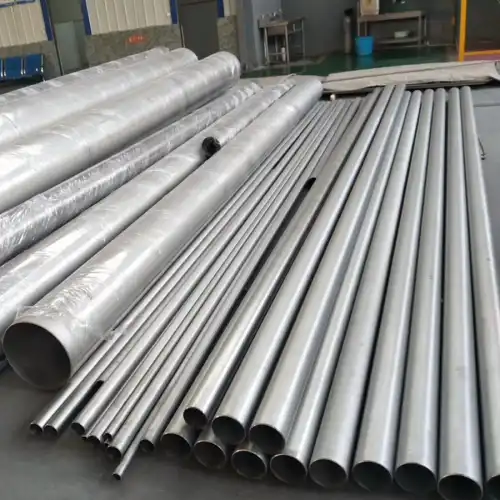
Understanding the Challenges in Bending Titanium Tubing
Titanium is harder to bend than most materials because it has its own set of problems. What's really hard is how titanium behaves mechanically when it is deformed. Its high yield strength and low elastic stiffness make for a lot of springback, usually between 15 and 25 percent based on the alloy grade. This means that when the bending forces are taken away, the material tries to go back to its original straight shape, which means that workers have to bend it much more than the goal angle.
Material Properties That Complicate the Bending Process
The crystal structure of titanium makes work hardening happen during cold forming. In a metal that is bent, dislocations increase within the solid lattice, making it harder to bend even more. This trait stands out even more in high-strength alloys like Ti-6Al-4V, where too much work hardening can cause tiny cracks to form along the edges of bends. Galling is a type of sticky wear in which titanium bonds to tool steel surfaces. This makes things even more complicated because it could damage both the tubing surface and expensive tools.
Common Failure Modes and Their Root Causes
One of the most common problems that happens when titanium tubes are bent is that the walls get thinner. When something is bent, the outer radius goes through tensile stress, which stretches the material, and the inner radius goes through compression. Too much shaving can lower wall thickness beyond what is allowed if there isn't enough mandrel support. This can affect pressure ratings and the performance of the structure. We've seen that carefully calibrated tooling and process factors are needed to keep the wall thickness within 10 percent of the original standard. Most of the time, cracks show up when the bend radius is too small for the grade of titanium being used. Commercially pure grades, such as Grade 2, have good elasticity and can stretch by about 20%, which lets cold-forming methods make tighter turns. On the other hand, Grade 5 titanium is stronger and less flexible, so it usually needs to be bent hot or with a wider bend radius to keep it from breaking. Surface pollution from bad lubrication or iron pickup from tools can make stress concentration places where cracks start when the part is loaded again for service.
Critical Parameters for Successful Tube Bending
To get accurate results when bending titanium tubes, you need to pay close attention to a number of factors that affect each other. The center line radius, which is usually given as a multiple of the tube's outer diameter, needs to be chosen based on the metal, the thickness of the wall, and whether cold or hot bending will be used. For cold forming, industry standards usually say that the minimum bend radius should be between 2D and 3D. However, with the right mandrel support and modern rotary draw tools, 1.5D bends can be made in good conditions. For hot bending tasks, temperature control is very important. To briefly lower the yield strength and springback of grade 5 titanium, it needs to be heated to temperatures between 650°C and 800°C. To keep alpha case formation from happening, the heating must be even across the bend zone and carefully managed. Alpha case formation is a fragile oxygen-rich layer that forms on the surface of titanium when it is exposed to air at high temperatures. During hot forming, protective atmospheres, bending titanium tubing, or short working steps help keep the surface's structure.
Essential Titanium Tube Bending Techniques and Processes
Depending on the needs of the project, the amount of output, and the properties of the titanium tubing being made, different ways of bending have different benefits. Choosing the right method has a direct effect on the quality of the end product, the efficiency of production, and the cost-effectiveness for procurement workers who are looking at manufacturing partners.
Rotary Draw Bending for Precision Applications
When working with very thin titanium tubes, rotary draw bending is the best way to do it. In this method, a bend die is put into the tube and turns around a fixed mandrel. This pulls the material through the forming process. The mandrel is an important internal support that keeps the wall from collapsing and keeps the thickness of the wall the same around the bend. When we bend titanium tubings, we use hardened brass mandrels that keep the tube from galling and give it enough support. The process gives very accurate measurements, with angular tolerances of up to 0.1 degrees and center line circles that are constant and meet strict aircraft standards like AMS 4928 and MIL-T-9047. Chlorine-free lubricants make a barrier layer between the titanium and tooling surfaces. This keeps the glue from wearing down while still letting the material move smoothly. This method is great for making complicated bend sequences with many planes. This makes it very useful for hydraulic systems in airplanes and medical robots, where accuracy directly affects usefulness.
Compression and Roll Bending Methods
Compression bending puts pressure on the outside of the tube while holding it on two die points. This presses the material into the desired shape that is wanted. This method works well for tubes with a bigger diameter and for uses that can handle slightly wider limits. Because the method is so simple, it requires less expensive tools, but it gives you less control over how thick the walls are compared to rotating draw techniques. Roll bending involves moving the tube through a set of movable rollers that gradually make large-radius curves. This is often done to make coiled shapes in heat exchangers. The slow bending reduces worries about work hardening and can handle large tube sizes. However, roll bending has trouble with small angles and gives you little control over where the bend starts and ends. This makes it less useful for complicated shapes that need to be placed precisely.
Cold Versus Hot Bending Decision Criteria
When used with commercially pure titanium types that are malleable at room temperature, cold-bending methods work really well. It is possible to cold form Grade 2 titanium tube with wall thicknesses that are right for the bend radius. This keeps production plans on track and avoids the need for complicated heating equipment. When done with the right tools and grease, the process keeps the material's oxide layer, which protects it from rusting. When working with high-strength alloys or when project requirements call for bend curves that are close to the limits of what the material can do when cold-formed, hot-bending is the only way to go. Heating Grade 5 titanium tube briefly lowers its yield strength, which lets it be bent more tightly and reduces problems with springback. The higher temperature makes the material more flexible, which lowers the risk of cracking during rough shaping. Post-bend pickling or passivation processes bring back the uniform oxide layer if the surface got dirty during the thermal process. This makes sure that the tube keeps its ability to resist rust for uses in chemical processing or on offshore platforms.
Selecting the Right Equipment and Tools for Titanium Tube Bending
The ability to produce, the regularity of bending titanium tubing of quality, and the long-term costs of running a business are all directly affected by the equipment that is chosen. When looking for industrial partners, people in charge of buying things should check not only to see if the company has bent equipment, but also to see how advanced it is, how well it's maintained, and whether it can work with the titanium grades and shapes that their projects need.
CNC-Controlled Bending Machinery
Modern CNC bending systems make it possible bending titanium tubing to program the bending of with exact accuracy when shaping titanium tubes. These machines digitally hold bend sequences, which makes sure that they can be used again and again during production runs. This is especially helpful for aerospace parts, where every part has to meet the same specs. Servo-driven controls change the speed of bending on the fly, slowing it down during critical stages to keep the material from breaking and speeding it up for straight parts. Modern systems have springback adjustment programs that change the over-bend angles based on the type of titanium, the size of the tube, and the radius of the bend that is being made. This smart change gets rid of the method of trial and error that loses materials and takes longer to set up. We've built measurement feedback systems that check the correctness of the angle after every bend. If drift happens because of tool wear or differences in the properties of the material between batches, these systems will automatically make changes to the next operations.
Mandrel Technology and Tooling Considerations
When bending titanium tubings, the choice of mandrel has a big effect on the regularity of wall thickness and the quality of the surface. Ball mandrels, which are made up of linked spherical pieces, offer great support while adapting to the changing shape of the turn. The flexible design stops the mandrel from sticking, which can damage internal surfaces or make drag forces too high. Plug mandrels are a cheaper option for less demanding jobs, but they need to be precisely sized to make sure they provide enough support without making it hard to remove the mold after shaping. Titanium tends to gall, but tool material selection can be fixed by using different levels of hardness and different surface processes. Our tools are made of hardened metal or carefully coated steel that doesn't stick to titanium and stays the same size after thousands of bending cycles. By placing wiper dies on the inner bend radius to smooth the material, wrinkles are avoided, and the tube's cross-section stays round. To keep making good work, these specialized dies need to be inspected and replaced on a frequent basis.
Maintenance Protocols and Operator Training Requirements
Routine repair plans are necessary for equipment to last a long time and keep producing high-quality work. For exact, repeated force application, hydraulic systems need fluid that is free of impurities and has the right viscosity. As mechanical parts wear down over time, servo motors and drive systems need to be calibrated on a regular basis to keep the positional accuracy. Regular maintenance is needed at lubrication points all over the bending equipment to keep the bearings from wearing out too quickly and keep the machine running smoothly. A key factor in successfully bending titanium tubes is often overlooked: the operator's skill. Skilled techs know how small changes in a material's hardness, even within the ranges specified, can affect how it springs back and adjust the process settings to account for these changes. They can spot early warning signs of tool wear, which stops defects from spreading through production runs. Training programs that cover titanium metallurgy, how to use tools, and quality control methods turn good bending operations into excellent ones that procurement professionals can rely on for important supply chain needs.
Procurement Guide for Bent Titanium Tubing and Bending Services
The people who work in global procurement have to find sources that can meet both technical and business needs, such as being clear about prices, making sure deliveries happen on time, and making sure partnerships stay stable over time. Because bending titanium tubings is a specialized job, the suppliers that can do it are limited. To reduce risk, it is important to have thorough review procedures.
Evaluating Supplier Capabilities and Certifications
Manufacturing licenses are the best way to see how well a company manages quality and how technically skilled they are. ISO 9001:2015 approval shows that quality control procedures have been written down, but it only shows basic competence. Certifications that are specific to an industry are more important. For example, AS9100 is more strict than ISO standards when it comes to tracking, configuration management, and risk assessment. Material licenses and testing skills are what set good sellers apart from great ones. Each batch of bent titanium tubing should come with mill test reports that list the chemical makeup and mechanical qualities of the source material, as well as dimensional inspection reports that show the bends are made according to the plan. Access to third-party testing, such as non-destructive examinations like eddy current or ultrasound inspection, adds to the reliability of important uses in chemical processing or oil and gas production, where failure would have very bad results. When we started LINHUI TITANIUM in 2000, we knew that having a wide range of certifications would help us serve clients around the world. Our building has PED 2014/68/EU certification for pressure equipment, as well as approvals from DNV, ABS, and CCS classification societies, and ISO 14001:2015 certification for environmental management. With this wide range of credentials, we can provide bent titanium tubing that meets legal standards in a wide range of geographic markets and industry sectors, so our clients don't have to go through the complicated compliance verification processes on their own.
Understanding Pricing Structures and Lead Time Dynamics
Titanium tube costs depend on how much the raw materials cost, how hard the process is, and how precise the project needs to be. Because it is easier to make and easier to find, Grade 2 commercially pure titanium usually costs less than Grade 5 Ti-6Al-4V alloy. Complex bends, like those with small radii, multiple plane sequences, or angles that aren't standard, take longer to make and have a higher risk of scrap. Reliable providers take these factors into account when setting prices. Lead times for custom-bent titanium orders are usually between two and six weeks, but they can be longer or shorter depending on production plans, supply of materials, and the need for hot bending. Suppliers who keep popular tube sizes in stock can speed up projects. On the other hand, suppliers who don't carry these sizes or alloys may need to place mill orders, which take longer. Getting in touch with possible suppliers early on in the planning stages of a project lets procurement teams set delivery plans that work with the realities of manufacturing without putting project goals at risk. When you commit to a certain amount of volume, you can often get a better price and faster delivery. When suppliers buy special tools for your specific bend designs, they can spread the costs of setup over bigger production runs, which lowers the cost per unit. We've set up partnerships with big EPC firms and national oil companies so that specialized production capacity can be allocated based on expected demand. This keeps the supply chain responsive even when market demand spikes, which can put a strain on supplier networks.
The Value Proposition of Pre-Bent Solutions
There are more benefits than just saving time by not having to bend titanium tubing on-site when you buy it already bent and ready to be installed. Field bending operations, which are often done in less-than-ideal conditions with movable tools, have a hard time keeping up with the constant quality of factory-controlled processes. Each bend is checked for its dimensions and can be put under pressure before it is shipped. This lowers the risk of fitting problems and the cost of doing repairs. Complex three-dimensional shapes that are hard to work with in the field are easy to make in factories that are properly equipped. Our rotary draw bending systems make EV battery cooling loops with walls that are all the same thickness around many sequential bends. This keeps the flow features that make thermal management work best. Offshore platform U-bends are shipped in handmade wooden boxes with shock sensors and VCI-coated anti-scratch wrapping. They arrive ready to be welded into seawater service, so there is no need to worry about damage from handling during transport. Engineering support services are also part of the combined value. Design for Manufacturing (DFM) consulting helps make bend sequences easier to make, and it may be possible to find other designs that keep the functionality while lowering the complexity and cost of production. With this collaborative approach, suppliers are turned into technical partners instead of just vendors, offering knowledge that improves the total project results in ways that go beyond providing materials.
Optimizing Titanium Tubing Bending Performance for B2B Clients
To keep bending titanium tubings to a high standard, you need to pay close attention to process control, methods for continuous improvement, and effective problem-solving that stops flaws before they happen. When analyzing possible manufacturing partners, procurement professionals should understand these operating theories because they directly predict the long-term trustworthiness of the supply chain.
Material Selection and Specification Optimization
By choosing the right titanium type for the job, you can avoid over-specification, which drives up costs without providing any performance gains. Grade 2 commercially pure titanium is very resistant to rust and easy to shape, which makes it perfect for heat exchangers in chemical processing and purification equipment where strength needs aren't too high. It's cheaper than alloy types, which can be an economic benefit in some situations. Grade 5 Ti-6Al-4V has better strength-to-weight ratios, which are important for high-performance car and aircraft hydraulic systems, where lowering weight has a direct effect on how well they work. The alloy is very strong, so it can have thinner wall sections that still meet structural needs while reducing mass. However, it is not very flexible, bending titanium tubing, so you have to be careful with bend angles and possible hot forming needs. We help our customers find the best material specs by balancing things like mechanical performance, ease of manufacture, and lifecycle costs. The choice of wall width has a big impact on how bendable the component is and how well it works in the end. With smaller angles, walls that are thinner can bend more easily, but they might not be able to handle the required pressure or structural load. Thicker walls have better mechanical performance, but they are harder to bend and have a bigger springback. Lead times and prices are affected by the availability of standard tube sizes. Common sizes can be shipped quickly from stock, but special sizes need to be made in a mill, which takes longer and usually requires larger minimum orders.
Process Control and Quality Assurance Measures
Statistical process control methods change production from fixing problems after they happen to making sure quality will be met ahead of time. We find trends before they go beyond what is allowed by keeping an eye on key factors like bend angles, wall thickness distribution, and surface finish readings across production runs. Control charts show when tooling wears down to the point where it needs to be replaced. This lets planned actions stop bad production before problems are found through failed inspection results. When deviations are caught early on during in-process checking, it is easy to fix the problem. We use precise digital protractors to check the bend angles after every forming step so that we don't find mistakes that have built up during the final review of complicated multi-bend parts. Ultrasonic measures of wall thickness show that thinning stays within acceptable limits around bend radii. This is especially true for high-pressure situations where the structure's integrity must not be affected. Traceability of documentation creates the chain of proof that important apps need. Each bent tube has a label that connects it to approvals of the source material, records of the processes used to bend it, and inspection reports that confirm it meets the requirements. This thorough record-keeping meets the rules for pressure vessels, aerospace parts, and medical devices. It also lets you find the root cause of problems in the field, which speeds up the fixing process and helps both the maker and the client.
Leveraging Technology for Continuous Improvement
Finite element analysis software models the bending process before it even touches the real thing. It can predict the size of the springback, the spread of wall thickness, and the locations of stress concentrations. These virtual trials find the best process settings and tooling configurations. This cuts down on development time and wasteful material use during the setup steps of production. We used simulation models to make sure that aggressive bend sequences could be used in surgical robotics. This way, we could make sure that the designs could be made before the clients signed off on them. Automated measurement devices record measurements at a speed and level of detail that have never been seen before. Laser scanning technology makes full three-dimensional models of bent parts. The as-built geometry is compared to CAD specs to make sure it fits within microns. This thorough inspection method finds small differences that traditional contact measurement might miss. It works especially well for complicated geometric shapes where checking by hand takes a long time and is prone to mistakes. Iterative development is driven by feedback loops that let the manufacturing and tech teams work together. When problems arise during production, we involve clients in talks aimed at finding solutions. These discussions may lead to design changes that make production easier without affecting usefulness. This partnership-based approach has helped aircraft clients rethink the route of fuel lines in a way that meets performance standards while also making them easier to make, lowering costs and delivery times, and strengthening long-term supply relationships.
Conclusion
Bending titanium tubings is a specialized field that requires technical know-how, high-tech tools, and strict quality control systems that separate producers who are truly skilled from those who are just saying they are. Knowing the material's special features, like how it springs back, how it hardens over time, and how easily it galls, helps you make smart choices about how to bend it, what tools you need, and the process parameters. A good buying strategy looks at all of a supplier's credentials, including their professional skills, certifications, and the way they run their business. This helps to find suppliers that will be reliable over the long term. In addition to the physical product, the value proposition includes engineering support, quality assurance documentation, and supply chain responsiveness. These factors together determine the success of a project in areas like aerospace, energy, chemical processing, and medical devices, where titanium's performance characteristics justify its specialized handling requirements.
FAQ
1. How can manufacturers prevent cracking during the bending process?
Keeping the right minimum bend angles for the titanium grade being made is key to preventing cracks. Commercially pure Grade 2 can usually handle center line radii of 2D to 2.5D when cold bending, but Grade 5 Ti-6Al-4V needs 3D radii or hot bending methods to work with its lower flexibility. Support from a mandrel keeps the wall from shrinking too much on the outer radius, which is where the tension stresses are highest. Controlled bending speeds let the material flow slowly without creating microcracks. Cleaning the surface gets rid of any impurities that could cause stress concentration starting points during the making process.
2. What typical lead times should procurement teams anticipate?
Orders for standard bent titanium tubing in popular tube sizes usually take two to four weeks to ship from the time the order is confirmed. Timelines may be pushed back to five or six weeks for complicated shapes with many bends, tight standards, or non-standard measurements. Compared to cold forming, hot bending methods take longer to finish because they need to go through extra steps of heat treatment. Lead times are greatly affected by the supply of materials. Stock sizes ship quickly, but custom tube lengths that need to be made in a mill can add four to eight weeks before any bending can begin. Talking to sources early on in the planning stages of a project helps make the schedule more realistic.
3. How does titanium compare with stainless steel for bent tubing applications?
Titanium has a much higher strength-to-weight ratio than stainless steel, often offering the same level of structural performance at half the weight. This is a major benefit for high-performance cars and aerospace uses, where reducing mass increases efficiency. Titanium is the best material for seawater service, chemical processing, and offshore energy uses because it is more resistant to corrosion than even the best types of stainless steel in chloride settings. The downsides are higher material costs and tougher construction standards because of the tendency for springback and galling. Titanium's high price is worth it for uses that need to save weight, resist rust, or be biocompatible. In less demanding settings, stainless steel may be enough and cost less.
Partner with LINHUI TITANIUM for Superior Bent Titanium Solutions
Getting bent titanium tubing can be hard. You need a production partner with technical know-how, full certifications, and a history of reliability in serving difficult global industries. This is exactly what LINHUI TITANIUM offers, and they have decades of experience working with big energy companies, military prime contractors, and chemical processing plants in more than 60 countries. Our engineering team offers free Design for Manufacturing talks that help you make sure that your bend Bending titanium tubing configurations are the most efficient ones for production while still meeting performance standards. This could cut costs and delivery times. We keep up-to-date our ISO 9001:2015, PED 2014/68/EU, and other licenses from classification societies that meet strict legal standards in a wide range of markets. We can bend titanium tubings from Grade 2 to Grade 5 to meet the standards of the aircraft, medical, and energy industries. This makes us your one-stop shop for all titanium goods. Email our technical sales team at linhui@lhtitanium.com to talk about the specifics of your project and find out how our emergency repair program, which is available 24/7, and a 12-month guarantee on material defects can help you keep your supply chain running.
References
1. American Society for Testing and Materials. (2021). ASTM B338: Standard Specification for Seamless and Welded Titanium and Titanium Alloy Tubes for Condensers and Heat Exchangers. West Conshohocken, PA: ASTM International.
2. Donachie, M. J. (2000). Titanium: A Technical Guide (2nd ed.). Materials Park, OH: ASM International.
3. Leyens, C., & Peters, M. (Eds.). (2003). Titanium and Titanium Alloys: Fundamentals and Applications. Weinheim, Germany: Wiley-VCH.
4. SAE International. (2019). AMS 4928: Titanium Alloy Tubing, Seamless, Hydraulic, 6Al-4V Annealed. Warrendale, PA: SAE International.
5. Schutz, R. W., & Watkins, H. B. (1998). Recent developments in the application in the energy industry. Materials Science and Engineering: A, 243(1-2), 305-315.
6. Tang, N. C. (2000). Plastic-deformation analysis in tube bending. International Journal of Pressure Vessels and Piping, 77(12), 751-759.









