
When it comes to high-performance materials for critical industrial applications, titanium sheets have earned an unmatched reputation. Their remarkable combination of lightweight construction, corrosion resistance, and biocompatibility makes them indispensable across multiple sectors. Among the various titanium alloys, the Ti-6AL-4V ELI Titanium Sheet stands apart as the premium choice for applications demanding exceptional ductility and fracture toughness. This comprehensive guide will walk you through everything you need to understand about titanium sheets, with particular emphasis on the ELI grade, helping procurement managers, engineers, and business owners make informed decisions that balance performance, compliance, and cost.
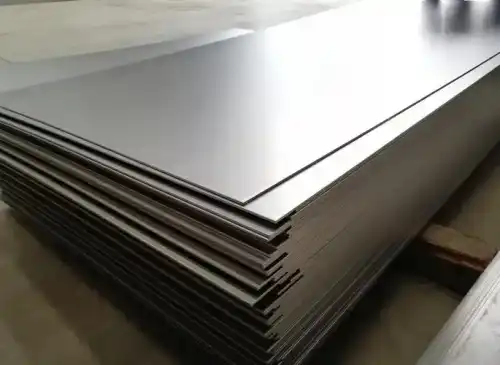
Understanding Ti-6AL-4V ELI Titanium Sheets: Properties and Composition
The Ti-6AL-4V ELI review describes a better version of the standard Ti-6AL-4V alloy, specifically made to meet the strict requirements of medical implants and cryogenic aviation applications. The "ELI" designation—Extra Low Interstitial—refers to the purposely diminished levels of oxygen, nitrogen, and carbon in the alloy's chemical composition.
Chemical Composition and Its Significance
The chemical composition of Ti-6AL-4V ELI titanium sheets takes after thorough measures such as ASTM F136 for therapeutic applications and AMS 4907 for aviation utilisation. The aluminium content ranges between 5.5 and 6.75%, whereas vanadium sits at 3.5-4.5%. The basic refinement lies in the interstitial components: oxygen is capped at a mere 0.13% (most extreme compared to 0.20% in standard review), phosphorus is constrained to 0.25%, carbon to 0.08%, and nitrogen to 0.05%. These limitations avoid micro-void arrangement beneath the push and essentially upgrade the material's break strength, especially at cryogenic temperatures down to -253°C, where standard titanium becomes fragile.
Mechanical Performance Characteristics
The mechanical properties of titanium 6Al-4V ELI sheets strike an optimal balance between strength and ductility. Typical specifications include a minimum tensile strength of 860 MPa (125 ksi), yield strength of 795 MPa (115 ksi), and elongation exceeding 10%. The alloy maintains a density of approximately 4.43 g/cm³—roughly 60% that of steel—which translates to substantial weight savings without compromising structural integrity. The modulus of elasticity sits at 113.8 GPa, closely matching human bone stiffness, which proves critical in medical implant applications by reducing stress shielding effects that can lead to bone resorption.
Heat Treatment and Surface Properties
Warm treatment significantly impacts the execution of titanium sheets. The beta transus temperature for Ti-6Al-4V ELI occurs at roughly 975°C, and controlled warm treatment cycles can be custom-made to optimise particular properties. Strengthening medications soothe inside stresses and make strides in ductility, whereas annealing, treating, and ageing can upgrade quality. The alloy normally forms a steady, persistent oxide film upon exposure to oxygen, giving uncommon corrosion resistance in watery salt situations, oxidising acids, and chloride solutions—environments where numerous stainless steels would fail.
Key Differences Between Ti-6AL-4V and Ti-6AL-4V ELI Titanium Sheets
Understanding the distinctions between standard Ti-6AL-4V and the ELI variant is crucial for making appropriate material selections. While both alloys share the same basic aluminium and vanadium content, the reduced interstitial elements in the ELI grade create significant performance differences that justify its use in premium applications.
Chemical and Mechanical Distinctions
The essential chemical distinction centres on oxygen contents. Standard Review 5 titanium grants oxygen levels up to 0.20%, while the ELI variation limits it to 0.13% at most. So also, press oxygen drops from 0.40% to 0.25%. These apparently small reductions have a considerable impact on fabric behaviour. The lower oxygen content straightforwardly relates to improved break durability (K1c), improved ductility, and prevalent weariness break proliferation resistance. Whereas standard Ti-6AL-4V titanium sheets might display marginally higher absolute quality values, they give up durability and formability—trade-offs that prove unsatisfactory in biomedical and cryogenic applications.
Regulatory and Certification Requirements
Biomedical applications require ASTM F136 compliance or the common mechanical standard ASTM B265. The F136 determination forces tighter controls on microstructure, imperfection limits, and mechanical testing conventions vital for FDA and MDR administrative endorsement. The ELI grade's non-magnetic properties make it MRI-compatible, permitting patients with inserts to securely experience attractive reverberation imaging, although a few image artefacts may happen close to the equipment. This regulatory pathway includes complexity but guarantees the fabric meets the thorough security measures requested in healthcare applications.
Cost and Supply Chain Considerations
The extra refining forms required to accomplish additional MOO interstitial levels increase generation costs for Ti-6AL-4V ELI sheets compared to standard review fabric. Worldwide procurement groups must adjust these added premiums against execution benefits. Supply chain variables such as lead times, least arranged amounts, and fabric accessibility shift between grades and providers. Set up producers with comprehensive certification portfolios and demonstrated track records in serving therapeutic and aviation segments; they command premium estimates but offer decreased risk and guaranteed quality.
Applications and Industry Use Cases of Ti-6AL-4V ELI Titanium Sheets
The unique properties of titanium 6Al-4V ELI sheets have set them up as the fabric of choice in different high-stakes businesses where disappointment is not an option. Real-world applications show how the alloy's remarkable characteristics solve specific operational challenges that other materials cannot satisfactorily address.
Medical Implants and Biomedical Devices
The biomedical division speaks to the essential application space for ASTM F136-certified titanium sheets. Orthopaedic implants, including hip and knee replacements, depend on the material's biocompatibility to avoid rejection. The modulus of flexibility minimises stretch shielding—a phenomenon where excessively hardened implants avoid normal bone stacking, driving to bone thickness loss. Dental implants benefit from the material's capacity to osseointegrate, shaping coordinate auxiliary associations with bone tissue. Spinal obsession frameworks, craniofacial plates, and pacemaker casings all use the combination of quality, erosion resistance, and MRI compatibility. Surgical rebar fabricated from ELI titanium sheets withstand high-frequency ultrasonic vibrations without breaking, whereas they remain secure for MRI-guided strategies.
Aerospace and Cryogenic Applications
The aviation industry values Ti-6AL-4V ELI for fluid drive frameworks dealing with cryogenic liquids. Fluid hydrogen and oxygen capacity tank requests materials that keep up ductility and harm resilience at temperatures where standard combinations become perilously brittle. Aerospace components, motor parts, and forming equipment benefit from the remarkable strength-to-weight ratio and weakness resistance. Defence frameworks join the amalgam in applications where unwavering quality beneath extraordinary conditions is paramount. The material's proven track record with aviation producers confirms its effectiveness in mission-critical situations.
Chemical Processing and Marine Environments
Chemical processing equipment in corrosive environments benefits from the excellent corrosion resistance of titanium alloy sheets. The stable oxide film protects against atmospheric corrosion and is very resistant to aqueous salt solutions, making it ideal for marine components. High-performance automotive applications are beginning to adopt titanium sheets for components where weight reduction directly translates to efficiency gains. These speciality industrial applications demonstrate the versatility of the material beyond its traditional strongholds in the medical and aerospace sectors.
How to Choose and Procure Ti-6AL-4V ELI Titanium Sheets for Your Business?
Successful procurement of titanium sheets requires understanding both technical requirements and practical business considerations. Making informed decisions involves comparing material options, evaluating suppliers, and structuring purchases to optimise the total cost of ownership.
Material Selection and Comparison
Before committing to Ti-6AL-4V ELI, consider alternative materials based on specific application requirements. Commercially pure titanium grades offer superior corrosion resistance but lack the strength of alloyed materials. Ti-6AL-7Nb provides an alternative alpha-beta alloy with vanadium replaced by niobium, sometimes preferred in medical applications due to theoretical concerns about vanadium release. Stainless steel grades like 316L cost significantly less but carry higher density and inferior corrosion resistance in chloride environments. Aluminium alloys deliver weight savings but cannot match titanium's strength or biocompatibility. The decision matrix should weigh mechanical properties, regulatory requirements, corrosion environment, operating temperature range, and budget constraints.
Supplier Evaluation Criteria
Identifying reliable titanium sheet suppliers demands thorough due diligence. Manufacturer certifications provide the foundation—look for ASTM F136, ISO 13485:2016 for medical device manufacturing, and AS9100D for aerospace quality systems. Stock availability and delivery timelines directly impact project schedules, so suppliers with comprehensive inventories across multiple grades and specifications have significant advantages. Full traceability with mill test reports containing heat numbers, chemical composition data, and mechanical test results should be standard, not optional. Third-party inspection agency approvals from organisations like DNV, BV, SGS, and TUV demonstrate commitment to quality assurance. Experience supplying major energy companies, EPC contractors, and multinational corporations indicates proven capability in handling large-volume orders with consistent quality.
Customisation Options and Ordering Procedures
Modern procurement requires flexibility beyond standard stock sizes. Precision tolerances of ±0.02 mm thickness accuracy meet tight manufacturing specifications. Multiple surface finishes—polished, satin, or bead-blasted with Ra 0.4 μm surface roughness—eliminate additional processing steps. Water-jet cutting services allow suppliers to deliver near-net-shape components, reducing material waste and machining time. When structuring orders, clarify minimum order quantities, payment terms, and logistics arrangements. International shipments require proper documentation for customs clearance. Establishing framework agreements with preferred suppliers streamlines repeat purchases and often secures preferential pricing for committed volumes.
Machining and Handling Best Practices for Ti-6AL-4V ELI Titanium Sheets
The unique properties that make titanium alloys valuable also present machining challenges. Understanding proper techniques, tooling, and handling procedures ensures efficient fabrication while maintaining material integrity and meeting quality standards.
Common Machining Challenges and Solutions
Titanium's low thermal conductivity causes heat to concentrate at the cutting interface rather than dispersing through the workpiece or chip. This heat buildup accelerates tool wear and can alter material properties in the machined zone. The material's chemical reactivity at elevated temperatures makes it prone to galling and work hardening. Recommended practices include using sharp, carbide, or polycrystalline diamond (PCD) cutting tools with positive rake angles. Reduced cutting speeds compared to steel—typically 30-50% lower—help manage heat generation. High feed rates maintain chip thickness and prevent work hardening. Climb milling proves superior to conventional milling in minimising work hardening effects.
Lubrication and Cooling Strategies
Effective cooling is non-negotiable when machining titanium sheets. Flood coolant application at high flow rates carries heat away from the cutting zone and prevents chip welding to tools. Water-soluble synthetic coolants or chlorinated cutting oils work well, though environmental regulations increasingly favour non-chlorinated alternatives. Minimum quantity lubrication (MQL) systems provide targeted coolant delivery for certain operations. Through-tool coolant delivery directly at the cutting edge maximises effectiveness in drilling operations. Avoiding dry machining is critical—even brief periods without coolant can damage tools and compromise surface finish.
Post-Machining Protocols and Quality Assurance
After machining, components require thorough cleaning to remove cutting fluids and debris. Heat treatments for stress relief at controlled temperatures can eliminate residual stresses from cold working without significantly affecting mechanical properties. Surface inspection using visual examination, dimensional measurement, and non-destructive testing methods verifies conformance to specifications. Ultrasonic testing detects internal defects in critical applications. Microstructure analysis shows that the alpha case layer formed during heat treatment has been properly removed, because this brittle surface layer makes machining difficult and can cause cracks during use. Proper documentation of all processing steps maintains traceability throughout the supply chain.
Why Choose LINHUI TITANIUM's Ti-6AL-4V ELI Titanium Sheets?
Material quality directly impacts project success, making supplier selection one of the most consequential decisions in procurement. We have spent over two decades building the capabilities, certifications, and relationships that make us the preferred titanium sheet supplier for the world's most demanding industries.
Our Ti-6AL-4V ELI titanium sheets meet ASTM F136 certification standards, ensuring implant-grade quality suitable for the most critical biomedical applications. The extra-low interstitial designation guarantees enhanced ductility and fracture toughness through stringent control of oxygen, nitrogen, and carbon content. Every shipment includes comprehensive documentation at no additional cost: ASTM F136 and EN ISO 5832-3 certifications, mill test reports with complete chemical and mechanical data, microstructure analysis reports, and ultrasonic test reports for applications where internal soundness is paramount.
Our manufacturing operations hold ISO 13485:2016 certification for medical device production and AS9100D for aerospace quality management. These system certifications demonstrate organisational commitment to quality, not just product-level compliance. The company maintains approvals from major classification societies, including DNV, ABS, CCS, GL, BV, BSI, and Lloyd's Register, along with PED 2014/68/EU certification for pressure equipment. Third-party inspection agencies such as SGS, Moody's, TUV, and RINA regularly audit our facilities and products.
Technical capabilities extend beyond standard offerings. We provide multiple surface finishes—polished, satin, and bead-blasted options with Ra 0.4 μm surface roughness available upon request. Precision tolerances of ±0.02 mm thickness accuracy meet the most demanding specifications. Full traceability through mill test reports with heat numbers ensures complete supply chain transparency. Custom cutting services deliver components in near-net-shape configurations, reducing your fabrication time and material waste.
Our integrated approach functions as a comprehensive titanium products supermarket, maintaining extensive inventories across multiple grades and specifications. This breadth enables us to fulfil complex, multi-material orders from a single source, simplifying procurement and logistics. Having supplied major international projects for companies including CEFC, PTT, PDVSA, PETROECUADOR, PPL, KOC, and PEMEX, we understand the operational demands of large-scale industrial procurement. Our products reach more than 60 countries across North America, South America, the Gulf region, Africa, the CIS, and Southeast Asia, supported by logistics networks that ensure reliable delivery regardless of destination.
Conclusion
Titanium sheets, particularly the Ti-6AL-4V ELI Titanium Sheet, represent a critical enabling material for industries where performance, safety, and reliability are non-negotiable. The Extra Low Interstitial designation delivers the enhanced ductility, fracture toughness, and biocompatibility required for medical implants, cryogenic aerospace applications, and corrosive chemical processing environments. Knowing the chemical composition, mechanical properties, regulatory requirements, and machining considerations helps procurement teams make informed decisions that improve both technical performance and total cost of ownership. Selecting suppliers with comprehensive certifications, proven track records, and integrated capabilities ensures reliable access to quality materials backed by full traceability and technical support.
FAQ
What distinguishes Grade 23 ELI from standard Grade 5 titanium sheets?
The fundamental difference lies in interstitial element content. Grade 23 titanium sheets contain a maximum of 0.13% oxygen versus 0.20% in Grade 5 and a maximum of 0.25% iron versus 0.40%. These reductions grant superior ductility and fracture toughness, making ELI suitable for medical implants and cryogenic applications where standard-grade material would be too brittle.
Can Ti-6AL-4V ELI be welded without compromising its properties?
Yes, but welding requires strict environmental controls. Procedures must occur in inert gas atmospheres using argon or helium shielding, or within vacuum chambers. Oxygen uptake during welding embrittles the weld zone and negates the ELI properties. Proper welding procedures maintain material integrity and preserve certifications.
Why does biomedical procurement require ASTM F136 instead of ASTM B265?
ASTM F136 specifically addresses surgical implant materials with tighter controls on microstructure, defect limits, and mechanical testing compared to the general industrial standard ASTM B265. Medical devices must meet F136 or ISO 5832-3 specifications to satisfy FDA and MDR regulatory requirements, ensuring patient safety through enhanced material purity and consistency.
Partner with LINHUI TITANIUM for Your Ti-6AL-4V ELI Sheet Requirements
Quality materials drive project success, and choosing the right Ti-6AL-4V ELI titanium sheet manufacturer determines whether you achieve optimal outcomes. LINHUI TITANIUM brings over 20 years of specialised expertise serving the oil, gas, chemical, aerospace, and biomedical sectors with certified, traceable titanium products. Our comprehensive certifications—including ASTM F136, ISO 13485:2016, and AS9100D—combined with approvals from major classification societies and third-party inspection agencies, provide the assurance your critical applications demand.
Located in Xi'an, China, at the nexus of global trade routes, we have delivered hundreds of thousands of tonnes to customers in more than 60 countries. Our titanium products supermarket approach maintains extensive inventories across multiple grades and specifications, enabling rapid fulfilment of complex orders. Whether you need implant-grade sheets for medical devices, cryogenic-rated material for aerospace applications, or corrosion-resistant sheets for chemical processing equipment, our team provides personalised technical consultation, competitive pricing, and reliable logistics solutions.
Contact our sales team at linhui@lhtitanium.com to discuss your specific requirements. We offer sample provision; customisation options, including precision cutting and surface finishing; and complete mill test documentation with every shipment. Experience the difference that working with a globally trusted Ti-6AL-4V ELI titanium sheet supplier makes in your procurement efficiency, product quality, and project outcomes.
References
1. ASTM International. (2020). "Standard Specification for Wrought Titanium-6Aluminum-4Vanadium ELI (Extra Low Interstitial) Alloy for Surgical Implant Applications (UNS R56401). " ASTM F136-13.
2. Boyer, R., Welsch, G., & Collings, E.W. (2019). "Materials Properties Handbook: Titanium Alloys." ASM International, Materials Park, Ohio.
3. Donachie, M.J. (2018). "Titanium: A Technical Guide, 2nd Edition." ASM International addresses the composition, properties, and industrial applications of titanium alloys.
4. Lutjering, G. & Williams, J.C. (2021). "Engineering Materials and Processes: Titanium (Second Edition). "Springer-Verlag Berlin, covering physical metallurgy and application engineering.
5. International Organisation for Standardisation. (2017). "Implants for Surgery — Metallic Materials — Part 3: Wrought Titanium 6-Aluminium 4-Vanadium Alloy." ISO 5832-3:2016.
6. SAE International. (2019). "Titanium Alloy Sheet, Strip, and Plate 6Al-4V, Annealed, Aerospace Material Specification" (AMS 4907) addresses aerospace-grade titanium sheet specifications.