
When sourcing materials for basic therapeutic inserts or aviation components, procurement experts around the world turn to ASTM F136 titanium—the all-inclusive recognised benchmark for surgical-grade titanium amalgams. Known actually as Ti-6Al-4V ELI (Additional Moo Interstitial), this implant-grade fabric speaks to decades of metallurgical refinement pointed at killing disappointment dangers in the most demanding applications. Unlike ordinary mechanical titanium grades, ASTM F136 titanium has strict composition controls and microstructural management to provide unmatched biocompatibility, break strength, and erosion resistance. From orthopaedic joint replacements to aeroplane engine parts, this mix looks at the main problems that keep engineers and procurement managers awake at night: early material failure, design flaws, and supply chain quality issues.
Understanding ASTM F136 Titanium: Composition, Properties & Manufacturing
Defining the Standard: What Makes ASTM F136 Unique
The ASTM F136 titanium standard sets strict rules for wrought titanium-aluminium-vanadium alloy that is meant to be used in medical implants. This standard requires the "Extra Low Interstitial" designation. This means that manufacturers must limit the amount of oxygen to 0.13% (compared to 0.20% in normal Grade 5 titanium) and the amount of iron to 0.25%. These seemingly small differences make a significant difference in how well something works. Lower interstitial elements directly lead to better elasticity and damage tolerance, which are critical for a hip stem that has to handle millions of load cycles inside the body without breaking.
Chemical Composition and Microstructural Excellence
The alloy has an exact balance of about 6% aluminium and 4% vanadium, which makes a two-phase alpha-beta microstructure. This collection of microstructures gives the best balance of strength and flexibility. During production, controlled heat treatment methods keep these phases stable. This makes sure that every batch has the same mechanical performance. Testing labs outside of production areas make sure that each heat lot has the right mix of elements before the material goes into production areas. This gives quality managers the tracking they need.
Mechanical Performance Parameters
It has a least malleable quality of 860 MPa, a least ductile quality of 795 MPa, and a least extension of 10%. This stretching property sets it apart from more fragile choices, and it's fundamental in circumstances where the fabric needs to marginally twist beneath push instep of snapping. The modulus of flexibility of the metal is exceptionally near to the thickness of human bone. This implies that it doesn't have the stress-shielding impacts that can cause bone to break down around orthopaedic inserts. Engineers like that this fabric doesn't alter attractive areas and doesn't show up on X-rays, so it can be utilised with MRIs and for great imaging after surgery.
Manufacturing Process and Quality Assurance
Production begins with vacuum arc remelting, which removes impurities and ensures homogeneous chemical distribution. Subsequent hot working through forging or rolling refines the grain structure, while precise heat treatments establish the final microstructure. Manufacturers subject finished products to 100% ultrasonic testing to detect internal discontinuities, followed by chemical analysis and mechanical testing. Certification packages include mill test reports with full traceability to specific heat and lot numbers, addressing regulatory requirements across global markets. Compliance with ISO 13485 medical device standards and FDA approval processes ensures material reliability for the most critical applications.
ASTM F136 Titanium vs Alternatives: Helping You Make Informed Material Choices
Comparison with ASTM F67 Commercial Pure Titanium
While ASTM F136 titanium, commercially pure titanium, offers excellent biocompatibility, it lacks the strength required for load-bearing implants. The alloyed composition of Ti-6Al-4V ELI provides approximately three times the tensile strength of pure titanium grades, making it suitable for hip stems and spinal rods where mechanical demands exceed what pure titanium can deliver. Procurement teams handling high-stress applications consistently choose the alloyed version despite the price premium because material failure in service carries unacceptable consequences.
Standard Ti-6Al-4V (Grade 5) versus ELI Grade
Standard industrial-grade Ti-6Al-4V works exceptionally well for chemical processing and aircraft, but because it has a lot of interstitial content, it's not as good for permanent implants. The ELI version has less oxygen and iron, which makes it more resistant to fatigue crack propagation and notch sensitivity. When parts are loaded and unloaded over and over in acidic environments, like bone screws that are repeatedly stressed by body fluids, the extra low interstitial specification stops failure modes that can happen with standard Grade 5 parts.
Stainless Steel and Cobalt Chrome Alternatives
Surgical stainless steel costs less and machines effortlessly, but its weight and potential for nickel sensitivity make it an impediment. Cobalt chrome amalgams offer remarkable wear resistance for articulating surfaces; however, their thickness and modulus interfere with bone, making them less perfect for implantable equipment. The titanium combination strikes an ideal balance: roughly 40% lighter than steel with identical quality and a modulus that advances common bone stacking designs. Long-term embed ponders illustrate prevalent osseointegration with titanium surfaces compared to other metallic biomaterials.
Key Benefits and Applications of ASTM F136 Titanium
Unmatched Biocompatibility for Medical Devices
The most compelling advantage of this surgical-grade amalgam lies in its organic execution. The steady oxide layer that shapes itself on titanium surfaces stands up to particle discharge in real liquids, anticipating the provocative reactions that lead to stringy embodiment. Orthopaedic specialists around the world believe this fabric is for lasting inserts since it demonstrates osseointegration—the capacity to bond directly with living bone tissue without a mediating sinewy layer. This property demonstrates the fundamentals for dental inserts, spinal combination cages, and joint substitution components, where long-term natural soundness determines understanding results.
Exceptional Strength-to-Weight Performance
Design engineers value the alloy's high specific strength, which allows thinner, lighter components without sacrificing structural integrity. Aircraft manufacturers utilise Ti-6Al-4V ELI for critical fasteners and engine components where weight savings translate directly into fuel efficiency and payload capacity. The material performs reliably across temperature ranges from cryogenic conditions to several hundred degrees Celsius, maintaining mechanical properties where aluminium alloys would fail, and steel would impose unacceptable weight penalties.
Corrosion Resistance Across Demanding Environments
ASTM F136 titanium is widely used in chemical processing facilities, offshore marine platforms, and desalination plants, all of which benefit from titanium's remarkable resistance to chloride stress corrosion cracking. The protective oxide layer remains stable in seawater, acidic solutions, and high-chloride environments that rapidly degrade stainless steels. This corrosion immunity translates into extended service life and reduced maintenance expenses, particularly in applications where component replacement requires expensive downtime or surgical intervention.
Critical Industrial Applications
Beyond medical uses, the aerospace sector relies on this alloy for landing gear components, hydraulic system parts, and structural elements where failure carries catastrophic risks. Defence contractors specify implant-grade titanium for submarine components and armour applications. Chemical plants use it for reactor vessels and piping systems handling corrosive media. Marine hardware manufacturers produce propeller shafts and fasteners from this material, knowing it will outlast conventional alloys in harsh saltwater conditions.
Navigating the ASTM F136 Titanium Market: Procurement and Pricing Insights
Supplier Evaluation and Certification Requirements
Sourcing genuine implant-grade fabric requires careful verification by the provider. Legitimate producers keep up current certifications, including ISO 13485 for therapeutic gadgets, PED compliance for weight gear, and endorsements from classification societies such as DNV, ABS, and Lloyd's Enrol. Acquirement experts ought to confirm that providers provide total fabric traceability with test reports certified by independent third-party review offices. The nearness of FDA 510(k) clearances and CE stamping demonstrates that providers have set up quality administration frameworks capable of supporting directed businesses.
Understanding Price Structures and Market Dynamics
Estimating for surgical-grade titanium regularly ranges from premium levels over standard mechanical grades due to the extra handling controls and certification necessities. Crude fabric costs fluctuate based on titanium wipe accessibility and worldwide requests from the aviation and restorative sectors. Buyers ought to anticipate contributing more per kilogram compared to routine combinations, but the material's life span and execution legitimize the consumption in basic applications. Volume commitments and setting up provider connections regularly result in more favourable estimating structures, making association approaches more temperate than spot purchasing.
Product Forms and Lead Times
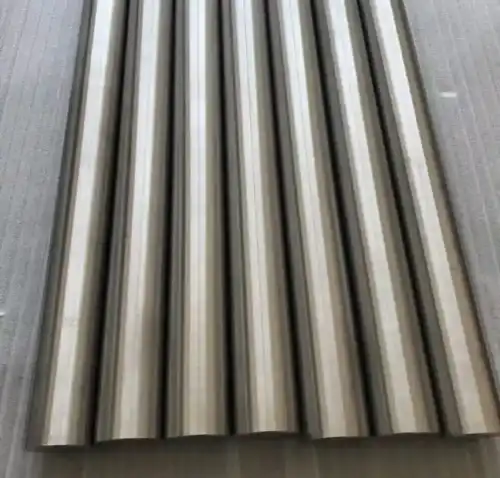
Manufacturers offer this alloy in multiple configurations to suit various applications. Bar stock ranges from 0.1875 inches to 4 inches in diameter, with round, square, and hexagonal profiles available. Plate products span thicknesses from 0.1875 inches to 4 inches, accommodating machining requirements for custom components. Sheet and strip products serve medical device manufacturers producing thin-walled implants or precision-stamped parts. Wire forms down to 0.1 millimetre diameter support specialised applications, including sutures and guide wires. Standard lead times vary from several weeks for common sizes to several months for specialised dimensions or custom heat treatments.
Global Supply Chain Considerations
ASTM F136 titanium is widely supplied by major titanium makers working in North America, Europe, and Asia, each advertising unmistakable preferences. Chinese producers like LINHUI TITANIUM have contributed heavily to quality systems and international certifications, offering competitive pricing alongside comprehensive product portfolios. American and European suppliers often emphasise shorter lead times for customers in the Western Hemisphere. Effective procurement strategies include qualifying multiple suppliers across geographic regions to mitigate supply chain disruptions and ensure trade continuity during material shortages or geopolitical vulnerabilities.
How to Choose and Partner with the Best ASTM F136 Titanium Supplier?
Essential Qualification Criteria
The right supplier partnership begins with thorough due diligence. Verify that potential partners maintain current ISO 9001 quality management certification as a baseline, with ISO 13485 being mandatory for medical device applications. Request evidence of successful audits by major customers or regulatory bodies. Check the supplier's testing capabilities: in-house laboratories with spectrometry, tensile testing, and ultrasonic inspection equipment show a strong commitment to quality. Ask for customer references from similar industries and contact them to understand real-world experiences with delivery performance and technical support responsiveness.
Value-Added Services That Distinguish Top Suppliers
Leading titanium suppliers extend beyond simple material provision to offer genuine partnership advantages. Technical support teams should assist with material selection, guide heat treatment specifications, and offer design consultation for new applications. Customisation capabilities, including precision cutting, surface treatments, and certification to customer-specific requirements, reduce your downstream processing costs. Efficient logistics management with flexible delivery schedules and consignment inventory programmes helps optimise your working capital. Suppliers who invest in understanding your application requirements become strategic partners rather than transactional vendors.
Building Long-Term Supply Relationships
Sustainable procurement success demands moving beyond price-focused negotiations toward collaborative partnerships. Establish clear communication channels with supplier technical and commercial teams to address issues proactively before they impact production schedules. Implement joint quality reviews to monitor performance trends and identify improvement opportunities. Consider multi-year agreements with volume commitments that incentivise supplier investment in capacity and capability enhancements. The most successful buyer-supplier relationships involve mutual transparency about business forecasts, technical challenges, and market dynamics.
Risk Mitigation Strategies
Diversifying your supply base across multiple qualified sources protects against single-source dependencies while maintaining competition that drives continuous improvement. Maintain safety stock levels appropriate to your lead time exposure and demand variability. Establish protocols for incoming material inspection that verify critical properties before production use. Develop contingency plans identifying alternative suppliers or substitute materials for potential supply disruptions. These risk management practices ensure business continuity even when unexpected events impact your primary supply chains.
Conclusion
ASTM F136 titanium represents the culmination of metallurgical science applied to the most demanding surgical and engineering challenges. Its unique combination of biocompatibility, mechanical strength, and corrosion resistance makes it indispensable for applications where material failure carries unacceptable consequences. Successful procurement requires understanding the technical specifications that distinguish implant-grade material from industrial alternatives, carefully evaluating supplier qualifications, and building partnerships with manufacturers who demonstrate consistent quality and reliable delivery. As global demand for medical implants and high-performance components continues growing, securing relationships with certified suppliers becomes increasingly critical to business success.
FAQ
What distinguishes ASTM F136 from standard titanium alloys?
The "Extra Low Interstitial" specification sets this grade apart through tightly controlled oxygen, nitrogen, and iron content that enhances ductility and fatigue resistance beyond standard Ti-6Al-4V. This composition control prevents brittle fracture under cyclic loads and improves biological compatibility for implantable devices.
How does pricing compare to alternative implant materials?
While ASTM F136 titanium commands premium pricing over stainless steel, the material's superior biocompatibility, lighter weight, and corrosion resistance deliver better total cost of ownership in long-term implant applications. Reduced revision surgery rates and extended component lifespans offset initial material costs.
What certifications should I verify when sourcing surgical-grade titanium?
Confirm suppliers maintain ISO 13485 medical device certification, FDA approvals for relevant applications, and third-party inspection agency approvals. Request mill test certificates with full traceability and chemical composition verification for every batch purchased.
Partner with LINHUI TITANIUM for Certified Implant-Grade Solutions
LINHUI TITANIUM stands ready to support your procurement requirements with comprehensive ASTM F136 titanium offerings backed by over two decades of manufacturing expertise. Our Xi'an facility maintains complete certifications, including ISO 13485, PED compliance, and approvals from DNV, ABS, Lloyd's, and additional classification societies serving global industries. We supply bar stock from 2mm to 200mm in diameter, plate from 0.5mm to 50mm in thickness, and wire down to 0.1mm—all with full mill test documentation and traceability. As an established titanium supplier serving major energy companies, EPC contractors, and industrial manufacturers across 60+ countries, we deliver the quality assurance and technical support your critical applications demand. Contact our team at linhui@lhtitanium.com to discuss your specific requirements and receive detailed quotations on certified implant-grade titanium materials.
References
1. American Society for Testing and Materials. (2022). Standard Specification for Wrought Titanium-6Aluminum-4Vanadium ELI Alloy for Surgical Implant Applications (UNS R56401), ASTM F136-22.
2. Rack, H.J. and Qazi, J.I. (2006). Titanium Alloys for Biomedical Applications, Materials Science and Engineering C, Volume 26, Issue 8.
3. Niinomi, M. (2008). Mechanical Biocompatibilities of Titanium Alloys for Biomedical Applications, Journal of the Mechanical Behaviour of Biomedical Materials, Volume 1, Issue 1.
4. Geetha, M., Singh, A.K., Asokamani, R., and Gogia, A.K. (2009). Ti-Based Biomaterials: The Ultimate Choice for Orthopaedic Implants, Progress in Materials Science, Volume 54, Issue 3.
5. Long, M. and Rack, H.J. (1998). Titanium Alloys in Total Joint Replacement: A Materials Science Perspective, Biomaterials, Volume 19, Issue 18.
6. Boyer, R., Welsch, G., and Collings, E.W. (1994). Materials Properties Handbook: Titanium Alloys, ASM International, Materials Park, Ohio.