
It's important to have dished end caps on pressure vessels, storage tanks, and pipe systems that are used in tough industrial settings. These carefully made heads, which come in ellipsoidal, torispherical, and hemispherical shapes, spread stress better than flat caps. That's why they're so important for keeping buildings strong in places with a lot of pressure and Dished End Caps corrosion. These solutions are made to make sure they are safe and work well over time. They are used in many areas, from making drugs to processing petrochemicals. When made from high-quality titanium metals, dished end caps protect against rust the best and are the strongest for their weight, meeting the toughest needs in applications all over the world.
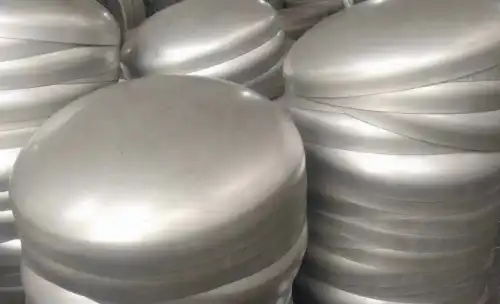
Understanding Different Types of Dish End Caps
To choose the right vessel seals, you need to know the basic differences between the different head shapes and how well they work in different industries. Standards for modern production and advances in material science have made these important parts more powerful.
Classification of Dish End Geometries
Pressure tank seals come in several different geometric forms. Each shape works best for a certain set of tasks. Usually, ellipsoidal heads are made with a 2:1 ratio. They have a scientifically defined shape that makes them great at spreading pressure while cutting down on the thickness of the material that needs to be used. For low-pressure situations where vessel height is a problem, torus-shaped designs use a spherical cap with a smaller knuckle radius. This is a cheap choice. While hemispherical heads can handle the most pressure, they are harder to shape and cost more to buy the materials for. These flat end caps with reinforced edges are used to control low pressure when space is more important than pressure. If buying teams know about these geometric differences, they can better match vessel closure designs to practical pressure ratings, the best way to use space inside, and the cost of production.
Material Selection and International Standards
Materials used in industry need to be strong enough to stand up to the weather and not get damaged by it. Because they are easy to clean and keep, 316L and other types of stainless steel are often used in pharmacies and food processing plants. There are cheap ways to store fuels that don't rust in different types of carbon steel. It is very hard for titanium metals to rust in acidic environments, seawater, and chemical processes that happen at high temperatures. Safety and quality are always maintained by following international manufacturing rules. ASME Section VIII Division 1 tells people in North America how to build pressure vessels. It says how to figure out the diameter, what the forming limits are, and how the vessels must be inspected. EU businesses follow the rules set out in EN 13445 and PED 2014/68/EU. If you get ISO 9001:2015 approval, it means that your method for quality control is very strict. The way LINHUI TITANIUM makes things is in line with these international standards, and we have proof from DNV, ABS, CCS, BV, and other classification groups. Our Xi'an plant keeps its PED and TUV Nord AD2000-W0 certifications up to date. This makes sure that all of our products meet the strict requirements of energy projects around the world.
Manufacturing Methods and Quality Implications
How something is made has a lot to do with how well it works and how much it costs. When you use methods like hot spinning and cold pressing to form something without any weld cracks, you get rid of places where stress can build up or rust can start to form. This is the best way to do important service work at nuclear, aeroplane, and offshore sites. When you weld plate pieces together, you can make heads that are wider than the material's width limits, but you have to use X-rays to make sure the weld is strong. LINHUI TITANIUM's precision forming uses advanced heat treatment methods that bring back the grain structure after cold working. This keeps the material's flexibility and stops it from rusting. All of the parts are checked for flaws using ultrasonic waves, laser callipers to check the width, and metallography to make sure the structure is solid.
Key Applications and Benefits of Dish End Caps
Industries all over the world count on well-designed tank closures to keep processes safe and operations running smoothly. Curved heads solve important engineering problems because of their unique geometric benefits.
Petrochemical and Refining Operations
In petroleum plants, high-pressure fractionation columns and reactor vessels work in harsh environments that require strong structures. When internal pressures are higher than 100 bar and temperatures hit 450°C, ellipsoidal Dished End Caps are the best way to distribute stress. The mathematical curve changes hoop stress into meridional stress patterns that need 30–40% less material than flat caps with the same pressure rating. When working with sour gas that contains hydrogen sulfide, you need materials that don't crack when stressed by sulfur. In these acidic environments, where carbon steel parts would break in months, our titanium alloy end caps made from Grade 2 and Grade 5 materials keep the structure strong. Big energy companies like CEFC, PTT, and PDO have chosen our products for use in vital pressure vessels at all of their sites around the world.
Pharmaceutical and Food Processing Equipment
Pharmaceutical fermenters and food-grade storage tanks must have smooth inner surfaces that keep bacteria from growing and make Clean-In-Place practices easier to follow. Electropolished 316L stainless steel torispherical heads meet FDA 21 CFR standards and European Regulation 1935/2004 for materials that come into contact with food. Heads that are properly made have a continuous curve that gets rid of dead zones where product waste could build up during processing cycles. Hygienic vessel design standards, such as the ASME BPE and 3-A Sanitary Standards, talk about things like the required surface finish, the shape of the weld joints, and the draining angles. Titanium Dished End Caps are better in acidic food preparation areas, where stainless steel Dished End Caps' passivation layers may wear away over time. This is especially true when making citric acid and vitamin C.
Cryogenic and LNG Storage Applications
Materials that stay flexible at cryogenic temperatures up to -196°C are needed for liquefied natural gas ports and commercial gas production facilities. Austenitic stainless steels and special nickel alloys keep their impact hardness in these harsh conditions, which stops brittle fractures that could lead to catastrophic failures of containment. During cool-down processes, the curved shape of ellipsoidal and hemispherical heads better spreads thermal contraction forces than flat closures. Charpy V-notch impact testing at service temperatures is part of our manufacturing process to make sure the materials work well. Since we send goods to LNG plants in North America, Southeast Asia, and the Gulf, we know how important it is to be able to track materials and have third parties check them according to the project's rules.
Marine and Offshore Industries
Equipment on ships and offshore platforms is exposed to salty seawater, which quickly corrodes most materials. Titanium is the best material for desalination plants, ballast tanks, and tools used in deep-sea processing because it is very resistant to pitting and crevice rust caused by salt. Our goods are safe for use on ships because they have been approved by Lloyd's Register, DNV, ABS, and Bureau Veritas, among others. Titanium end caps on heat exchangers used in condensers have a service life of more than 25 years without any material breakdown, while copper-nickel metals only last 5 to 7 years in the same conditions. Because it lasts longer, it saves a lot of money over its lifetime, even though it costs more to buy at first.
Choosing the Right Dish End Cap: Key Considerations
To choose the best components, you have to weigh a lot of technical factors against the practical needs and budget of the particular project. Performance, safety, and total cost of ownership must all be balanced by engineering teams.
Material Property Evaluation
For chemical processes and marine uses, corrosion protection is the most important factor in choosing a material. The stable oxide layer that forms naturally on open surfaces of titanium metals keeps them from rusting in seawater and most acidic environments. If this passive film gets broken, it heals itself on its own, which isn't possible with coated carbon steel options. When used in aircraft, cars, and portable tools, strength-to-weight ratios are very important. Titanium Grade 5 (Ti-6Al-4V) has the same tensile strength as high-strength steel but is 60% lighter. This means that smaller vessels can be made, which cuts down on the need for structural support and the cost of shipping them. Temperature resistance changes a lot between metal families. For example, commercial pure types keep their properties up to 300°C, while beta-stabilised alloys can be used in places up to 600°C.
Geometric Configuration and Pressure Ratings
As shown in ASME Section VIII calculations, the link between the shape of the head and the pressure it can hold is based on well-known mechanical concepts. Hemispherical heads can handle the most pressure for a given amount of material because the stress is spread out evenly across the surface of the sphere. The needed thickness is about half of what it is for cylinder-shaped shell parts with the same pressure ratings. For most pressure vessel uses, ellipsoidal heads are the industry standard. They balance pressure capacity with production difficulty and material economy. With the 2:1 elliptical ratio, the major axis is equal to the shell diameter, and the minor axis is equal to the half diameter. This makes the wall thickness needs only 15–20% higher than for hemispherical equivalents while lowering the total vessel height by a large amount. For modest pressure services below 15 bar, torispherical heads are a cost-effective way to make a head. The smaller knuckle radius causes stress to build up, which means the width needs to be increased. However, the shallower outline makes it easier to shape and wastes less material. Before finalising specs, procurement teams should ask for thorough stress analysis reports that show they follow all relevant design codes.
Manufacturing Quality and Inspection Requirements
Third-party inspection of Dished End Caps procedures is an important way to make sure that goods meet engineering standards. Radiographic testing shows that welded structures have internal cracks that could lead to service failures. Ultrasonic testing finds layers in the base material and confirms the minimum wall thickness after shaping steps that naturally make the material thin at the knuckle radius. Using coordinate measuring tools to check the dimensions shows that the crown radius, knuckle radius, and total height tolerances shown on the fabrication plans are correct. To make sure the joint penetrates properly during field assembly, the shape of the edge preparation must match the requirements of the welding process. At LINHUI TITANIUM, we keep a lot of quality records. These include Mill Test Reports that can be linked to heat numbers, Positive Material Identification results, mechanical test certificates, and records of measurement inspections. Our ISO 9001:2015-certified quality management system makes sure that all of our production batches always meet the needs of our customers. Modern testing tools, such as ultrasound flaw detectors, hardness testers, and metallographic cameras, make sure that every item meets strict international standards before it is sent out.
Procurement and Sourcing Guide for Dish End Caps
Strategic choices about where to get materials have a big effect on how long a project takes, how well it stays within budget, and how reliable it is in the long run. Professionals in procurement have to look at providers in more ways than just the price per unit.
Supplier Qualification and Certification
Manufacturers who are trustworthy show they can make good products by getting widely recognised licenses and industry approvals. Quality management systems based on ISO 9001 provide basic process controls, and ASME code stamps allow the production of pressure-retaining parts in places that need them. Under the Pressure Equipment Directive, equipment can be sold in the European Union if it has been certified as PED. Approvals from classification societies like DNV, ABS, Lloyd's Register, and Bureau Veritas show that products and production methods are safe for use in marine and coastal environments. These approvals need to be checked every year to make sure they are still in line with building standards. For projects that need to follow the rules set by EN 10204 Type 3.1 or 3.2, it is important to have material tracking systems that connect produced goods to certifications of raw materials. Since its start in 2000, LINHUI TITANIUM has teamed up with well-known companies around the world, such as PETRONAS, PEMEX, KOC, KNPC, and big EPC providers. We are dedicated to meeting the highest international standards, as shown by our extensive certification collection, which includes approvals from ASME, PED, multiple classification societies, and third-party inspections. Our track record in more than 60 countries gives procurement teams faith in our ability to produce key parts for world-class energy projects.
Order Planning and Lead Time Management
When working on big industrial projects, getting materials and keeping to building plans need to be carefully coordinated. Standard setups made of common materials usually ship within 4 to 6 weeks. Custom specs using rare metals or non-standard sizes may take 10 to 14 weeks for finding materials, shaping, heating, and inspecting. By batching production and buying materials more efficiently, volume agreements allow prices to be optimised. Early in the project plan, engineering teams should finish designs for vessels. This lets suppliers use multiple production runs of similar parts, which cuts the cost per unit by 15 to 25 per cent. Using buffer inventory helps you deal with unclear project timelines while staying away from expensive rush fees. Strategic buyers make framework deals with qualified suppliers that spell out pricing, wait times, and quality standards for the project they expect to need. As building plans solidify, they then send out specific purchase orders.
Customisation Capabilities and Technical Support
When working on complicated projects, it's common to need combinations that aren't in the store. Respondent providers help engineers come up with custom solutions that fit the needs of each project. This includes diameter and thickness pairs that aren't standard, special grades of material for harsh working conditions, and different ways to prepare the edges for certain welding processes. At LINHUI TITANIUM, our experienced technical team works with client engineering teams to make sure that head designs are the most efficient way to make things while still meeting performance standards. We offer customised OEM services, full help with choosing materials, and quick customer service during the whole buying and installation process. Our "Titanium Products Supermarket" feature gives you access to a wide range of grades and product types. This makes it easier to handle the supply chain for large, complicated projects.
Installation and Maintenance of Dish End Caps
Correct fitting methods and preventative maintenance plans extend the useful life of parts and keep them in line with safety rules. For putting together and inspecting pressure vessels, field workers need to know certain scientific details.
Installation Best Practices and Safety Protocols
Before putting together a vessel, the areas that Dished End Caps will be touching must be carefully checked to make sure they are the right size and condition. The link between the shell and the head is a vital pressure limit that needs to be carefully fitted together to get a good weld penetration and reduce residual stress. During the final welding process, alignment tools and temporary tack welds keep the parts in place. Qualified welding methods created according to ASME Section IX or similar standards list the temperatures that need to be heated up, the metals that need to be used as filler, and the heat treatment factors that need to be done after the welding is done. Procedure evaluation records show that the proposed welding methods make joints with the right mechanical properties and resistance to rust. Before pressure testing, a non-destructive check is done on the joint to make sure it is still solid after welding. Radiographic or ultrasonic testing finds breaks inside the material, while a liquid penetrant test finds signs that the material is breaking through the surface. Acceptance standards according to ASME Section VIII or project specs tell us if the indications need to be fixed or are within the acceptable range. Hydrostatic testing at 1.3 times the design pressure is the last way to make sure that the pressure limit is still solid. The test methods say how long to hold something, how to record the pressure, and how to look for leaks or permanent damage. When water pollution is a problem, pneumatic testing with nitrogen or compressed air can be used instead of hydraulic methods. However, extra safety measures need to be taken because of the dangers of stored energy.
Common Operational Challenges and Solutions
Leaks at the shell-to-head joints are usually caused by welds that don't go deep enough, stress corrosion cracks, or damage that happens during service. Before making fixes, the root reasons should be found right away through an investigation. Temporary leak sealing solutions help for a short time while the planned stop happens, but to fix things permanently, the bad welds must be ground out and re-welded according to approved methods. Corrosion harm looks different based on the location and type of material used. Over time, uniform thinning from acidic process fluids lowers the pressure capacity, so ultrasound scales are used to check the thickness on a regular basis. When chloride is present, localised pitting causes areas of high stress that could lead to breaking. It is common for people not to notice crevice rust under gaskets or support parts until it has gotten really bad. The choice of material becomes the main protection against breakdowns caused by corrosion. Titanium Dished End Caps don't have these problems in harsh chemical and sea settings because they don't rust naturally. Upgrading to titanium metals, even though it costs more at first, makes a big difference in how reliable parts are and how much they cost to maintain in places where carbon steel or stainless steel parts keep breaking.
Preventive Maintenance Recommendations
Regular inspections find wear and tear before they cause major problems. Surface rust, mechanical damage, and covering wear that needs attention are seen visually during planned shutdowns. Ultrasonic thickness studies find patterns in the rate of corrosion that help predict how long a system will last and plan for repair. An internal check might show process fouling that limits capacity or forms rust cells in specific areas under deposits. The right way to clean restores the surface to its natural state and lets you get a good idea of the health of the base material. For clean processing equipment to meet regulatory standards, it needs to be proven that cleaning procedures remove biological residues successfully. Documentation systems that keep track of test results, fixes, and the state of materials allow upkeep choices to be based on data. Records from the past show patterns of failure that mean the design needs to be changed, or the materials need to be upgraded. Our technical support team helps clients come up with testing methods that are right for their industry's legal needs and the conditions of the services they provide.
Conclusion
To choose the right vessel closures, you have to balance technical performance, legal compliance, and the cost of ownership over the whole lifetime. Different dish end shapes—ellipsoidal, torispherical, and hemispherical—meet different operating needs in gas uses for petrochemicals, pharmaceuticals, ships, and factories. The choice of material has a big effect on how well it resists rust and how long it lasts. Titanium alloys work better in harsh settings, even though they cost more at first. To be successful in procurement, you need to work with qualified makers who can show that they have all the necessary certifications, have worked on similar projects before, and can provide quick expert help. Pressure boundary integrity is ensured by proper installation that follows set welding and inspection processes. Preventive maintenance programs extend the life of components and improve operating safety.
FAQ
1. What distinguishes ellipsoidal from torispherical head designs?
Ellipsoidal heads have a constant mathematical curve that makes pressure spread better and allows for thinner walls in high-pressure situations. Torispherical designs use a spherical crown with a smaller knuckle radius, which saves money on production for mild pressure applications below 15 bar because the shallower shape makes shaping easier.
2. How can buyers make sure the quality of a product before it ships?
Full material tracking records, such as Mill Test Reports per EN 10204 Type 3.1, measurement inspection records, and the results of non-destructive testing, make it possible to objectively check the quality. Inspections by third parties, such as DNV, SGS, or Bureau Veritas, provide independent proof that goods meet requirements and relevant codes.
3. For custom sales, how long should procurement teams allow for the wait time?
Standard configurations usually take between 4 and 6 weeks to make and send. For specialised alloys or non-standard measurements, the time frame may go up to 10 to 14 weeks, based on the supply of materials and the need for inspections. Getting involved with suppliers early on and making framework deals helps make shipping plans work best for the project.
Partner with LINHUI TITANIUM for Premium Dished End Caps
LINHUI TITANIUM is a top producer and seller of titanium alloy pressure tank parts. They can give your important projects the quality, licenses, and technical know-how they need. Our factory in Xi'an makes precision-engineered products that have been approved by many foreign bodies, such as ASME, PED, and several Dished End Caps classification societies. We've given reliable parts to big energy companies and EPC firms in more than 60 countries for the toughest jobs. Our integrated powers include custom sizes, different grades of titanium, strict quality testing, and quick expert help during the whole purchase process. Get in touch with our team at linhui@lhtitanium.com to talk about your needs and find out why stars in the industry choose LINHUI TITANIUM for their pressure tank component needs.
References
1. American Society of Mechanical Engineers. (2021). ASME Boiler and Pressure Vessel Code, Section VIII, Division 1: Rules for Construction of Pressure Vessels. ASME Press.
2. Harvey, J.F. (2019). Theory and Design of Pressure Vessels, Third Edition. Van Nostrand Reinhold Company.
3. European Committee for Standardisation. (2018). EN 13445: Unfired Pressure Vessels - Parts 1-8. CEN Technical Committee.
4. Schutz, R.W. & Watkins, H.B. (2017). Recent Developments in Titanium Alloy Application in the Energy Industry. Materials Performance Journal, 56(4), 42-49.
5. Bednar, H.H. (2020). Pressure Vessel Design Handbook, Fourth Edition. Krieger Publishing Company.
6. International Organisation for Standardisation. (2019). ISO 9001:2015 Quality Management Systems - Requirements. ISO Central Secretariat.