
To get titanium wire for big industrial projects, you need a manufacturing partner that can provide regular quality, strict compliance with approval requirements, and production capacity that can be expanded. By fusing cutting-edge metalworking techniques with strict obedience to international standards, a China ASTM B863 titanium wire factory that specializes in large orders can meet these urgent needs. Choosing the right titanium wire source has a direct effect on project timelines, operating reliability, and long-term upkeep costs for procurement managers in the oil and gas, chemical processing, aircraft, and marine industries.
Understanding ASTM B863 Titanium Wire: Specifications and Benefits
What Defines ASTM B863 Titanium Wire?
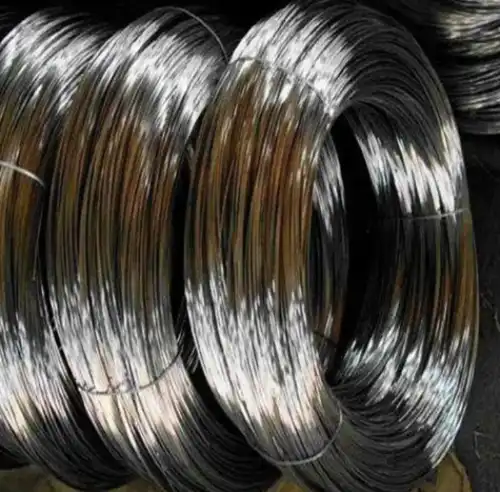
ASTM B863 titanium wire is a complete standard that describes how titanium and titanium alloy wire should be used in industrial engineering and corrosion-resistant situations. This standard is different from medical-grade requirements or welder filler materials because it focuses on structural parts like fasteners, springs, chemical processing meshes, and anodizing racks. The standard covers more than 30 grades, from Grades 1-4 of Commercially Pure (CP) to Grade 5 (Ti-6Al-4V) and Grade 9 (Ti-3Al-2.5V), which are high-strength Alpha-Beta metals. For each grade, the mechanical and chemical qualities are different, so they can be used in different situations.
The standard strictly sets the chemical composition boundaries, especially the amounts of oxygen, nitrogen, carbon, iron, and, most importantly, hydrogen. Hydrogen embrittlement, a catastrophic failure process where brittle hydrides form under stress, can be avoided by keeping the amount of hydrogen below 150 ppm. The mechanical property standards are also very strict. The tensile strength ranges from 240 MPa for soft CP grades to over 1300 MPa for spring-temper Grade 5 material.
Core Technical Properties
Titanium wire made according to ASTM B863 has a great strength-to-weight ratio. Its density is about 56% that of steel, at 4.51 g/cm³ for CP grades and 4.43 g/cm³ for Grade 5. This weight advantage directly leads to better fuel economy in aircraft use and less stress on structures in marine settings. The material stays stable at a melting point of about 1660°C, making it useful in a wide range of production conditions.
Corrosion resistance comes from a steady, continuous film of titanium dioxide (TiO2) that forms on surfaces that are exposed to air. The material is almost impervious to rust from air, water, wet chlorine, metallic chlorides, and oxidizing acids like nitric and chromic acid because of this inactive layer. In chemical processing plants, where stainless steel parts rust within weeks, ASTM B863 titanium wire extends operating lifecycles to 10–20 years, which greatly lowers the cost of replacement and upkeep.
Most of the time, diameter limits are within h7, h8, or h9 precision grades. Laser micrometer scanning makes sure that the uniformity is within ±0.03mm or better. This level of accuracy is very important for automatic cold heading machines and high-speed weaving processes that can't keep going if wires break or springback doesn't work right.
How China ASTM B863 Titanium Wire Factories Support Bulk Procurement
Advanced Manufacturing Capabilities
To make titanium wire that meets international standards, China ASTM B863 titanium wire factory top producers have spent a lot of money on vacuum melting furnaces, continuous extrusion lines, and multi-pass drawing equipment. Triple vacuum arc remelting (VAR) is the first step in the production process. This stops segregation and makes sure that the chemicals are the same throughout the ingot. After controlled hot extrusion, the first wire rod is made. This is then followed by several cold drawing passes with annealing processes in between to reach the desired sizes and mechanical properties.
Quality control systems include tracking in real time at every stage of production. The ASTM E1409 test for inert gas fusion checks the levels of oxygen and nitrogen, and the ASTM E1941 test for burning checks the levels of carbon. As per ASTM E8/E8M, tensile testing proves the Ultimate Tensile Strength, the Yield Strength at 0.2% offset, and the amounts of extension. Eddy-current testing finds flaws on the surface, like gaps, laps, slivers, or cracks, that could lead to wear failure in use.
China-based factories regularly handle large orders of more than 50 tons per shipment, with diameters ranging from 0.5 mm to 6 mm and a variety of grades. This production scale lets prices stay low while keeping material properties constant from batch to batch. This is an important factor for EPC workers who are in charge of long-term projects that need to be restocked on a regular basis.
Certification and Compliance Infrastructure
Reliable providers keep a full set of certifications, such as ISO 9001:2015 for quality management systems, PED 2014/68/EU for pressure equipment, and approvals from DNV, ABS, CCS, BV, and Lloyd's Register for classification societies. These approvals show that the company can make products that meet the strict international safety standards that oil companies and energy companies look for.
Every package comes with EN 10204 3.1 Mill Test Certificates that make it possible to fully track the materials. There are heat numbers, chemical makeup analysis results, mechanical test data, and measurement inspection records in these papers. Third-party inspection companies like SGS, Bureau Veritas, TUV, and Moody's offer independent verification services. This gives buyers who need complete material purity an extra layer of confidence.
Comparing China ASTM B863 Titanium Wire Suppliers: Ensuring Quality and Reliability
Key Evaluation Criteria
Production ability is one of the most important choosing factors. When demand is high, factories with multiple drawing lines can still keep delivery plans, but smaller factories may have to wait longer for parts to arrive. When production rates are more than 500 tons per year, it means that there are established supply lines for raw materials and tested logistics networks for shipping goods around the world.
Knowing a lot about technology is very important when choosing wire for specific uses. Suppliers with metallic engineering teams can suggest the best grades based on the climate for corrosion, the conditions of mechanical loads, and the needs for shaping. This consultative method stops design mistakes that cost a lot of money, like using Grade 2 wire in places that need Grade 5 material for its fatigue strength.
Transparent communication methods make it easier to do business with people in different languages and time zones. Well-known companies that make things send English-speaking account managers to each customer who answer technical questions, requests for samples, and reports on the progress of the order quickly. Cloud-based order tracking tools let you see the progress of production and shipping in real time.
Understanding Specification Differences
People who work in procurement often get ASTM B863 and other similar standards mixed up. ASTM B348 rules titanium bars and billets instead of wire. It has different standards for surface finish and tolerances on size. AWS A5.16 talks about welding filler metal, which needs stricter chemistry controls to make sure the weld pool is pure. Some wire may have two certifications if its chemistry meets both requirements, but buyers must make sure that the main purpose of the wire fits their needs.
The performance qualities are affected by the choice of surface finish. Acid-pickled finishes get rid of the brittle alpha-case layer that forms during high-temperature processing. This leaves a matte gray look that can be used in a variety of weave situations. For high-speed cold heading operations and fatigue-critical springs where surface flaws focus stress, polished or ground finishing offers better diameter tolerance and fatigue resistance.
Buying Guide for Bulk ASTM B863 Titanium Wire Orders from China
Procurement Planning Essentials
Depending on the width and grade, the minimum order quantity from a China ASTM B863 titanium wire factory is usually between 500 kg and 2000 kg. It is possible to negotiate MOQs with known buyers or when shipping items with different diameters together. When you approve your order, you usually have to pay a 30% deposit. The rest of the payment is usually due with a copy of the shipping papers or a Letter of Credit for first-time transactions.
Asking for samples of the material before placing a large order is a real way to check its quality. Sample coils weighing 5 to 10 kg can be tested in-house to see how well they work with current production tools and what their mechanical properties are. By putting money into pre-qualification, expensive rejects or production delays that happen after full orders are received can be avoided.
Lead times include both the time it takes to make something and the time it takes to ship it to another country. Standard grades in common sizes usually take 30 to 45 days from the time the order is placed until it is loaded at the port. Custom standards or special heat treatments may make the time frame 60 to 90 days. Planning the buying cycles around the building plans of a project makes sure that materials arrive when they're needed without having to pay extra for faster shipping.
Navigating International Trade Logistics
Commercial invoices, packing lists, certificates of origin, and material test results are all types of export paperwork. Buyers in certain areas might need extra proof of compliance, like REACH declarations for targets in the European Union or conflict minerals statements for aircraft uses. Suppliers with a lot of experience keep up with document preparation processes that meet a wide range of legal requirements.
The best shipping methods combine speed and cost. For large orders, sea freight is the most cost-effective choice. 20-foot containers can hold between 18 and 22 tons, based on how they are packed. Air freight can handle urgent orders, but it costs a lot more per kilogram. When a shipment is FOB (Free On Board), the buyer is responsible for paying for insurance and freight. When the shipment is CIF (Cost, Insurance, Freight), these costs are included in the supplier's quote.
The steps for clearing customs depend on the place you are going to. Using skilled freight forwarders who know how to classify titanium products speeds up the process. Harmonized System (HS) codes for titanium wire usually fall under 8108.90, but buyers should check with their local customs office to see what duties and limits apply.
Why Choose a Certified China ASTM B863 Titanium Wire Factory?
Compliance Assurance and Risk Mitigation
Certification to foreign standards is a reliable way to show that a company can make something. Getting ISO 9001:2015 approval shows that you have put in place quality management systems that include ways to evaluate suppliers, keep an eye on processes, and make improvements all the time. When wire is going to be used in heat exchangers, pressure tanks, or piping systems in oil and gas sites, PED certification makes sure that it meets the requirements for pressure equipment.
It is very important for marine and coastal uses to have approvals from classification societies like DNV and ABS for a China ASTM B863 titanium wire factory. To get these certificates, factories have to go through strict inspections, have their work watched, and have materials tested in front of society inspectors. Using approved materials to make parts speeds up the project approval process, which cuts down on delays in commissioning.
The OHSAS 18001 and ISO 14001 standards cover health and safety at work as well as environmental management. Multinational companies that have responsible sourcing policies and are looking for sellers who will keep their environmental promises need to follow these standards.
Long-Term Partnership Benefits
Well-known makers put money into building relationships that go beyond just filling orders. Volume discount structures reward customers who buy from you regularly, and tiered pricing shows how much you promise each year. Technical support includes helping choose the right material, giving advice on how to shape it, and fixing problems in production that have to do with how well the wire works.
Customization lets you make solutions that fit the needs of a specific job. Through coordination of production plans, special temper conditions, non-standard lengths, or specific coil weights can be met. This versatility comes in very handy when project requirements are different from what's listed in the catalog.
Diversifying your buying relationships makes your supply chain more resilient. Having qualified backup suppliers reduces the risks that come with relying on a single source, making sure that materials are available even when primary sellers' supplies are interrupted or their capacity is limited.
Conclusion
For bulk purchases, choosing a reliable China ASTM B863 titanium wire factory necessitates a thorough assessment of the factory's production skills, certification compliance, and supply chain reliability. Leading Chinese makers are ready to compete for global industrial projects thanks to their advanced metalworking methods, strict quality control systems, and wide range of foreign approvals. Understanding the details of specifications, setting clear rules for communication, and putting in place thorough seller qualification processes are all things that procurement workers can benefit from. Doing your research before choosing a provider pays off in the long run with stable material quality, on-time deliveries, and a low total cost of ownership over the course of a project's many years.
FAQ
How does surface finish affect titanium wire performance?
The finish on the surface has a direct effect on the ability to hold dimensions and prevent wear. Acid-pickled finishes get rid of the brittle alpha-case layer, leaving surfaces that are resistant to corrosion and good for weaving and net production. Polished or ground finishes give you tighter diameter limits (often ±0.02mm) and smoother surfaces that lower stress concentration points. This is why they are necessary for cold heading and spring uses where fatigue life is important. The choice you make should fit your unique making needs and end-use needs.
What documentation should accompany bulk titanium wire shipments?
Full packages come with EN 10204 3.1 Mill Test Certificates that list heat numbers, chemical makeup analyses, mechanical test results, and data on inspections for size and shape. Material safety data sheets (MSDS), commercial bills, packing lists, and certificates of origin all make it easier to get goods through customs. Buyers in controlled industries might need extra proof of compliance, like REACH releases, conflict minerals statements, or inspection reports from third-party companies like SGS or Bureau Veritas that show the product meets the requirements.
Can ASTM B863 wire be used interchangeably with welding filler wire?
If the chemical makeup of ASTM B863 wire meets the standards of AWS A5.16, it can be used as a welder filler. However, this needs to be confirmed through dual certification. AWS A5.16 puts tighter controls on some elements to make sure the weld pool is clean and the mechanical qualities of the weld zone are good. Buyers who want to use wire for both welding and building parts should make sure they get dual-certified material and check for agreement with test certificates before committing to production use.
Partner with LINHUI TITANIUM for Your Bulk Titanium Wire Requirements
LINHUI TITANIUM is ready to help you buy a lot of titanium wire because they have a history of producing high-quality products and a wide range of certifications. We've shipped hundreds of thousands of tons of high-quality titanium goods to customers in North America, South America, the Gulf area, Africa, the CIS countries, and Southeast Asia since we opened for business in 2000. We have a lot of certifications, such as PED 2014/68/EU, ISO 9001:2015, TUV Nord AD2000-W0, and approvals from DNV, ABS, CCS, BV, Lloyd's Register, and GL. These make sure that our goods meet the strictest international standards.
We have the production ability to handle projects of any size and offer reasonable prices without sacrificing quality as a China ASTM B863 titanium wire factory that specializes in large orders. Our "Titanium Products Supermarket" plan lets you get different grades and specs from a single source, which makes managing your supply chain easier. You can email our technical team at linhui@lhtitanium.com to talk about your specific needs, ask for examples of our materials, or get detailed quotes for your future projects.
References
1. American Society for Testing and Materials. (2021). ASTM B863-21: Standard Specification for Titanium and Titanium Alloy Wire. ASTM International, West Conshohocken, PA.
2. Davis, J.R. (2003). Handbook of Materials for Medical Devices. ASM International, Materials Park, OH, Chapter 5: Titanium and Titanium Alloys, pp. 121-153.
3. Lutjering, G. & Williams, J.C. (2007). Titanium, 2nd Edition. Springer-Verlag, Berlin, Engineering Materials and Processes Series.
4. Boyer, R., Welsch, G. & Collings, E.W. (1994). Materials Properties Handbook: Titanium Alloys. ASM International, Materials Park, OH.
5. Schutz, R.W. & Watkins, H.B. (1998). Recent Developments in Titanium Alloy Application in the Energy Industry. Materials Science and Engineering: A, 243(1-2), pp. 305-315.
6. Donachie, M.J. (2000). Titanium: A Technical Guide, 2nd Edition. ASM International, Materials Park, OH, Chapter 7: Fabrication of Titanium Wire Products.