
Thick-walled titanium tubes significantly boost system durability through their exceptional mechanical properties and corrosion resistance. These specialized components offer superior strength-to-weight ratios, outstanding thermal stability, and unmatched resistance to harsh operating environments compared to traditional materials. With wall thicknesses specifically engineered for demanding applications, thick-walled titanium tubes deliver enhanced structural integrity, extended service life, and reduced maintenance requirements across aerospace, oil & gas, chemical processing, and marine industries, making them an invaluable investment for long-term system reliability.
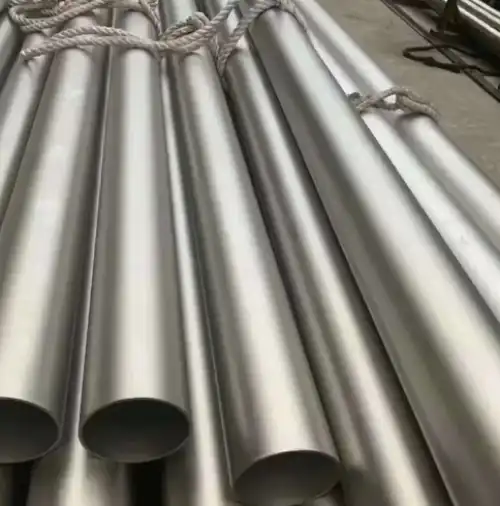
Understanding Thick-Walled Titanium Tubes and Their Impact on Durability
Defining Thick-Walled Titanium Tube Specifications
Thicker-walled titanium tubes are a special kind of tube product with better wall thickness ratios and high-quality titanium metal formulas. The wall thickness of these parts is usually between 3mm and 25mm, but it depends on the purpose and the pressure grade. Titanium metal's natural benefits are kept while the wall thickness is raised to give the structure more strength. Precision methods are used in the manufacturing process, such as vacuum arc remelting (VAR) for making billets and then cold rolling and pilgering to get dimensions that are accurate to within ±0.1mm tolerances. Solution annealing improves the mechanical qualities of a material while getting rid of any leftover stresses that might hurt its long-term performance.
Superior Material Properties for Enhanced Durability
The fact that these titanium tubes are made of a special material makes them very durable. The tensile strengths of Grade 5 (Ti-6Al-4V) and Grade 9 (Ti-3Al-2.5V) metals are higher than 900 MPa, but they are still very flexible and tough. This mix allows for long-lasting performance under cyclic loading situations that would cause most materials to fail from wear. Another important factor in longevity is corrosion resistance. Titanium naturally creates a protective oxide layer that grows back when it gets broken. This makes it more resistant to salt environments, acidic conditions, and high-temperature oxidation. This inactive safety system makes sure that performance stays the same over long periods of service without getting worse.
Manufacturing Excellence and Quality Assurance
LINHUI TITANIUM has been making things for 21 years and has two dedicated buildings with 30 specialized production lines that can make 800 tons of metal every year. Our quality control systems keep their ISO 9001:2015, SGS, and TUV certifications, which means that our products are always of the highest quality. Each production batch goes through a lot of tests, such as checking the dimensions, making sure the mechanical properties are correct, and looking at it without damaging it. Advanced metallurgical methods are used in the production process to improve the structure of the grains and get rid of any flaws. Vacuum melting conditions keep things from getting dirty, and controlled cooling rates create the microstructures that are wanted. By getting rid of possible places where failure could start, these processes directly lead to longer durability.
How Thick-Walled Titanium Tubes Solve Durability Problems in Industrial Systems
Addressing Common System Failure Modes
When materials are put through tough working conditions, industrial systems often fail before they should. Some problems that common materials have are stress corrosion cracks, erosion-corrosion, thick-walled titanium tubes, and wear damage buildup. These types of failure cause expensive downtime, safety issues, and the need to replace things often. Because the material is so good, thick-walled titanium tubes don't have many of the most common ways that things break. The thicker walls better spread out stress, which lowers the highest points of stress that cause cracks to form. Because titanium is very resistant to wear, these tubes can be loaded and unloaded millions of times without breaking.
Real-World Performance in Harsh Environments
Applications in chemical processing show that thick-walled titanium tubes are very durable. In chlor-alkali factories, these parts can handle the harsh chlorine conditions that quickly wear down stainless steel options. The extended service life is usually longer than 15 years, compared to two to three years for regular products. These tubes are used for seawater systems on offshore oil rigs, where rust from salt water is always a problem. Titanium's naturally high resistance to rust and its thick walls make it possible for safe operation even without protective coatings or cathodic protection systems. This simplification makes upkeep easier and increases the general reliability of the system.
Thermal and Pressure Endurance Capabilities
Titanium is very good at withstanding high temperatures because it is thermally stable and doesn't expand or contract much. In power plants, thick-walled titanium tubes are used in heat exchanges where changing temperatures would wear down other materials. The thicker walls can handle thermal loads while keeping the structure's stability. Thick-walled titanium tubes are used in pressure vessels because they are stronger than they are light. These parts are used in reactor cooling systems at nuclear power plants, where long-term dependability and resistance to radiation are very important. The mix of mechanical strength and resistance to rust makes sure that the system can be used safely for long fuel cycles.
Comparing Thick-Walled Titanium Tubes with Other Material Solutions
Performance Analysis Against Traditional Materials
Titanium tubes with thick walls always perform better than other materials for important uses, as shown by a number of different performance measures. Even though stainless steel is cheaper at first, it doesn't hold up well against rust in harsh conditions and is heavier. Aluminum is lighter than other metals, but it isn't strong enough or resistant to high temperatures for demanding uses. The strength of carbon steel is great, but it needs a lot of corrosion protection methods, which make it harder to work with and require more upkeep. Copper metals are good at resisting rust in some conditions, but they can't handle high temperatures or high strengths. When figuring out how long something will last, these limits become very important.
Lifecycle Cost Considerations
Total cost of ownership estimates show that thick-walled titanium tubes have big benefits, even though they cost more to buy at first. Longer service life, less upkeep, and no longer needing protective coatings all balance out the costs of purchase. Many applications have payback times of two to three years because they cut down on downtime and repair costs. The benefits of losing weight include saving money on supporting systems and not having to dig as deep a base. When it comes to aerospace uses, thick-walled titanium tubes have these traits that are especially useful because every kilogram decrease saves money on operational costs by using less fuel and carrying more.
Grade Selection for Optimal Performance
The best performance for certain uses comes from choosing the right titanium types. Grade 2 is great for moderate-strength needs because it is easy to shape and doesn't rust. Grade 5 is the strongest and is used in aircraft and high-pressure situations. Grade 9 is strong and flexible enough to be used in sea and chemical processing settings. Each grade has its own traits that are in line with its own achievement standards. By knowing these differences, you can choose the best materials that will last the longest while keeping costs low. LINHUI TITANIUM offers a wide range of grades, from Grade 1 to 12, of titanium alloys to meet a wide range of application needs.
Procurement Guide for Thick-Walled Titanium Tubes in B2B Markets
Technical Specification Requirements
For a procurement to go well, there must be clear technical standards that meet the needs of the specific application. When figuring out wall thickness, you have to take into account safety factors, internal pressure, external loads, and corrosion limits. Dimensional limits affect how well a system works with other systems and how it needs to be installed. Material approvals check the makeup of an alloy, its mechanical features, and the quality of its production. Standards compliance makes sure that the product works with ASTM, API, and aircraft standards, among others. The company LINHUI TITANIUM has approvals for uses in aerospace (AS9100, AMS-T-9046), medicine (ISO 13485, ASTM F136), oil and gas (API 5L, NACE MR0175), and general industry (ISO 9001, RoHS).
Supplier Evaluation Criteria
Consistent quality is shown by reliable providers through thorough certification programs and track records that have been proven. The manufacturing skills must match the needs of the project in terms of production capacity, wait times, and customization options. LINHUI TITANIUM's two factories with 30 production lines make sure that deliveries happen on time. Quality assurance programs give people faith in the stability and performance of products. Third-party testing services from companies like DNV, BV, SGS, and TUV confirm the quality of the production process and the finished product. These certificates show that you are dedicated to quality and following the rules.
Logistics and Delivery Considerations
For global projects to work, shipping choices need to be open, and transportation support needs to be reliable. LINHUI TITANIUM offers a wide range of shipping choices, such as DHL, FedEx, air freight, and sea freight, so that customers can get their packages quickly or get the best deal on shipping for bigger orders. International shipping rules are met while packaging standards protect the integrity of the goods during travel. Products come in perfect condition thanks to anti-corrosion film wrapping and wooden crate packing. Real-time tracking lets you see what's happening with the arrival at all times.
Building System Reliability Through Strategic Use of Thick-Walled Titanium Tubes
Integration Strategies for Existing Systems
Putting thick-walled titanium tubes into old systems needs careful planning to make sure they work well and are compatible. When joining two different types of materials, the way they are connected must take into account their different rates of heat growth and galvanic corrosion. Using the right isolation methods stops electrochemical reactions that could damage the structure of the system. To account for differences in weight and temperature, changes may need to be made to the design. Titanium, on the other hand, has a better strength-to-weight ratio than most metals, so wall thickness can often be lowered to balance out weight increases caused by changes in material density. This improvement keeps the building requirements the same while making the structure more resistant to corrosion.
Maintenance and Lifecycle Management
Strategic use of thick-walled titanium tubes greatly lowers the amount of upkeep needed compared to regular materials. When protective protection systems are taken away, reapplication plans and the downtime that comes with them are also taken away. Titanium's natural protection means that it doesn't need to be monitored for corrosion. Predictive maintenance programs can focus on places where machines wear out instead of worrying about how materials break down. This change makes it easier to plan upkeep and divide up resources. Longer inspection periods keep safety margins while reducing working delays.
Future Technology Developments
Additive manufacturing technologies for thick-walled titanium tubes are changing the way titanium tubes are made by making it possible to make them with complicated shapes and better designs. These new ideas make it possible to add cooling lines, change the thickness of the walls, and make special connection features. LinHui Titanium keeps putting money into new production technologies so that it can offer cutting-edge solutions. The goal of developing advanced alloys is to improve their qualities for specific uses. For specific uses, new formulas aim for higher strength, resistance to corrosion, or special qualities like magnetic permeability. These new developments make it possible for thick-walled titanium tubes to be used in more situations.
Conclusion
Thick-walled titanium tubes definitely make the system last longer because they are made of better materials, have stronger structures, and can handle hard working conditions better than other materials. These parts are perfect for important jobs in the marine, oil and gas, aircraft, and chemical processing industries because they are strong for their weight, don't rust, and don't change shape when heated or cooled. Even though they may cost more to buy at first than regular materials, they are much cheaper in the long run because they last longer, need less upkeep, and don't need to be coated to protect them. Choosing and using thick-walled titanium tubes in the right way can ensure their long-term dependability and performance in tough industrial settings.
FAQ
1. What factors determine the optimal wall thickness for titanium tubes?
When figuring out wall thickness, you have to take into account the required internal pressure, the loading conditions from the outside, the weathering limits, and any safety factors that apply. For certain uses, industry guidelines like ASME BPVC or API regulations give advice. The research team at LINHUI TITANIUM helps with optimizing thickness to find the best mix between performance needs and cost concerns.
2. How do thick-walled titanium tubes perform in cryogenic applications?
Titanium keeps its great mechanical qualities at cryogenic temperatures, and as the temperature drops, it actually gets stronger. Instead of breaking down at low temperatures like many other options, this material stays tough. Titanium tubes with thick walls are great for LNG systems and aircraft uses because of this.
3. What quality standards should people look for when they buy titanium tubes?
Some important certifications are ISO 9001 for quality management systems, ASTM or AMS specifications for materials, and standards specific to the industry, like AS9100 for aircraft or API for oil and gas. Third-party inspection reports from well-known companies like DNV, SGS, or TUV give you even more peace of mind about the quality.
Partner with LINHUI TITANIUM for Superior Thick-Walled Titanium Tube Solutions
To be great at making titanium products, you need to have a lot of knowledge, know a lot about them, thick-walled titanium tubes, and always be committed to quality. LINHUI TITANIUM provides all three through 21 years of specialized manufacturing, two dedicated buildings, and 30 production lines that can make 800 tons of titanium every year. We can make thick-walled titanium tubes out of metals ranging from Grade 1 to Grade 12. We have full certificates from ISO, SGS, and TUV quality control systems. Your project deadlines will be met thanks to global shipping through DHL, FedEx, air freight, and sea freight. Get in touch with our knowledgeable staff at linhui@lhtitanium.com to talk about your particular needs and experience the LINHUI TITANIUM difference in quality, dependability, and excellent service.
References
1. Boyer, R.R., Welsch, G., & Collings, E.W. "Materials Properties Handbook: Titanium Alloys." ASM International Materials Park, 2007.
2. Lutjering, G. & Williams, J.C. "Titanium: Engineering Materials and Processes." Springer-Verlag Berlin Heidelberg, 2nd Edition, 2007.
3. Donachie, M.J. "Titanium: A Technical Guide." ASM International Materials Park, 2nd Edition, 2000.
4. Peters, M., Kumpfert, J., Ward, C.H., & Leyens, C. "Titanium Alloys for Aerospace Applications." Advanced Engineering Materials, Vol. 5, No. 6, 2003.
5. Schutz, R.W. & Thomas, D.E. "Corrosion of Titanium and Titanium Alloys." ASM Handbook Volume 13B: Corrosion of Materials, ASM International, 2005.
6. Banerjee, D. & Williams, J.C. "Perspectives on Titanium Science and Technology." Acta Materialia Journal, Vol. 61, Issue 3, 2013.