
When purchasing managers and engineers look at materials for surgical implants or important aircraft parts, they have to choose between ASTM F136 titanium and commercial-grade titanium. This isn't just a technical choice; it has an effect on the safety of patients and the efficiency of operations. The clinical minimum standard is set by ASTM F136 titanium, which is called Ti-6Al-4V ELI (Extra Low Interstitial). This is because it gets rid of the failure modes that come with ASTM F136 titanium commercial titanium grades. The tightly controlled interstitial elements—with oxygen below 0.13%, nitrogen kept to a minimum, and iron stopped at 0.25%—make the material tough and flexible in ways that commercial versions just can't match when physiological loads are applied and removed over and over again.
Understanding ASTM F136 Titanium and Aerospace ELI Grade
Defining the ELI Specification
The name "Extra Low Interstitial" means more than just following the rules; it solves important problems in material science. Commercial titanium alloys, such as Grade 5 Ti-6Al-4V, are made up of 6% aluminum and 4% vanadium, but the interstitial material makes them behave very differently. In ASTM F136 titanium, limiting the oxygen level to no more than 0.13% (as opposed to 0.20% in normal grades) makes it more resistant to damage. This carefully managed chemistry keeps an alpha-beta phase architecture that stops micro-cracks from spreading even after millions of load cycles.
Chemical Composition Requirements
For the titanium material to work, what isn't there is just as important as what is. The ASTM F136 titanium standard sets strict limits: aluminum must be between 5.50 and 6.50%, vanadium must be between 3.50 and 4.50%, iron must be no more than 0.25%, oxygen must be no more than 0.13%, and nitrogen must be less than 0.05%. These lines aren't just made up on the spot; they're designed to be the points at which a material changes from being flexible to being rigid. Each percentage point of oxygen presence lowers the material's ductility at room temperature by about 15% and makes it more sensitive to notch pressures, both of which are important when an implant is loaded over and over again by the body.
Why ELI Meets Clinical Minimums
Surgical implants are placed in places that are very harsh, with saline fluids that are acidic, pH levels that change, and constant muscular stress. The ELI grade gives the bare minimum of safety needed for long-term cellular interaction. Standard commercial titanium is fine for structural aircraft uses where replacements are planned, but it isn't tough enough to break when failure means having to do more surgery or hurting the patient. Controlled interstitial levels in ASTM F136 titanium stop stress corrosion cracking and hydrogen embrittlement, which are ways that medical devices made from non-ELI types have failed in the past.
Key Differences Between ASTM F136 Titanium and Commercial Titanium
Mechanical Property Comparison
When you look at verified ASTM F136 titanium test results, you can measure the performance gap. The minimum tensile strength of ASTM F136 titanium is 860 MPa (125 ksi), and the minimum yield strength is 795 MPa (115 ksi). However, the extension values are at least 10%, which is higher than the 8% value for commercial Grade 5. This extra flexibility directly translates to resistance to fatigue. In spinning beam wear tests, ELI-grade material has endurance limits that are about 15 to 20 percent higher than market versions. This means that devices like femoral stems that go through millions of gait cycles will last longer. When purchasing managers look at mill test results, they should know that these mechanical qualities don't change during heat treatment cycles. Solution treating ASTM F136 titanium at 955°C and then letting it age changes its microstructure into a fine lamellar alpha-beta structure that makes it strong and tough at the same time. This is something that industrial grades can't do without giving up one feature to get the other.
Corrosion Resistance in Biological Environments
Corrosion problems in the body are different ASTM f136 titanium from those in factories. At 37°C, body fluids that are high in chloride, protein deposits, and changing oxygen levels create conditions where inactive oxide layers decide how long an implant will last. The titanium dioxide film that forms on ASTM F136 titanium surfaces is very stable and can be as thick as 2 to 6 nanometers. When commercial titanium grades have more interstitial material, they form oxide layers with tiny holes in them that let crevice rust start. Using artificial body fluid in the lab to test for rapid corrosion shows that ELI-grade material stays passivated at potentials where commercial grades start to show pitting. This is a difference in millivolts that represents years of clinical performance.
Heat Treatment Impact on Microstructure
Protocols for heat treatment show another important difference. The controlled chemistry in ASTM F136 titanium gets rid of the factors that make industrial types hard to work with when they are heated. When beta annealing takes place at temperatures above 995°C, the low interstitial content stops grains from growing too much. This keeps grain sizes between ASTM 5-7, which are the best for mechanical qualities. When commercial titanium has a lot of oxygen in it, the grains get bigger more quickly. This makes the microstructures less flexible and makes it hard to predict how they will break. In industrial settings, we've seen that parts made from properly heat-treated ASTM F136 titanium have a 30–40% better surface finish than commercial versions. This means that fewer steps need to be taken after the part is machined, and the dimensions are more accurate.
ASTM F136 vs. Other Medical-Grade Metals: Making an Informed Choice
Comparing Against Grade 5 Titanium
Many buying teams don't understand the difference between ASTM F136 titanium and standard Grade 5 Ti-6Al-4V because the nominal compositions look the same. The difference lies in how strictly quality control is carried out and how sure the mechanical features are. Grade 5 material works great in aircraft uses where weight reduction is more important than biocompatibility, but it doesn't have the approved history needed for implantable devices. Individual chemical verification and recorded oxygen analysis are done on each heat lot of ELI-grade material. This is a requirement that is often skipped for industrial grades, where batch approval is enough.
Stainless Steel and Cobalt-Chromium Alternatives
When making purchases, people usually compare the costs of ASTM F136 titanium to 316L stainless steel or cobalt-chromium metals. Even though stainless steel is cheaper to make (about 40–60% less than titanium), it contains nickel, which makes 10–15 percent of people hypersensitive. Cobalt-chromium metals are better at resisting wear on moving surfaces, but they are less dense. The difference in weight between cobalt-chrome (8.3 g/cm³) and titanium (4.43 g/cm³) makes patients uncomfortable with big devices and makes surgery more difficult. The modulus of elasticity comparison is just as telling: ASTM F136 titanium at 110 GPa is more like cortical bone (18–20 GPa) than stainless steel (200 GPa), which means that stress buffering that causes bone loss around implants is lessened.
Cost-Benefit Analysis for Procurement
The cost of materials is only a small part of the total economics of ASTM F136 titanium a gadget. When purchasing managers look at ASTM F136 titanium providers, they should figure out the total cost of the purchase, which should include licensing paperwork, batch tracking, and the rate of rejection during machining. ELI-grade material usually costs 20–35% more than industrial titanium, but this difference gets smaller when you consider lower failure rates, longer gadget lifespans, and faster regulatory approval. Manufacturers of medical devices say that moving from commercial to certified ASTM F136 titanium lowers in-process quality holds by 40–50%. This is because the uniform properties of the material get rid of variations in CNC machining and surface treatment processes.
Practical Considerations for the Procurement of ASTM F136 Titanium
Supplier Certification Verification
Manufacturers in North America, Europe, and Asia are all part of the world supply chain for ASTM F136 titanium, but not all of them have the same quality processes. The first step in verifying a seller is looking at their list of certifications. ISO 13485:2016 is the standard for medical devices, but top suppliers also keep PED 2014/68/EU certification, FDA registration, and permission from classification societies like DNV, ABS, and CCS. LINHUI TITANIUM, based in Xi'an, China, has a lot of different kinds of certifications. It has TUV Nord AD2000-W0 approvals from several classification societies, and licenses to make special tools that can be used in both medical and commercial settings. Mill test reports are the official records that make it possible to track down materials. Each shipment of ASTM F136 titanium should come with a heat-specific certification that lists the chemical composition and percentages of each element, as well as the mechanical property test results, which should include the tensile strength, yield strength, and elongation values, as well as a record of the heat treatment history that shows the time-temperature profiles. For important uses, procurement departments should set rules that these papers must be shown before the material is accepted. For added security, the chemical makeup should be checked by a third party, ASTM F136 titanium.
Available Product Forms and Customization
The ability to get materials in different forms affects the freedom of design and the speed of production. Typically, there are several variations involved in ASTM F136 titanium procurement:
- Strip and sheet Medical device makers use strip and sheet materials with a width of less than 4.76 mm to make head plates, bone fixation plates, and cardiovascular stents. For these thin-gauge materials to have consistent mechanical properties, they need to be rolled in a way that keeps thickness errors within ±0.05 mm.
- Plate products Plates with thicknesses ranging from 4.76 mm to 101.60 mm are used to make orthopedic joint parts and tools for spine implants. What determines machining results and the quality of the end part is how regular the thickness is and how sound the inside is, which can be checked with ultrasonic testing.
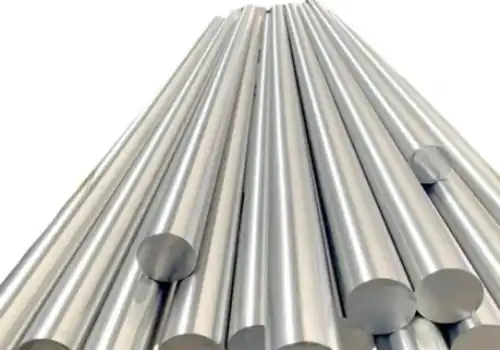
- Bar products Bars with diameters between 4.76 mm and 101.60 mm are the most popular type of material bought for CNC cutting. Round bars with widths that match the measurements of the implant cut down on material waste during turning operations, directly affecting per-unit production costs. Wire forms below 4.76 mm are also used for surgical sutures and orthodontic wires, where flexibility combined with strength is required.
Pricing Dynamics and Market Factors
The market price for ASTM F136 titanium is based on the cost of the raw materials, the difficulty of handling them, ASTM f136 titanium and the cost of getting them certified. Prices for normal bar and plate shapes are currently between $35 and $55 per kilogram. Tight-tolerance ground bar costs an extra 15% to 25% more, small-diameter wire costs an extra 30% to 40% more, and custom chemicals that meet proprietary specs cost an extra 20% to 30% more. Purchase quantities have a big effect on unit prices. Orders over 500 kilograms usually get 10-15% discounts for their size, while sales of less than 50 kilograms on the spot are charged more to cover the costs of making the minimum order. Buyers should know that the security of titanium prices rests on how much sponge titanium is available and how much the energy costs for vacuum arc remelting processes. Setting up a framework that deals with qualified ASTM F136 titanium suppliers guards against changes in the spot market and ensures production capacity during times of high demand. Companies like LINHUI TITANIUM offer inventory management services. Pre-positioned stock makes sure that materials are available for production plans without charging buyers for carrying costs.
Future Trends and The Strategic Value of ASTM F136 Titanium in Clinical Use
Innovations in Alloy Development
Through microalloying and processing improvements, advances in material science keep making ASTM F136 titanium work better. Researchers are looking into adding small amounts of copper (0.1 to 0.5%) and silicon (0.2 to 0.4%) to bone to help it fuse together better. They do this by changing the chemistry of the surface oxides without changing the mechanical properties. These changed compositions are still in the Ti-6Al-4V family, but they have a significantly better biological response. For example, bone-to-implant contact percentages rise from 65–70% for regular ELI grade to 75–80% for optimized versions within 12 weeks of healing.
Regulatory Evolution and Compliance
Additive manufacturing is another cutting-edge technology that is changing how ASTM F136 titanium is used. Powder bed fusion and directed energy deposition technologies make it possible to make implant shapes that are specific to each patient. The challenge lies in maintaining ELI-grade purity through powder production and recycling processes, where oxygen pick-up could affect quality. Leading providers now offer approved ASTM F136 titanium powder with an oxygen content checked below 0.13%. Furthermore, the 2022 update to ASTM F136 added stricter standards for inspections and mechanical property verification, increasing trust in material uniformity as global standards like the European MDR emphasize material traceability.
Long-Term Strategic Advantages
Putting money into approved ASTM F136 titanium providers gives you a competitive edge that goes beyond just one project. Companies that make medical devices say that working with just two or three approved suppliers instead of eight to ten generic ones cuts the cost of receiving inspections by 60% and makes materials more consistent, which leads to better process control. The strategic value can be seen in faster decisions by regulators, lower failure rates in the field, and a better brand image based on proven safety records. Aircraft manufacturers also recognize that these fracture toughness benefits help important fasteners and structural parts in next-generation airplanes, creating economies of scale that help all market groups.
Conclusion
As a result of carefully designed chemistry that removes interstitial elements that weaken flexibility and fracture toughness, ASTM F136 titanium is better than industrial grades of titanium. This Extra Low Interstitial specification sets the clinical minimum for surgical implants because it gets rid of failure modes that normal commercial grades can't safely stop, such as stress corrosion cracking, brittle fracture under cyclic loads, and biological incompatibility. When you choose to buy certified ELI-grade material from qualified suppliers, you get measurable benefits in device performance, regulatory compliance, and long-term clinical results. These benefits support the higher price by lowering total lifetime costs and improving patient safety.
FAQ
1. What makes ASTM F136 titanium better suited for medical implants compared to commercial titanium?
Controlling the interstitial elements—oxygen, nitrogen, and iron—that decide how fractures behave in physiological settings is the main benefit. The oxygen limit for ASTM F136 titanium is 0.13%, while the limit for industrial Grade 5 titanium is 0.20%. This makes it much more flexible and resistant to wear. This means implants that can take millions of loads without starting to crack, which is very important for devices like spine rods and hip stems. The material is confirmed to be biocompatible and to integrate with bone, which makes it different from market types that haven't been tested for long-term biological contact.
2. How do I verify if a supplier is certified to provide ASTM F136 titanium?
To qualify as a supplier, you have to look at more than one level of approval. Request proof of ISO 13485:2016 certification for medical device quality systems, check that the company is registered with the right regulatory bodies (for example, the FDA startup registration is needed to get into the U.S. market), and make sure that third-party inspection agencies like DNV, SGS, or TUV have approved the company. Each shipment of materials must include a Mill Test Report that can be linked to the particular heat number and lists the chemicals meeting ASTM F136 standards. Reliable sources allow full tracking from the raw material to the finished product using licensed labs for analysis.
3. Is aerospace ELI titanium significantly more expensive, and how does it affect overall project costs?
Material cost prices of 20–35% for ASTM F136 titanium, compared to market grades, only make up 8–15% of the total cost of making the device when you count the costs of machining, surface treatment, sterilization, and following the rules. The investment pays off with lower rejection rates during machining, faster regulatory approvals, and lower field failure rates that protect the brand's image and lower its liability risk. For large-scale production, the price difference gets even smaller because sources offer bulk discounts. This makes ELI-grade material more cost-effective while also getting rid of the technical risks that come with commercial alternatives.
Partner with a Certified ASTM F136 Titanium Supplier for Your Critical Applications
You can trust LINHUI TITANIUM to give you high-quality ASTM F136 titanium in any form, from precisely ground bar stock to custom-rolled plate that meets the strictest requirements. We've sold hundreds of thousands of tons to top companies like CEFC, PEMEX, and PETRONAS since 2000. Our products are certified by ISO 13485:2016, PED 2014/68/EU, and have approvals from DNV, ABS, CCS, and BV. Our integrated manufacturing skills allow us to offer mill-direct prices on a wide range of bar, plate, sheet, strip, forging bar, ASTM F136 titanium and wire shapes, all of which can be fully tracked by heat and verified by a third party. Whether you're designing next-generation orthopedic implants or mission-critical flight parts, our expert team can help you choose the right materials and come up with special processing solutions that fit your needs. Contact our ASTM F136 titanium manufacturers at linhui@lhtitanium.com right away to talk about your project needs, get approved test reports, or set up a sample evaluation. We're dedicated to providing you with high-quality materials that improve the results of your manufacturing processes.
References
1. American Society for Testing and Materials. (2022). "ASTM F136-13: Standard Specification for Wrought Titanium-6Aluminum-4Vanadium ELI Alloy for Surgical Implant Applications." ASTM International, West Conshohocken, PA.
2. Rack, H.J. and Qazi, J.I. (2006). "Titanium Alloys for Biomedical Applications." Materials Science and Engineering C, Volume 26, Issues 8, pp. 1269-1277.
3. Niinomi, M. (2008). "Mechanical Biocompatibilities of Titanium Alloys for Biomedical Applications." Journal of the Mechanical Behaviour of Biomedical Materials, Volume 1, Issue 1, pp. 30-42.
4. Boyer, R., Welsch, G., and Collings, E.W. (1994). "Materials Properties Handbook: Titanium Alloys." ASM International, Materials Park, Ohio.
5. Donachie, M.J. (2000). "Titanium: A Technical Guide, 2nd Edition." ASM International, Materials Park, Ohio.
6. Long, M. and Rack, H.J. (1998). "Titanium Alloys in Total Joint Replacement—A Materials Science Perspective." Biomaterials, Volume 19, Issues 18, pp. 1621-1639.