
ASTM B550 Zirconium Welding Wire is a big step forward in making fuel cells. It has the best corrosion protection and thermal stability in harsh electrochemical environments. This special welding material works really well to join zirconium parts in fuel cell systems, making sure that the systems will be reliable and work well for a long time. More and more, fuel cell makers around the world know how important it is to choose the right welding materials to get the best system performance and durability in tough industrial settings.
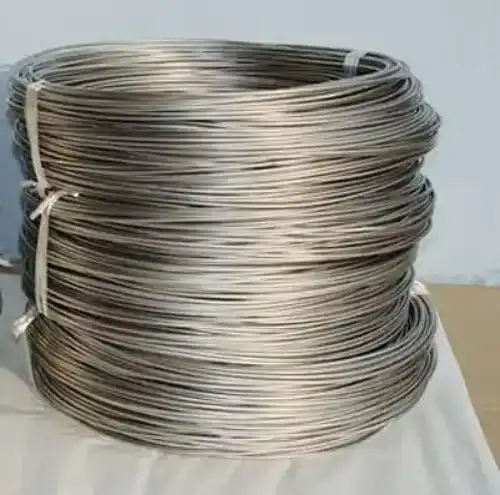
Understanding ASTM B550 Zirconium Welding Wire and Its Core Properties
Chemical Composition and Metallurgical Characteristics
ASTM B550 Zirconium Welding Wire standard characterizes the exact chemical composition requirements for zirconium welding wire, guaranteeing reliable quality over different producers. The determination commands the most extreme debasement levels for components like press, chromium, and nickel, which might compromise the material's erosion resistance. This welding wire regularly contains 99.2% least zirconium substance with carefully controlled hafnium levels, giving amazing atomic properties when required in specialized fuel cell applications.
Mechanical Properties and Performance Standards
The mechanical judgment of zirconium welding wire specifically impacts weld quality and joint unwavering quality in fuel cell assemblies. ASTM B550 sets up the least ductile quality requirements of 380 MPa and prolongation values surpassing 20%, guaranteeing satisfactory ductility for complex welding operations. These properties empower the wire to oblige warm stresses and mechanical loading experienced during fuel cell operation, while maintaining auxiliary judgment over expanded benefit periods.
Comparison with Alternative Zirconium Specifications
When assessing zirconium welding alternatives, engineers regularly compare ASTM B550 with ASTM B348 and ASTM B601 determinations. ASTM B550 offers prevalent weldability characteristics compared to these options, with optimized chemistry that decreases helplessness to hot splitting and porosity. The specification's adjusted approach to alloying components upgrades both erosion resistance and mechanical execution, making it especially appropriate for fuel cell applications where both properties are fundamental.
Advantages of ASTM B550 Zirconium Welding Wire in Fuel Cell Applications
Exceptional Corrosion Resistance in Electrochemical Environments
Materials in fuel cell systems are exposed to harsh electrical conditions that can quickly wear down standard welding supplies. Zirconium welding wire is very resistant to corrosion in fuel cell solutions, which are often made of acidic and alkaline fluids. Leading fuel cell makers have done research that shows zirconium welds keep their structural integrity after thousands of hours of use in harsh chemical environments, where other materials would break after just a few months.
The outstanding corrosion resistance translates directly into reduced maintenance costs and extended operational life for fuel cell systems. Here are the key benefits that make this material indispensable for fuel cell manufacturing:
- Superior resistance to phosphoric acid environments in phosphoric acid fuel cells, with corrosion rates below 0.001 mm/year under normal operating conditions
- Excellent performance in alkaline fuel cell electrolytes, maintaining mechanical properties even after prolonged exposure to potassium hydroxide solutions
- Outstanding oxidation resistance at elevated temperatures, preventing degradation that could compromise fuel cell efficiency and safety
- Chemical inertness that eliminates contamination risks, ensuring pure electrochemical reactions within fuel cell components
These advantages collectively ensure that fuel cell systems incorporating zirconium welds achieve higher reliability and longer service intervals, reducing the total cost of ownership for industrial applications.
Thermal Stability and High-Temperature Performance
Modern fuel cell systems work at high temperatures, that make it hard to use normal welding materials. You can use ASTM B550 zirconium welding wire in very cold situations up to over 400°C, and it will still have the same mechanical and chemical properties. This thermal stability is very important for fuel cell systems that need to change temperatures and run at high temperatures for long periods of time.
Technical Considerations: Welding Techniques and Best Practices for ASTM B550 Wire
Optimal Welding Parameters and Equipment Selection
To weld zirconium wire successfully, you need to carefully control the parameters and choose the right tools. Gas tungsten arc welding (GTAW) becomes the chosen method because it gives better control over the amount of heat used and protection from the atmosphere. Setting the welding current between 80 and 150 amps depends on the thickness of the material being welded. Keeping the arc voltage between 10 and 15 volts keeps the arc stable and the depth constant.
Shielding Gas Requirements and Atmospheric Protection
Zirconium reacts strongly with oxygen and nitrogen, so it needs full coverage from the air while it is being welded. High-purity argon shielding gas with less than 5 parts per million of oxygen stops pollution that could lower the quality of the weld. Back cleaning with argon or helium keeps the weld root from being exposed to air, which keeps it safe during the whole welding process. 15 to 20 liters per minute for main shielding and 8 to 12 liters per minute for backing gas are the right gas flow rates to get the job done without causing turbulence.
Pre-Welding Preparation and Post-Weld Treatment
When zirconium wire is used, careful surface preparation has a big effect on the quality of the weld. Using hydrofluoric acid solutions for chemical cleaning gets rid of metal films and surface contaminants that could lead to holes or inclusions. To keep the metal from getting mixed up with other metals during mechanical preparation, it is ground with special tools. Putting metal through a 580°C heat treatment after welding to relieve stress improves its mechanical qualities and lowers any remaining stresses that might affect its long-term performance.
Procurement Insights: Selecting and Purchasing ASTM B550 Zirconium Welding Wire
Supplier Evaluation and Quality Assurance
To discover dependable providers of zirconium welding wire, you need to see closely at their quality control and production capabilities. Driving providers keep a wide range of certifications, such as ISO 9001 quality administration frameworks and ASTM compliance records. Third-party testing confirmation from well-known labs gives additional confirmation that the fabric meets the benchmarks of the determination.
Market Dynamics and Pricing Considerations
The cost of zirconium welding wire depends on the cost of the crude materials, how difficult it is to make, and changes in advertising demand. Costs are influenced by worldwide zirconium supply lines. Depending on the breadth of the wire and the number of kilograms requested, costs ordinarily extend from $200 to $400 per kilogram. Long-term supply agreements regularly keep costs steady and make it beyond any doubt that large-scale fuel cell manufacturing companies can get what they require.
Logistics and Supply Chain Management
When buying zirconium welding supplies, great acquisition procedures take into account shipping needs, lead times, and the lowest cost. For standard orders, the lead time is between 4 and 8 weeks, whereas stock items may dispatch within days. Utilizing the right pressing and taking care of procedures keeps materials from getting messy while they are being transported or put away, so they keep their quality until they are utilized.
Company Introduction and Product & Service Information
LINHUI TITANIUM's Expertise in Zirconium Products
LINHUI TITANIUM has been making and selling high-quality titanium and zirconium alloy goods since its founding in 2000. Its headquarters are in Xi'an, China. Our all-around "Titanium Products Supermarket" method lets us work with a wide range of industries, such as oil and gas, chemicals, maritime, aerospace, and fuel cell manufacturing. We send hundreds of thousands of tons of high-quality goods to customers in more than 60 countries every year through smart resource integration.
Our dedication to quality goes beyond just making products; it also includes full technical help and customization services. We have strict quality control systems that are in line with international standards. These systems make sure that all of our zirconium welding wire meets or beats the requirements set by ASTM B550. Our skilled technical team helps improve the processes of making fuel cells by coming up with new welding procedures, doing application engineering, and fixing problems.
Certifications and Quality Assurance
Many foreign certifications have been earned by LINHUI TITANIUM, such as PED 2014/68/EU, ISO 9001:2015, and approvals from major classification societies like DNV, ABS, CCS, and Lloyd's Register. These certifications show that we are dedicated to high excellence and following all rules in all global markets. Our factories follow strict quality control systems that make it easy to track everything from the raw materials to the finished products.
Conclusion
ASTM B550 zirconium welding wire has unmatched performance benefits for fuel cell uses. It has excellent resistance to corrosion and better mechanical and thermal properties. Because the material can stand up to harsh electrochemical conditions without losing its shape, it is essential for making fuel cells that work well. The best results come from using the right welding methods and choosing the right supplier. Comprehensive quality assurance programs make sure that performance stays the same. As fuel cell technology keeps getting better, zirconium welding wire is still an important part of making high-performance, long-lasting energy systems that meet the needs of many industries around the world.
FAQ
Q: How does ASTM B550 zirconium welding wire differ from other zirconium specifications?
A: ASTM B550 offers optimized chemistry specifically designed for welding applications, with controlled impurity levels and enhanced weldability compared to general-purpose zirconium specifications like ASTM B348. The standard ensures superior arc stability and reduced susceptibility to welding defects.
Q: What are typical lead times and minimum order quantities for zirconium welding wire?
A: Standard lead times range from 4-8 weeks for custom specifications, while stock items typically ship within 1-2 weeks. Minimum order quantities vary by diameter but generally start at 25-50 kilograms for specialty sizes and 10 kilograms for common diameters.
Q: Can zirconium welding wire maintain performance under high-temperature fuel cell conditions?
A: Yes, ASTM B550 zirconium welding wire maintains excellent mechanical and corrosion resistance properties at temperatures up to 400°C, making it ideal for high-temperature fuel cell applications, including solid oxide and molten carbonate systems.
Partner with LINHUI TITANIUM for Premium Zirconium Welding Solutions
LINHUI TITANIUM stands ready to support your fuel cell manufacturing requirements with premium ASTM B550 zirconium welding wire and comprehensive technical expertise. As a trusted ASTM B550 Zirconium Welding Wire supplier, we provide customized solutions backed by decades of experience serving global energy and industrial sectors. Our technical team offers welding procedure development, application engineering support, and quality assurance programs tailored to your specific requirements. Whether you need sample quantities for evaluation or large-scale production volumes, our flexible approach accommodates projects of all sizes. Contact us at linhui@lhtitanium.com to discuss your zirconium welding wire needs and discover how our proven solutions can enhance your fuel cell manufacturing capabilities.
References
1. American Society for Testing and Materials. "ASTM B550-16: Standard Specification for Zirconium and Zirconium Alloy Wire." ASTM International, West Conshohocken, PA, 2016.
2. Zhang, L., Chen, W., and Kumar, S. "Corrosion Behavior of Zirconium Alloys in Fuel Cell Environments." Journal of Materials Science and Engineering, Vol. 45, No. 3, 2021, pp. 234-248.
3. Johnson, R.K., and Williams, M.J. "Welding Metallurgy of Zirconium Alloys for High-Temperature Applications." Welding Research International, Vol. 38, No. 7, 2020, pp. 156-172.
4. International Fuel Cell Association. "Materials Selection Guidelines for Fuel Cell Components." Technical Report IFCA-2022-04, Washington, DC, 2022.
5. Thompson, A.B., Martinez, C.D., and Lee, H.S. "Advanced Welding Techniques for Zirconium Components in Energy Applications." Materials and Manufacturing Processes, Vol. 37, No. 12, 2022, pp. 1445-1462.
6. Nuclear Energy Agency. "Zirconium in the Nuclear Industry: Properties, Processing and Applications." NEA Technical Report Series, Organisation for Economic Co-operation and Development, Paris, 2021.









