
When aviation engineers and acquisition groups confront the challenge of selecting materials that can withstand extraordinary conditions while minimising weight, the 6al4v titanium sheet reliably develops as the ideal arrangement. This titanium combination, also known as Ti-6Al-4V or Review 5 titanium, contains about 6% aluminium and 4% vanadium with titanium to provide high quality, erosion resistance, and thermal stability. Its wide use in commercial flying, defence, and space investigation shows decades of proven performance in the most demanding situations where fabric failure is not an option.
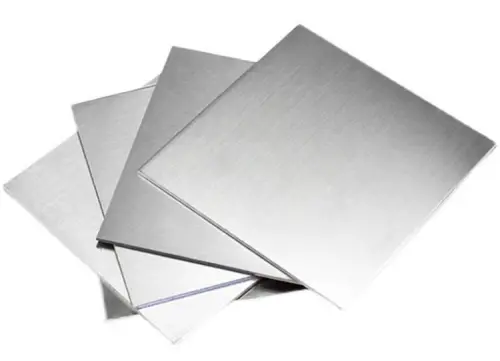
Understanding Ti-6Al-4V Titanium Sheet: Properties and Composition
The 6Al4V titanium sheet speaks to the most broadly utilised titanium combination around the world, accounting for over half of all titanium utilisation in aviation fabrication. This dominance comes from its carefully built composition and main mechanical characteristics, which address specific industry challenges.
Chemical Composition and Manufacturing Process
When aviation engineers and procurement groups confront the challenge of selecting materials that can withstand extraordinary conditions while minimising weight, the 6Al4V titanium sheet reliably emerges as the ideal arrangement. This titanium amalgam, also known as Ti-6Al-4V or Review 5 titanium, combines around 6% aluminium and 4% vanadium with titanium to provide extraordinary quality, erosion resistance, and warm steadiness. Its far-reaching appropriation over commercial flying, defence, and space investigation applications reflects decades of demonstrated execution in the most demanding situations, where fabric disappointment is not an alternative.
Mechanical and Physical Characteristics
In the toughened condition, the 6Al4V titanium sheet shows a least ductile quality of 895 MPa (130 ksi) and an abductive quality of 828 MPa (120 ksi), with prolongation regularly extending between 10 and 14%. These mechanical properties stay steady at temperatures up to 400°C, outperforming aluminum combinations and numerous stainless steels. The flexible modulus of 113.8 GPa provides adequate firmness for basic applications, while the material's remarkable resistance to weakness ensures a long service life under cyclic loading conditions commonly found in aviation operations. The arrangement of an unconstrained titanium dioxide (TiO2) detached film gives insusceptibility to erosion from saltwater, climatic dampness, and different chemical situations experienced amid flight operations.
Advantages Over Alternative Materials
Compared to commercially unadulterated titanium grades, the 6Al4V titanium sheet offers essentially higher quality without significant weight punishment. Not at all like stainless steel, which weighs around 40% more for proportionate quality, this titanium combination empowers significant weight investment funds that specifically decipher to move forward with fuel proficiency and expanded payload capacity. The material's warm treatability through arrangement treating and maturing (STA) forms permits assist customization of mechanical properties to meet particular application prerequisites, a capability inaccessible in unadulterated titanium grades. This combination of characteristics positions Ti-6Al-4V as the favoured choice for obtainment directors and plan engineers working on weight-critical aviation ventures.
Aerospace Applications of 6Al4V Titanium Sheet
The aerospace industry's reliance on 6Al4V titanium sheet spans multiple critical applications where performance, reliability, and weight optimisation intersect. Understanding these specific uses helps procurement teams appreciate the material's value proposition beyond simple cost comparisons.
Structural Components and Airframe Elements
Flying machine fuselage skins, bulkhead boards, and wing gatherings progressively join titanium sheet 6Al-4V to diminish, by and large, aeroplane weight while keeping up basic astuteness. These components must endure high cyclic stacking during takeoff, flight, and landing operations, as well as extreme temperature variations from stratospheric cold to engine warm introduction. The material's high weariness quality and break proliferation resistance guarantee that these structures keep up security edges all through decades of operational benefit. Producers report that substituting conventional aluminium amalgams with titanium amalgam sheets in select airframe ranges can decrease segment weight by 25-30% while progressing erosion resistance in moisture-prone zones.
Engine Components and High-Temperature Applications
Jet engine manufacturers utilise 6Al4V titanium sheet for compressor blades, casings, and heat shields where temperatures reach 400°C and thermal cycling occurs thousands of times per flight. The material withstands these thermal stresses without suffering creep deformation or oxidation degradation that would compromise performance. Heat exchangers fabricated from Ti-6Al-4V sheets efficiently transfer thermal energy while resisting corrosion from combustion byproducts and environmental contaminants. Engine firewalls and thermal barriers protect critical systems from heat damage by using titanium's low thermal conductivity and high melting point to create effective safety zones within aircraft propulsion systems.
Fastening Systems and Precision Hardware
Air ship gathering requires thousands of latches, brackets, and mounting equipment that must keep up clamping constrain and dimensional soundness all through the aircraft's benefit life. The 6al4v titanium sheet serves as source fabric for precision-stamped and machined affixing components that stand up to galvanic erosion when joining disparate metals, a common challenge in mixed-material airplane development. These clasp keep up mechanical astuteness beneath vibrational stretch and temperature cycling without extricating or falling flat, contributing to by and large, aeroplane unwavering quality. The biocompatibility and erosion resistance of Ti-6Al-4V, moreover, empower specialised aviation therapeutic applications inside life back frameworks and group wellbeing checking equipment.
These differing applications illustrate why aviation producers reliably indicate titanium sheet 6Al-4V in spite of its higher fabric fetch. The long-term operational investment funds from decreased fuel utilisation, expanded upkeep interims, and moved-forward component life expectancy legitimise the starting venture, especially for aeroplanes anticipated to stay in benefit for 20-30 years, a long time.
Choosing the Right Titanium Alloy Sheet for Aerospace Projects
Procurement decisions involving 6Al-4V titanium sheet require careful consideration of multiple technical and commercial factors. Understanding these selection criteria helps engineering teams optimise performance while managing budget constraints.
Comparing Ti-6Al-4V with Stainless Steel Alternatives
While stainless steel grades like 316 and 17-4 PH offer good corrosion resistance at lower material costs, they cannot match the strength-to-weight ratio of titanium alloy sheets. A component manufactured from a 6Al4V titanium sheet weighs approximately 40% less than an equivalent stainless steel part with comparable strength, translating directly to fuel savings over the aircraft's operational lifetime. The lifecycle cost analysis shows that despite titanium's higher upfront expense (typically 8-12 times stainless steel per kilogram), the operational savings from weight reduction and extended service intervals often result in a lower total cost of ownership for aerospace applications. Stainless steel also exhibits inferior performance at elevated temperatures, limiting its use in high-heat zones where titanium excels.
Sheet vs. Plate Thickness Considerations
The distinction between sheets and plates essentially includes thickness, with sheets regularly extending from 0.5 mm to 6 mm and plates surpassing this range. More slender 6Al4V titanium sheet fabric suits applications requiring formability and weight optimisation, such as skin boards and fairings, where complex ebbs and flows and tight tolerances are fundamental. Thicker segments give more noteworthy flexibility and load-bearing capacity for auxiliary outlines and mounting points subjected to concentrated stresses. Superplastic formability of the material at elevated temperatures (roughly 900°C) allows even moderately thick sheets to be shaped into complex geometries without breaking, which reduces the need for welding and minimises concerns related to heat-affected zones that can compromise mechanical properties.
Standard Grade vs. Extra-Low Interstitial (ELI) Variants
Standard 6Al4V titanium sheet meets most aviation necessities, but extra-low interstitial (ELI) grades offer improved break durability and ductility at cryogenic temperatures. The ELI variation decreases oxygen, nitrogen, and carbon substance underneath standard limits, coming about in progressed indent affectability and weakness break development resistance. Aviation applications including cryogenic fuel systems, fluid oxygen tanks, and deep-space investigation equipment benefit from ELI grade's prevalent low-temperature execution. Obtainment groups ought to indicate ELI grades (assigned as Review 23 or Ti-6Al-4V ELI) when components will encounter temperatures below -50°C or require greatest harm resistance in basic structures. Standard grades suffice for normal aeroplane working conditions and offer cost-effective savings when extraordinary execution is unnecessary. Understanding these specialised refinements empowers educated obtainment choices that adjust execution necessities with budget constraints, ensuring aviation projects get ideal material selections without superfluous use.
Sourcing Aerospace-Grade 6Al4V Titanium Sheet Globally
Successful procurement of a 6Al4V titanium sheet requires identifying suppliers who maintain rigorous quality standards and possess necessary aerospace certifications. The sourcing strategy significantly impacts both component quality and project timelines.
Supplier Certification and Quality Standards
Aerospace applications demand materials meeting AMS 4911 (for sheet and strip), ASTM B265, and various OEM-specific requirements from Boeing, Airbus, and other manufacturers. Qualified suppliers provide full Mill Test Reports (MTR) with EN 10204 3.1 certification, documenting chemical composition, mechanical properties, and traceability to specific production batches. LINHUI TITANIUM maintains comprehensive certifications including PED 2014/68/EU, ABS, DNV, BV, and ISO 9001:2015, ensuring 6Al4V titanium sheet products meet international aerospace standards. Third-party inspection agencies like DNV, SGS, and TUV verify material compliance, providing procurement teams with confidence in material authenticity and performance characteristics.
Lead Times and Minimum Order Quantities
Standard 6Al4V titanium sheet dimensions typically ship within 4-6 weeks from established suppliers that maintain inventory in common sizes. Custom thicknesses, widths beyond 2000mm, or specialised surface finishes may require 8-12 weeks for production scheduling and processing. Minimum order quantities vary by supplier and product specification, generally ranging from 100kg for stock sizes to 500kg for custom configurations. Volume purchases offer significant cost advantages, with pricing potentially decreasing 15-25% for orders exceeding one metric tonne. Procurement professionals should balance inventory carrying costs against volume discounts and lead time requirements when structuring orders.
Customisation and Value-Added Processing
Many aerospace applications require 6AL-4V titanium sheet with precision cutting, edge finishing, or surface treatments beyond standard mill finish. CNC waterjet cutting, laser profiling, and abrasive trimming make near-net-shape blanks that reduce machining waste and save time in later processing. Surface treatments including pickling, passivation, and specialised coatings enhance corrosion resistance and paint adhesion for exterior applications. LINHUI TITANIUM offers comprehensive value-added services including drilling, forming, and heat treatment, enabling customers to receive components closer to final specifications and reducing internal processing requirements. These services prove particularly valuable when internal machining capacity is limited or when material yield optimisation justifies outsourcing fabrication operations.
Establishing relationships with certified suppliers who understand aerospace quality requirements and offer flexible ordering options creates supply chain resilience essential for managing complex aircraft manufacturing schedules.
Optimising Performance Through Proper Processing and Maintenance
Maximising the service life and performance of 6Al4V titanium sheet components requires attention to heat treatment, machining practices, and maintenance protocols throughout the component lifecycle.
Heat Treatment Protocols for Enhanced Properties
Solution treating and ageing (STA) processes can significantly enhance the mechanical properties of titanium sheet 6Al-4V beyond the annealed condition. Solution treatment involves heating to approximately 955°C, holding for a specified duration, and then rapidly cooling to retain the beta phase. Subsequent ageing at 540°C for 4-8 hours precipitates fine alpha particles within the beta matrix, increasing yield strength to over 1100 MPa while maintaining acceptable ductility. These heat treatments require careful temperature control and inert atmosphere protection to prevent surface contamination that would compromise corrosion resistance. Aerospace manufacturers employ vacuum furnaces or argon-blanketed equipment to ensure consistent results across production batches.
Machining Best Practices and Tool Selection
The 6Al4V titanium sheet presents specific machining challenges due to its work-hardening tendency and low thermal conductivity. Successful machining requires sharp cutting tools made from carbide or coated high-speed steel, operated at relatively low cutting speeds (30-50% of aluminium speeds) with generous coolant application. The material's tendency to weld to cutting edges necessitates frequent tool inspection and replacement to maintain dimensional accuracy and surface finish quality. Climb milling, rather than conventional milling, reduces work hardening, while maintaining consistent feed rates prevents built-up edge formation that causes surface defects. These practices minimise waste and maximise material utilisation, important considerations given titanium's cost premium over conventional metals.
Preventive Maintenance and Corrosion Management
Although Ti-6Al-4V exhibits excellent corrosion resistance, proper maintenance extends component life in harsh aerospace environments. Regular inspection for surface damage that could initiate stress corrosion cracking ensures early detection of potential issues before they compromise structural integrity. Components subjected to high-stress levels benefit from shot peening or surface rolling treatments that induce beneficial compressive residual stresses, improving fatigue resistance and crack initiation resistance. The 6Al4V titanium sheet components exposed to marine environments or industrial pollution require periodic cleaning to remove surface contaminants that might locally disrupt the protective oxide film. These straightforward maintenance practices preserve the material's inherent advantages throughout decades of operational service.
Attention to these processing and maintenance details ensures that aerospace components manufactured from titanium alloy sheet deliver the expected performance and longevity that justify the material's premium cost.
Conclusion
The 6Al4V titanium sheet has proved itself as an irreplaceable material in modern aerospace engineering, offering an exceptional combination of strength, lightweight, and environmental resistance. Its applications span structural components, engine systems, and precision hardware where performance directly impacts safety and operational efficiency. Procurement teams benefit from understanding the technical distinctions between grades, thickness options, and heat treatment conditions when specifying materials for specific applications. Sourcing from certified suppliers who maintain aerospace-grade quality standards and offer value-added processing capabilities streamlines manufacturing while ensuring compliance with stringent industry requirements. As aerospace technology continues advancing toward more efficient and capable aircraft, the role of Ti-6Al-4V titanium alloy in enabling these innovations remains central to industry progress.
FAQ
Why is Ti-6Al-4V preferred over other titanium grades for aerospace?
The 6Al4V titanium sheet offers the optimal balance of strength, weight, and cost among titanium alloys. Its tensile strength of 895 MPa exceeds that of commercially pure grades by 100%, while the addition of aluminium and vanadium enhances high-temperature performance, which is critical for engine applications. The material's heat treatability allows customisation of properties for specific requirements, unlike pure titanium grades.
How does sheet thickness affect mechanical performance?
Thinner sheets (0.5- 3 mm) provide maximum formability for complex shapes but offer lower absolute strength for load-bearing applications. Thicker sections (4- 6 mm) increase rigidity and load capacity while maintaining excellent strength-to-weight ratios superior to alternative materials. The 6Al4V titanium sheet maintains consistent mechanical properties across thickness ranges when properly manufactured.
What lead times should procurement teams expect?
Standard stock sizes typically ship within 4-6 weeks from established suppliers. Custom dimensions, specialised surface finishes, or volume orders requiring dedicated production runs may extend timelines to 8-12 weeks. Planning procurement schedules around these realities prevents project delays and enables cost-optimised ordering strategies.
Partner with a Trusted 6Al4V Titanium Sheet Supplier
LINHUI TITANIUM delivers aerospace-grade titanium sheet 6Al-4V meeting AMS 4911, ASTM B265, and international aerospace standards to manufacturers and contractors worldwide. Our Xi'an facilities produce premium Ti-6Al-4V sheets in thicknesses from 0.5 mm to 100 mm, with customisation options including precision cutting, heat treatment, and surface finishing available. Holding PED, ABS, DNV, and ISO 9001:2015 certifications, we've supplied world-class projects for organisations including PEMEX, PETRONAS, and leading aerospace contractors across 60+ countries. Our engineering team provides technical support for material selection, processing guidance, and compliance documentation, ensuring your projects receive optimal solutions. Contact our specialists at linhui@lhtitanium.com to discuss your 6al4v titanium sheet requirements and discover how our factory-direct pricing and responsive service benefit aerospace procurement operations.
References
1. American Society for Testing and Materials. (2020). ASTM B265-20: Standard Specification for Titanium and Titanium Alloy Strip, Sheet, and Plate. West Conshohocken: ASTM International.
2. SAE International. (2018). AMS 4911: Titanium Alloy, Sheet, Strip, and Plate 6Al-4V, Annealed. Warrendale: SAE Aerospace Material Specifications.
3. Donachie, M.J. (2000). Titanium: A Technical Guide (2nd ed.). Materials Park: ASM International.
4. Boyer, R., Welsch, G., & Collings, E.W. (1994). Materials Properties Handbook: Titanium Alloys. Materials Park: ASM International.
5. Lutjering, G., & Williams, J.C. (2007). Titanium (2nd ed.). Berlin: Springer-Verlag.
6. Peters, M., Kumpfert, J., Ward, C.H., & Leyens, C. (2003). Titanium alloys for aerospace applications. Advanced Engineering Materials, 5(6), 419-427.









