
For the best pipe system design, you need to know how to use 45° and 90° ASTM B363 Gr5 titanium elbows in different situations. The 45° design has smoother changes in flow direction and less pressure drop, which makes it perfect for tasks that need little turbulence. On the other hand, 90° elbows are a space-saving option for tight spots where you need to change directions a lot. Both types of ASTM B363 Gr5 titanium elbows have great corrosion protection and strength-to-weight ratios, which is why they are used in the aerospace, oil, gas, and chemical industries around the world.
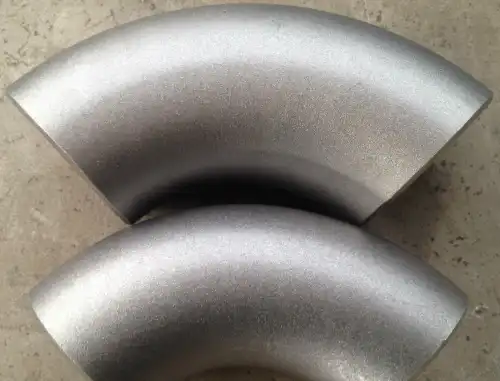
Understanding ASTM B363 Grade 5 Titanium Properties
Grade 5 titanium, which is also written as Ti-6Al-4V, is the titanium metal that is most often used in industry. This titanium alloy elbow is made up of 6% aluminum and 4% vanadium, which makes it very strong, light, and resistant to rust. The tensile strength of the material is between 895 and 1000 MPa, which is a lot higher than the strength of commercially pure titanium grades.
Grade 5 titanium has both alpha and beta phases in its microstructure, which helps explain why it has such good mechanical qualities. Because it has a dual-phase structure, the material can keep its shape at very low temperatures (below 0°C) or very high temperatures (400°C). Chemical processing plants value these qualities a lot when they have to deal with corrosive media that would quickly wear down regular steel parts.
ASTM B363 fittings made from Grade 5 titanium have very high fatigue resistance, which is important for uses that are loaded and unloaded many times. The material has a Young's modulus of 114 GPa, which means it is stiff enough but still flexible enough to accommodate thermal growth in large-scale pipe systems.
45° Elbow Applications and Performance Benefits
The 45° titanium pipe connection, specifically the ASTM B363 Gr5 titanium elbow, is used in situations where a gradual change in flow direction is needed to keep system stress and pressure losses to a minimum. Offshore oil platforms use this fitting extensively in their saltwater cooling systems, as its softer bend makes the system less likely to cavitate and increases the equipment's lifespan. Furthermore, these elbows are excellent for high-velocity fluid applications due to their ability to reduce turbulence.
In aircraft hydraulic systems, where room is limited and efficient routing without sudden changes in direction is key, 45° titanium elbow configurations work best. Because titanium fittings are so light, they help a lot with weight loss goals while still keeping their structural integrity under high pressure.
When routing around existing infrastructure or natural obstacles, 45° bend configurations are helpful for pipeline use in the petrochemical industry. The slow change in direction keeps the wall from thinning as it does around sharp bends, which increases its useful life in corrosive environments. When working with processes that are hot, the heat-resistant features of elbows become very useful.
Flow dynamics research shows that 45° elbows cause about 30% less pressure drop than 90° configurations that are the same. This decrease means that pumping systems use less energy, which makes them a good choice for long-distance transportation networks in oil and gas use.
90° Elbow Applications and Design Advantages
The 90° high-strength titanium elbow, specifically an ASTM B363 Gr5 titanium elbow, is the most popular choice for situations where space needs to be used efficiently and direct perpendicular connections are needed. When compact design is more important than flow efficiency, these elbows are used extensively in the shipbuilding industry for ballast systems and cargo handling equipment. Their exceptional corrosion resistance is paramount in the constant presence of seawater.
Chemical processing plants use 90° ASTM titanium pipe fittings to connect reaction vessels in places where precise geometry calls for quick changes in direction. The fittings for the pressure vessels have to be able to handle both mechanical stresses and harsh chemical conditions that would break down other materials within months of being put in place.
90° titanium tube fittings are used in condensate systems at power plants where limited room calls for small routing solutions. In these situations, the material's ability to avoid stress corrosion cracking is very useful because failure could cause a lot of loss and safety issues.
The use of medical-grade titanium elbows in the pharmaceutical industry requires both exact geometry and complete cleanliness. The 90° shape makes cleaning easier while keeping the biocompatibility that is important for pharmaceutical production settings.
Flow Dynamics and Pressure Drop Considerations
Computational fluid dynamics studies show that the performance features of elbows at 45° and 90° are very different. At the same flow rates, the 45° smooth titanium elbow produces lower Reynolds numbers. This means that there is less wall shear stress and less chance of erosion. This benefit is very important when working with rough fluids or slurries, which are common in mining and mineral processes.
Calculations of pressure drop show that resistance coefficients (K-factors) for 90° elbows are usually between 0.9 and 1.2, while K-factors for 45° designs stay between 0.35 and 0.45. This big difference affects the size of the pump needed and the cost of running the facility's energy for its entire life.
Measurements of turbulence strength show that 90° bends make secondary flow patterns that are very important and reach up to 10 pipe diameters downstream. These flow disturbances can make measurements further downstream less accurate and make instrument care more necessary. The 45° industrial titanium elbow disrupts flow less severely, which improves the general performance of the system.
Cavitation susceptibility research shows that sharp bends lower local pressure, which could cause vapor bubbles to form in liquid systems. The sloping shape of 45° elbows helps keep pressure levels above vapor pressure limits, which keeps the system's integrity safe.
Installation and Welding Considerations
To keep the material's properties and keep it from getting contaminated, welding titanium elbow setups need to be done in a certain way. During welding, both 45° and 90° designs need inert gas shielding to keep oxygen from absorbing, which could weaken corrosion resistance. To keep microstructural changes from happening, the welding process must keep the temperatures between passes below 150°C.
Cleaning the area well with acetone or alcohol to get rid of any contaminants is part of the pre-welding preparation for an ASTM B363 Gr5 titanium elbow. This material requires backing gas protection to stop root pass oxidation, which could make stress concentration points that cause the material to fail too soon.
Because of the different designs, post-weld heat treatment needs to be thought about in different ways. The 90° shape puts more stress at the bend apex, which might mean that stress relief steps are needed that aren't needed for 45° setups in the same situations.
As part of quality control, liquid penetrant tests and X-rays must be used to make sure the integrity of the weld. Custom titanium elbows made by experienced suppliers usually come with material test papers that list the chemical makeup and mechanical properties of the material to make sure they meet the needs of the project.
Industry-Specific Applications and Case Studies
The biggest user of Grade 5 titanium elbows is the oil and gas business. Offshore platforms use thousands of fittings for each installation. Titanium pipe connectors used in seawater pumping systems have been shown to last 25 years in recent North Sea projects, compared to an average of 7 years for stainless steel parts with the same function.
After switching to titanium alloy elbow systems, chemical processing plants in the Gulf region have seen a big drop in their upkeep costs. The better resistance to corrosion means that replacements don't have to be planned, and unexpected shutdowns happen over 60% less often. These gains in performance directly lead to higher profits and more reliable operations.
Spacecraft and satellite technologies are now being used in aerospace applications in addition to traditional aircraft systems. Since Grade 5 titanium is both light and resistant to radiation, it is perfect for use in space-based fluid systems where parts can't be replaced.
Pharmaceutical companies like titanium devices because they are biocompatible and easy to clean. Titanium's smooth surface finish keeps germs from sticking and makes sterilization easier, which is important for making sure the quality of the product.
Quality Standards and Certification Requirements
The ASTM B363 standards set strict rules for titanium pipe fittings, covering everything from size tolerances to material makeup and mechanical features. The standard includes both seamless and welded constructions and has detailed rules for pressure ratings ranging from 150# to 2500#. To make sure that these high standards are met, manufacturing methods must keep a close eye on quality.
The requirements for international certification depend on the product and the location. Maritime applications usually need approval from a classification group, like DNV, ABS, or Lloyd's Register. For these certifications, a lot of tests and paperwork are needed to prove that the product works in marine environments.
Pressure equipment directives (PED) must be followed for all uses of pressurized devices in the European Union. Authorized inspection groups look over the design, make sure the materials are correct, and rate the quality of the manufacturing as part of the certification process. This strict method makes sure that the system works safely in the conditions that are designed for service.
Chemical analysis, mechanical testing, and non-destructive examination are common types of third-party inspection methods. Reliable makers keep full traceability systems that keep track of where materials come from, how they were processed, and the results of quality tests for each production lot.
Conclusion
Which of the 45° and 90° ASTM B363 Gr5 titanium elbows to use relies on the needs of the application, taking into account flow efficiency, space limitations, and system performance goals. While 45° configurations offer better flow characteristics and lower pressure drops, 90° elbows are important for small installations that need to save space. Both choices offer high levels of resistance to corrosion and the mechanical qualities needed for tough industrial uses. By knowing these differences, engineers can make the best system designs that are also the most reliable and cost-effective for the whole lifecycle of a building.
Get Premium ASTM B363 Gr5 Titanium Elbow Solutions from LINHUI TITANIUM
LINHUI TITANIUM stands as your trusted ASTM B363 Gr5 titanium elbow manufacturer, delivering world-class fittings backed by 21 years of manufacturing excellence and comprehensive international certifications. Our advanced production facilities feature 30 titanium metal production lines, ensuring consistent quality and reliable delivery for your critical projects. Whether you need 45° or 90° configurations, our expert team provides customized solutions meeting the most demanding specifications. Contact us at linhui@lhtitanium.com to discuss your requirements.