
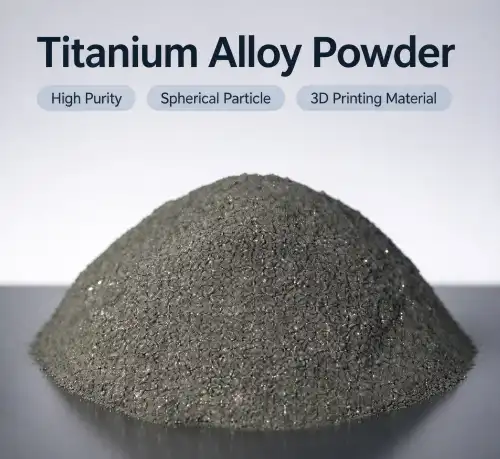
Titanium Alloy Powder for 3D Printing
Standard: ASTM F2924, ASTM F3001, ISO 5832-3, AMS 4998
Grade: Ti-6Al-4V (Grade 5 / UNS R56400), Ti-6Al-4V ELI (Grade 23 / UNS R56407)
Particle Size: LPBF: 15–53 μm / 15–45 μm · EBM: 45–106 μm · DED: 53–150 μm (custom cuts available)
Oxygen Content: Grade 5: ≤ 0.13 wt% (economy ≤0.17% available) · Grade 23 ELI: ≤ 0.08–0.10 wt%
Sphericity: ≥ 0.90, satellite content < 5%
Apparent Density: ≥ 2.30 g/cm³ (LPBF grade typical 2.35–2.40 g/cm³)
Tap Density: ≥ 2.60 g/cm³
Hall Flow: ≤ 30 s/50g (LPBF grade)
Processing Type: Plasma atomization (PA) / Electrode Induction-melting Gas Atomization (EIGA)
Surface Treatment: Virgin, uncoated; passivated options available on request






Ti-6Al-4V titanium alloy powder is a high-performance spherical powder specified for laser powder bed fusion (LPBF), electron beam melting (EBM), and directed energy deposition (DED) additive manufacturing. Available in Grade 5 (UNS R56400) and Grade 23 ELI (UNS R56407), this powder complies with ASTM F2924, ASTM F3001, ISO 5832-3, and AMS 4998, delivering the low oxygen content, high sphericity, and excellent flowability required for aerospace structural components, medical implants, and industrial heat exchangers.
As a direct titanium powder manufacturer, we produce and export gas-atomized Ti-6Al-4V powders in custom particle size cuts — with factory-direct pricing, batch-specific Certification of Analysis (CoA), and worldwide delivery. Whether you need 15-53 μm Grade 5 powder for LPBF or low-oxygen Grade 23 ELI powder for medical implants, we help you match the right specification to your printer and application.
Send your specifications — receive a quotation and CoA sample within 24 hours.
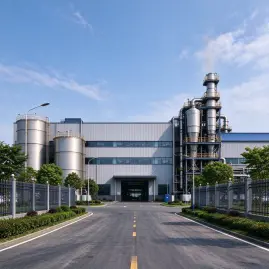
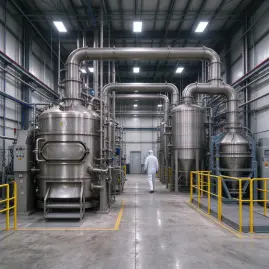

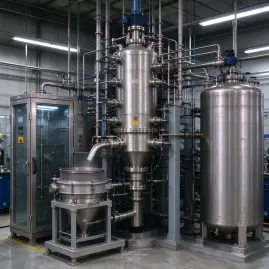
Key Features & Advantages
-
Dual Grade Coverage: Ti-6Al-4V (Grade 5) for structural strength, and Grade 23 ELI for medical/fatigue-critical applications.
-
Application-Specific PSD: Custom cuts for LPBF (15-53μm), EBM (45-106μm), and DED (53-150μm) ensure perfect printer compatibility.
-
Ultra-Low Oxygen Control: Grade 5 (≤0.13 wt%) and ELI (≤0.08-0.10 wt%) with batch-specific actual values to prevent embrittlement.
-
High Sphericity & Flowability: ≥0.90 sphericity and smooth flow guarantee uniform powder beds and flawless recoating.
-
Full Batch Traceability: Batch-specific CoA provided for seamless ISO 9001, AS9100, and ISO 13485 quality audits.
-
High Yield & Cost Efficiency: Minimal satellites and consistent melting behavior reduce build failures and wasted machine time.
Product Specifications
| Parameter | Specification |
|---|---|
| Standard | ASTM F2924, ASTM F3001, ISO 5832-3, AMS 4998 |
| Grade | Ti-6Al-4V (Grade 5 / UNS R56400), Ti-6Al-4V ELI (Grade 23 / UNS R56407) |
| Particle Size | LPBF: 15–53 μm / 15–45 μm · EBM: 45–106 μm · DED: 53–150 μm (custom cuts available) |
| Oxygen Content | Grade 5: ≤ 0.13 wt% (economy ≤0.17% available) · Grade 23 ELI: ≤ 0.08–0.10 wt% |
| Sphericity | ≥ 0.90, satellite content < 5% |
| Apparent Density | ≥ 2.30 g/cm³ (LPBF grade typical 2.35–2.40 g/cm³) |
| Tap Density | ≥ 2.60 g/cm³ |
| Hall Flow | ≤ 30 s/50g (LPBF grade) |
| Processing Type | Plasma atomization (PA) / Electrode Induction-melting Gas Atomization (EIGA) |
| Surface Treatment | Virgin, uncoated; passivated options available on request |
| Packaging | 5 kg / 10 kg / 25 kg HDPE drums under argon; silica gel desiccant included |
| Customization | Custom PSD cuts, low-oxygen versions, and 1–5 kg qualification samples available |
Manufacturing Process
Our titanium alloy powder is manufactured through six controlled steps to ensure high batch-to-batch consistency and extremely low impurity levels:
1. Raw Material Selection
We use high-purity titanium sponge and master alloys, conducting strict chemical re-inspection and surface cleaning before melting to eliminate high-density inclusions (HDI) at the source.
2. Clean Melting
Using crucible-free Electrode Induction-melting Gas Atomization (EIGA) or plasma technology. The melting process involves no contact with refractories or tungsten electrodes, eliminating contamination risks.
3. Argon Atomization
The molten stream is shattered by supersonic high-purity argon gas and rapidly solidified, forming premium powder with ≥ 0.90 sphericity and minimal satellites, featuring a fine, uniform internal grain structure.
4. Precision Classification
Through multi-stage mechanical sieving and air classification, coarse and fine tails are precisely cut. This ensures a highly concentrated final PSD (e.g., 15–53 μm or 45–106 μm) to guarantee smooth recoating.
5. Multi-Stage QC
Samples are taken at three nodes: post-atomization, post-sieving, and pre-packaging. We test chemical composition (including oxygen), PSD, morphology, and flow rate. Non-compliant batches are strictly isolated and never proceed to the next stage.
6. Argon Packaging
Qualified powder is packed in moisture-proof drums within an argon-protected environment, with desiccants added and argon-filled sealing. This completely isolates the powder from air, ensuring it is "ready to use" upon opening.
Quality Assurance & Testing
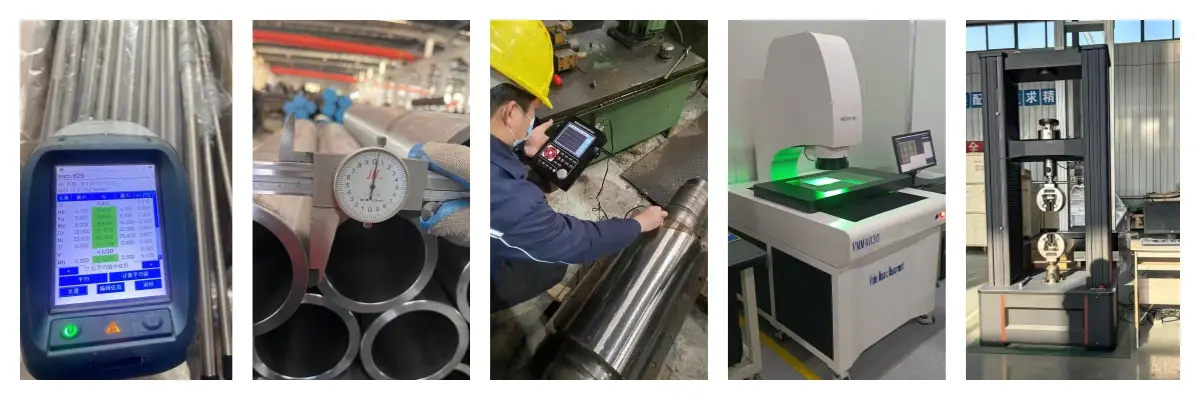
We operate a lot-by-lot release system—no powder ships without passing our full QC protocol. Testing is performed both in-house and through accredited third-party laboratories (ISO 17025 where required).
-
Chemical composition by ICP-OES and combustion analysis (O/N/H)
-
Particle size distribution by laser diffraction (D10/D50/D90 reported)
-
Morphology and satellite content by SEM imaging
-
Flowability by Hall flowmeter (ASTM B213)
-
Apparent and tap density (ASTM B212 / B527)
-
Moisture content by Karl Fischer or TGA
Documentation provided: Batch-specific Certificate of Analysis (CoA), Safety Data Sheet (SDS), and export compliance documentation. Third-party inspection (SGS, TÜV, Bureau Veritas) can be arranged at buyer's request.
Applications
Aerospace Structural Components
Grade 5 powder is the workhorse for LPBF and EBM production of brackets, housings, and structural fittings where weight reduction and high specific strength are essential.
Medical Implants & Surgical Instruments
Grade 23 ELI powder meets the stricter interstitial limits required for orthopedic implants, dental frameworks, and surgical guides, supporting ISO 10993 compliance for patient-contacting devices.
Industrial & Energy Components
Heat exchangers, impellers, and valve bodies benefit from titanium's corrosion resistance. DED-grade powder (53–150 μm) enables laser cladding and repair of expensive titanium components.
Consumer & Custom Products
From premium eyewear frames to custom cycling components, titanium's strength-to-weight ratio and finish quality make it a favorite for high-end consumer goods.
Why Choose Us?
Powder Quality Built for Print Yield
A failed build wastes machine time, gas, and labor. We spec our powder for flowability and packing density first, because these variables most directly affect layer uniformity and part density. Our QC release criteria are tighter than minimum ASTM requirements.
Application-Specific Technical Support
Our team helps you match PSD, oxygen grade, and packaging to your printer model. We offer 1–5 kg qualification samples with full CoA so you can validate on your own machine before committing to bulk orders.
Consistent Supply, Transparent Pricing
We quote EXW or CIF with clear breakdowns and lead times. For recurring production accounts, we offer scheduled quarterly releases with locked pricing windows.
Export-Ready Packaging & Documentation
Titanium powder is a reactive material requiring proper handling. We package under argon, include desiccant, and supply SDS plus UN-compliant shipping documentation for air and sea freight.
FAQ
Q1: What is the difference between Grade 5 and Grade 23 (ELI) titanium powder?
Grade 5 is standard Ti-6Al-4V (O₂ ≤ 0.20%, we typically deliver ≤0.13%), suited for most industrial and aerospace structural parts. Grade 23 ELI has stricter interstitial limits (O₂ ≤ 0.08–0.10%), offering higher ductility and fracture toughness. Choose Grade 23 for medical implants and fatigue-critical aerospace parts; choose Grade 5 for cost-sensitive industrial components.
Q2: Which particle size do I need for my printer?
-
LPBF / SLM: 15–45 μm or 15–53 μm
-
EBM: 45–106 μm
-
DED / Laser Cladding: 53–150 μm
Tell us your machine model and layer thickness, and we'll recommend the optimal cut.
Q3: How do you control oxygen content?
We use high-purity argon throughout melting, atomization, and packaging. Powder is never exposed to ambient atmosphere. Our Grade 23 ELI lots routinely test below 0.10 wt% oxygen, and actual measured values are provided on the CoA.
Q4: Can I get a sample before bulk ordering?
Yes. We offer 1 kg, 2 kg, and 5 kg qualification samples with full batch CoA. Sample orders typically ship within 5–7 business days. We recommend printing a test build to check density, surface finish, and mechanical properties.
Q5: What is your MOQ and lead time?
MOQ is 5 kg for sample qualification and 25 kg for production orders. Lead time is 2–3 weeks for standard cuts from stock, or 4–6 weeks for custom PSD or ELI grades produced to order.
Q6: Can titanium powder be reused?
Yes, but establish a sieving and refreshing protocol. Titanium powder slowly absorbs oxygen during printing. Sieve out agglomerates and spatter after each build, refresh with 20–30% virgin powder, and periodically test oxygen content. When oxygen exceeds the grade limit (Grade 5 >0.20% or Grade 23 >0.13%), retire the powder.
Contact Us
Ready to qualify titanium powder for your 3D printing process?
Send us your requirements:
-
Printer model and process (LPBF / EBM / DED)
-
Required grade (Grade 5 or Grade 23 ELI)
-
Target particle size distribution
-
Estimated annual quantity
-
Certification or documentation requirements
Email: linhui@lhtitanium.com