
The Zr702 Zirconium Bar is a very important material for industrial uses because it doesn't break down when exposed to strong chemicals or high temperatures. This type of pure zirconium is very resistant to corrosion and has good mechanical strength, which makes it essential for chemical processing plants, petrochemical facilities, and advanced manufacturing settings. With a zirconium and hafnium percentage of at least 99.2%, this material naturally creates an oxide layer that protects equipment from harsh acids and alkalis. This greatly increases the equipment's service life and lowers the cost of upkeep.
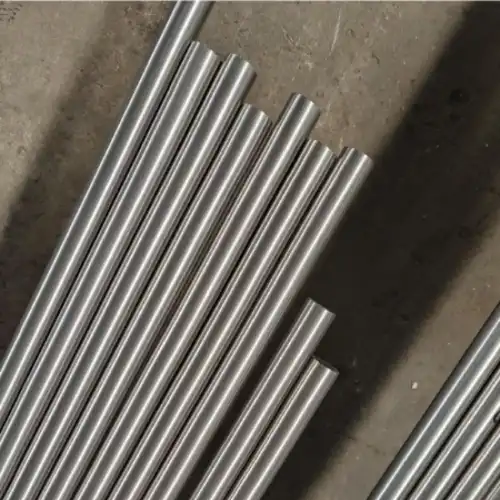
Understanding Zr702 Zirconium Bar and Its Core Properties
The technical base of Zr702 Zirconium Bar is its carefully controlled chemical makeup and designed mechanical properties. This unalloyed zirconium (UNS R60702) is commercially pure and meets the needs of efficiency and cost value for industrial uses.
Chemical Composition and Material Standards
The minimum amount of zirconium and hafnium in Zr702 Zirconium Bar, which meets ASTM B550 and ASME SB550 standards, is 99.2%. Nuclear-grade zirconium needs to have hafnium taken out, but this grade keeps up to 4.5% of the naturally present hafnium. This lowers production costs without lowering the rust resistance. The material has controlled intermediate elements, like oxygen levels that stay between 1000 and 2000 ppm, carbon levels that stay below 270 ppm, and hydrogen levels that stay below 50 ppm to stop delayed hydride cracking. The bar's density of 6.51 g/cm³ and melting point of 1852°C are due to these carefully balanced elements. This makes sure that the bar's shape stays stable during high-temperature exothermic processes that happen a lot in chemical synthesis.
Mechanical Performance Parameters
Because of its mechanical qualities, Zr702 Zirconium Bar works reliably in a wide range of industry settings. Tensile strength is at least 380 MPa (55 ksi), which means that structural parts like heat exchanger tie rods and reactor vessel internals can handle enough weight. If the yield strength is at least 205 MPa (30 ksi), there is a safety buffer against permanent deformation under working stress. When making a part, elongation values of at least 16% allow for some flexibility, which means that cold forming and cutting can be done without breaking the material. Hardness levels are usually between 80 and 95 HRB, which is a good mix between resistance to wear and ease of machining that makes it easy to turn and thread valve stems and pump shafts precisely.
Corrosion Resistance Across Industrial Environments
What really sets zirconium bar stock apart from other materials is how well it resists chemical attack. When exposed to oxygen, the material makes a dense, self-healing layer of zirconium dioxide (ZrO2), which acts as a shield against corrosive media. This protective process works very well in both reducing and oxidizing acids. It works much better than titanium in sulfuric acid settings with concentrations above 70% at boiling temperatures. The substance is completely resistant to alkaline solutions. It can withstand all amounts of sodium hydroxide and potassium hydroxide, which would dissolve tantalum or glass-lined steel. In naval settings, the zirconium bar stays strong in saltwater and chloride-filled situations, without the pitting or crevice corrosion that happens with stainless steel bars.
Heat Treatment and Performance Optimization
Strategic heat treatment is used in manufacturing processes, such as Zr702 Zirconium Bar, to improve material qualities and relieve stress. Usually, annealing takes place in controlled gas furnaces at temperatures between 650°C and 750°C. This creates a fully recrystallized grain structure that makes the metal more flexible and stable in its shape. This heat treatment gets rid of any stresses that were left over from cold working, which keeps the metal from warping during the following cutting and welding steps. The control of grain size is based on ASTM E112 standards, which aim for similar microstructures that ensure stable mechanical behavior under repeated loading conditions. Rapid cooling rates can be used to improve the structure of the grains, which makes parts that are used in chemical reactors and distillation columns more resistant to wear. With these heat processing options, procurement workers can choose the right material conditions for each job, whether they want maximum corrosion protection, better machinability, or higher mechanical strength.
Comparing Zr702 with Other Materials and Grades
To make good choices about what materials to use, you need to know a lot about how different materials work and the economic costs and benefits of each. Strategic comparisons show when Zr702 Zirconium Bar is the best value compared to other materials.
Zr702 versus Zr705 Zirconium Alloy
Both grades can be used in corrosive settings, but their performance ratings are different because of their different compositions. Zr705 has niobium added on purpose (2–3 percent), which makes the tensile strength about 550 MPa and the yield strength about 380 MPa. This makes it about 45% stronger than commercially pure Zr702. This alloying makes Zr705 better for high-temperature pressure tank uses because it makes it less likely to creep at temperatures above 300°C. Adding niobium, on the other hand, makes the material 30–40% more expensive and makes it slightly less resistant to rusting in some acidic conditions. When maximum rust resistance is more important than final strength, commercially pure Zr702 Zirconium Bar works best. This is especially true in the production of acetic acid, urea, and medicines, where chemical inertness and material purity are most important. Zr702 is not as hard as some other metals, which makes it easier to machine and lowers the cost of making complicated shapes.
Performance Benchmarking Against Titanium and Stainless Steel
When buying things, zirconium is often weighed against more common building materials. Titanium Grade 2 is great for aircraft uses because it doesn't rust in oxidizing conditions and has a high strength-to-weight ratio. But titanium rusts quickly in reducing acids and concentrated sulfuric acid above 60% concentration at high temperatures. These are conditions where commercially pure Zr702 Zirconium Bar does well. For a modest price, super duplex stainless steels are good at resisting chloride stress corrosion cracking. However, they fail horribly when exposed to strong hydrochloric and sulfuric acids, while zirconium 702 bar is barely affected. The lifetime cost study shows that zirconium is better for aggressive chemical service, even though it costs more at first. This is because zirconium equipment lasts 20–25 years, compared to 5–7 years for stainless steel. This means that there are no more replacement costs or production delays.
Cost-Effectiveness and Thermal Performance Analysis
Material prices are based on how complicated the supply chain is and how much refinement is needed. It usually costs 8–12 times more per kilogram for zirconium bars than the same-sized stainless steel bars, and 3–4 times more per kilogram for titanium bars. Total cost of ownership estimates, on the other hand, show a different economic picture. When used with sulfuric acid, a zirconium heat exchanger bundle lasts three to four times longer than titanium equivalents. This means that the higher starting cost is spread out over longer amounts of time. The material's melting point of 1852°C gives it large thermal margins in situations where temperatures hit 300–400°C. It keeps its mechanical integrity when polymer-lined equipment breaks, and glass-lined vessels could be damaged by thermal shock. Zirconium is better at conducting heat than ceramics, which saves energy because it allows for smaller heat exchanger designs with lower pressure drops and lower pumping costs. Because of these things, Zr702 Zirconium Bar is the most cost-effective choice for important process equipment in chemical plants, where unexpected shutdowns cost between $50,000 and $500,000 per day in lost production.
Manufacturing and Quality Assurance of Zr702 Zirconium Bars
The quality of the production determines whether the materials meet the performance requirements or become legal threats. Our production process for Zr702 Zirconium Bar is based on decades of experience working with metals and meeting strict industry standards.
Advanced Production Methodology
We start the manufacturing process by choosing the raw materials. We only use high-quality zirconium sponge that has been chemically tested and proven to be safe. The vacuum arc remelting (VAR) process makes ingots whose makeup is uniform. This gets rid of segregation flaws that make the metal less resistant to corrosion. When these ingots are hot-forged at temperatures between 800°C and 950°C, controlled deformation processes are used to break down the cast structure and make the grain direction more uniform. After that, hot rolling reduces the cross-sections to almost net dimensions while keeping the Zr702 Zirconium Bar temperature stable to stop surface rusting. After going through precision dies for cold finishing, the final dimensions are within ±0.1mm. This makes centerless ground surfaces with Ra values below 0.8µm that can be used for precision sealing.
Comprehensive Quality Control Protocols
Every production lot goes through strict testing procedures that make sure it meets ASTM B550 standards and customer needs. Inductively coupled plasma optical emission spectrometry (ICP-OES) and glow discharge mass spectrometry (GDMS) are used in chemical makeup research to measure major elements and find impurities with an accuracy of parts per million. For mechanical testing, samples are taken from each heat lot, and tensile tests are done to record the yield strength, final tensile strength, and stretch values. These results are written on material test papers that are sent with every package. This makes it possible to find the original melting records.
Critical Certifications and Compliance Documentation
Our quality management system is certified by ISO 9001:2015 and has written processes for all production and testing tasks. Our Zr702 Zirconium Bar has been certified by PED 2014/68/EU to be used in pressure equipment across all European markets. It meets the most important safety standards for materials that are used in pressure service. The TUV Nord AD2000-W0 approval adds to the credibility of German industry standards. Our materials can be used in marine and offshore environments where material breakdowns could be very dangerous to people and the environment. They have been approved by classification societies like DNV, ABS, CCS, BV, and Lloyd's Register.
Procurement Guide for Zr702 Zirconium Bars
Strategic choices about where to get materials affect whether projects get real materials on time or have to deal with expensive delays and quality problems. This useful information helps people who work in buying find their way around the global Zr702 Zirconium Bar supply chain.
Identifying Reliable Supply Sources
Buyers around the world should give more weight to companies that can make everything themselves, from cleaning sponges to making finished bars. This integration makes sure that the quality of the materials stays the same and lowers the risks in the supply chain compared to sellers who buy from a lot of different secondary providers. When looking at different providers, make sure to ask for facility qualification paperwork like ISO 9001 certificates, pressure equipment directions, and classification society approvals. Check the manufacturer's production capacity and normal wait times. Reliable makers keep common sizes in stock and can also make products to specific sizes upon request.
Commercial Considerations and Order Management
The price of zirconium bars depends on the cost of raw materials, how hard they are to make, and how the market supplies them. Zr702 Zirconium Bar costs about $85 to $125 per kilogram on the market right now for normal diameters (25 to 150 mm) that have been annealed. There are extra fees for small diameters less than 20 mm or large lengths more than 200 mm. Different suppliers have different minimum order numbers, but in general, they need between 100 and 500 kilos to cover the costs of setting up the production line. When buyers in bulk negotiate annual supply deals, they can often get savings of 10 to 15 percent compared to buying on the spot market.
International Logistics and Custom Capabilities
Shipping plans need to be carefully thought out to protect surfaces and keep them from getting dirty while they're in transit. For our packing, we use wooden boxes that are wrapped in polyethylene film to keep out moisture and protect against damage. International orders are mostly sent by sea freight. It usually takes 25 to 35 days for goods to get from Xi'an, China, to important places like Houston, Rotterdam, and Singapore. There are choices for air freight that can meet pressing needs and cut transit times to 5–7 days at a cost that is about 3–4 times that of ocean freight.
Why Choose Our Zr702 Zirconium Bars?
Material providers make claims, but only real success with tough industrial customers can show real ability. Leading companies trust LINHUI TITANIUM for important uses of Zr702 Zirconium Bar because of our track record.
Decades of Manufacturing Excellence
Since its start in 2000, LINHUI TITANIUM has grown from a regional materials seller to a world-famous zirconium bar maker that works with the toughest industries in the world. Our offices are in Xi'an, China, which is where the Belt and Road began in history. This puts us at the center of international trade lines and sources of raw materials. Our vertically integrated production sites, where we control every step from qualifying the sponge to final inspection, work well with this geographical benefit. Integrating the supply Zr702 Zirconium Bar chains makes it possible for flexible ordering of output and strict quality control that aren't possible with separate supply chains.
Global Client Portfolio and Project Success
As of now, we have sent hundreds of thousands of tons of specialized products to over 60 countries in Africa, the CIS, South America, the Gulf region, and Southeast Asia. Some of our clients are well-known companies around the world, like CEFC, PTT, PDVSA, PETROECUADOR, PPL, KOC, KNPC, Petro Vietnam, YPFB, LUKOIL, PDO, PEMEX, UZNEFTGAZ, and PETRONAS. These relationships weren't made based on marketing claims; instead, they were won by consistently delivering materials that work as promised in the toughest industrial settings.
Comprehensive Certification and Technical Support
Our certification offering meets a wide range of regulatory needs in places around the world. Our goods can be used in European pressure tools because they have PED 2014/68/EU certification. The TUV Nord AD2000-W0 approval is in line with German business standards. Classification society certificates from DNV, ABS, CCS, BV, BSI, Lloyd's, GL, and RINA allow for use in the sea and at sea. A manufacturing license for special equipment from the Chinese government, along with ISO 14001:2015 certifications for environmental management and OHSAS 18001:2007 certifications for health and safety at work, show a clear dedication to following the rules in all areas of operations.
Partner with LINHUI TITANIUM for Superior Zirconium Bar Solutions
The materials used in your important process tools should be designed to be reliable. LINHUI TITANIUM sells commercially pure Zr702 Zirconium Bar solutions that are made using ISO 9001:2015 quality systems and are approved to meet worldwide standards such as PED, ASTM B550, and the major classification societies. With the help of our extensive transportation and technical know-how, our global supply network guarantees regular delivery to more than 60 countries. Our team offers quick service backed by decades of manufacturing quality, whether you need stock sizes for instant shipment or custom dimensions for unique uses. Get in touch with us right away at linhui@lhtitanium.com to talk about your needs with a reliable source who wants your project to succeed.
Conclusion
When choosing materials for toxic industrial settings, you have to balance performance needs, lifecycle costs, and the stability of the supply chain. The Zr702 Zirconium Bar is very resistant to corrosion in harsh acids and alkalis. It also has enough dynamic strength for structural uses and has been shown to last a long time, which lowers the total cost of ownership, even though it costs more at first. By knowing the chemical makeup, mechanical properties, and industrial quality controls of a material, you can make smart purchasing choices that meet practical needs. LINHUI TITANIUM is a reliable zirconium bar source for the world's toughest industry uses because it has manufacturing know-how, the ability to ship products all over the world, and a lot of different certifications.
FAQ
1. What industries benefit most from Zr702 Zirconium Bar applications?
Chemical processing plants that work with strong acids are the main users. These include plants that make sulfuric acid, hydrochloric acid, and acetic acid. Zr702 Zirconium Bar is used in petrochemical plants to build heat exchangers and the insides of reactor vessels. The material is used for tie rods, shields, and structural supports in high-pressure carbamate environments in fertilizer production plants, especially urea synthesis plants. Pharmaceutical companies like that the material is chemically inactive and doesn't get contaminated when making active ingredients. Zirconium is used in nuclear power plants for corrosion-resistant tasks that don't involve neutrons. The material is used in the aerospace and marine industries to make parts that need to be resistant to seawater and have a high strength-to-weight ratio.
2. How does lead time vary between stock and custom dimensions?
Standard diameter bars with a hardness level between 25 mm and 150 mm usually ship two to three weeks after an order is confirmed, because makers keep these popular sizes in stock. Custom sizes that aren't in normal catalogs need full production processes, which adds 8 to 12 weeks to the wait time. The production schedule, vacuum arc remelting, forging processes, heat treatment cycles, and final inspection steps are all on this plan. If production capacity allows, expedited production may cut the time it takes to send a custom order to 6 to 8 weeks, but it will cost more. Suppliers can keep strategic inventory on hand thanks to annual supply deals that include demand forecasts. This cuts down on lead times for future orders, even if they have non-standard specs.
3. What documentation should buyers request to verify material authenticity?
Full material test records are necessary proof because they show the chemical makeup from spectrographic analysis, the mechanical traits from tensile testing, and the settings for heat treatment. Certificates should list individual heat or lot numbers that can be used to find production records. Third-party inspection records from reputable companies like SGS, Bureau Veritas, or TUV give independent proof that the product meets the requirements. Ask for copies of the manufacturer's ISO 9001, PED 2014/68/EU, and any other relevant classification society approvals. Dimensional inspection records prove the required limits for diameter, straightness, and surface finish. Reports from ultrasonic tests show that the inside is sound. Genuine makers easily give these papers, but suppliers who can't provide full traceability should be looked at more closely before making a promise.
Call to Action: Secure Reliable Supply with an Established Manufacturer
LINHUI TITANIUM is ready to meet your needs for zirconium materials. They have been improving their production skills for twenty years. Our production skills allow us to make Zr702 Zirconium Bar units that meet the requirements of ASTM B550. These bars come with a full set of certificates that are known around the world. Big energy companies, EPC contractors, and industrial makers hire us because they need solid quality control and delivery. Our expert team works together to choose materials, evaluates corrosion, and provides application engineering help that improves the design of parts. Whether you're looking for materials for current processes or planning new ones, our zirconium bar stock will make sure that your equipment can handle the harshest chemical environments and keep running as long as possible. Send an exact quote to linhui@lhtitanium.com right now to find out why business leaders in over 60 countries choose LINHUI TITANIUM as their main source for mission-critical applications.
References
1. American Society for Testing and Materials. "ASTM B550/B550M-20: Standard Specification for Zirconium and Zirconium Alloy Bar, Rod, and Wire for Nuclear Application." ASTM International, 2020.
2. Davis, Joseph R. "Corrosion of Zirconium and Zirconium Alloys." ASM Specialty Handbook: Nickel, Cobalt, and Their Alloys. ASM International, Materials Park, OH, 2000.
3. Lustman, Benjamin, and Frank Kerze. "The Metallurgy of Zirconium." McGraw-Hill Book Company, New York, Advanced Metallurgy Series, 1955.
4. Newkirk, John B. "Physical Metallurgy and Corrosion Resistance of Zirconium and Zirconium Alloys." Transactions of the American Society for Metals, Volume 45, 1953.
5. Schemel, John H. "Manual on Zirconium and Hafnium." ASTM International Standards Worldwide, ASTM Manual Series MNL-12, 1977.
6. Whitmarsh, C. L. "Review of Zircaloy-2 and Zircaloy-4 Properties Relevant to Design and Performance." Light Water Reactor Fuel Element Performance Computer Modeling, Idaho National Engineering Laboratory, 1983.