
Material failure is not a choice when you are in charge of large-scale electrical infrastructure for aerospace facilities, chemical plants, or oil pipelines. For high-efficiency electrical systems where normal copper wire falls short, Zirconium Copper Wire offers a specialized option. This precipitation-hardened metal, which is usually called UNS C15000, stays very good at conducting electricity and doesn't soften at temperatures close to 550°C. Understanding this material's unique qualities can make the difference between a system lasting a long time and having to be shut down for a long time, which costs a lot of money.
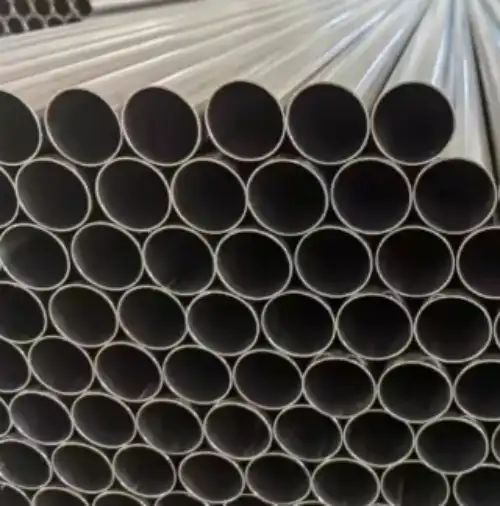
Understanding Zirconium Copper Wire: Properties and Manufacturing
Composition and Core Characteristics
This alloy's engineering solves a problem that has been bothering businesses for a long time. Pure copper is a great conductor, but it softens dangerously above 200°C, breaking down right when heat loads are at their highest. Zirconium Copper Wire has 0.13 to 0.20% zirconium mixed in with a very pure copper core. Microscopic zirconium forms at the edges of the grains during cold working and heat treatment. This stops the thermal degradation that would normally break down copper. This substance has an electrical conductivity of 93–95% IACS and a tensile strength of 350–550 MPa, based on the temperature. The thermal conductivity is between 360 and 385 W/(m·K), which means that heat can be removed efficiently in high-current situations. This metal is different from others because it doesn't shrink when under long-term stress at high temperatures. This is a very important property for parts in circuit breakers and resistance welding equipment.
Manufacturing Process Excellence
The way we make things at LINHUI TITANIUM makes sure that the quality of every spool of wire we make is the same. The first step is to find high-purity zirconium and electrolytic-grade copper. By vacuum induction melting these materials, an alloy is made that is uniform and free of any impurities that might affect its electrical or mechanical properties. The liquid metal is shaped into billets, which are then heated and pushed through a die to improve the grain structure. Several cold-drawing passes gradually lower the width while hardening the material. Controlled atmosphere heating at certain temperatures starts precipitation hardening between drawing steps without losing conductivity. Industrial-grade wire is different from regular wire because it goes through an exact heat treatment cycle.
Technical Specifications That Matter
Our quality control lab uses four-point probe methods that are based on international standards to check each output run for electrical resistivity. Tensile testing shows that the material meets the standards for yield strength, maximum tensile strength, and elongation. A metallographic study checks the uniformity of the grain structure. These rules make sure that every package that leaves our Xi'an facility has the PED, ISO 9001:2015, and other industry-specific certifications that EPC contractors and global energy companies need. When engineers choose materials for high-efficiency electricity systems, they put certain factors at the top of their lists. The Zirconium Copper Wire we sell meets the standards set by UNS C15000 in North America, EN CW120C in Europe, and JIS C1510 in Japan. Diameters range from 0.5 mm to 6 mm, so they can be used for everything from small electrical connectors to heavy-duty welding electrode caps. The melting point is higher than 525°C, which is very different from pure copper, which loses its strength quickly above 200°C. In car spot welding, where electrode tips are heated very quickly in one area, this temperature stability is very important. The metal keeps its spring qualities and contact pressure over thousands of weld cycles, which cuts down on the number of times that parts need to be replaced and the time that production is shut down.
Performance Comparison: Zirconium Copper Wire vs Other Copper Alloys
Benchmarking Against Industry Alternatives
When choosing materials for electricity equipment, procurement teams often look at more than one copper alloy. Comparing efficiency helps make the case for buying high-quality products. Pure copper (C11000) is the most conductive at 100% IACS, but it quickly changes its shape when heated. Pure copper works best for power transfer and bus bars that are kept at room temperature. It is no longer ideal when subjected to temperature cycling or mechanical stress. Like Zirconium Copper Wire, beryllium copper (C17200) is very strong and hard because it hardens through precipitation. But it only has an electrical conductivity of 20 to 28 percent IACS, so it can't be used in places where low resistance is needed. Also, beryllium is toxic during cutting and removal, which creates handling issues that slow down the production process. Brass metals like C26000 can be machined and have a modest level of strength, but they lose about 28% of their conductivity. Because they have zinc in them, they can rust in tough chemical conditions like those found in petrochemical plants. Stainless steel lines don't rust, but they only have a 2% to 3% IACS conductivity, which means they can't be used for Zirconium Copper Wire electrical purposes. purposes.
The Unique Value Proposition
No other material can match the ability of Zirconium Copper Wire. It keeps 93% of its conductivity and doesn't soften when heated up to temperatures where other metals have already broken. This combo is very helpful in resistance welding electrodes, which are used a lot in the car industry. Pure copper electrodes stick to the zinc layer when welding galvanized steel sheets, so they need to be dressed or replaced often. Adding zirconium makes it less likely for electrodes to stick, which in production settings increases tool life by 300–500%. The way the costs are set up shows this specialized ability. Zirconium Copper Wire costs more than regular copper, but in high-temperature situations, the total cost of ownership is better for the combination. Operations save a lot of money when repair times are shortened, replacement parts are used less often, and production stops less often. For a petroleum plant that uses circuit breakers to protect important equipment, the extra cost of the materials is almost nothing compared to the money that could be lost if the breakers fail.
Applications of Zirconium Copper Wire in High-Efficiency Electrical Systems
Resistance Welding Electrode Manufacturing
The biggest market for Zirconium Copper Wire used for spot welding is the car industry. Thousands of resistance spot welds join galvanized steel body pieces together in modern car production. When made in large quantities, electrode caps made from this metal stay the same size and continue to conduct electricity. When put under pressure and heated and cooled many times, the material doesn't expand like pure copper electrodes would within hours. Custom-drawn wire is used by our aircraft production clients to make unique electrode geometries for joining advanced high-strength steels and aluminum alloys. The alloy can be cold-worked to make complicated forms by heading and machining, while still keeping its metallurgical integrity. Post-forming heat treatment Zirconium Copper Wire. makes the material harder and more conductive, so it works best for the purpose.
High-Performance Motor Commutators
Zirconium Copper Wire is being used more and more by companies that make electric vehicles and industrial motors to make commutator bars. In traction motors with high RPM, spinning forces, and brush friction cause very high temperatures in certain areas. Copper commutator pieces that are used in most motors soften and bend, which leads to runout that speeds up brush wear and lowers motor efficiency. The material's resistance to heat softening keeps the commutator's dimensions accurate for as long as the motor works. To make commutators, trapezoidal wire shapes are drawn to very close tolerances and then put together using silver-copper brazing. The steadiness at high temperatures during brazing operations stops distortions that could lower the quality of the electrical contact. Power tool makers say that switching high-performance cordless tool motors from normal copper to Zirconium Copper Wire alloy cuts costs by a large amount.
Circuit Breaker and Switchgear Components
In oil pipelines and chemical plants, high-voltage circuit breakers that protect important structures need materials that can handle electrical arcing and long-term overloading. Flexible links inside breaker panels need to keep their spring tension and ability to conduct electricity even when the fault current stops and starts many times. The creep resistance of Zirconium Copper Wire ensures that these parts keep their contact pressure specs for decades of use. The material can handle the joule heating that comes from constant high-amperage transfer without breaking down like pure copper links do. Major companies that make equipment for the power production business use this alloy as standard for the flexible wires inside breakers with a rating of 15kV or more.
Procurement Insights for B2B Clients: Sourcing Zirconium Copper Wire
Supplier Evaluation Criteria
When looking for specific materials for electrical systems where Zirconium Copper Wire is essential to mission-critical operations, source approval goes beyond just comparing prices. A technical capability review should look at how advanced the production equipment is, whether the quality management system is certified, and how much experience the company has working with similar businesses. At LINHUI TITANIUM, our Xi'an factory is state-of-the-art and has both modern wire drawing tools and a full set of testing instruments. We have PED 2014/68/EU certification for materials used in pressure equipment, approvals from several classification societies (DNV, ABS, CCS, GL, BV, and Lloyd's Register), and ISO 9001:2015 recognition for our quality management system. These qualifications show that we can meet the strict technical needs of global energy companies, EPC contractors, and OEM makers in the aerospace, maritime, and industrial sectors.
Customization and Technical Support
It's possible that standard wire sizes won't work perfectly in all situations. Our engineers work with customers to come up with unique wire shapes, tempering conditions, and ways to package the products. A North American company that makes circuit breakers recently asked for Zirconium Copper Wire that was drawn into an oval shape. with a certain aspect ratio. Our production experts made sure that the die shape and draw plan were just right to get the profile we needed while still meeting the requirements for conductivity and tensile strength. Every package comes with technical paperwork, like material test results that can be linked to specific production batches, certificates for dimensional checking, and proof of electrical properties. This paperwork meets the needs of third-party inspections from companies like SGS, Bureau Veritas, TÜV, Zirconium Copper Wire, and Moody's that are often in charge of buying things for big projects.
Logistics and Delivery Considerations
Product quality is not the only thing that counts in the global supply chain. Our well-established transportation network makes sure that projects in North America, South America, the Gulf area, Africa, the CIS countries, and Southeast Asia are delivered on time. Using moisture barrier packing, wooden box reinforcement, and padding that is suitable for both ocean freight and air shipping are ways to protect the integrity of wires while they are traveling across international borders. As a way to balance production speed with customer inventory management, the minimum order quantity is usually set at 100 kilos. For big projects that need a lot of materials, we plan production runs that work with the schedules of the builders. This way, we can offer scheduled deliveries that cut down on the amount of space needed on-site. For multi-year supply deals, pricing models for volume commitments make costs predictable.
Optimizing Electrical System Performance with Zirconium Copper Wire
Addressing Common Performance Challenges
Electrical system designers have to deal with problems that keep happening, which make their work less efficient and less reliable. Conductor materials that go through temperature cycling lose their springiness over time. This makes links less secure, which raises the resistance of the contact. In a harmful feedback process, this resistance makes more heat, which speeds up the breakdown. In traditional methods, parts have to be replaced and maintained often, which is expensive in businesses that use continuous processes. Using Zirconium Copper Wire in links that are sensitive to temperature stops this loop of degradation. Because the material doesn't relax under stress at high temperatures, the contact pressure stays the same across all working temperature ranges. A petroleum plant in the Gulf region replaced some important circuit breaker links with this alloy. This changed the repair schedule from once a year to every five years, and it also made the system more reliable.
Installation Best Practices
To get the most out of a material, care must be taken during manufacturing and placement. The alloy's ability to be worked with in cold conditions makes shaping easier, but bend radii smaller than five times the wire thickness should be avoided so that the metal doesn't get too hard. Use tools made for high-strength copper alloys when crimping connections or links to make sure full metal flow and the most contact area. By annealing after manufacturing, qualities can be made better for certain uses. Heating to 500–550°C for a set amount of time releases leftover stresses from cold working and starts the process of precipitation hardening. This heat treatment should happen in a safe atmosphere or vacuum to keep the surface from oxidizing, which could make it harder to solder or braze.
Future Innovations in Copper Alloy Technology
Material science keeps improving the properties of copper Zirconium Copper Wire alloys by using microalloying strategies and more advanced processing methods. Higher Zirconium Copper Wire content formulas are being studied to see if they can make them stronger without losing their ability to conduct electricity. Powder metallurgy methods make it possible to create new microstructures with the best particle distribution for specific uses. These changes mean that next-generation electricity systems will work even better in places like advanced manufacturing facilities, charging networks for electric vehicles, and infrastructure for green energy. Keeping up with new developments in materials helps procurement pros plan for changes in technology and stay ahead of the competition by adopting better solutions early.
Conclusion
Choosing the right circuit material has a big effect on how reliable, efficient, and cost-effective an electrical system is over its entire time. Zirconium Copper Wire works very well in situations where it needs to be highly conductive while also being stable at high temperatures and strong. This special metal is used to make electrodes for resistance welding in car plants and parts for circuit breakers that protect important infrastructure. It is strong enough to handle problems that other materials can't.To be successful at buying, you need to work with makers who have metallurgical knowledge, strict quality control systems, and the ability to ship goods all over the world. Paying more for high-quality materials pays off in the long run by making parts last longer, requiring less upkeep, and making systems more reliable in tough industrial settings where downtime costs a lot of money.
FAQ
1. What makes zirconium copper wire superior to pure copper in high-temperature applications?
Above 200°C, pure copper softens a lot, losing its tensile strength and ability to stay the same size. Through a process called precipitation hardening, Zirconium Copper Wire keeps its mechanical qualities up to about 550°C. Tiny zirconium particles push the grain limits together, stopping the heat breakdown that makes pure copper bend when it's stressed. This thermal stability is very important for things like resistance welding electrodes, motor commutators, and high-current switches that work in temperatures that are higher than what pure copper can handle, while still needing low electrical resistance.
2. Can copper zirconium wire be customized for specific industrial applications?
You can make changes to the wire's diameter, cross-sectional shape, temper state, and surface processes. For certain electrical connections, applications may need profiles that aren't round, like those with a rectangular or trapezoidal form. Controlled cold-working and annealing plans can be used to change temper standards and find the best balance between strength and conductivity. Depending on the location, plating the surface with silver, tin, or nickel makes it easier to join or less likely to rust. Automated feeding tools can be used with custom packaging designs in high-volume production.
3. What certifications validate quality for procurement in the oil and gas industries?
In the oil, gas, and petrochemical industries, full approval is needed to show that they meet foreign standards. For European pressure equipment, PED 2014/68/EU is an important qualification. API standards are needed for American oil installations, and approvals from DNV, ABS, Lloyd's Register, and Bureau Veritas for marine and offshore uses. Certification as an ISO 9001:2015 quality management system gives you peace of mind about the process, and material test results with third-party proof from SGS, TÜV, or Moody's meet the inspection needs of the project, which is common in EPC contracts.
Partner with LINHUI TITANIUM for Premium Copper Zirconium Wire Solutions
Having reliable access to approved high-performance products makes you more competitive in industries that need it. LINHUI TITANIUM has been working with metals for 24 years and has full global supply chain skills. It works with large energy companies, aerospace makers, and EPC contractors in more than 60 countries. Our factory in Xi'an follows strict quality standards that have been approved by PED, ISO 9001:2015, and several classification societies.
We not only provide Zirconium Copper Wire that meets the requirements of UNS C15000, but we also offer expert advice to help you choose the right materials, custom wire development for unique uses, and open delivery schedules that work with your project's schedules. Our engineering team works with sourcing experts to find the best specs, lower the total cost of ownership, and improve system stability by using better conductor materials.
Get in touch with our experts at linhui@lhtitanium.com to talk about your needs with a reliable Zirconium Copper Wire provider. We offer thorough technical documents, reasonable bulk pricing, and the kind of quick customer service that long-term partnerships need. Whether you need materials for resistance welding systems, high-performance motors, or important electrical infrastructure, our dedication to quality products and on-time delivery helps your business succeed.
References
1. Davis, J.R. (2001). Copper and Copper Alloys: ASM Specialty Handbook. Materials Park: ASM International.
2. Brandes, E.A. & Brook, G.B. (1992). Smithells Metals Reference Book, Seventh Edition. Oxford: Butterworth-Heinemann.
3. Zhang, W. & Liu, H. (2018). Precipitation behavior and mechanical properties of Cu-Zr alloys. Journal of Alloys and Compounds, 737, 505-514.
4. Resistance Welding Manufacturing Alliance (2019). RWMA Resistance Welding Manual, Revised Fifth Edition. Miami: American Welding Society.
5. Kumar, S. & Singh, R. (2020). High-temperature performance of precipitation-hardened copper alloys in electrical applications. Materials Science and Engineering: A, 776, 139042.
6. International Copper Association (2017). Copper Alloys for Electrical and Electronic Applications: Properties and Selection Guidelines. New York: Copper Development Association Inc.