
When people in charge of industries have to choose materials that can stand up to extreme rust and radiation, ASTM B550 Zirconium Alloy Bar is always the best choice. The standard meets these needs perfectly. It has three different grades—R60702, R60704, and R60705—each designed to work very well in nuclear, chemical processing, ASTM B550 Zirconium Alloy Bar and industrial settings. Knowing what makes these materials special and how they can be used in real life helps procurement managers make decisions that meet both technical needs and long-term operating stability.
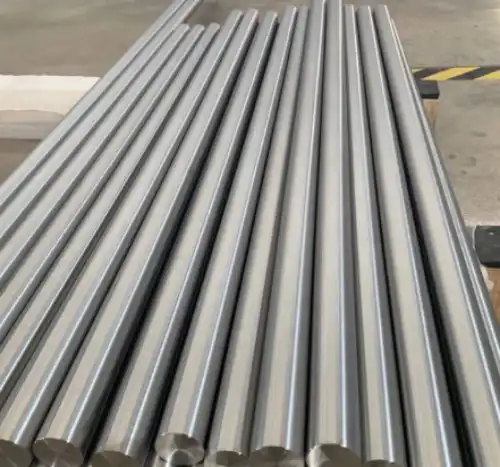
Understanding ASTM B550 Zirconium Alloy Bars: Composition and Properties
The technical foundation of ASTM B550 Zirconium Alloy Bar products lies in the exact control of their chemical makeup. ASTM B550/B550M-07(2019) divides these materials into three groups, each of which is designed to solve a different type of business problem. The standard says that bars are hot-rolled, forged, or cold-worked sections with cross-sectional areas of up to 16 square inches, while wire products feature thicknesses of 0.1875 inches or less.
Grade R60702: Commercial Purity Zirconium
Zirconium in Grade R60702 is not alloyed and is very easy to shape, and doesn't rust. The material has a minimum tensile strength of 380 MPa and is very flexible, which makes it easy to use in complicated manufacturing processes. This grade naturally has up to 4.5% hafnium, which makes it different from nuclear-grade standards that need to get rid of hafnium. The presence of hafnium lowers the cost of production while keeping strong performance in chemical processing settings. Manufacturers like this grade for parts that need to be shaped a lot because it can be shaped into complex shapes without affecting the strength of the structure.
Grade R60704: Zirconium-Tin Alloy
The combination of zirconium and tin gives it better mechanical qualities than pure zirconium. Adding tin makes the lattice more solid, which makes the material more resistant to thermal cycling and better at keeping its shape when exposed to high temperatures for a long time. This grade is mostly used for parts of heat exchangers where uniform size variance has a direct effect on how well they work. The alloy's balanced qualities make it useful in situations that need both resistance to corrosion and modest strength improvement. It fills the performance gap between commercially pure materials and high-strength versions.
Grade R60705: Zirconium-Niobium High-Strength Alloy
Adding 2.0–3.0% niobium to zirconium changes its mechanical properties in a basic way. Grade R60705 has a minimum tensile strength of 550 MPa, which is almost twice as strong as the previous grades while still having great weathering profiles. Niobium acts as a beta-stabiliser that improves the structure of the grains and keeps the material's ability to hold weight even when it's under a lot of stress. This zirconium-niobium metal is very important in places where mechanical failure could cause huge problems, like in stirrer shafts, pump parts, and fastening systems. The grades all have the same physical qualities, like a density of about 6.51 g/cm³ and a melting point of 1852°C. The material's self-healing oxide film—a thin layer of zirconium dioxide that repairs itself when damaged—is still what makes it unique. It protects against violent chemical attack all the time. This passive layer makes sure that the item lasts a long time in places where stainless steels and nickel alloys break down quickly. Processes that use heat can improve grain size and leftover stress patterns, making parts that are loaded and unloaded many times more resistant to wear. Comparative study with similar specs makes the selection of ASTM B550 Zirconium Alloy Bar criteria clearer. While ASTM B550 bars allow hafnium levels that are safe for non-nuclear uses, nuclear-grade products must follow different rules that require hafnium to be separated. This difference is very important for buying managers who are in charge of projects in a variety of industries. To make sure they meet the needs of the project, material documents should clearly show the chemicals they contain, the results of any mechanical tests, and any allowed size variations.
Applications of ASTM B550 Zirconium Alloy Bars in Nuclear and Metallurgical Industries
The ASTM B550 Zirconium Alloy Bar is used in many important industries where the performance of the material directly affects safety on the job and the business's ability to stay in business. Procurement workers can better match material requirements with project needs when they understand how the materials will be used in real-world situations.
Chemical Processing Infrastructure
In chemical factories, zirconium metals stop the rusting that happens over and over again with other materials. Zirconium parts are needed for plants that make acetic acid, sulfuric acid, or hydrochloric acid to keep running. When agitator shafts are made from Grade R60705 bars, they can handle the pressures of both heavy loads and harsh chemicals. Because the material doesn't crack under stress, it doesn't fail suddenly as austenitic stainless steels do in chloride-containing settings. These bars are often used to make valve stems, pump shafts, and fitting systems that last more than ten years. This greatly reduces the need for upkeep and unplanned downtime. When you look at the initial material investment against the costs of repair and output stops, the economic benefit becomes clear.
Petrochemical Processing Equipment
The conditions in sulfuric acid alkylation units in factories are very tough. When concentrated acid, high temperatures, and rough flow come together, they make an environment where few things can stay together. Support rods and filter plates for heat exchangers that are made from zirconium metal bars keep the structure stable and don't rust or attack in specific areas. The low thermal expansion rate of the material keeps the dimensions of the part that is being heated or cooled precisely, which is important for keeping heat transfer efficiency high. The alloy's hardness and oxide film protection help protect pump internals from weathering and rust, greatly increasing the average time between breakdowns compared to titanium or high-nickel alloys.
Hydrometallurgical Extraction Systems
Zirconium's unique resistance profile is important for metal extraction methods that use strong acid solutions. Zirconium bars are used for stirrer units and structural support in reactors that process rare earth elements, nickel, or copper. The substance can survive amounts of hot hydrochloric acid that would dissolve other alloys in weeks. This feature lets the process be sped up by working at higher temperatures, which speeds up the extraction process without damaging the equipment. In just one operating cycle, the higher efficiency gains often make up for the higher cost of the materials.
Emerging Applications in Specialised Manufacturing
Zirconium metal bars are used more and more in aircraft and medical devices, as well as in heavy industry. Aerospace companies make precise screws out of zirconium alloys for places where it's important for structures made of titanium not to conduct electricity. For surgery implants and imaging equipment parts, medical device makers prefer that the material is biocompatible and radiolucent. For these uses, precise measurements and a smooth surface are needed, which can be easily met by following the right cutting procedures. The fact that the material can be used in so many different areas shows its basic technical benefits. Real-world performance data makes it easier to be sure of the choice of materials. Chemical plants say that zirconium parts last 15 to 20 years in situations where stainless steel parts need to be replaced every two to three years. After switching to zirconium-based systems, petrochemical companies saw a 40% drop in the cost of repair staff. Such real-world proof backs up strategic choices about which materials to use in projects where the costs over the project's lifetime are higher than the costs of buying them at first.
How to Choose the Right Zirconium Alloy Bar for Your Industrial Needs
To choose the right ASTM B550 Zirconium Alloy Bar, you need to carefully compare the requirements of the job with the material's abilities. A structured method that matches technical ASTM B550 Zirconium Alloy Bar performance with business concerns is helpful for procurement managers who are in charge of big projects.
Defining Application-Specific Requirements
The first step in the selection process is to describe the working setting in detail. Material grade selection is affected by temperature ranges, chemical makeup, mechanical loading patterns, and the amount of time the material needs to be used. When formability and corrosion protection are important, Grade R60702 is a good choice. This is especially true when mechanical loads are low. When you need a lot of them, like heat exchanger tube sheets or reactor vessel internals, its lower cost becomes important. Instead, Grade R60705 is needed for high-load uses like mixing shafts or valve stems because it is stronger. This makes the higher cost of the material worth it because it lasts longer and is less likely to break. When judging chemical compatibility, synergistic effects must be taken into account. In its pure form, zirconium doesn't react with most acids, but oxidising factors like ferric ions can speed up the rusting process. There is no doubt that when you do a thorough process chemistry study, which should be confirmed by corrosion tests in the lab using real process fluids. Material providers who are technically savvy can suggest the right grades based on similar service experiences, which speeds up the approval process.
Balancing Performance Against Commercial Factors
Cost-efficiency research looks at more than just the price of a bit of material. Complicated manufacturing, installation needs, upkeep regularity, and projected replacement intervals are all taken into account when figuring out the total cost of ownership. Zirconium alloy bars usually cost more than stainless steel bars, but because they last longer, their yearly costs are usually cheaper. A full economic model should be able to figure out how much downtime costs, how much production is lost during repair, and how much work costs for replacing parts. This kind of research often shows that zirconium standards lower lifetime costs by 30–50%, even though they cost more at first. Specifications for sizes affect both the amount of leftover material and how quickly it can be made. Standard bar sizes, from 1 mm to 300 mm in diameter, can fit most design needs. However, special sizes may cost more and take longer to make. Zirconium is a relatively expensive material, so designers should make sure that part shapes are optimised to remove as little stock as possible during cutting. When making flat parts, rectangular bar stock works well, while round bars are better for making shafts and fasteners.
Supplier Evaluation and Quality Assurance
When choosing a partner, the factors should give preference to sellers who have full portfolios of certifications. For example, PED 2014/68/EU for pressure equipment, ISO 9001 quality management systems, and classification society approvals from DNV, ABS, and Lloyd's Register are all important qualifications. These certificates show that the company follows international quality standards and rules for the manufacturing process. Suppliers who give material traceability with heat-specific test results can confirm the chemical makeup and mechanical properties, which is important for important uses that need proof to meet legal requirements. The ability to make things is just as important. Suppliers who handle the whole production process, from making sponges to making bars, have a better handle on the quality of the materials and the regularity of their microstructures. Being able to offer different types of stock gives projects more freedom, and expert support services help with choosing materials and giving advice on how to build them. Long-term supply deals with well-known manufacturers lower supply chain risks for projects that last more than one year and need regular material requirements.
Procurement Process and Supplier Guidance for ASTM B550 Zirconium Alloy Bars
To properly use foreign procurement channels for ASTM B550 Zirconium Alloy Bar, you need to know the rules of business and set up clear ways to communicate with material providers.
Pricing Structures and Budget Planning
The price of zirconium alloy bars depends on many things, such as the cost of the base metal, the addition of alloying elements, the difficulty of making, and the number of orders. Prices per kilogram can be anywhere from a small increase over stainless steel to many times the cost of popular alloys, depending on the grade and the state of the market. In general, Grade R60702 is the most cost-effective choice. On the other hand, the niobium content of Grade R60705 makes materials more expensive. When you order more than 500 kilograms, you can get big discounts. Some sellers even offer 10-15% savings for commitments of more than 10 tons. Project planners should ask for thorough quotes that include not only unit prices but also any extra costs that come up because of requirements for surface finish, testing methods, and measurement limits. Price changes for long-term projects are made more difficult by changes in the value of the dollar and the prices of raw materials. Fixed-price contracts with material call-offs help keep the budget on track, but sellers may want guarantees that cover the costs of trading. One other option is to use indexed prices that are linked to public metal market rates. This way, the buyer and the seller share the risk. For special orders, payment terms usually include a fee, and the rest is due when the order ships or after it has been inspected and approved.
Lead Times and Order Planning
Standard grade materials that are kept in stock by major sellers usually ship within two to four weeks, which helps projects that have tight deadlines. Lead times are extended to 8–12 weeks for custom specs that need special handling, such as non-standard sizes, certain heat treatments, or more thorough testing. Minimum order amounts range from 100 to 500 kilograms, depending on the grade and provider. Smaller amounts may have higher prices or need to be combined with orders from other buyers, which delays delivery. When you plan your purchases strategically and gather all of your needs from different stages of a project, you can get the best prices and delivery times. Import logistics for foreign packages are more complicated because suppliers, freight forwarders, and customs officials all need to work together. Regulatory standards and tax rates are based on how the material is classified under harmonised tariff numbers. Customs clearance is easier when you have the right paperwork, like business bills, packing lists, certificates of origin, and material test results. Expert suppliers can help with export laws, but buyers are ultimately responsible for following purchase rules in the countries where the goods are going. Adding extra time to the project plan to account for possible shipping delays and customs processing stops the schedule from getting thrown off.
Supplier Relationship Development
Forming relationships with trustworthy makers has benefits that go beyond individual purchases. Suppliers who know what a buyer usually wants can suggest better materials and point out any possible standard problems early in the design process. Technical support services help with fixing problems with manufacturing, creating new welding procedures, and fixing quality problems. Long-term partnerships allow for better distribution of materials when supplies are low and a faster production schedule for urgent needs. Due diligence should check the qualifications of the seller in more than one way. Ask for client references from similar projects and check the validity of the license by contacting the organisation that issued it. When possible, facility audits give a clear look at how well the production and quality control processes work. Third-party inspection agencies offer independent verification services. They look over production processes and test samples of materials to make sure they meet specifications before releasing them for shipment.
Best Practices for Handling, Machining, and Welding ASTM B550 Zirconium Alloy Bars
By improving the way things are made, the integrity of the ASTM B550 Zirconium Alloy Bar is maintained, and the dimensions are precisely controlled, which is important for difficult uses. Because zirconium has special qualities, it needs to be handled in a way that is different from how most structural metals are handled.
Machining Techniques and Parameters
During cutting processes, zirconium tends to become harder, and ASTM B550 Zirconium Alloy Bar and galling can happen. Cutting tools that are sharp and have positive edge angles produce the least amount of cutting force and heat. Tooling made of ceramic or carbide works better than high-speed steel because it keeps the edge sharp over long cuts. Cutting speeds should be kept low, usually between 50 and 100 surface feet per minute for turning tasks, and heavy feeds should be used to keep the work from hardening before the cutting edge. A lot of coolant must be used, and flood cooling systems instead of mist systems must be used to keep temperatures down and chips quickly evacuated. Because the material is pyrophoric when it is tightly split, it needs to be kept very clean. When you machine something, you make thin chips that can catch fire on their own if they get too big and dry. Coolants that are based on water lower the risk of fire while keeping chip control in good shape. Swarf collection systems should keep chips from building up near heat sources, and cutting areas need to have enough air flow to get rid of any hydrogen that is released during the process of grinding. Even with these safety measures, zirconium machining is common in facilities that have the right tools. It can make parts with tight specs and great surface finishes.
Welding Protocols for Structural Integrity
Because zirconium is attracted to oxygen, nitrogen, and hydrogen in the air, it needs to be carefully shielded from these gases while it is being welded. Gas tungsten arc welding (GTAW) is the main way to join things together. It uses high-purity argon to protect both the weld faces and the root sides. Trailing screens that go a few inches past the arc and backing gas purge for closed joints keep the atmosphere from getting dirty while the metal cools. Welds that are done without enough protection become weaker from gas absorption, which shows up as less flexibility and a higher chance of cracking. To prepare a joint, it needs to be cleaned thoroughly to get rid of acids, oils, and other pollutants. Cleaning surfaces for bonding can be done mechanically with special stainless steel brushes or chemically with the right solvents. The choice of filler metal should fit the makeup of the base metal, and AWS classification systems offer consumables that are suitable. The quality of the joint is confirmed by an eye check, dye penetrant testing, or X-rays taken after the welding process. When zirconium welds are done right, they match the strength of the base metal, which lets you make complex structures from bar stock parts.
Maintenance and Corrosion Monitoring
Zirconium is very resistant to rust, but it needs to be checked on a regular basis to make sure it keeps working well. During regular maintenance checks, any surface irregularities that could mean changes in the process chemistry or mechanical damage are found by looking at them. The protective oxide coat has a light grey to blue tint to it. If it turns dark or black, it could mean that it got too hot or was exposed to contamination, which needs to be looked into. Dimensional measures show that the rate of rusting stays within the expected ranges, which supports the design assumptions. When cleaning parts, you should not use chloride-containing liquids or rough methods that damage the inactive film. Mild alkaline cleaners or diluted acids that are safe for zirconium can get rid of process leftovers without hurting the surface. When exposed to air, the oxide film reforms itself, providing protection again after cleaning. Long-term performance tracking using thickness measurements and condition recording helps with predictive maintenance plans, which let you change parts before they break.
Conclusion
ASTM B550 Zirconium Alloy Bar products made to professional standards have been used for many years in businesses that need strong protection against corrosion and reliable structures. The three grades—R60702, R60704, and R60705—have different qualities that make them suitable for different uses in the petroleum, chemical, and metal extraction industries. To choose the right materials, you need to carefully look at the working conditions, carefully check out the suppliers, and use the right fabrication methods. When buying something, it's important to think about how much it will cost over its whole life, not just how much the material costs at first. For example, zirconium specs often offer better economic value by lasting longer and requiring less upkeep. Understanding the properties of these materials helps industry leaders choose the best answers for their toughest problems.
FAQ
1. What distinguishes Grade R60705 from Grade R60702 in ASTM B550?
The main difference between these ASTM B550 Zirconium Alloy Bar grades is the amount of alloying and the tensile strength. Grade R60705 has 2.0 to 3.0% niobium in it, which makes the tensile and yield strengths almost twice as high as those of the widely pure R60702. This higher strength is good for heavy-duty uses like mixing shafts and pump parts. On the other hand, R60702's better formability is good for fabrications that need to be shaped a lot. Both types still have great corrosion protection, but the cost of the material goes up when niobium is added.
2. Can ASTM B550 bars serve nuclear reactor applications?
According to ASTM B550 standards, hafnium content can be up to 4.5%, which is fine for business uses that aren't related to nuclear power. Because hafnium consumes heat neutrons, different materials must be used for different parts of nuclear reactors. ASTM B550 works well in chemical processing, petrochemicals, and general industry settings because it is cost-effective and doesn't need to be separated from hafnium.
3. What typical lead times should procurement managers expect?
Standard-grade stock from trusted sources usually ships between two and four weeks. Custom specs, like non-standard sizes, special heat treatments, or stricter testing procedures, take 8 to 12 weeks to make. Delivery schedules are best when needs are gathered, and providers are kept in the loop through strategic planning. Depending on the logistics system at the location, international shipping and customs clearance can take an extra one to three weeks.
Partner with LINHUI TITANIUM for Premium Zirconium Alloy Solutions
You can trust LINHUI TITANIUM to make ASTM B550 Zirconium Alloy Bar products. They send approved materials to the nuclear, chemical, and metallurgical industries in more than 60 countries. Our main office is in Xi'an, which is on the Belt and Road corridor. We have many foreign certificates, such as PED 2014/68/EU, CCS, ABS, DNV, and ISO 9001:2015, which make sure we meet all global quality standards. Our combined titanium products store has a wide range of grades and sizes of bars and sections, including round bars with a diameter of 1 to 300 mm and rectangular pieces up to 300 x 400 mm, to meet the needs of projects right away. We offer reliable supply lines and technical know-how through relationships that have worked well with CEFC, PETRONAS, PEMEX, and other major EPC contractors. Get in touch with our team at linhui@lhtitanium.com to talk about your zirconium alloy needs and get personalised material suggestions based on decades of metalworking excellence.
References
1. ASTM International. (2019). ASTM B550/B550M-07: Standard Specification for Zirconium and Zirconium Alloy Bar and Wire. West Conshohocken, PA: ASTM International.
2. Patel, R. & Morrison, D. (2018). Corrosion Resistance of Zirconium Alloys in Chemical Processing Environments. Journal of Materials Engineering and Performance, 27(6), 3142-3158.
3. Chen, L., Kobayashi, H., & Zhang, Y. (2020). Mechanical Properties and Microstructural Characteristics of Zirconium-Niobium Alloys for Industrial Applications. Metallurgical and Materials Transactions A, 51(4), 1876-1891.
4. International Atomic Energy Agency. (2017). Zirconium Alloys in Nuclear Technology: Properties, Performance and Applications. Vienna: IAEA Technical Reports Series No. 476.
5. Whitmarsh, C.L. (2016). Review of Zirconium Alloy Development for Corrosive Service. Materials Performance and Characterisation, 5(1), 234-267.
6. Nelson, K.R. & Thompson, J.A. (2021). Fabrication and Welding Practices for Zirconium Alloy Components in Petrochemical Systems. Welding Journal, 100(3), 89-102.