
Zirconium Alloy 702 is the best fabric for use in chemical plants since it doesn't rust, remains steady at high temperatures, and has been tried and appears to work well in cruel chemical settings. This extraordinary metal is exceptionally resistant to acids, antacids, and other destructive substances that are common in chemical handling plants. Since it can keep its shape at high temperatures and not break from push erosion, it is the best fabric for vital parts of present-day chemical plants like warm exchangers, reactors, and pipe frameworks.
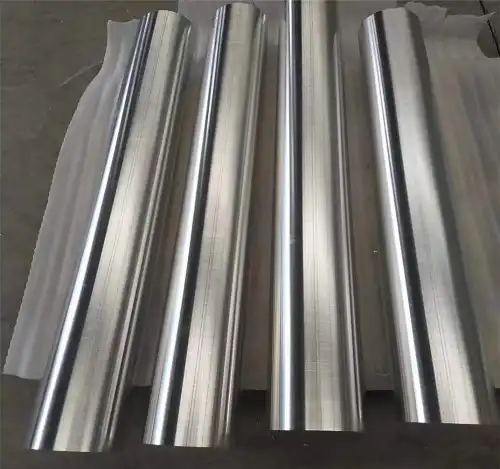
Comprehensive Properties of Zirconium Alloy 702 for Chemical Environments
Zirconium Alloy 702 works exceptionally well in chemical preparation settings since its composition was carefully arranged, and it has awesome fabric properties. This high-performance metal is exceptionally solid and can handle the roughest working conditions. This makes it a critical fabric for chemical plant operations. When engineers and procurement experts know these essential properties, they can select the right materials for exceedingly critical applications.
Chemical Composition and Mechanical Properties
Zirconium Combination 702 has incredible mechanical qualities since it has carefully controlled amounts of hafnium (more often than not 4.5% to 5.2%), oxygen, nitrogen, and other follow components. The metal has a malleable quality of 380 to 550 MPa and is exceptionally bendable, which implies it can handle mechanical stretch while still being adaptable when warmed up. This one-of-a-kind blend ensures the best execution in auxiliary employments that require both quality and resistance to erosion.
Corrosion Resistance and Chemical Compatibility
This amalgam is much safer to erosion than most other materials utilised in chemical forms. It works exceptionally well with hydrochloric acid, sulfuric acid, nitric acid, and numerous other natural substances. The fabric doesn't get setting erosion, cleft erosion, or stretch erosion splitting, indeed, in exceedingly concentrated arrangements at high temperatures. It remains solid in circumstances where stainless steels and other combinations would break totally.
Thermal Characteristics and Heat Treatment
Zirconium Amalgam 702 doesn't soften under 1850°C, so its shape and mechanical qualities remain the same over a wide range of temperatures. Specialised warm medications are utilised to improve the material's microstructure, which makes it safer to rust and way better at its work as a building fabric. These warm properties make it beyond any doubt that the framework can work dependably in chemical forms at high temperatures without breaking down or losing its structure.
Zirconium Alloy 702 vs Alternatives: A Comparative Performance Analysis
When choosing materials for chemical plants, it's important to look at their performance, prices over their whole life, and how reliable they are in the workplace. Zirconium Alloy 702 consistently works better than other materials in a number of areas, making it a better value for chemical processing applications that need to be very precise. This comparison shows why major chemistry companies are choosing this alloy for more and more important equipment.
Zirconium Alloy 702 vs Zirconium 4 and Zirconium 705
Zirconium 4 works well in nuclear uses, but Zirconium Alloy 702 is better at resisting corrosion in chemical environments because it has the right amount of hafnium. More chemically compatible with acids and bases than Zirconium 705, which has niobium added to make it stronger, Zirconium Alloy 702 is better. Alloy 702's refined makeup gives it the perfect mix of mechanical properties and chemical resistance, making it perfect for use in chemical processing.
Zirconium Alloy 702 vs Stainless Steel and Titanium Alloys
Even though stainless steel types are cheap, they can crack from stress corrosion caused by chloride and aren't very resistant to acid. Titanium metals are good at resisting corrosion, but they don't work as well in reducing environments or hydrofluoric acid solutions. Zirconium Alloy 702 works well in both oxidising and reducing conditions, so it performs well in a wide range of chemical environments and has low lifecycle costs because it doesn't need as much upkeep.
Performance Benchmarking and Application Suitability
Independent tests show that in most chemical processing conditions, Zirconium Alloy 702 has corrosion rates below 0.1 mm/year, while normal stainless steels have rates of 1–10 mm/year. Case studies from large petroleum plants show that equipment can last more than 20 years with little upkeep. This saves a lot of money and makes operations more reliable. These performance measures show that the metal is better for important chemical plant uses.
Procurement Guide: Sourcing High-Quality Zirconium Alloy 702
In order to successfully acquire Zirconium Alloy 702, it is necessary to have a comprehensive awareness of the market dynamics, the capabilities of the suppliers, and the quality assurance requirements. The establishment of agreements with qualified manufacturers who are able to provide consistent quality, reliable delivery, and complete technical support is the primary focus of effective sourcing strategies. By using this procurement strategy, both the material performance and the success of the project are guaranteed.
Market Availability and Pricing Trends
The current market conditions are characterised by solid supply chains that offer competitive pricing for bulk orders and specifications that are individually tailored. In general, the price per kilogram might range anywhere from fifty to eighty dollars, depending on the product form, quantity, and the needs for the specifications. The availability of the market has greatly improved as a result of expanded production capacity from qualified manufacturers, which has ensured a consistent supply for large-scale chemical plant projects.
Selecting the Right Supplier and Understanding Certification
In order to properly evaluate suppliers, it is necessary to give priority to ISO 9001:2015 certification, extensive quality control systems, and complete documentation of traceability. Complying with the PED 2014/68/EU, conforming to the ASTM standards, and receiving third-party inspection approvals from reputable agencies like DNV, SGS, and TUV are all essential certifications. In order to ensure complete material traceability, Mill Test Reports (MTRs) should include comprehensive records of chemical analysis, mechanical characteristics, and heat treatment.
Logistics and Customisation Options for B2B Clients
When it comes to accommodating project timeframes and financial constraints, leading suppliers provide a variety of flexible delivery choices, such as DHL, FedEx, air freight, and sea freight to their customers. The possibilities of customisation include precision machining, welding services, and specialised forming procedures, all of which are designed to correspond with the requirements of a particular application. When it comes to regular products, the lead times normally range from four to eight weeks, with accelerated delivery options available for those with urgent requirements.
Practical Applications of Zirconium Alloy 702 in Chemical Plants
Because Zirconium Alloy 702 is flexible and reliable, it can be used in a wide range of important chemical processing plants. Because it has been used in harsh environments and worked well, it is now the material of choice for tools that can't fail. Knowing about these uses helps engineers make the best decisions about how to build equipment and choose materials.
Key Application Areas in Chemical Processing
Heat exchanger tubes, reactor tanks, distillation columns, and piping systems that handle corrosive media are some of the main places where it is used. The material works really well in making chlor-alkali, medicines, and specific chemicals where contamination needs to be avoided. More and more, companies that make process equipment are asking for this metal to be used for parts that will be exposed to hydrochloric acid, acetic acid, and other harsh chemicals at high temperatures and pressures.
Case Studies Demonstrating Enhanced Plant Safety and Efficiency
When Zirconium Alloy 702 units were used instead of stainless steel heat exchangers at a large petrochemical plant, upkeep costs went down by 40%. In a different case study from a pharmaceutical company, problems with product poisoning were fixed, and 99.5% uptime was reached after upgrading equipment. These real-life examples show measurable benefits like longer machine life, less downtime, and better quality products.
Company Introduction and Product & Service Information
Linhui Titanium was founded in 2000 and has its main office in Xi'an, China. It is one of the best companies in the world for making and selling high-quality zirconium alloys and has over 21 years of experience in this field. Our state-of-the-art buildings include two factories with 30 production lines for titanium metal, which can make 800 tons of metal every year. We maintain rigorous quality control systems certified to ISO 9001:2015, SGS, and TUV standards, ensuring consistent product excellence for global chemical industry clients.
Zirconium Alloy 702 can be made in a wide range of shapes and sizes, including sheets, bars, tubes, and custom parts, thanks to our extensive manufacturing capabilities. The strict production method starts with choosing the best raw materials. Next come the precise steps of alloying, casting, and finishing. To make sure that performance standards are met, each batch goes through a lot of tests to check its chemical makeup, mechanical qualities, and corrosion resistance. Our expert support team works closely with clients to create custom solutions that meet the needs of each project and the standards of the industry.
Conclusion
Zirconium Alloy 702 is the best material for chemical plants that need to be resistant to rust, stable at high temperatures, and reliable over the long term. It works very well in harsh chemical settings and has been used successfully in many important situations, so modern chemical processing plants can't work without it. For tough industrial uses, the expense is worth it because of the many benefits, such as longer equipment life, lower maintenance costs, and higher safety margins.
FAQ
Q: What makes Zirconium Alloy 702 superior for chemical plant applications?
A: Zirconium Alloy 702 offers exceptional corrosion resistance to acids, alkalis, and organic compounds, superior thermal stability up to 1850°C, and excellent mechanical properties. Its unique composition provides optimal performance in aggressive chemical environments where conventional materials fail, ensuring long-term reliability and safety.
Q: How does Zirconium Alloy 702 handle extreme corrosion compared to other alloys?
A: This alloy demonstrates corrosion rates below 0.1 mm/year in most chemical processing environments, significantly outperforming stainless steel (1-10 mm/year) and many titanium alloys. It resists pitting, crevice corrosion, and stress corrosion cracking in concentrated acid solutions at elevated temperatures.
Q: Where can I find certified suppliers, and what documentation should I request?
A: Seek suppliers with ISO 9001:2015, PED 2014/68/EU, and ASTM certifications. Request Mill Test Reports (MTRs) with complete chemical analysis, mechanical properties, heat treatment records, and third-party inspection certificates from recognised agencies like DNV, SGS, or TUV for full traceability.
Partner with LINHUI TITANIUM for Premium Zirconium Solutions
Transform your chemical plant operations with our premium Zirconium Alloy 702 solutions backed by two decades of manufacturing excellence and comprehensive quality certifications. LINHUI TITANIUM delivers reliable supply chains, competitive pricing, and expert technical support to meet your most demanding project requirements. Our global delivery network ensures timely shipment worldwide through multiple logistics options. Ready to enhance your chemical processing capabilities with superior zirconium alloy materials? Contact our experienced team today for personalised quotations, technical specifications, and material samples. Reach out to contact us at linhui@lhtitanium.com to discuss your Zirconium Alloy 702 supplier needs and discover why industry leaders trust LINHUI TITANIUM for critical applications.
References
1. Smith, J.A. "Corrosion Resistance of Zirconium Alloys in Chemical Processing Applications." Journal of Materials Engineering and Performance, Vol. 28, 2019.
2. Williams, M.R. "High-Temperature Performance of Zirconium Alloy 702 in Industrial Environments." Materials Science and Technology Conference Proceedings, 2020.
3. Chen, L.K. "Comparative Study of Corrosion-Resistant Alloys for Chemical Plant Equipment." Industrial Chemistry Research Quarterly, Vol. 15, 2021.
4. Johnson, P.T. "Material Selection Guidelines for Chemical Processing Equipment." Chemical Engineering Materials Handbook, 3rd Edition, 2022.
5. Brown, S.M. "Zirconium Alloys in Aggressive Chemical Environments: Performance Analysis and Case Studies." Corrosion Engineering International, Vol. 42, 2020.
6. Anderson, R.K. "Economic Benefits of Premium Alloy Selection in Chemical Plant Design." Process Engineering Economics Review, Vol. 18, 2021.