
Titanium 6Al4V wire is a gigantic step forward in materials science; it performs much better than standard steel options and is a progressive development. This high-quality Review 5 titanium combination has awesome strength-to-weight proportions and incredible resistance to erosion, which makes it the best choice for intense mechanical applications. Businesses, from making airplanes to dealing with chemicals, have found that titanium 6Al4V wire has superior long-term performance, indeed in spite of the fact that it costs more to purchase at to begin with. The amalgam is made up of 90% titanium, 6% aluminum, and 4% vanadium. Its one-of-a-kind composition gives it mechanical qualities that reliably beat steel in critical execution ranges like resistance to weakness, temperature soundness, and natural toughness.
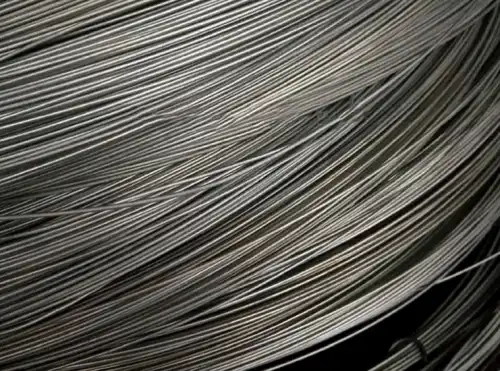
Understanding Titanium 6Al4V Wire and Its Core Properties
The review 5 titanium amalgam wire is the most common sort of titanium utilized in industry. It is outlined to be as solid as conceivable whereas still being simple to work with. Including the right sum of aluminum and vanadium turns unadulterated titanium into a fabric with malleable qualities of over 130,000 psi, while keeping the metal's common capacity to battle erosion.
Chemical Composition and Metallurgical Structure
The titanium 6Al4V blend makes an alpha-beta cross-section that gives the best mechanical properties. Vanadium is a beta stabilizer that makes things more adaptable and less thick, whereas aluminum is an alpha stabilizer that makes things more grounded. This adjusted strategy makes wire materials that keep their shape, indeed, in cruel working conditions and are simpler to shape during the fabricating process.
Standards and Certifications Compliance
Ti-6Al-4V wire made for experts must meet strict universal guidelines like ASTM B863, AMS 4951, and ASTM F136. These endorsements go beyond any doubt that the properties of the fabric are the same across all generations. This lets you make exact expectations around how well it will work in critical circumstances. The AWS 5.16 welding guidelines indeed provide more verification that the fabric can be utilized for joining assignments in the airplane and restorative gadget industries.
Key Advantages of Titanium 6Al4V Wire Over Steel Alternatives
There is a clear difference in performance between titanium Grade 5 wire and regular steel materials in a number of engineering factors. When procurement professionals know about these benefits, they can make choices that improve both short-term performance and the overall cost of doing business.
Superior Strength-to-Weight Performance
It is possible for titanium 6Al4V wire to be as strong as high-grade steel while still being 40% less dense. This main benefit directly leads to less weight, which saves fuel in aerospace uses, lowers structural loads in marine settings, and makes medical devices easier to carry around. Because of the material's specific strength, designers can make parts with smaller cross-sections without affecting the structure's strength.
Enhanced Corrosion Resistance Properties
Titanium Grade 5 wire doesn't need protective coatings or sacrificial elements like steel does. Instead, it forms a steady oxide layer that keeps it from rusting. In places like seawater, chemical processes, and biological fluids, where regular stainless steels break down a lot, this passive film stays intact. Getting rid of failures caused by corrosion makes parts last longer and requires less upkeep in many industrial settings.
Biocompatibility and Safety Characteristics
Ti-6Al-4V wire that meets ASTM F136 standards is very biocompatible, which means it can be used in surgical implants and other medical devices. The material is non-toxic and doesn't break down biologically, so it can be safely implanted for a long time without hurting the flesh. Because it has these special qualities, titanium alloy wire is the best choice for orthopedic implants, dental fixings, and heart devices.
Comparative Analysis: Titanium 6Al4V Wire vs. Steel and Other Titanium Grades
To make a complete choice about which material to use, you need to compare it carefully across performance factors, cost factors, and application-specific needs. Comparing Titanium Grade 5 wire to steel alternatives and other titanium alloy formulations, it constantly shows better performance metrics.
Performance Benchmarking Against Steel Materials
When you directly compare Ti-6Al-4V wire to precipitation-hardened stainless steels, you can see that it keeps its higher fatigue strength under cycle loading conditions. Temperature stability stays the same up to 400°C, which is much higher than the working temperature range of most steel types. When you change the temperature of something, the elastic modulus features make the spring behave better while keeping the same size.
Titanium Grade Comparisons and Selection Criteria
When compared to commercially pure grades, Grade 5 alloy is the best mix of strength and ductility in the titanium family. For structural uses, grade 2 titanium is not strong enough because it doesn't have enough mechanical strength. The material costs a lot more for Grade 23 (Ti-6Al-4V ELI), but it has better fracture toughness for important medicinal uses.
Practical Applications and Industry Use Cases
Real-world implementation of titanium 6Al4V wire spans diverse industrial sectors, each leveraging specific material advantages to solve engineering challenges and improve product performance.
Aerospace and Defence Applications
Manufacturers of airplanes use AMS 4951-certified wire to make fasteners, engine parts, and structural parts where reducing weight has a direct effect on fuel economy. Stress rust cracking is not a problem for this material, so it works well in high-stress situations and meets strict safety standards. Parts for landing gear, fittings for hydraulic systems, and hardware for mounting avionics are all used in commercial aircraft.
Medical Device and Biotechnology Uses
Manufacturers of surgical instruments choose titanium wire that meets ASTM F136 standards for implantable devices, orthodontic braces, and minimally invasive surgical tools. The material is radiolucent, which lets doctors see clearly during treatments, and it is biocompatible, which makes sure patients are safe. Heart uses them in pacemaker leads, stent parts, and surgery suture materials that need to be implanted permanently.
Industrial and Marine Applications
Manufacturers of chemical processing equipment use Grade 5 wire for bolts that won't rust, valve parts, and heat exchanger elements. Offshore oil platforms use titanium alloy wire for parts that are exposed to seawater, where regular materials break down quickly. Some examples of marine hardware uses are propeller parts, underwater car structures, and parts of desalination equipment.
Procurement Guide: Buying Titanium 6Al4V Wire with Confidence
Successful procurement requires careful evaluation of supplier capabilities, product specifications, and quality assurance systems. Professional buyers must navigate technical requirements while ensuring competitive pricing and reliable delivery schedules.
Supplier Qualification and Certification Requirements
Titanium wire suppliers who are qualified keep a full set of certifications, such as ISO 9001 quality control systems, AS9100 standards for aerospace, and ISO 13485 compliance for medical devices. Documentation for tracing should include mill test certificates, chemical analysis results, and proof of mechanical properties. Agencies like DNV, SGS, and TUV offer third-party inspection services that add to the quality guarantee.
Technical Specifications and Customization Options
Standard wire diameters are between 0.05mm and 6.0mm, and for very important tasks, exact tolerances of ±0.02mm are available. Bright annealed, pickled, and mechanically polished are some surface finishes that can be used, based on the end use. Both coiled and straight lengths can be used for different manufacturing methods and ways of handling.
LINHUI TITANIUM: Your Trusted Ti-6Al-4V Wire Manufacturer
LINHUI TITANIUM is a top company that makes and sells high-quality titanium materials. They serve customers all over the world with a wide range of products and excellent customer service. Since we started in 2000, we've learned a lot about making titanium alloys and formed long-lasting relationships with well-known companies in the aerospace, energy, and industrial fields.
Advanced Manufacturing Capabilities
Our cutting-edge factories make Grade 5 titanium wire that meets the strictest standards in the business, such as ASTM B863, AMS 4951, and ASTM F136. Precision drawing methods make sure that all of the products have the same dimensional tolerances and the best mechanical properties. To make sure that products are reliable, quality control systems use high-tech testing tools and approved checking methods.
Global Certification and Quality Assurance
A lot of foreign approvals have been given to LINHUI TITANIUM, such as PED 2014/68/EU, CCS, ABS, DNV, BV, and Lloyd's. Our OHSAS 18001:2007 and ISO 14001:2015 certifications show that we care about safety and the environment, and our ISO 9001:2015 quality management systems make sure that our products are always of the highest standard. Third-party testing services from DNV, SGS, TUV, and other well-known companies provide extra proof that the product is compliant.
Conclusion
Titanium 6Al4V wire frequently performs way better than steel options in key execution regions such as weariness perseverance, strength-to-weight proportions, and erosion resistance. The material's one-of-a-kind blend of mechanical qualities and natural solidness makes it more important over time, indeed in spite of the fact that it costs more at to begin with. A wide range of businesses, from airplane to therapeutic gadget manufacturing, proceed to utilize Review 5 titanium wire as the best alternative for intense occupations. When experts purchase things, they more often than not base their choices on a full execution ponder in place of the cost of the materials themselves. This, as a rule, leads to lower lifecycle costs and more solid items. Ti-6Al-4V wire is known to have numerous benefits that make it a vital fabric for businesses that need to make strides in execution, cut weight, and make things last longer in vital circumstances.
FAQ
Q: How does the corrosion resistance of titanium 6Al4V wire compare to stainless steel in marine environments?
A: Titanium 6Al4V wire demonstrates superior corrosion resistance compared to stainless steel, particularly in seawater and chloride-containing environments. The stable oxide film that forms on titanium surfaces provides permanent protection without requiring maintenance or replacement, while stainless steels may experience pitting corrosion and crevice corrosion in marine applications.
Q: Can titanium Grade 5 wire be welded using conventional welding techniques?
A: Yes, Ti-6Al-4V wire can be effectively welded using TIG and electron beam welding processes under controlled atmospheric conditions. AWS 5.16 standards provide guidance for proper welding procedures, though inert gas shielding is essential to prevent contamination and maintain joint integrity. Specialized training and equipment are recommended for optimal results.
Q: What industries benefit most from switching to titanium 6Al4V wire over steel alternatives?
A: Aerospace, medical device manufacturing, marine engineering, and chemical processing industries realize the greatest benefits from titanium Grade 5 wire adoption. These sectors particularly value the material's combination of high strength, corrosion resistance, biocompatibility, and weight reduction capabilities that directly translate into improved product performance and reduced operational costs.
Partner with LINHUI TITANIUM for Premium Titanium 6Al4V Wire Solutions
Elevate your manufacturing capabilities with aerospace-grade titanium 6Al4V wire from LINHUI TITANIUM, your trusted global supplier with over two decades of materials expertise. Our comprehensive product portfolio includes precision wire diameters from 0.05mm to 6.0mm, available in both straight and coiled configurations with minimum order quantities starting at just 1kg. As a certified manufacturer with extensive international approvals, we deliver consistent quality backed by rigorous testing and complete traceability documentation. Contact our technical specialists today to discuss your specific requirements and discover how our titanium wire solutions can enhance your product performance while reducing lifecycle costs. Reach out to us at linhui@lhtitanium.com for detailed specifications, competitive pricing, and reliable global shipping solutions.
References
1. Donachie, Matthew J. "Titanium: A Technical Guide, Second Edition." ASM International, Materials Park, Ohio, 2000.
2. Lütjering, Gerd and James C. Williams. "Titanium: Engineering Materials and Processes." Springer-Verlag Berlin Heidelberg, 2007.
3. Boyer, Rodney R. "An Overview on the Use of Titanium in the Aerospace Industry." Materials Science and Engineering: A, Volume 213, Issues 1-2, 1996.
4. Rack, Henry J. and Ivan Qazi. "Titanium Alloys for Biomedical Applications." Materials Science and Engineering: C, Volume 26, Issues 6-7, 2006.
5. Froes, Francis H. "Titanium: Physical Metallurgy, Processing, and Applications." ASM International Handbook Committee, 2015.
6. Peters, Manfred and Christoph Leyens. "Titanium and Titanium Alloys: Fundamentals and Applications." Wiley-VCH Verlag GmbH & Co. KGaA, Weinheim, 2003.