
Chemical processing environments demand fastening solutions that withstand relentless corrosion, extreme temperatures, and aggressive chemical exposure. Tantalum studs have emerged as the preferred choice for securing critical connections in reactors, heat exchangers, and corrosion-resistant equipment. Their unmatched ability to resist chemical attack in environments where stainless steel and even titanium fail makes them indispensable. With a density of 16.69 g/cm³ and the formation of a self-healing pentoxide layer, these specialised fasteners deliver long-term reliability, eliminating premature failures and costly unplanned shutdowns.
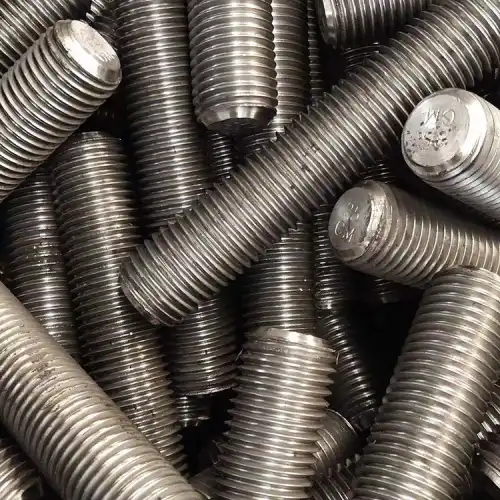
Introduction to Tantalum Studs in Chemical Processing
When securing glass-lined reactors or collecting high-purity pharmaceutical vessels, standard latches essentially cannot meet the challenge. Tantalum studs are specialised latches fabricated from refractory-grade tantalum metal, exhibiting extraordinary resistance to the most destructive chemicals encountered in mechanical preparation. Unlike standard latches that erode within months when exposed to bubbling hydrochloric or sulphuric acids, tantalum-based arrangements maintain structural integrity for decades.
Why Chemical Plants Depend on Tantalum Fasteners
Modern chemical offices prepare substances that degrade routine materials quickly. The pentoxide inactive layer (Ta2O5) that forms suddenly on tantalum surfaces provides a barrier that recovers even when scratched, ensuring that it remains viable under 150°C across most corrosive types. This self-healing characteristic makes tantalum studs basic for applications including hot concentrated acids, chloride-rich situations, and oxidising media. Their coefficient of thermal expansion closely matches that of borosilicate glass, making them perfect for glass-to-metal seals in pharmaceutical reactors where thermal cycling is constant.
Critical Applications Over Preparing Industries
Chemical processing operations, including nitric acid recovery, sulphuric acid alkylation units, and chlorine-based oxidation forms, depend on tantalum clasps to keep up leak-free seals. Major petrochemical facilities and pharmaceutical producers have achieved benefit lives surpassing 20 for a long time with tantalum-fixing frameworks, compared to 2-5 years for high-grade stainless choices in identical conditions.
Key Properties of Tantalum Studs That Drive Their Preference
Understanding why tantalum studs outperform alternatives requires examining their metallurgical characteristics and how these translate into operational advantages. The combination of chemical inertness, mechanical strength, and thermal stability creates a fastening solution that addresses multiple engineering challenges simultaneously.
Superior Corrosion Resistance Across Acid Types
The defining advantage of tantalum studs lies in their immunity to chemical attack across a broad spectrum of corrosive media. Testing conducted according to ASTM standards confirms that tantalum exhibits corrosion rates below 0.001 inches per year in boiling 37% hydrochloric acid, environments where Type 316 stainless steel would fail within hours. This resistance extends to sulphuric acid concentrations up to 98% at elevated temperatures, nitric acid at all concentrations, and organic acids, including formic and acetic acids. The passive oxide layer prevents chloride-induced stress corrosion cracking, a failure mode that plagues austenitic stainless fasteners in petrochemical applications.
Mechanical Strength with Metallurgical Stability
Standard commercially pure tantalum studs manufactured from R05200 grade material deliver tensile strengths ranging from 30,000 to 40,000 psi in the annealed condition. When enhanced mechanical properties are required, the R05252 alloy grade incorporates 2.5% tungsten, increasing ultimate tensile strength by approximately 35% without compromising corrosion resistance. This tungsten-enhanced composition maintains ductility while providing the load-bearing capacity needed for high-pressure vessel closures. The material retains stable properties across temperature ranges from cryogenic conditions to 250°C in non-oxidising atmospheres.
Thermal Expansion Compatibility
With a thermal expansion coefficient of 6.3 µm/m·K, tantalum studs match glass expansion characteristics almost perfectly. This compatibility prevents stress concentration at glass-lined vessel penetrations during heating and cooling cycles, eliminating the fracture risk inherent with mismatched fastener materials. Chemical plants operating batch reactors with frequent thermal cycling benefit from this property through extended glass lining service life.
Chemical Inertness That Prevents Contamination
Pharmaceutical and speciality chemical manufacturers value tantalum studs for their absolute chemical inertness. Unlike reactive metals that can introduce trace contamination into high-purity processes, tantalum remains chemically passive, contributing no ions or compounds to process streams. This characteristic proves essential in fine chemical synthesis and active pharmaceutical ingredient production, where parts-per-billion purity standards apply.
Comprehensive Comparison: Tantalum Studs vs Alternatives
Procurement decisions for critical fastening applications require objective performance comparisons across material options. While initial acquisition costs differ significantly, lifecycle analysis reveals compelling economic advantages for tantalum solutions in corrosive service.
Tantalum vs Stainless Steel Fasteners
Type 316 stainless steel represents the baseline fastener material in chemical applications. However, chloride concentrations above 200 ppm initiate pitting corrosion, and temperatures above 60°C accelerate degradation exponentially. Chemical plants using stainless fasteners in sulphuric acid service typically schedule replacements every 18 to 36 months. In contrast, tantalum studs installed in identical conditions have documented service exceeding 15 years without measurable material loss. The cost differential—tantalum fasteners commanding 10-15 times the price of stainless equivalents—is recovered through eliminated replacement cycles and avoided production interruptions.
Performance Against Titanium Alternatives
Titanium clasps offer amazing erosion resistance in oxidising acid and chloride situations, making them well known in seawater and dyeing applications. Their limitations ended up being clear in decreasing corrosive situations and at elevated temperatures. Tantalum studs beat titanium altogether in hot phosphoric corrosive benefits, concentrated sulphuric acid over 70%, and any application including fluoride particles. Whereas titanium gives weight preferences insignificance in stationary hardware, tantalum's prevalent chemical resistance in unforgiving, lessening situations legitimises fabric determination for basic applications.
Niobium Studs as Cost-Effective Alternatives
Niobium (columbium) offers chemical similarities with tantalum and offers roughly 60% of tantalum's corrosion resistance at generally half the cost. Chemical processors assess niobium clips for decently destructive applications where tantalum details surpass real necessities. In any case, niobium's oxide layer demonstrates less stability than tantalum's in warm cycling and shows higher erosion rates in concentrated acids over 100°C. The fabric serves as a middle-of-the-road arrangement but cannot substitute for tantalum studs in the most demanding chemical situations.
Real-World Performance Data
A Gulf Coast petrochemical facility documented a comparative study across fastener materials in sulphuric acid alkylation service. Stainless steel fasteners require replacement every 24 months, with associated downtime costs of $45,000 per incident. Hastelloy C-276 fasteners extended service life to 4-5 years but still necessitated periodic replacement. Tantalum studs installed during a 2003 turnaround remained in service through 2023 with no measurable degradation, demonstrating a 20-year service life that transformed lifecycle economics.
Manufacturing and Types of Tantalum Studs for the Chemical Industry
Producing fasteners from refractory metals requires specialised metallurgical processes and rigorous quality protocols. Understanding manufacturing approaches helps procurement teams evaluate supplier capabilities and specify appropriate grades for specific applications.
Metallurgical Production Methods
Tantalum studs begin as either electron beam vacuum arc cast (EBVAC) ingots for maximum purity or powder metallurgy consolidations for specific alloy compositions. The EBVAC process yields commercially pure R05200 material with minimal interstitial contamination, optimising ductility and corrosion resistance. Ingots undergo hot working through forging or extrusion, followed by cold drawing to achieve final dimensions. Thread profiles may be machined using single-point cutting tools or, preferably, formed through thread rolling processes that work-harden the surface and eliminate potential stress risers from machining marks.
Critical Quality Control Procedures
Proficient acquisition of Tantalum Studs requires confirmation of material quality and mechanical judgment through comprehensive review conventions. Chemical composition examination utilising glow discharge mass spectrometry (GDMS) or inductively coupled plasma (ICP) strategies affirms tantalum purity levels of 99.95% or higher, while checking interstitial components. Oxygen content gets specific attention, as abundant oxygen causes embrittlement; details regularly restrain oxygen to under 200 ppm. Dimensional assessment utilises exactness string gauges assembly ASME B1 guidelines, with go/no-go confirmation guaranteeing appropriate string engagement without rankling chance. Microstructure examination affirms a uniform recrystallised grain structure per ASTM E112, and colour penetrant inspection (DPI) identifies any surface discontinuities that might start erosion.
Standard Grades and Custom Specifications
We supply tantalum studs in two essential commercial grades. The R05200 grade speaks to unalloyed tantalum's greatest virtues and ductility, which is perfect for applications prioritising erosion resistance over mechanical quality. The R05252 review joins 2.5% tungsten, improving ductility by 30-50% while keeping up erosion execution about indistinguishable from unalloyed tantalum. Custom details oblige special dimensional requirements, uncommon string shapes, and adjusted mechanical properties. Our engineering team collaborates with clients to create clasp arrangements optimised for particular hardware plans, guaranteeing consistent integration with existing assemblies.
Compliance with International Standards
Tantalum studs made to ASTM B365 details for tantalum pole and wire guarantee controlled interstitial pollution and reliable mechanical properties. Medical-grade applications reference ASTM F560 requirements, in spite of the fact that chemical handling rarely requires this raised level of purity. Dimensional guidelines follow ASME B18 latch details, adjusted for hard-headed metal characteristics. Our generation's offices keep up ISO 9001:2015 certification, and we hold PED 2014/68/EU endorsement for pressure-containing hardware applications, guaranteeing compliance with European administrative requirements.
Procurement Guide for B2B Clients in Chemical Processing
Securing reliable sources for speciality refractory metal fasteners requires understanding global supply chains, pricing dynamics, and supplier qualification criteria. Strategic procurement approaches balance cost considerations against quality assurance and delivery reliability.
Evaluating Supplier Capabilities
Qualified tantalum latch providers illustrate a few basic capabilities. Fabricating facilities ought to have vacuum softening or powder metallurgy solidification hardware appropriate for hard metals, along with accurate machining capabilities for string generation. Quality research facilities prepared for chemical examination and mechanical testing confirm fabric conformance. Certification portfolios including ISO 9001 quality frameworks, wet hardware endorsements (PED, CCS, ABS, and DNV), and third-party review acknowledgements (SGS, Bureau Veritas, and TÜV) demonstrate established quality systems. We keep up all major universal certifications and welcome third-party assessments at any stage.
Pricing Structures and Commercial Terms
Tantalum studs' pricing reflects raw material costs, which fluctuate based on global tantalum ore supply, plus manufacturing value-added. Commercial pure R05200 fasteners typically command premium pricing compared to R05252 alloy grades due to stricter purity requirements despite lower raw material costs. Volume discounts apply at thresholds typically beginning at 100-unit quantities, with significant cost reductions for orders exceeding 500 pieces. Minimum order quantities vary by supplier but generally range from 10 to 50 pieces, depending on size and specification complexity. Lead times span 8-12 weeks for standard sizes and 12-16 weeks for custom specifications, reflecting refractory metal processing cycles.
OEM Customisation for Equipment Integration
Chemical equipment manufacturers benefit from early supplier engagement during equipment design phases. Our engineering team provides design consultation addressing fastener load requirements, corrosion environment specification, and thermal expansion compatibility. Custom tantalum studs can incorporate modified thread profiles, special head configurations, and dimensional variations that optimise assembly processes. OEM partnership programmes deliver dedicated inventory management, just-in-time delivery coordination, and documented material traceability supporting equipment certification requirements.
Global Logistics and Delivery
Established refractory metal suppliers maintain distribution networks supporting international project requirements. Our logistics infrastructure spans more than 60 countries across North America, South America, the Gulf region, Africa, and Southeast Asia. Shipment options include air freight for urgent requirements and consolidated ocean freight for large-volume orders, with transit times and costs optimised according to project schedules. Export documentation, material certifications, and customs coordination are managed comprehensively, ensuring smooth cross-border transactions.
Why Do Leading Chemical Processing Companies Choose Tantalum Studs?
The operational advantages delivered by tantalum fastening solutions translate directly into improved safety, reduced lifecycle costs, and enhanced regulatory compliance. Major chemical processors and EPC contractors worldwide specify these specialised fasteners for critical applications based on documented performance benefits.
Documented Lifecycle Cost Advantages
Return on investment calculations demonstrate compelling economics favouring tantalum studs in corrosive service. A typical sulphuric acid concentrator installation using 240 fasteners illustrates the financial impact. Stainless steel fasteners costing $12 each require replacement every 30 months, yielding 10-year material costs of $9,600 plus six replacement turnarounds at $28,000 each in labour and lost production—totalling $177,600. Tantalum studs at $180 each represent a $43,200 initial investment but require no replacement over the same decade, saving $134,400 while eliminating six unplanned shutdowns. This analysis excludes additional benefits from improved safety and avoided emergency repairs.
Safety and Regulatory Compliance Benefits
Fastener failures in chemical processing equipment create significant safety hazards through toxic chemical releases, personnel exposure risks, and potential fire or explosion scenarios. Tantalum studs eliminate corrosion-related fastener failures, directly supporting safety management in processes and regulatory compliance with OSHA PSM requirements. Facilities operating under EPA Risk Management Program (RMP) regulations reduce reportable incident potential through fastener material upgrades. Our supply chain maintains full material traceability, supporting equipment certification and regulatory audits.
Proven Performance in Landmark Projects
We have supplied tantalum studs to major global projects, including CEFC petrochemical complexes, PTT polymer facilities, PDVSA refinery upgrades, and PEMEX chemical plants. These installations demonstrate tantalum fastener performance across diverse applications from glass-lined reactor closures to titanium heat exchanger assemblies. Long-term partnerships with international EPC contractors, including firms managing PETRONAS, LUKOIL, and PDO projects, reflect confidence in our product quality and supply reliability.
Market Trends Supporting Continued Adoption
Growing environmental regulations mandate reduced emissions and improved process containment, driving adoption of more reliable fastening solutions. Simultaneously, chemical plants extend operating cycles between turnarounds, increasing requirements for fastener longevity. These trends position tantalum studs as strategic investments rather than maintenance commodities. Ongoing research into advanced tantalum alloys and surface treatments promises further performance enhancements, ensuring these specialised fasteners remain at the forefront of corrosion-resistant fastening technology.
Conclusion
Tantalum studs represent the optimal fastening solution for chemical processing equipment exposed to aggressive corrosive environments. Their exceptional resistance to acidic media, self-healing oxide protection, and decades-long service life deliver unmatched reliability and lifecycle value. While initial costs exceed conventional alternatives, the elimination of replacement cycles, avoidance of unplanned shutdowns, and enhanced safety create compelling economic justification. As chemical processing intensifies and regulatory standards tighten, specifying tantalum fasteners for critical applications becomes both an engineering best practice and a strategic business decision supporting operational excellence.
FAQ
Why Do Tantalum Studs Outperform Stainless Steel in Acidic Environments?
The pentoxide passive layer formed on tantalum surfaces provides superior chemical stability compared to chromium oxide layers protecting stainless steel. This tantalum oxide remains intact and self-healing in hot concentrated acids where stainless protective films break down, leading to rapid corrosion. Tantalum demonstrates corrosion rates below measurable thresholds in acids that attack stainless steel at rates exceeding 50 mils per year.
Can Tantalum Studs Be Used in High-Temperature Chemical Applications?
Tantalum studs keep their corrosion resistance and mechanical properties up to 250°C in non-oxidising environments that are typical in chemical processing. The material's 2,996°C melting point provides substantial thermal margin. However, oxidising atmospheres above 300°C cause rapid oxidation, limiting air-exposed high-temperature use. Chemical environments below 150°C represent optimal service conditions where corrosion resistance remains absolute.
What Advantages Do Custom-Designed Tantalum Studs Provide?
Custom specifications optimise fastener performance for specific equipment requirements. Tailored thread profiles reduce galling tendencies inherent to tantalum's ductility. Modified dimensions accommodate unique vessel designs without adapter hardware. Mechanical property adjustments through alloy selection balance strength against ductility requirements. Custom solutions eliminate compromise inherent in standard fastener adaptation, enhancing reliability and assembly efficiency.
Partner with LINHUI TITANIUM for Premium Tantalum Studs
Chemical processing demands uncompromising fastener reliability, and LINHUI TITANIUM delivers certified tantalum studs manufactured to exacting international standards. Our comprehensive quality assurance protocols, including GDMS chemical analysis and precision dimensional inspection, guarantee material conformance for critical applications. As an established tantalum stud supplier serving global chemical processors since 2000, we offer customised solutions from modified thread profiles to specialised alloy compositions. Our logistics network supports delivery across 60+ countries, and our engineering team provides technical consultation optimising fastener specifications for your specific corrosive environments. Contact our team at linhui@lhtitanium.com to discuss your requirements and receive detailed specifications with competitive bulk pricing tailored to your project scope.
References
1. Davis, J.R. (2000). Corrosion of Refractory Metals: Tantalum, Niobium, and Their Alloys. Materials Park, OH: ASM International.
2. Mandarino, L.J. & Carter, R.H. (2015). Fastener Technology for Chemical Processing Equipment, 3rd Edition. Houston: Gulf Professional Publishing.
3. ASTM International (2021). ASTM B365-20: Standard Specification for Tantalum and Tantalum Alloy Rod and Wire. West Conshohocken, PA: ASTM International Standards Organisation.
4. Miller, G.L. (2008). Tantalum and Niobium: Applications in Chemical Process Industries. Chemical Engineering Progress Monograph Series, Vol. 104, pp. 56-73.
5. European Pressure Equipment Directive (2019). Material Selection for Corrosive Service in Pressure Vessels: Guidelines for Refractory Metal Fasteners. Brussels: European Commission.
6. Schweitzer, P.A. (2018). Metallic Materials: Physical, Mechanical, and Corrosion Properties for Chemical Processing Applications. Boca Raton, FL: CRC Press.