
The gold standard for airship fabricating, ASTM B265 titanium plate offers way better strength-to-weight proportions, erosion resistance, and durability in cruel flying circumstances. This standardized titanium amalgam detail is fundamental in airship applications due to its unwavering quality and execution that meet strict industry benchmarks. Mission-critical components require titanium plates since the fabric choice in airplane designing influences security, execution, and operational costs. Titanium plates beneath ASTM B265 necessities give uncommon weariness resistance, high-temperature execution, and natural soundness that aviation producers utilize for aircraft auxiliary components and motor parts.
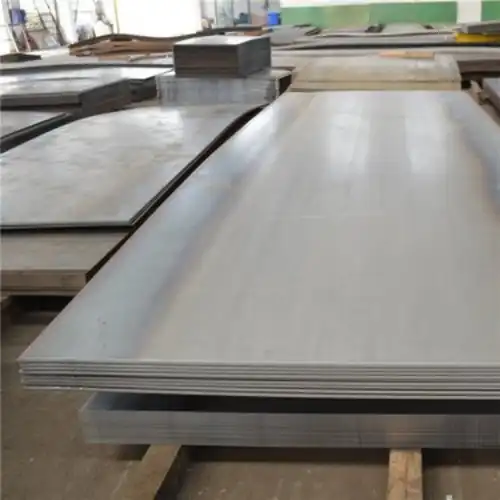
Understanding ASTM B265 Titanium Plate and Its Grades
ASTM B265 titanium plate prerequisites cover creating and testing high-performance titanium alloys. The aviation industry depends on these standardized materials since they give consistent mechanical and chemical qualities that engineers can rely on in key plans. Understanding the grades beneath this detail makes a difference for aviation specialists select the best fabric for their applications.
What Is ASTM B265 Titanium Plate?
For common corrosion-resistant and raised temperature applications, ASTM B265 covers rolled or manufactured titanium and titanium amalgam plates, sheets, and strips. This standard incorporates titanium grades with diverse execution necessities. Carefully chosen crude titanium materials experience directed softening, hot rolling, cold rolling, and accurate warm treatment to begin our fabrication process. The plates fulfill airship quality criteria with reliable grain structure and mechanical qualities. Our ISO, SGS, and TUV-certified quality control frameworks guarantee quality at LINHUI TITANIUM's two plants with 30 titanium fabricating lines.
Key Grades Used in Aerospace: Ti 6Al-4V and Advanced Alloys
Due to its strength, weight, and corrosion resistance, Ti 6Al-4V is the most common ASTM B265 grade in aerospace applications. The 6% aluminum and 4% vanadium alpha-beta alloy has tensile strengths up to 130,000 psi and excellent ductility. For aircraft medical equipment and critical safety components, Ti 6Al-4VELI (Extra Low Interstitial) improves biocompatibility and fracture toughness.
Our product range includes advanced grades like Ti-3Al-2.5V for applications requiring superior formability and Ti6242 (6Al-2Sn-4Zr-2Mo) for high-temperature aerospace engines. Each grade offers distinct advantages:
- Ti 6Al-4V: Excellent strength-to-weight ratio with good corrosion resistance, ideal for structural aerospace components and landing gear systems
- Ti 6Al-4VELI: Enhanced fracture toughness and fatigue resistance for critical safety applications and pressure vessels
- Ti-3Al-2.5V: Superior cold formability and weldability for complex aerospace geometries and fabricated assemblies
- Ti6242: Outstanding high-temperature strength retention for jet engine components and exhaust systems
These diverse alloy options enable aerospace engineers to optimize material selection based on specific application requirements, operating temperatures, and stress conditions.
Thickness Range and Dimensional Standards
ASTM B265 titanium plates meet aerospace component needs in thicknesses from 0.3mm to 4.76mm. Thinner plates are better for weight reduction and complex shaping, while thicker portions strengthen load-bearing components. Aerospace assembly fits and performs consistently due to ASTM B265 dimensional accuracy. Precision rolling and finishing allow us to manufacture all thicknesses with tight tolerances.
Aerospace-Critical Mechanical and Chemical Properties
Materials must survive harsh conditions and preserve structural integrity over long service life in flight applications. Mechanical and chemical qualities of ASTM B265 titanium plates exceed aircraft performance criteria, making them ideal for sensitive applications where failure is not an option.
Mechanical Properties Beneficial for Aerospace
Ti 6Al-4V titanium plates have ductile qualities of 895-1000 MPa and ablation qualities of 828-895 MPa, making them reasonable for airplane components. For flight components subjected to cyclic loads, the fabric has remarkable wear resistance with continuous limits coming to 600 MPa. Stretching levels of 10-15% give ductility for shaping, while keeping up basic reliability.
Titanium alloys' tall strength-to-weight proportion spares weight compared to other aviation materials. Titanium has a thickness of 4.43 g/cm³ and is around half the weight of steel, coming about in proportionate quality. This weight diminishes, boosts the aviation vehicle's fuel effectiveness, and payload.
Chemical Composition and Its Role in Performance
The chemical composition of ASTM B265 titanium combinations is adjusted to optimize execution. Aluminum increments quality, diminishes thickness, and stands up to high-temperature oxidation. Quality, hardenability, ductility, and durability are improved by vanadium. Controlled oxygen, nitrogen, and carbon levels decrease brittleness and maintain mechanical characteristics.
ASTM B265 plates have way better surface cleanliness and dimensional control than ASTM B348 bars for aviation sheet metal applications. These plates have progressed formability and welding for complex aviation manufactures due to their refined chemistry and preparation.
Heat Treatment and Its Effect on Performance
Titanium plate mechanical characteristics and microstructure are greatly affected by heat treatment. Solution treatment followed by aging increases strength by 20-30% while maintaining ductility. Stress relief annealing eliminates residual stresses from forming procedures, maintaining service dimensional stability. Each plate offers consistent mechanical qualities because of our regulated heat treatment methods that optimise grain structure and phase distribution.
Corrosion Resistance and Environmental Suitability
Aerospace components operate in harsh environments that destroy conventional materials quickly. Titanium plates are ideal for aircraft applications exposed to ambient moisture, salt spray, and harsh chemicals due to their corrosion resistance.
Corrosion Resistance of ASTM B265 Titanium Plate in Aerospace Conditions
Titanium forms a steady oxide coating that ensures aeronautical components against erosion. Harmed detached film recovers consequently, securing against air erosion, salt spray, and chemical assault for a long time. After hundreds of hours of salt shower presentation, titanium plates hold basic astuteness way better than stainless steel and aluminum alloys.
Titanium is more corrosion-resistant than Inconel and stainless steel in aviation applications, particularly in the presence of chloride and natural corrosive introduction. Predominant natural resistance spares support and extends component benefit life, sparing flying machine vehicle administrators cash.
Applications in Marine and Chemical Processing for Aerospace Components
Titanium's saltwater resistance benefits marine aerospace vehicles greatly. Naval aircraft and coastal missions expose components to salt spray that rapidly corrodes traditional materials. Titanium plates retain their structural qualities and appearance after prolonged exposure to these severe circumstances, ensuring reliable performance during extensive deployments.
Comparing ASTM B265 Titanium Plate with Alternatives for Aerospace
Aerospace engineering material selection requires careful consideration of performance, weight, cost, and availability. In applications that optimize many performance parameters, titanium plates' advantages frequently justify their use over other materials.
ASTM B265 vs ASTM B348 Titanium Plate
Both specifications cover titanium alloys; ASTM B265 plates have better surface quality and dimensional control than B348 bars. Plate rolling delivers a more consistent grain structure and improved surface quality for aerospace applications requiring precision fitting and appearance. ASTM B265 plates can be formed into complicated shapes and have higher thickness selection flexibility.
ASTM B265 vs Stainless Steel and Inconel Plates
Titanium has 40% lower thickness than stainless steel and 30% lower than Inconel. This weight diminishes, boosts aviation vehicle execution and fuel economy. Titanium gives more prominent erosion resistance in different circumstances, minimizing upkeep and extending benefit intervals.
Due to its lighter weight, lesser upkeep, and longer benefit life, titanium takes the toll of possession by and large beats stainless steel's. Titanium alloys' strength-to-weight proportion permits plan changes that diminish component tally and assembly complexity.
Price and Supplier Considerations in Aerospace Procurement
Aerospace procurement decisions must balance material costs, performance, and supply chain reliability. Our 800-ton production capability provides a smooth supply for large aerospace contracts. Based on specifications and volumes, lead times are 2-4 weeks, with DHL, FedEx, air freight, and sea freight alternatives to suit project dates.
Procurement and Supplier Insights for Aerospace B2B Clients
Successful aircraft projects depend on qualified suppliers who understand industry requirements and can regularly provide materials that meet strict specifications. Quality certifications, production capabilities, technical support, and long-term reliability should be considered while choosing suppliers.
Choosing Certified and Reliable ASTM B265 Titanium Plate Suppliers
To assure product quality and regulatory compliance, aerospace suppliers must maintain ISO 9001:2015, OHSAS 18001:2007, and ISO 14001:2015 certifications. Third-party inspections from DNV, BV, SGS, TUV, and ABS verify manufacturing and quality systems.
LINHUI TITANIUM's 21 years of titanium manufacture and partnerships with key aerospace industries demonstrate our quality and reliability. Our certifications from renowned classification organizations and approval by international inspection agencies prove we can deliver aerospace-grade materials to the highest standards.
Customization and Value-Added Services
Advanced plate processing is often needed for aerospace applications. Our precision cutting, welding, and machining services meet aircraft component criteria. With rigorous documentation and certification compliance for all processing activities, we provide supply chain traceability. Our versatile manufacturing techniques can support custom thickness ranges, specific chemistry, and non-standard dimensions.
LINHUI TITANIUM: Your Trusted Aerospace Materials Partner
Xi'an Linhui Import and Export Co., Ltd. is your trusted partner for excellent ASTM B265 titanium plates, with over two decades of titanium manufacturing experience and aerospace industry knowledge. We offer ASTM B265/ASME SB265, ASTM F136, ASTM F67, and AMS4911-compliant grades Ti 6Al-4V, Ti 6Al-4VELI, Ti-3Al-2.5V, and Ti6242.
We use ISO, SGS, and TUV-certified quality control methods to ensure aerospace excellence. We guarantee aerospace project availability and quality with two specialized manufacturing sites and 30 titanium production lines. With alliances in North America, South America, Gulf countries, Africa, CIS, and Southeast Asia, our worldwide logistics network supports multinational aerospace programs with various delivery options.
Conclusion
ASTM B265 titanium plate delivers unmatched performance for aerospace applications through its exceptional strength-to-weight ratio, superior corrosion resistance, and proven reliability in demanding environments. The standardized specifications ensure consistent material properties while multiple alloy grades provide optimization opportunities for specific applications. Titanium's environmental durability and mechanical properties make it indispensable for modern aerospace engineering, where safety and performance cannot be compromised.
FAQ
Q: What is the best ASTM B265 titanium plate grade for aerospace applications?
A: Ti 6Al-4V represents the most versatile grade for general aerospace applications, offering excellent strength, corrosion resistance, and weldability. Ti 6Al-4VELI provides enhanced fracture toughness for critical safety components, while Ti6242 excels in high-temperature engine applications.
Q: How does ASTM B265 titanium plate compare to stainless steel in aerospace use?
A: Titanium plates offer 40% weight reduction compared to stainless steel while providing superior corrosion resistance and comparable strength levels. This weight savings directly improves fuel efficiency and payload capacity in aerospace vehicles.
Q: What lead times and minimum order quantities are typical for aerospace-grade titanium plates?
A: Standard lead times range from 2-4 weeks, depending on specifications and quantities. Minimum order quantities vary by thickness and grade, but our flexible manufacturing capabilities accommodate both prototype and production volumes.
Partner with LINHUI TITANIUM for Superior Aerospace Materials
Aerospace manufacturers seeking reliable ASTM B265 titanium plate suppliers can depend on LINHUI TITANIUM's proven track record and comprehensive manufacturing capabilities. Our aerospace-grade materials meet the most demanding specifications, while our global logistics network ensures timely delivery to your manufacturing facilities. With over 21 years of titanium expertise and partnerships with leading aerospace companies worldwide, we understand the critical nature of your material requirements.
Contact our technical team today to discuss your specific aerospace material needs and discover how our premium titanium plates can enhance your project performance. Our engineers provide comprehensive technical support from material selection through final application, ensuring optimal results for your aerospace applications. Reach out to us for detailed specifications, custom quotes, or technical consultations at linhui@lhtitanium.com.
References
1. Boyer, R. R. (1996). An overview of the use of titanium in the aerospace industry. Materials Science and Engineering: A, 213(1-2), 103-114.
2. Peters, M., Kumpfert, J., Ward, C. H., & Leyens, C. (2003). Titanium alloys for aerospace applications. Advanced Engineering Materials, 5(6), 419-427.
3. Lutjering, G., & Williams, J. C. (2007). Titanium: Engineering Materials and Processes. Springer Science & Business Media.
4. ASTM International. (2019). ASTM B265-15 Standard Specification for Titanium and Titanium Alloy Strip, Sheet, and Plate. ASTM International.
5. Banerjee, D., & Williams, J. C. (2013). Perspectives on titanium science and technology. Acta Materialia, 61(3), 844-879.
6. Cotton, J. D., Briggs, R. D., Boyer, R. R., Tamirisakandala, S., Russo, P., Shchetnikov, N., & Fanning, J. C. (2015). State of the art in beta titanium alloys for airframe applications. JOM, 67(6), 1281-1303.