
When choosing materials for important commercial uses, Titanium Round Tube vs. stainless steel is often what makes the difference between success and failure. Titanium round tubes are the best at resisting rust, are stronger for their weight, and last a very long time in harsh places where stainless steel fails. There are cheaper materials like stainless steel, but titanium is better for aircraft, chemical processing, and marine uses because it lasts longer, needs less upkeep, and can handle harsh conditions. When procurement workers understand these basic differences, they can make choices that improve both business performance and long-term return on investment.
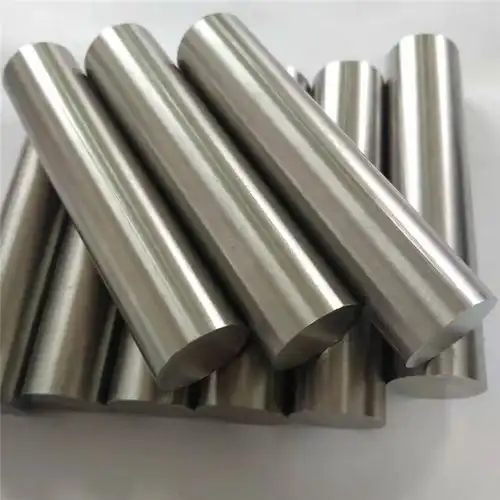
Understanding Titanium Round Tube: Key Properties and Specifications
Titanium round tubes are the best industrial materials because they are both strong and light. These cylinder-shaped parts are made from commercially pure titanium or titanium alloys using high-tech methods such as cold rolling, smooth extrusion, and precise welding.
Manufacturing Excellence and Material Grades
Advanced manufacturing techniques are used to make sure that the quality and performance of modern titanium tubes are always the same. LINHUI TITANIUM uses 30 high-tech production lines for cold rolling and continuous extrusion, which improves the structural stability that is needed for high-pressure systems. The process of making something starts with high-quality titanium billets that are carefully deformed to get exact measurements within 0.05 mm.
Most of the time, Grade 1 and Grade 2 economically pure titanium are used. These grades offer the best corrosion protection and shapeability. The higher strength of Grade 5 (Ti-6Al-4V) makes it perfect for use in aircraft hydraulic systems and structural uses. The best mix of strength and flexibility is found in Grade 9 (Ti-3Al-2.5V), which is perfect for high-performance car and sports equipment uses.
Superior Mechanical Properties
Titanium tubes can be made much lighter than other materials because they have a very high strength-to-weight ratio. Titanium has about 60% the mass of steel, but its tensile strength is the same as or better than that of steel. Because every gram of weight loss in aircraft means better fuel economy and more payload capability, this feature is very useful.
Titanium's 114 GPa elastic stiffness makes it very resistant to wear, which is very important for parts that are loaded and unloaded many times. Amazingly, the material works great even when temperatures are very different; it keeps its shape from very cold temperatures to high temperatures over 400°C. Because they are thermally stable and have low thermal expansion factors, these materials don't break under stress as most other materials do.
Corrosion Resistance and Environmental Performance
A steady oxide layer forms on the Titanium Round Tube, which makes it almost completely resistant to rusting in air and water. When this passive film gets broken, it heals itself right away, protecting against pitting, crevice corrosion, and stress corrosion cracking. In places with a lot of chloride, like ocean purification plants, titanium stays strong, but stainless steel breaks in terrible ways.
Titanium's resistance to harsh chemicals like acids, alkalis, and organic solvents makes it very useful in chemical processes. Hydrochloric acid, sulfuric acid, and other acidic chemicals that quickly break down stainless steel systems don't affect the material. This resistance gets rid of worries about contamination and makes sure that products used in medicinal and food processing are pure.
Titanium Round Tube vs Stainless Steel Tube: Core Differences Explained
Titanium and stainless steel tubes are fundamentally different in more ways than just their material qualities. These differences include how well they work over time, how much they cost to run, and what they can be used for. Understanding these differences helps people make smart choices for important business uses.
Weight and Strength Comparison
Titanium tubes are much stronger than stainless steel tubes while also being much lighter. Grade 5 titanium has final tensile powers of more than 900 MPa and weighs 40% less than stainless steel parts that are the same size and shape. This edge in weight is very important for mobile uses like flight systems, offshore platforms, and transportation equipment, where less mass directly affects how well they work.
Titanium's high fatigue resistance lets wall parts be smaller without affecting the structure's strength. This feature lets engineers make plans that work best while using the least amount of materials. Stainless steel needs stronger walls to have the same wear life as other materials, which means it costs more and weighs more.
Corrosion Performance Analysis
Independent tests show that titanium is better at resisting rust in a wide range of settings. In tests where seawater is present, stainless steel 316L starts to rust within months, but titanium samples don't show any signs of wear and tear after years of contact. In marine uses, where downtime and the cost of replacing parts have a big effect on practical economics, this difference in performance becomes very important.
Even more difficult situations can be found in places where chemicals are processed. Titanium keeps its protective oxide layer even in strong acids and bases that break down stainless steel systems quickly. The biocompatibility of the material ensures that processed materials don't get contaminated, which is very important for pharmaceutical and food-grade uses that need very pure products.
Total Cost of Ownership Evaluation
Titanium has higher starting material prices, but lifecycle analysis shows that it has big economic benefits for the circular titanium tube. A full cost study of heat exchanger uses shows that titanium systems last 15 to 20 years, while stainless steel systems only last 5 to 7 years in naval settings. Better operating dependability, fewer repairs that need to be done, and no replacement costs all add up to a better return on investment.
Applications in the energy field show extra cost savings through better heat efficiency. Thinner titanium walls improve the rate of heat transfer while getting rid of the fouling problems that come with stainless steel systems. These efficiency gains mean that over the life of the equipment, more can be made and less energy will be used.
How to Choose the Best Material for Your Procurement Needs: Titanium or Stainless Steel?
To choose the best material, you need to carefully think about the needs of the product, the working conditions, and the expected long-term performance. To get the best results, procurement pros have to find a balance between technology requirements and business concerns.
Application-Specific Selection Criteria
Titanium Round Tube is always preferred in aerospace uses because of the need for lightweight designs and harsh working conditions. Materials for aircraft hydraulic systems need to be able to handle high pressures, changes in temperature, and stress while still being light. These needs are met by grade 9 titanium, which also has a longer useful life than steel options.
Materials need to be able to withstand aggressive corrosion processes in marine and chemical handling settings. When used in seawater, parts are exposed to high levels of chloride, which quickly eat away at stainless steel through pitting and crevice rust. Titanium is the best material for water plants, remote platforms, and chemical processing equipment because it doesn't break down in these ways.
For medical uses, you need safe materials that don't break down when exposed to body fluids and keep their shape. Because titanium is biocompatible and doesn't wear down easily, it is perfect for surgical implants, medical devices, and tools used in pharmaceutical processing, where stainless steel wouldn't work because of contamination issues.
Supplier Evaluation and Certification Requirements
To successfully buy titanium, you need to work with makers who have a lot of certifications and a track record of success. The long list of certifications that LINHUI TITANIUM has includes PED 2014/68/EU, ISO 9001:2015, and approvals from DNV, ABS, CCS, and GL, among others. These licenses show that a business meets world quality standards and government rules in a number of different fields.
A manufacturing capability review should look at how much can be made, how well quality control systems work, and how much specialized knowledge the company has. Modern factories with many production lines make sure that the supply chain works well and that the standard of the products always stays high. Third-party inspections from well-known companies like SGS, TUV, and Moody's add to quality control and make it easier to track.
Geographic and Logistical Considerations
For global supply chain management to work, sellers must be able to ship goods all over the world while still meeting quality standards. Having established partnerships with foreign shipping companies like DHL, FedEx, Maersk, and COSCO guarantees dependable arrival times and the safe handling of delicate titanium parts. Using wooden boxes, PVC wrapping, and protection films to package things securely keeps them from getting damaged during transport.
Different markets have very different regional certification standards, so sellers need to have extensive approval portfolios. Certifications from the European PED, the American ASME, and the Asian classification society make it possible for people from all over the world to join a project without any problems caused by regulations.
Practical Procurement Guide: Buying Titanium Round Tubes Online and Wholesale
Digital platforms and long-term connections with suppliers are used by modern procurement methods to make buying easier. To buy titanium tubes successfully, you need to know how the market works, what specifications are needed, and how to make sure the quality of the tubes.
Specification Development and Grade Selection
To make a precise design, you must first carefully look at the application and define the speed requirements. When engineers choose the right titanium grades, they have to think about working pressures, temperature ranges, corrosive conditions, and dimensional limits. For general commercial uses, Grade 2 titanium is the most corrosion-resistant and easiest to shape. Grade 5 titanium, on the other hand, is stronger and better for structural uses.
Custom specs often call for measurements that aren't standard, special surface treatments, or certification requirements that aren't found anywhere else. LINHUI TITANIUM can provide types Gr1 through Gr23 that are specifically made to meet ASTM, AMS, or ISO standards. This makes it possible to match specifications perfectly. Precision cutting with laser-guided systems makes sure that medical implants and aircraft parts with tight specs are made to the right size.
Quality Assurance and Testing Protocols
Certification of materials, checking of dimensions, and performance tests are all parts of comprehensive quality control. Mill test papers that list the chemical make-up, mechanical qualities, and heat treatment conditions make it possible to track and make sure that regulations are being followed. Ultrasonic examination, eddy current inspection, and radiography testing are all examples of non-destructive testing that make sure the inside is sound and the surface is intact.
Electropolishing, pickling, and anodizing are some surface treatments that can be used to meet the needs of specific industries while also improving the look and resistance to rust. To get consistent results that meet aerospace AMS 4928, medical ASTM F136, and oil & gas ASME SB338 norms, these methods need specialized tools and knowledge.
Supply Chain Management and Delivery Optimization
Supply chain management that works well combines the costs of inventory with the needs for access while keeping quality standards high. Minimum order amounts, shipping times, and customization options change a lot between providers, so it's important to carefully compare the total costs of procurement. Long-term supply deals with qualified manufacturers keep prices stable and make sure that enough capacity is used.
When sending goods between countries, you need to make sure you have the right paperwork, an export license, and follow the rules of the target country. Suppliers with a lot of experience handle all of these needs while also giving shipment tracking and arrival confirmation. Transport harm can be covered by insurance, and proper packing keeps the product's integrity throughout the distribution chain.
Conclusion
Ultimately, the choice between Titanium Round Tube and stainless steel comes down to the needs of the product and the long-term performance goals. Titanium has better protection against corrosion, a higher strength-to-weight ratio, and a longer service life, all of which make it worth the higher cost in challenging uses. Titanium is always used for important parts in the aerospace, marine, and chemical processing industries, where failure would have worse effects than the original cost. To be successful at procurement, you need to work with approved manufacturers who have all the necessary licenses, a track record of success, and the ability to sell goods all over the world. With more than 21 years of experience, a large list of certifications, and a global supply network, LINHUI TITANIUM can guarantee the dependability and speed needed for mission-critical applications.
FAQ
What makes titanium round tubes superior to stainless steel in marine applications?
Titanium round tubes are completely resistant to weathering by saltwater because they form a stable oxide layer. Titanium's structure stays strong in saltwater settings for a very long time, unlike stainless steel, which pits and cracks because of chloride. This resistance to rust means that it doesn't need to be maintained, and its service life can be increased from 5 to 7 years for stainless steel to 20 years or more for titanium in desalination and offshore uses.
How does the weight advantage of titanium impact aerospace applications?
Titanium is 40% lighter than stainless steel, which directly leads to better fuel economy and more payload capacity in aircraft systems. Every kilogram of weight saved in aircraft parts leads to a measured drop in running costs over the life of the equipment. Because it has a higher strength-to-weight ratio, the walls can be smaller without affecting the structure's strength. This improves performance while using less material.
What certification standards apply to medical-grade titanium tubes?
For medical uses, surgical implants must meet ASTM F136 standards, and medical device manufacturing must meet ISO 13485 standards. These standards require tests for biocompatibility, specifics for the surface finish, and records of tracking. LINHUI TITANIUM keeps up-to-date certifications for medical uses, which makes sure that their products meet international quality and healthcare rules.
Can titanium round tubes be welded or formed after delivery?
Titanium is easy to weld as long as you use the right methods and protective gases. For best results, you may need to relieve stress after welding. When cold forming, you have to think about how the metal will spring back, and the bend radius usually has to be bigger than for stainless steel. Specialized tools and controlled making speeds make sure that the dimensions are correct and that the surface doesn't get damaged or cracked.
What factors determine the total cost of ownership for titanium versus stainless steel?
A full cost analysis must include the starting costs of materials, the costs of installation, the costs of upkeep, the plans for replacements, and the effects on operating efficiency. Titanium has higher initial costs, but its longer service life, lack of upkeep needs, and better performance traits usually result in 15–25% cheaper lifetime costs in corrosive environments compared to stainless steel options.
Partner with LINHUI TITANIUM for Premium Titanium Solutions
LINHUI TITANIUM is a reliable company that makes titanium round tubes. They offer precision-engineered products and have been in the business for more than 20 years. With 30 specialized production lines and full ISO/SGS/TUV certifications, our state-of-the-art production centers guarantee consistent quality and dependability for your most demanding uses. We offer unique titanium solutions from Grade 1 to Grade 23 that meet ASTM, AMS, and ISO standards and have precise tolerances of ±0.05mm. We have a history of serving the aerospace, medical, and energy industries around the world. Email our technical team at linhui@lhtitanium.com to talk about your unique needs and find out how our titanium round tube supply services can help your project run more smoothly and save you money in the long run.
References
1. American Society for Testing and Materials. "Standard Specification for Seamless and Welded Titanium and Titanium Alloy Tubes for Condensers and Heat Exchangers." ASTM B338-21.
2. Boyer, Rodney, Gerhard Welsch, and E.W. Collings. "Materials Properties Handbook: Titanium Alloys." ASM International Materials Park, Ohio, 1994.
3. Donachie, Matthew J. "Titanium: A Technical Guide, 2nd Edition." ASM International, Materials Park, Ohio, 2000.
4. Lütjering, Gerd, and James C. Williams. "Titanium: Engineering Materials and Processes, 2nd Edition." Springer-Verlag Berlin Heidelberg, 2007.
5. Schutz, R.W., and D.E. Thomas. "Corrosion of Titanium and Titanium Alloys." ASM Handbook Volume 13B: Corrosion Materials, ASM International, 2005.
6. Titanium Development Association. "Guidelines for Design with Titanium." Technical Report TDA-TR-2019-001, Titanium Development Association, 2019.