
Custom titanium tubing represents the pinnacle of engineering excellence for projects demanding exceptional performance characteristics. When you need materials that deliver unmatched corrosion resistance, superior strength-to-weight ratios, and biocompatibility, Custom Titanium Tubing emerges as the optimal solution. Unlike standard off-the-shelf alternatives, custom titanium solutions are precisely engineered to meet your exact dimensional tolerances, alloy specifications, and application requirements, ensuring seamless integration into critical systems across aerospace, medical, energy, and industrial sectors.
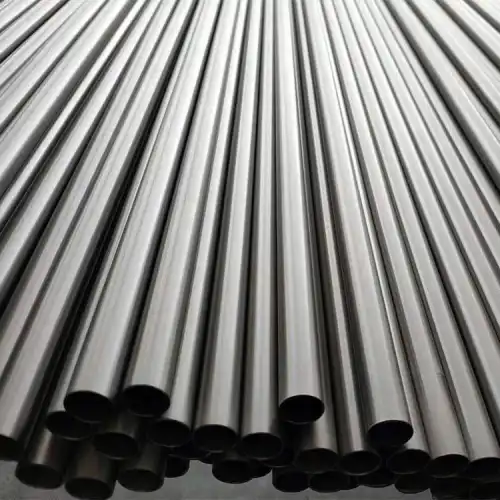
Understanding Custom Titanium Tubing and Its Unique Benefits
Custom Titanium Tubing is basically different from standard versions because it can handle specific changes in size, unique alloy grades, and custom surface finishes. This custom method solves technical problems that can't be solved well with mass-produced tubing.
Precision Engineering Capabilities
The process of tailoring includes many factors that have direct effects on how well things work. Different wall thicknesses can be carefully controlled, from very thin walls of 0.5 mm for medical devices to very thick walls of more than 25 mm for industrial pressure tanks. Dimensional limits allow for amazing precision, often within ±0.05mm, for important uses that need to integrate systems without any problems. You can choose from more than just basic, widely pure grades of alloys. For example, Ti-3Al-2.5V (Grade 9) is used in hydraulic systems, and Ti-6Al-4V (Grade 5) is used in structural parts. Acid etching, mechanical polishing, and special coatings are some of the surface treatments that can improve performance even more in certain working conditions.
Superior Material Properties
Titanium is perfect for tough jobs because of its natural qualities. Through passive oxide film development, the material has great corrosion resistance and stays almost completely immune to corrosion in air, seawater, and harsh chemical conditions. Compared to stainless steel or aluminum options, this feature means that the product will last longer and require less upkeep. When weight is important, the benefit of the strength-to-weight ratio becomes even more important. Titanium is about 45% lighter than its steel counterparts, with a density of 4.51 g/cm³, while still having the same or better mechanical qualities. This quality is very useful in aircraft uses where every gram affects how much fuel is used and how much weight can be carried. Because of these special advantages, custom titanium solutions offer better performance, longer longevity, and lower costs over the lifetime of the product. This makes them a smart investment for mission-critical uses.
Core Applications and Industry Use Cases of Custom Titanium Tubing
Different industries use Custom Titanium Tubing's flexibility in different ways, using the material's unique qualities to solve specific technical problems.
Aerospace and Defense Applications
Materials used in aerospace must be able to resist harsh environments while also weighing as little as possible. Custom titanium tubes are very important in hydraulic systems because they need materials that don't crack or corrode easily to move high-pressure fluids. Titanium's heat stability and light weight make it a good choice for engine ducts, especially in high-temperature areas where aluminum would fail. For shock braces and hydraulic actuators in landing gear systems, custom-formed titanium tubing is used. The material's high wear resistance makes sure that the systems work reliably after thousands of pressurization cycles. Because titanium tubing can be bent into complicated shapes without losing its structural integrity, it can be easily routed through aircraft frames while still meeting pressure requirements.
Medical and Pharmaceutical Industries
Titanium is used in medicine because it is biocompatible and doesn't break down when sterilized. For femoral stems and spine rods, orthopedic implant makers use custom titanium tubes. Precise control over the dimensions makes sure that the bone integrates properly and the implant stays stable over time. The fact that the material is not magnetic is very important for making MRI-compatible devices and surgical tools. Custom titanium tubing is used in clean fluid handling systems in pharmaceutical processing equipment. The inertness of the material keeps the product pure and stops contamination. FDA's strict rules say that surfaces that can be made ultra-clean using special processing methods must be used in direct product touch situations.
Energy and Chemical Processing
Applications in the energy field include processing oil and gas and new methods for storing hydrogen. Titanium doesn't rust in ocean cooling systems, which makes it possible to build heat exchangers with smaller walls that work better at moving heat. Custom tube shape improvement improves flow properties and lowers the fines for pressure drop. Chemical processing plants use special titanium tubes to deal with strong acids and caustic solutions, which would quickly wear down stainless steel. The material can't be damaged by chloride stress corrosion cracking, which makes it essential for making chlor-alkali and desalinating seawater.
How Custom Titanium Tubing Is Made: From Raw Material to Finished Product
When Custom Titanium Tubing is made, it goes through a series of complex steps that turn raw materials into precisely built parts that meet exact requirements.
Raw Material Processing and Preparation
To make something, high-quality titanium powder or recycled aerospace-grade scrap is used as the starting material. This is heated in a vacuum arc to remove any flaws and make the metal chemically uniform. The ingots that are made are then shaped into billets that have controlled grain structure and mechanical features. Before starting to form the tube, spectroscopic analysis is used to check the quality and make sure that the metal ratios are correct.
Advanced Manufacturing Techniques
When making seamless tubes, the rotating piercing and pilgering methods keep the wall width the same and allow for exact control of the dimensions. The process of cold drawing improves the accuracy of the dimensions and the quality of the finish on the surface. Internal surfaces that look like mirrors are often achieved, which is necessary for high-purity uses. Advanced laser welding methods are used to make welded tubes that have few heat-affected zones and retain their corrosion-resistant qualities. Later rounds of heat treatment improve the mechanical qualities while releasing stresses that were created during the forming process.
Quality Control and Certification Standards
Strict quality control procedures make sure that every tube meets the standards. Non-destructive testing includes ultrasound checking to check the consistency of wall thickness and find internal flaws, eddy current testing to find surface flaws, and hydrostatic pressure testing to make sure the structure is solid. International standards like ASTM B338 for heat exchangers, ASTM B861 for seamless pipe applications, and AMS 4943 for aerospace hydraulic tubes are followed during manufacturing to make sure that quality and efficiency are always the same. For very important uses, third-party approvals from groups like DNV, ABS, and Lloyd's Register add an extra quality guarantee. Lead times for normal custom configurations are usually between 4 and 8 weeks. For more complicated geometries or alloys, plans need to be stretched. Delivery times and minimum order quantities are affected by production factors such as the supply of alloys, the difficulty of meeting dimensional requirements, and testing requirements.
Comparing Custom Titanium Tubing with Alternative Materials
Knowing the differences in how different materials work lets you make smart choices when choosing the best options for different uses.
Performance Characteristics Analysis
Custom Titanium Tubing is more resistant to rust than stainless steel options, especially in chloride-filled areas where stainless steel gets pitted, cracked, and corroded. This benefit means longer periods between repairs and lower replacement costs, even though the original investment is higher. Comparing titanium's strength to weight shows how well it works. Grade 9 titanium has tensile strengths of more than 620 MPa and is very easy to shape, which makes it perfect for uses that need both strong structure and complex geometry formation. Aluminum options are lighter, but they can't compare to titanium's strength or ability to withstand high temperatures.
Cost-Effectiveness Over Product Lifecycle
Titanium's initial material prices are much higher than those of stainless steel and aluminum. Lifecycle study, on the other hand, shows strong economic benefits through lower upkeep needs, longer service life, and fewer early failures. Because they have less downtime and upkeep costs, industries that work in corrosive environments often see payback times of less than three years.
Grade Selection Considerations
Choosing the right titanium grade makes sure that the qualities of the material meet the needs of the application. For general industry uses, grade 2 commercially pure titanium is very good at resisting rust and is easy to shape. Grade 9 (Ti-3Al-2.5V) is best for hydraulic systems and high-performance uses because it is stronger and can still be worked on in cold conditions. Grade 5 (Ti-6Al-4V) is the strongest material for building uses, but it needs to be hot-formed to make complex shapes. When procurement workers understand these changes in properties, they can choose the best materials while combining performance needs with cost limitations.
Procurement Insights: Sourcing Custom Titanium Tubing for Your Business
Strategically choosing a supplier has a direct effect on the success of a project through consistent quality, reliable delivery, and the ability to provide expert help.
Supplier Evaluation Criteria
Suppliers with a good reputation show a wide range of certifications, such as ISO 9001 quality management systems, PED pressure equipment guidelines, and approvals specific to the industry, like AMS standards for aerospace uses. Verification of manufacturing potential should include output capacity, the level of sophistication of the tools, and the infrastructure for quality control. LINHUI TITANIUM is a great example of a provider with 21 years of experience making things and two dedicated buildings with 30 specialized production lines. Some of the many certifications we have are from TUV Nord AD2000-W0, PED 2014/68/EU, and important classification groups like DNV, ABS, CCS, and Lloyd's Register.
Pricing Models and Commercial Considerations
Understanding how prices work is important for making good budget plans and reducing costs. Volume-based prices usually give big discounts for orders that are more than 1,000 linear feet, and even bigger discounts are available for long-term supply deals. For non-standard shapes, custom tooling costs may apply, but these costs are quickly covered by bigger production runs. Minimum order amounts depend on what the supplier can do and how much of the metal is available. Standard types, like widely pure titanium, can usually handle smaller amounts, but for specific alloys, you might need to order a certain amount to cover the costs of setting up the production line.
Supply Chain Management Strategies
To handle wait times well, suppliers need to be involved early on and be able to understand the specifications. Giving thorough drawings, material certificates, and testing needs during the initial questions speeds up the quotation process and lowers the chance of delays. Coordinated supply chain planning, which includes buying raw materials and making plans for production, helps reduce the risk of delivery. For foreign tasks, being able to handle global logistics is essential. When suppliers offer FOB and CIF terms along with hazmat approval for both air and sea freight, it makes the buying process easier and makes sure that all parts of the supply chain handle materials safely.
Conclusion
Custom Titanium Tubing has many strategic benefits that go beyond the qualities of the material itself. These include better performance, lower lifetime costs, and higher system stability in important applications. Custom solutions solve technical problems that standard materials can't by carefully controlling the dimensions, choosing the right alloys, and using advanced manufacturing methods. Titanium is still a valuable material in many fields, including aerospace, medicine, energy, and chemical processing, even though it costs more at first. This is because it has strong performance and lifetime economic benefits.
FAQ
What lead times should be expected for custom titanium tube orders?
Standard custom setups usually take between 4 and 8 weeks from the time the order is confirmed until it is delivered. If the shape is complicated and needs handmade tools or special metal, the lead time could be 10 to 12 weeks. Early interaction with suppliers and clear sharing of requirements help keep delays to a minimum and ensure accurate planning for delivery.
How does titanium tubing's corrosion resistance compare to stainless steel?
Titanium is much more resistant to rust than stainless steel, especially in chloride conditions where stainless steel pits and cracks. The inactive oxide sheet formation protects against corrosion from seawater, the air, and many harsh chemicals. This means that it will last longer and need less care than options made of stainless steel.
Can custom titanium tubing be welded or machined after delivery?
Titanium is very easy to weld if you use the right methods and filler materials. By using TIG welding in places with a neutral atmosphere, you can make parts that last and don't rust. Machining needs certain tools and cutting settings, but the results are very smooth surfaces. To meet customer needs, many providers offer fabrication services after shipping.
What testing and certifications are available for quality verification?
A full test includes measuring, chemical analysis, checking the material properties, and non-destructive tests like ultrasound and eddy current examination. Material certificates usually have mill test certificates, inspection records from a third party, and proof that the material meets the requirements of standards like ASTM, AMS, or EN.
Partner with LINHUI TITANIUM for Your Custom Titanium Tubing Requirements
LINHUI TITANIUM is ready to provide you with precisely designed solutions that meet the strictest requirements of your project. With 21 years of experience making things and advanced production skills across 30 specialized lines, we can guarantee consistent quality and on-time delivery of your Custom Titanium Tubing needs. As a reliable maker with big clients like PETRONAS and PEMEX, we know how important your applications are and offer full support from the first design meeting to the final delivery.
Email our expert team at linhui@lhtitanium.com to talk about your unique needs and get quotes that are made to fit your project. See the difference at LINHUI TITANIUM, where we are dedicated to quality, creativity, and client satisfaction in every custom solution we provide.
References
1. Boyer, R. R., & Briggs, R. D. (2013). The Use of β Titanium Alloys in the Aerospace Industry. Advanced Materials & Processes, 171(6), 22-25.
2. Davis, J. R. (2006). Titanium and Titanium Alloys: Specialty Handbook. ASM International Materials Engineering Series, Second Edition.
3. Froes, F. H., & Qian, M. (2018). Titanium: Physical Metallurgy, Processing, and Applications. Advanced Materials Research and Manufacturing Processes, Volume 12.
4. International Titanium Association. (2019). Guidelines for Titanium Tubing Manufacturing and Quality Control Standards in Industrial Applications.
5. Leyens, C., & Peters, M. (2014). Titanium and Titanium Alloys: Fundamentals and Applications. Industrial Manufacturing and Processing Technology Series.
6. Peters, M., Kumpfert, J., Ward, C. H., & Leyens, C. (2003). Titanium Alloys for Aerospace Applications. Advanced Engineering Materials, 5(6), 419-427.