
To find dependable Titanium Welding Pipe suppliers with approved weld quality, you need to carefully evaluate suppliers who strictly follow international standards. The solution is to work with well-known companies like LINHUI TITANIUM, which has many standards such as ISO, SGS, and TUV approvals. These providers have a history of providing Grade 1-12 titanium alloy pipes with advanced TIG and laser welding skills. This ensures consistent quality for important uses in the oil, gas, chemical, aerospace, and marine industries. Certified providers offer full paperwork, reports from third parties inspecting the work, and keep their factories updated with post-weld processes like precision cutting and stress-relieving annealing to ensure the weld is strong.
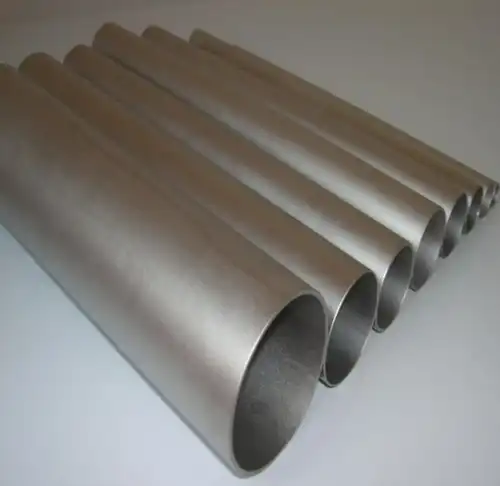
Understanding Titanium Welding Pipes and Their Benefits
Titanium Welding Pipe is a high-tech option for businesses that need to work in harsh conditions and get great results. To make these tubular goods, titanium flat-rolled materials are bent into exact forms and then joined together using advanced Gas Tungsten Arc Welding (GTAW/TIG) or Plasma Arc Welding (PAW) methods. The end products are much more durable than common materials like stainless steel and Inconel metals because they are much more resistant to rust and have better strength-to-weight ratios.
Superior Mechanical Properties and Performance
Titanium-welded pipes are very useful for important industrial uses because of their natural properties. These lines can stand up to harsh chemicals, high temperatures, and places with a lot of pressure. Since the material is biocompatible and non-toxic, it can be used in even more medical gadgets and pharmaceutical manufacturing systems. Titanium welding pipes are stronger than steel pipes of the same weight, which means they can hold up better under tough conditions while reducing structural loads. This trait is especially useful in aerospace uses where reducing weight has a direct effect on fuel economy and payload capability. The material's thermal expansion coefficient is also very close to that of many substrates, which means that stress-related breakdowns are less likely to happen in thermal cycling.
Cost-Effectiveness Through Longevity
As an initial investment, Titanium Welding Pipe may be more expensive than other materials. However, the long-term worth becomes clear when you consider the lower upkeep needs, longer service life, and lower replacement costs. Industries that use these lines say they save a lot of money on running costs because they have less downtime, no more failures caused by corrosion, and shorter upkeep times for their systems.
Critical Standards and Certifications for Titanium Welding Pipes
Titanium Welding Pipe quality meets strict industrial requirements when it meets widely accepted standards. The production requirements are set by ASTM B862 and ASTM B338 standards. Other certificates from groups such as DNV, ABS, CCS, and GL confirm performance in certain situations.
Essential Certification Requirements
When you buy something professionally, you have to check a lot of different approval levels. Getting ISO 9001:2015 Quality Management System approval shows that a company is dedicated to using uniform quality control methods. The PED 2014/68/EU certification shows that the equipment meets European safety standards, and the OHSAS 18001:2007 certification makes sure that it meets health and safety standards at work. Independent checks of industrial methods and product quality are done by third-party inspection companies like SGS, Moody's, TUV, and Bureau Veritas. Dimensional accuracy, weld integrity, material makeup, and mechanical properties tests are all part of these checks. For insurance, regulatory compliance, and project approval reasons, proof of approved weld quality from these organizations is very important.
Documentation and Traceability
Certified titanium-welded pipes come with full paperwork packages. Material test certificates (MTCs) list the chemical makeup, mechanical qualities, and heat treatment history of a substance. Weld process qualification records, or WPQRs, list the allowed welding procedures and conditions. Radiographic, ultrasonic, or dye penetrant checking methods are used to make non-destructive testing results that prove the integrity of the weld.
How to Identify Reliable Suppliers of Titanium Welding Pipes
To find reliable suppliers, you need to carefully look at their manufacturing skills, quality control methods, and knowledge in the field. Well-known companies show how reliable they are by having a lot of certifications, a history of successful projects, and the ability to make unique solutions.
Manufacturing Capability Assessment
Reliable sources have production sites that are just for titanium and have special tools for handling it. LINHUI TITANIUM is a leader in its field and has two factories with more than 30 dedicated production lines that can make 800 tons of steel each year. This system makes sure that quality is always the same and that big projects can handle a lot of work. Precision forming tools, automated welding systems, and full testing facilities are all examples of advanced production skills. After the weld is done, steps like stress-relieving annealing, precision cutting, and surface passivation make the metal more resistant to rust and improve its accuracy in measurements. Suppliers who offer helium leak testing and 3D laser measurement show that they are serious about checking the quality of their products.
Industry Experience and Project Portfolio
Experienced sellers keep long portfolios that show they've delivered to big companies and EPC providers successfully. LINHUI TITANIUM has worked with well-known companies like CEFC, PTT, PDVSA, PETROECUADOR, and PEMEX, which shows that it can handle tough tasks. Long-term relationships with these groups show that they consistently do a good job and can be counted on. Geographic reach and export experience show how mature and well-equipped a seller is for logistics. Suppliers that work with more than 60 countries show that they understand the different rules and challenges of shipping. This experience means that the buying process will go more smoothly and project risks will be lower.
Buying Guide: Navigating the Procurement Process of Titanium Welded Pipes
Successful procurement requires understanding cost drivers, technical specifications, and supplier capabilities. Titanium Welding Pipe pricing reflects alloy grade selection, dimensional requirements, welding complexity, and volume considerations.
Cost Optimization Strategies
Choosing the right grade has a big effect on the price. For example, commercially pure titanium (Grades 1-4) is cheaper than mixed grades (Grades 5-12) and still has great rust resistance. Wall width optimization finds a balance between the needs of the structure and the cost of the materials. Welded construction is better for larger diameter lines than seamless construction because it saves a lot of money without sacrificing performance. Buying in bulk takes advantage of savings of scale, especially when the specs are standard. Suppliers often offer tiered price systems that reward customers who make bigger purchases. Long-term relationship deals can help you get better prices and keep your supply chain stable for projects that are already underway.
Technical Specification Development
Developing precise specifications for a titanium-welded tube prevents changes and delays from costing a lot of money and time. Some important factors are the tolerance for the diameter, the consistency of the wall thickness, the location of the weld seam, and the end preparation requirements. Specifications for the surface finish affect both how it looks and how well it works in fluid transport uses. Choosing the right welding method affects both cost and quality. For important purposes, TIG welding produces better welds, while laser welding provides accuracy for thin-wall applications. When used, the filler metal must match the qualities of the parent material and the needs of the application.
Ensuring Long-Term Value: Post-Purchase Considerations and Support
For Titanium Welding Pipe to work at its best, it needs to be installed, maintained, and watched over properly. Following what the maker says will protect your guarantee and make sure the best service life.
Installation Best Practices
Professional installation keeps the license active and protects the integrity of the system. Welders who are qualified must have titanium welding certifications and follow the right steps. Atmospheric shielding during welding keeps contaminants out that could weaken the resistance to rust. When asked for, post-weld heat treatment for the titanium welded tube reduces leftover stresses and improves the mechanical qualities. To get the results you want, temperature control and cooling rates must be done on exact dates and times. Keeping records of the factors used for heat treatment ensures that they can be tracked and that they are in line with specs.
Preventive Maintenance Protocols
Schedules for regular inspections help find problems early, before they affect operations. Visual inspections show the state of the surface, and non-destructive testing makes sure that the weld is still strong. Monitoring corrosion in harsh settings helps figure out the best time for repair and how long something will last. Cleaning surfaces the right way keeps them in good shape and stops contamination from building up. Cleaning methods and products that have been approved keep inactive oxide layers that protect against rust from getting damaged. Regular repair keeps things running at their best and extends the life of the equipment.
Conclusion
Find licensed Titanium Welding Pipe needs a careful review of suppliers that focuses on their ability to make the pipe, their quality certifications, and their experience in the business. Reliable sellers show that they follow international standards by providing lots of paperwork and having a third-party check it. Cost optimization takes into account different types of materials, their specs, and the amount that needs to be made while still meeting performance standards. For something to have long-term value, it needs to be installed, maintained, and watched in a way that keeps the approval current and increases the service life.
FAQ
What documentation should I request when purchasing titanium welded pipes?
Material test certificates (MTCs), weld procedure qualification records (WPQRs), third-party inspection reports, and copies of certifications from the right officials are all important pieces of paperwork. These papers check the chemistry makeup, technical features, and weld strength, and ensure that the product meets certain standards.
How do I verify the authenticity of welding certifications?
Real certificates have official seals, signatures, and registration numbers that can be checked with the groups that issued them. Inspection records from a third party are an independent way to back up claims of quality. Reliable sellers accept requests for verification and give direct contact information for certification groups.
What makes titanium-welded pipes superior to stainless steel alternatives?
Titanium is better at resisting rust than stainless steel, especially in chloride conditions where stainless steel can fail. The benefits of the strength-to-weight ratio make it possible to make smaller systems, and the biocompatibility makes the uses more varied. The lower upkeep costs and longer service life more than make up for the higher original investment.
Ready to Source Premium Titanium Welding Pipes?
LINHUI TITANIUM is ready to help you with your buying needs. They have been making things for over 21 years and have a wide range of certifications. Our Grade 1-12 titanium welded pipes are made with cutting-edge TIG welding technology, are subject to strict quality control, and come with full paperwork sets. Email our expert team at linhui@lhtitanium.com to talk about your unique needs and get accurate quotes. As one of the biggest companies that makes Titanium Welding Pipe, we promise approved weld quality backed by ISO, SGS, and TUV standards for your toughest jobs.
References
1. American Society for Testing and Materials. "Standard Specification for Titanium and Titanium Alloy Welded Pipe." ASTM International, 2023.
2. International Organization for Standardization. "Titanium and Titanium Alloys - Requirements for Welded Pipes in Industrial Applications." ISO Technical Committee 164, 2022.
3. Welding Research Council. "Best Practices for Gas Tungsten Arc Welding of Titanium Piping Systems." Welding Research Council Bulletin 534, 2023.
4. European Committee for Standardization. "Pressure Equipment Directive Compliance for Titanium Welded Piping." CEN Technical Report TR 15655, 2022.
5. American Petroleum Institute. "Recommended Practices for Titanium Alloy Piping in Offshore Applications." API Recommended Practice 2Z, 2023.
6. National Association of Corrosion Engineers. "Corrosion Control and Materials Selection for Titanium Welded Pipe Systems." NACE International Publication 35115, 2022.