
Sourcing customized titanium alloy plate Gr5 demands careful evaluation of supplier credentials, certification portfolios, and proven track records in serving high-stakes industries. We understand that procurement professionals in oil and gas, aerospace, and chemical sectors require materials that meet stringent international standards without compromising delivery timelines. Direct manufacturers with comprehensive certification systems—such as PED, API, ASTM B265, and AMS 4911 compliance—offer the most reliable pathways for acquiring Ti-6Al-4V plates tailored to your project specifications. Established suppliers in metallurgical hubs provide integrated services spanning material testing, dimensional customization, and logistics coordination, ensuring you receive plates ready for critical applications in offshore platforms, aircraft structural components, or high-pressure chemical reactors.
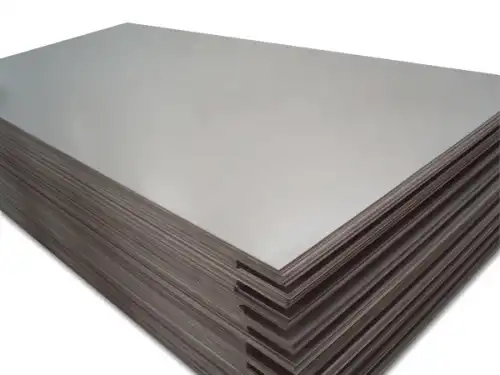
Understanding Customized Titanium Alloy Plate GR5
The most common alpha-beta titanium alloy used in industrial sourcing is the customized titanium alloy plate GR5, which is also known as Ti-6Al-4V. Its chemical make-up carefully keeps the amount of aluminum between 5.5 and 6.75% to keep the alpha phase stable and the amount of vanadium between 3.5 and 4.5% to keep the beta phase flexible. This two-phase microstructure has better mechanical qualities than pure titanium that is sold in stores, and it doesn't rust in chloride-rich settings.
Core Mechanical Properties and Standards Compliance
Material performance factors have a direct effect on choices about what to buy. ASTM B265 and AMS 4911 say that the Gr5 titanium plate must have a minimum tensile strength of 895 MPa (130 ksi) and a minimum yield strength of 828 MPa (120 ksi). Its density of 4.43 g/cm³ makes it 45% lighter than steel while keeping the same level of structural strength. The hardness of the material is usually between 30 and 36 HRC, which means it can fight wear on the surface without breaking when it is being made. Because of these qualities, engineers can make parts that are lighter without lowering their load-bearing capacity. This is especially useful for aircraft bulkheads and underwater drilling equipment, where every kilogram affects the cost of running the business.
Customization Capabilities for Industrial Applications
Options for customization go beyond normal sizes to meet the needs of each job. The plate thickness can be changed from 2 mm for thin fairings to 100 mm for heads of pressure vessels. There are different types of surface finishes, from hot-rolled scales that can be machined later to polished mirror finishes that are used on clean medical equipment. We see that procurement managers are asking for solution-treated and aged (STA) conditions more and more to make materials more resistant to wear in repeated loading situations. Precision aircraft parts can have dimensions that are accurate to within 0.1 mm, and chemical milling services can make pockets in structural panels that are the right size and weight. Because it is so adaptable, customized titanium alloy plate Gr5 can be used for many things, such as heat exchanger plates in desalination plants and firewall screens in turbine structures.
Chemical Resistance in Harsh Environments
The material's inactive oxide layer (TiO₂) forms right away when it comes in contact with oxygen, making a shield that can repair itself against corrosive attack. In underwater oil production, this quality is very important because Gr5 titanium plate doesn't rust in warm seawater, which would kill stainless steel in months. The metal stays strong in chlorinated hydrocarbons, organic acids, and hypersaline brines up to 300°C, so there's no need for protective layers that make it harder to prepare welds and check them.
Key Factors to Consider When Buying Customized Titanium Alloy Plate GR5
When you do strategic buying, you have to carefully compare the skills of potential suppliers with the technical needs of the project. We know that choosing the wrong material for a pressure-containing purpose can lead to catastrophic failures and fines from the government.
Certification Verification and Traceability Systems
The first step in quality assurance is to make sure that sellers still have all of their certifications from official bodies. For pressure tools, look for companies that are in line with PED 2014/68/EU, have API Q1 registration for oil and gas uses, and have ISO 9001:2015 quality management systems. Each package of a customized titanium alloy plate Gr5 should include mill test certificates (MTCs) that show the results of heat-specific chemical analysis, mechanical tests, and tracking numbers that connect the material to the records of how it was made from the original ingot. Third-party inspection acceptance from DNV, Bureau Veritas, or SGS makes sure that plates meet contractual requirements before they are shipped. This lowers the chance that non-conformances will be found during your receiving inspection.
Dimensional Accuracy and Surface Quality Standards
Tolerances in manufacturing have a direct effect on the prices of cutting that comes after. Precision hot rolling and following heat treatment make plates with better control over their dimensions than other methods. We suggest that you include flatness limits (usually < 5 mm per meter for structural uses) and edge preparation needs in your buy orders. The state of the surface is just as important as the type of surface. Hot-rolled metal scales need to be removed before welding, which takes more time and effort, but pickled and passivated surfaces are ready to be used. If you load and unload the gr5 titanium plate surface over and over, it shouldn't have any cracks, laps, or gaps that could cause stress concentration spots.
Lead Time Planning and Inventory Strategies
When compared to normal stock items, customization naturally causes arrival times to be longer. Plates that need certain mixtures of thickness and width may need their own rolling campaigns, which usually add 8 to 12 weeks to the base production times. For ongoing jobs, we suggest making blanket buy deals with reliable suppliers. This way, they can keep a strategic stock of the sizes you need most often. When you commit to buying a lot of something, you can often get better prices. For example, when you order 5 tons or more, the price goes down by 15-20% compared to buying one plate. But you should weigh the costs of keeping inventory against the risks of not being able to get materials, especially for projects that need to be finished quickly during refinery repair times.
Where to Find Reliable Suppliers for Customized Titanium Alloy Plate GR5
Finding capable suppliers is what separates projects that go well from buying processes that go badly. Vertically integrated producers, specialized processors, and distributors with different value propositions make up the environment.
Evaluating Manufacturer Capabilities and Track Records
Working directly with makers gives you more control over customization and better technical help. A lot of the producers that work with big oil and gas companies, like CEFC, PTT, and PEMEX, have shown that they can meet strict requirements on short notice. Read case studies that show how they helped with projects with similar scope and technical difficulty to yours. Vacuum arc remelting (VAR) furnaces in factories make ingots that are cleaner and have better compositional control. This has a direct effect on how consistent the mechanical properties are across big plate stocks. Site checks show if sources keep separate working lines for titanium to keep ferrous materials from getting on them and making the titanium less resistant to corrosion.
Certification Portfolio Assessment
A supplier's dedication to quality and following the rules is shown by the number of certifications they have. Find makers that have more than just ISO 9001 registration. Look for ones that also have pressure equipment directions (PED), classification society approvals (ABS, DNV, CCS, Lloyd's Register), and aerospace quality standards (AS9100). For these certificates, you have to show that you keep up with strict process controls and pass a yearly surveillance check. Aerospace, naval, and chemical suppliers, for example, need to keep a wider range of certifications to show that they can meet a wide range of scientific standards. This adaptability comes in handy when working on projects that need to follow different rules or things that need to meet more than one set of specifications at the same time.
After-Sales Technical Support Services
Post-delivery help is what sets great sellers apart from transactional ones. We value partners who can give us advice on the best heat treatment processes to reach certain strength goals, the best way to bond thick sections together without creating holes, and how to do a failure analysis if the material acts in a way we didn't expect it to. Some makers offer machining guidelines that are special to their customized titanium alloy plate gr5 microstructures. These guidelines can help your fabrication teams choose the best tools and set the best cutting parameters. The warranty terms must make it clear who is responsible for measurement problems, changes in mechanical properties, and hidden flaws found during production. This will protect your project plans.
Comparing Titanium Alloy Plate GR5 with Alternatives for Informed Purchasing
When choosing a material, it's important to know the performance trade-offs and cost effects of each choice. GR5 titanium plate is the most common grade for high-strength uses, but other grades are more cost-effective for certain niche needs.
GR5 Versus GR2: Strength and Formability Trade-Offs
Commercially pure GR2 titanium is better for cold shaping because its stretch values can reach 20%, which is twice as high as those of GR5 titanium plate, which are only about 10%. This ductility benefit makes it easier to shape heat exchanger tube sheets and building covering into complex curved forms. GR2 can't be used for solid load-bearing tasks, though, because its tensile strength is only 345 MPa (50 ksi). When your design estimates show that lighter materials can still provide enough strength, GR2 lowers the cost of raw materials by 30 to 40 percent compared to GR5. On the other hand, pressure tanks that need to follow ASME Section VIII usually need the higher allowable stress values that can only be provided by customized titanium alloy plate GR5. This is because it lowers the thickness of the walls and the total weight of the system, which justifies its higher price.
GR5 Versus Stainless Steel 316L: Corrosion and Weight Considerations
Stainless steel 316L is still the most common choice for chemical processing, but it shows its limits in warm salt conditions. We show that 316L seawater systems working above 60°C fail due to crevice corrosion within 18 to 24 months, but GR5 titanium plate parts in the same service conditions don't show any rust after decades. Steel is heavier than titanium (density 8.0 g/cm³ vs. 4.43 g/cm³), which makes structural loading difficult in offshore platforms where the weight of the topside affects the cost of the base. Lifecycle cost analysis always supports titanium in naval uses, even though it costs 3–4 times more at first. This is because it doesn't need as many coatings, corrosion limits, or replacement cycles.
Performance in Aerospace and Medical Sectors
For aerospace structural uses, customized titanium alloy plate gr5 is used because it can withstand high temperatures up to 300°C and still keep its mechanical qualities. Manufacturers of airplanes use AMS 4911 material for wing-to-fuselage connection parts because failure would be very bad. When making medical implants, the metal is better because it is biocompatible and has a modulus of elasticity closer to bone (110 GPa vs. 200 GPa for steel). This means that it doesn't cause bone resorption around implants as much as steel does. Because it is not magnetic, patients can easily go through MRI scans, which is a major benefit over ferromagnetic stainless steels.
Tips for Optimizing Use and Handling of Customized Titanium Alloy Plate GR5
When materials are handled and made correctly, they keep their purity and last as long as possible. We share methods that have been improved over decades of serving important businesses.
Machining Best Practices and Tool Selection
Titanium doesn't transfer heat well, so heat builds up at the cutting edges, which speeds up tool wear. We suggest carbide tools with cutting edges that stay sharp by being indexed or replaced often. Cutting speeds should be kept low, with surface speeds of 30 to 50 meters per minute for roughing tasks and lots of cooling flow to get rid of heat. By preventing work hardening, climb milling gives better surface finishes than regular milling. When drilling a Gr5 titanium plate, peck drilling cycles with frequent chip removal keep the hole's dimensions accurate and stop galling. Even though titanium is known for being hard to make, these methods lower the cost of making each part.
Welding Procedure Qualification Requirements
Gas tungsten arc welding (GTAW/TIG) is still the best way to join things together for important jobs because you can precisely control how much heat goes in. Shielding gas quality is very important—argon with no more than 50 parts per million of oxygen and water stops the heat-affected zone from becoming weak. We stress the use of backing gas and following shield to protect the weld zone until it cools below 400°C. This keeps the atmosphere from contaminating the weld zone, which would otherwise make the alpha-case layers weak. For customized titanium alloy plate gr5, there are usually no preheat requirements. Qualified welding methods should write down the interpass temperature limits and, if needed for stress relief, the post-weld heat treatment cycles. Procedure qualification records (PQRs) that meet ASME Section IX or AWS D1.9 show that the mechanical qualities of a joint are recorded.
### Storage and Contamination Prevention Protocols
Titanium is reactive, so it needs to be stored carefully to keep it from getting dirty. We suggest keeping steel in separate storage areas so that iron doesn't get picked up and speed up rusting. Plates should rest on wooden dunnage instead of steel racks, and plastic should be woven between the layers to keep them from scratching when they are being handled. To clean the surface before welding, it needs to be degreased with a solvent and then brushed with stainless steel wire. Steel brushes that contain iron bits should never be used. Titanium doesn't rust, but things that are stored outside need to be covered with a tarp to keep water from pooling. These simple rules keep expensive materials from being rejected during the receiving check or the weld radiography examination.
Conclusion
To find customized titanium alloy plate gr5, you have to weigh technical requirements, seller qualifications, and the cost of the project. We put a lot of emphasis on working together with manufacturers who have full foreign certifications and a history of delivering to important businesses. The material's high strength-to-weight ratio and resistance to corrosion make it a top choice for high-value applications in flight structures, offshore platforms, and chemical processing equipment where long-term performance is more important than starting cost. Strategic buying practices, such as checking certifications, defining measurement tolerances, and planning wait times, lower risks and improve total cost of ownership. Your choice of gr5 titanium plate provider has a direct effect on the success of your project because they provide reliable materials, help with manufacturing, and quick problem-solving throughout the supply chain.
FAQ
What factors influence the pricing of customized titanium alloy plate gr5?
Prices depend on the width of the plate, the total number of orders, the required surface finish, and the limits for size and shape. Market factors, such as the cost of titanium sponge material and demand from aircraft industries around the world, cause changes every three months that are usually between 10 and 15 percent. When you buy more than 5 metric tons, you can get big savings. The price per kilogram drops by 20% compared to buying in small lots. Standard 12-week lead times are the most affordable, while faster arrival times cost more. Costs are also affected by certification requirements. For example, material that needs full traceability and tests to be watched by a third party costs 5–8% more than normal mill certification.
How long does delivery take for custom specifications?
Standard customized titanium alloy plate Gr5 orders take 10 to 14 weeks to ship from the time the buy order is accepted. This time includes arranging the rolling mill, melting the ingot, heat treating it, and checking its quality. Timelines are extended to 14 to 18 weeks for non-standard thicknesses or lengths that need special moving campaigns. We keep a planned stock of popular sizes (6mm, 10mm, and 15mm thick in 1000mm x 2000mm sizes) that can be delivered in 4 to 6 weeks. For urgent jobs, expedited handling is possible, but it requires coordinating the production plan and usually comes with a 15–25% surcharge. Shipping by sea to North American ports takes an extra three to five weeks, but shipping by air cuts that time down to seven to ten days in critical cases.
Can GR5 titanium plate be welded to other metals?
When you directly weld a GR5 titanium plate to metals that are not the same, you can get galvanic corrosion and weak intermetallic compounds. We do not recommend welding titanium directly to metals such as steel, aluminum, or copper. To stop galvanic coupling, transition parts need to be mechanically fastened or bonded with explosives. Engineers use bimetallic transition inserts made by explosion welding to join titanium to steel buildings. These inserts provide metallurgically sound links on both ends. In offshore platform upgrades and chemical reactor changes, these plugs are very important because they allow for bolted or welded connections while electrochemically separating different metals.
Partner with LINHUI TITANIUM for Your Customized Titanium Alloy Plate GR5 Requirements
LINHUI TITANIUM delivers customized titanium alloy plate GR5 backed by comprehensive international certifications including PED 2014/68/EU, API, ASTM B265, and classification society approvals from DNV, ABS, and Lloyd's Register. Our integrated manufacturing capabilities serve as your titanium products supermarket, offering rapid customization from 2mm foils to 100mm structural plates with guaranteed dimensional tolerances. As a trusted customized titanium alloy plate Gr5 supplier, we maintain strategic partnerships with global energy leaders—CEFC, PTT, PEMEX, and PETRONAS—delivering hundreds of thousands of tons to mission-critical projects across 60+ countries. Our technical team provides metallurgical consultation on heat treatment optimization, welding procedures, and material selection tailored to your specific application demands. Contact us at linhui@lhtitanium.com to discuss your project specifications and receive detailed quotations with transparent lead times, or visit www.lhtitanium.com to explore our complete product portfolio and certification documentation.
References
1. American Society for Testing and Materials. (2021). ASTM B265-20a: Standard Specification for Titanium and Titanium Alloy Strip, Sheet, and Plate. West Conshohocken, PA: ASTM International.
2. Donachie, M. J. (2000). Titanium: A Technical Guide (2nd ed.). Materials Park, OH: ASM International.
3. Aerospace Material Specification. (2019). AMS 4911P: Titanium Alloy, Sheet, Strip, and Plate 6Al-4V, Annealed. Warrendale, PA: SAE International.
4. Boyer, R., Welsch, G., & Collings, E. W. (Eds.). (1994). Materials Properties Handbook: Titanium Alloys. Materials Park, OH: ASM International.
5. European Committee for Standardization. (2014). Pressure Equipment Directive 2014/68/EU: Conformity Assessment Procedures for Titanium Alloys. Brussels: Official Journal of the European Union.
6. Lütjering, G., & Williams, J. C. (2007). Titanium (2nd ed.). Berlin: Springer-Verlag Engineering Materials and Processes Series.









