
Procurement workers face a basic question when looking for materials for mission-critical uses in aerospace, chemical processing, or the production of medical implants: how can you be sure that gr4 titanium bar manufacturers actually deliver what they say they will do? Grade 4 titanium bars are very different from the other grades of titanium because they are stronger than widely pure grades 1-3 and have better corrosion protection. Because of this, they are essential for medical tools, hydraulic systems in spacecraft, and chemical processing equipment that needs to work well mechanically and last for a long time in harsh environments. It's not enough to just check off the boxes on a compliance form to show that you understand the rules that control output. It's about protecting business integrity, lowering the risk of failure, and forming partnerships with providers who have shown they are dedicated to quality. Working with global procurement teams for years, I've seen how standard alignment affects the success of a project. In this piece, I'll show you the key criteria that separate trustworthy makers from questionable sources.
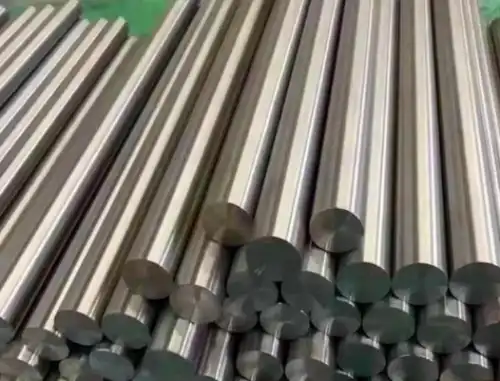
Understanding GR4 Titanium Bar Standards: An Industry Overview
The Foundation of Quality Assurance
Manufacturing standards for titanium Grade 4 bars set similar standards that make it possible to compare products from different sources around the world. The main frameworks are ASTM B348 (the North American standard for titanium bars and billets), AMS 4928 (a standard for aerospace materials), ISO 5832-2 (a standard for medical implant materials), and EN 2835 (a standard for aerospace materials in Europe). Not only do these standards set limits on chemical makeup, but they also set limits on mechanical performance, testing procedures, and dimensional tolerances. What makes Grade 4 different is that it has a higher oxygen content—usually around 0.40% compared to 0.25% in Grade 2—which works as an interstitial strengthener and increases tensile strength by 30–40% without adding alloying elements like vanadium or aluminum.
Why Standards Matter Beyond Compliance
In order to communicate with gr4 titanium bar manufacturers, buyers need to be able to use standards. When a seller says that their product meets ASTM B348, you can be sure that it has been chemically analyzed, tension tested, and measured to make sure it fits correctly. This standardization makes it easier to understand the requirements for buying things, lowers the chance of quality issues, and speeds up the approval process with regulatory bodies. Aerospace projects that use AS9100 quality control systems need to be able to clearly trace materials back to mill test results that use these standards. For equipment that will be used in corrosive settings, chemical processing plants that follow ASME pressure vessel rules must use materials that meet ASTM standards. To meet FDA and CE marking standards, companies that make medical devices need to be in line with ISO 5832-2. In addition to being required by law, following these guidelines shows that a maker has put money into quality infrastructure, from choosing raw materials to doing a final check. This is directly linked to long-term dependability.
Key Manufacturing Standards and Specifications for GR4 Titanium Bars
Chemical Composition Requirements
As part of ASTM B348 Grade 4, the maximum impurity limits are listed along with the defining feature: controlled oxygen level between 0.40% max (with most market material being between 0.25-0.40%). The standard limits the amount of nitrogen to 0.05%, the amount of carbon to 0.10%, the amount of hydrogen to 0.015 %, and the amount of iron to 0.50%. Titanium makes up the rest of the standard. These close limits keep the strengthening effect while stopping weakening from too many intermediate elements. For reliable gr4 titanium bar manufacturers, these ranges are possible with vacuum arc remelting (VAR) or electron beam cold hearth melting (EBCHM), which get rid of high-density spots and even out the distribution of oxygen. Check that the stated values are within the acceptable ranges on mill test certificates (MTCs) and that the testing facility is ISO/IEC 17025 accredited for metallurgical analysis. There have been times when slightly off-spec oxygen levels caused weld cracks to form in aircraft hydraulic fittings. This shows why chemical precision cannot be compromised.
Mechanical Property Standards
Grade 4 titanium bars must have a tensile strength of 550 MPa (80 ksi), a yield strength of 485 MPa (70 ksi), and a stretch of 15% in a 50mm gauge length. Tests that are based on ASTM E8 for metal materials show that these qualities are true. Because it is stronger than Grades 1-2, it can have thinner walls in pressure tanks or fasteners with smaller diameters in airframe parts, which lowers the weight of the whole part. Testing for hardness on the Rockwell or Brinell scales is another way to be sure. Grade 4 usually has a hardness of 120 to 140 HB. Instead of using random samples that might miss differences between batches, producers who care about quality test each lot at set times, usually after every heat or every 2,000 kg of production. When looking at a supplier's skills, you should ask for statistical process control (SPC) data that shows consistency over several production runs, not just test results from one run.
Dimensional Tolerances and Surface Quality
ASTM B348 sets guidelines for surface finish, diameter differences, and deviations from straightness. In bars less than 25 mm in diameter, hot-finished bars usually have width tolerances of ±0.75 mm. Precision-ground bars, on the other hand, can get tolerances of ±0.13 mm or less. In most industry settings, deviations must be less than 3 mm per meter of length, but in aerospace, standards are often 1 mm per meter or higher. There are different types of surface conditions, ranging from hot-finished with some rust to chemically pickled or physically polished. Alpha case is a hard, brittle layer on the surface that forms when oxygen is absorbed during hot working. It needs to be removed by pickling or grinding because it makes the metal less resistant to wear and less easy to weld. To ensure volumetric integrity beyond what eye inspection can show, leading GR4 titanium bar manufacturers use ultrasonic testing (UT) to find internal flaws like porosity or inclusions.
Evaluating GR4 Titanium Bar Manufacturers: Criteria and Best Practices
Certification Hierarchy and Quality Systems
A company's list of certifications shows how committed they are to organized quality management. ISO 9001:2015 sets basic standards for quality management systems (QMS) that can be used in any industry. As9100D builds on ISO 9001 by adding controls for managing configurations, lowering risks, and stopping fake parts. These controls are important for suppliers who work with the defense and aircraft sectors. A NADCAP (National Aerospace and Defense Contractors Accreditation Program) license for a materials testing lab or special processing shows that the professional skills have been checked by a third party. While FDA registration allows for direct sales into the U.S. healthcare market, ISO 13485 certification controls medical device quality systems for gr4 titanium bar manufacturers targeting medical markets. Pressure equipment materials sold in countries in the European Union must be certified according to PED 2014/68/EU. I suggest that you check certifications directly with the organizations that issued them instead of taking printouts, since the validity and scope of certificates can change.
Production Technology and Quality Control Infrastructure
A manufacturing capability evaluation looks at more than just licenses. It also looks at real production methods and testing tools. When compared to older induction melting methods, vacuum arc remelting makes titanium that is cleaner and has fewer flaws. To get a uniform grain structure, methods like hot rolling or forging should include checking the temperature and controlling how fast the metal cools down. Process sheets record annealing steps that make sure stress is relieved and that the mechanical traits are the same across all bar cross-sections. There should be spectroscopic testers for checking chemicals, universal testing machines for checking mechanical properties, ultrasonic flaw detectors for checking inside parts, and physical measuring tools that can be calibrated to national standards in quality control labs.
Traceability and Documentation Practices
Full traceability starts with receiving the raw materials and continues through all stages of processing until the finished product is shipped. Each output heat should have its own unique number that connects it to the chemistry of the source ingot, the processing settings, test results, and inspection records. The most reliable proof of paperwork is a material test certificate in the style of EN 10204 3.1, which is a manufacturer's test report with an independent inspection witness. These certificates include full chemical analysis, mechanical test results, heat treatment records, and inspector verification. Chain-of-custody paperwork should be sent with the goods through delivery networks to keep them from getting mixed up with non-conforming or lower-grade goods. When you get bars at your plant, check the markings against MTC data to make sure they are from the same lot, and check the bars for key dimensions and surface condition. Digital traceability systems from the best gr4 titanium bar manufacturers let customers see the whole production history by looking up a heat number.
Comparing GR4 Titanium Bar Standards Across Global Suppliers
Regional Standard Variations and Equivalencies
In North America, ASTM B348 Grade 4 is the most common standard. Other regulatory systems use similar names. The European EN standard calls titanium Grade 4 3.7065 or Ti2, and its chemistry and mechanical requirements are very similar to those of ASTM. The Chinese standard GB/T 2965 calls it TA2, but buying teams should make sure that the exact chemical alignment is correct because GB standards have small differences in the amount of impurities that can be present. Another one is the Japanese JIS standard H 4600 Class 2. Knowing these regional names helps when judging suppliers from various markets. However, I always suggest asking for ASTM compliance when looking for projects that will serve North American or foreign aircraft markets, since ASTM is still the most widely used standard. Some makers keep two sets of licenses by giving out MTCs that reference both ASTM and EN standards. This makes the approval process easier for projects that involve people from more than one country.
Verification Through Independent Testing
Test papers from the manufacturer are the most important proof, but independent verification adds an extra level of security, especially when working with new suppliers or making sure material is safe for important uses. Third-party inspection firms such as SGS, Bureau Veritas, TÜV, Moody International, and Lloyd's Register offer witness testing services. During these services, their inspectors watch the production, sample, and testing processes and then co-sign MTCs to make sure they are correct. This method is often used in oil and gas projects where end users require third-party inspection as part of the deal. You can also have an independent lab do destructive tests on arriving material and compare the results to the manufacturer's MTC to make sure they are the same. This costs more, but it makes you more confident in the accuracy of the provider and sometimes shows mistakes. I've seen customer verification tests catch mistakes made in the lab on MTCs, which stopped nonconforming material from going into production.
Balancing Cost, Quality, and Supply Reliability
When making a procurement choice, you always have to choose between competitive prices, quality guarantee, and reliable service. Gr4 titanium bar manufacturers whose prices are much lower than the market average should be closely looked at. Low prices could mean that testing methods have been hacked, raw materials are coming from shady sources, or the quality infrastructure isn't up to par. On the other hand, higher prices should be accompanied by real benefits, such as better quality control, faster wait times, tighter standards, or better customer service. Look at the total cost of ownership instead of just the unit price. This means taking into account things like inspection costs, rejection rates, supply problems, and the possible responsibility that could come from major failures. Different suppliers have very different minimum order numbers (MOQs) and wait times.
Ensuring Long-Term Reliability: Post-Procurement Considerations
Initial Sampling and Incoming Inspection Protocols
When materials arrive, they should be inspected in a planned way before they are sent to production. A visual inspection should look for flaws on the surface, the right identification marks, and damage to the packing. Using calibrated micrometers or coordinate measurement tools to check the diameter, straightness, and length against the specs on the buy order is called dimension verification. Check that the identification stamps or tags match the MTC paperwork to make sure the lots match. Some groups use mobile X-ray fluorescence (XRF) monitors to do spot checks on the chemistry, but these can't measure light elements like oxygen, nitrogen, or carbon, which are needed for full spectrographic analysis, which can only be done in a lab.
Documentation Management for Compliance and Audits
Keeping your material paperwork organized helps you meet the needs of regulations, customer checks, and internal traceability. There should be a physical or digital file for each material lot that has the original MTC, any deviation warnings, arriving inspection results, third-party inspection reports (if needed), and the chain-of-custody records. A lot of companies use enterprise resource planning (ERP) systems that have materials management modules that connect heat numbers to buy orders, inspection records, work orders, and serial numbers for finished products. This lets them track the whole process from the provider to the delivery of the finished product. This skill is very useful when you need to show material pedigree during product recalls, failure investigations, or regulatory inquiries. The aviation and medical device industries are closely watched, and regulators want written proof that materials meet standards and that makers followed approved methods. Setting standard filing processes and retention policies—usually 10 years or more for aircraft applications—avoids gaps in paperwork that could stop production or make audits more difficult.
Building Strategic Supplier Partnerships
When people only negotiate prices in transactional buying relationships, they miss out on chances to work together to make things better. When you form strategic relationships with major gr4 titanium bar manufacturers, you both invest in quality, communication, and finding solutions to problems. Regular reviews of the business give people a chance to talk about quality trends, share future needs, and find ways to make the process better. You can help suppliers improve their processes to better meet your needs by sharing your technical knowledge or giving feedback on how well materials work in your uses through supplier development programs. Manufacturers are more likely to invest in specialized inventory, production schedule priority, and custom testing methods when they have long-term deals with volume promises. Throughout my career, I've seen that the best procurement programs handled suppliers like they were extensions of their own companies. This encouraged openness and constant growth instead of hostile, outside relationships. This way of doing things pays off by solving problems before they happen, working together on new ideas, and keeping supplies going even when the market is down.
Conclusion
It's not just a formality to choose gr4 titanium bar manufacturers who meet strict international standards; it's a strategic choice that affects the performance of your products, your ability to follow regulations, and the business risk across your whole value chain. The framework of standards that includes ASTM B348, AMS 4928, ISO 5832-2, and similar documents sets important quality standards. At the same time, certification programs like ISO 9001, AS9100, and NADCAP show that quality management is done in a planned way. The practical meaning behind certifications can be seen by looking at production technology, testing skills, and tracking systems. Regional differences in standards need to be taken into account, but independent verification makes maker promises more reliable. After buying something, steps like incoming inspection, document management, and smart supplier relationships keep the quality high all the way through the material's lifetime. By using the evaluation criteria described in this article, procurement professionals can be sure to find Grade 4 titanium bars that meet the strict needs of hydraulic systems in spacecraft, equipment used in chemical processing, and medical implants—applications where failure of the material would have unacceptable results.
FAQ
What certifications should reputable Gr4 titanium bar manufacturers possess?
Most trustworthy manufacturers have basic quality control systems that are certified to ISO 9001:2015. Manufacturers that work with aerospace should be certified to AS9100D, which has rules just for flight and defense supply chains. Accreditation by NADCAP for labs that test materials or do special processes gives a third-party seal of approval for professional skills. Suppliers of medical devices need to be ISO 13485 certified. In the European Union, materials for pressure tools must follow PED 2014/68/EU. Always make sure that the certifications are up-to-date and apply to the goods you want to buy.
How does Grade 4 differ from other commercially pure titanium grades?
There is more oxygen in Grade 4 (about 0.40% vs. 0.25% in Grade 2), which makes the material stronger through solid-solution stiffening. This makes the tensile strength about 30–40% higher while keeping the excellent rust protection. Because Grade 4 alloy doesn't have the aluminum and vanadium that Grade 5 alloy does, it is better for places where corrosion is a problem and for medical treatments where biocompatibility is very important.
Can I request custom specifications beyond standard ASTM requirements?
Yes, many Gr4 titanium bar manufacturers can work with tighter standards, different surface finishes, or different testing methods. Custom specs could include tighter limits for diameters, higher levels of ultrasonic testing, specific grain size requirements, or chemistry checks for each lot. Make sure that any special needs are made clear during the quotation process, and then confirm them in buy orders with full material specs.
Partner With LINHUI TITANIUM for Certified GR4 Titanium Bar Excellence
One of the best gr4 titanium bar manufacturers and suppliers in the world is LINHUI TITANIUM. They offer high-quality materials that meet the strictest international standards. We have been in business since 2000 and are based in Xi'an, China, which is the strategic hub of the Belt and Road initiative. Our excellent reputation comes from having a wide range of certifications, such as ISO 9001:2015, PED 2014/68/EU, OHSAS 18001:2007, ISO 14001:2015, and approvals from DNV, ABS, CCS, BV, BSI, Lloyd's Register, and GL. Our Grade 4 titanium bars fully meet the requirements of ASTM B348, AMS 4928, and ISO 5832-2. They come with full material test certificates and inspection reports from a third party. We sell hundreds of thousands of tons of titanium products every year to over 60 countries. Some of our big clients are CEFC, PTT, PDVSA, PPL, KOC, PETRO VIETNAM, LUKOIL, PDO, PEMEX, and PETRONAS. These companies work in oil and gas, chemical processing, aerospace, maritime, and medicine. Our integrated supply chain and strict quality control make sure that we always give the best, whether you need standard sizes or unique specs with fast delivery. Talk to our technical team at linhui@lhtitanium.com about your particular needs, get detailed quotes, or set up a facility audit—work with a Gr4 titanium bar provider who blends the efficiency of Chinese production with the highest quality standards in the world.
References
1. American Society for Testing and Materials. (2021). ASTM B348-13: Standard Specification for Titanium and Titanium Alloy Bars and Billets. West Conshohocken, PA: ASTM International.
2. SAE International. (2019). AMS 4928: Titanium Alloy Bars, Wire, and Rings 99.0Ti Annealed. Warrendale, PA: SAE Aerospace Material Specifications.
3. International Organization for Standardization. (2018). ISO 5832-2: Implants for Surgery — Metallic Materials — Part 2: Unalloyed Titanium. Geneva, Switzerland: ISO Standards.
4. European Committee for Standardization. (2017). EN 2835: Aerospace Series — Titanium and Titanium Alloys — Technical Specification. Brussels, Belgium: CEN Publications.
5. Donachie, M.J. (2000). Titanium: A Technical Guide (2nd Edition). Materials Park, OH: ASM International.
6. Froes, F.H. (2015). Titanium: Physical Metallurgy, Processing, and Applications. Materials Park, OH: ASM International.