
Titanium Round Tube represents one of the most versatile and high-performance materials in modern industrial applications. In contemporary industrial uses, it is one of the most adaptable and high-performance materials. It is made from commercially pure titanium or titanium alloys, which are very strong, light, and don't corrode. These precision-engineered hollow cylinder parts are also biocompatible. titanium round tubes are used in many fields, from aircraft and chemical processing to making medical devices, when steel or aluminum just isn't strong enough to solve the problem. Titanium tubes are essential in high-stress, high-temperature, and corrosive situations where other materials would break down quickly because of their special qualities.
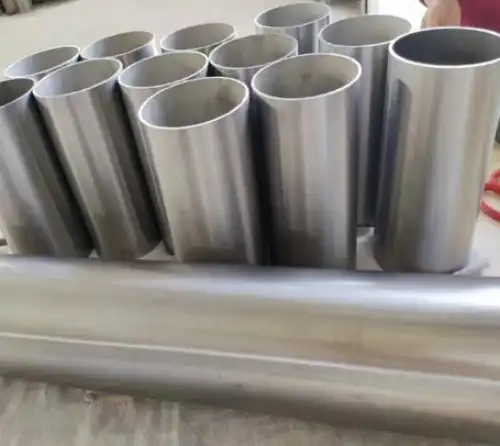
Understanding Titanium Round Tubes: Properties and Specifications
Titanium round tubes are carefully designed and manufactured to work exceedingly well in tough industrial settings. The main ingredients in these tubes range from commercially pure titanium grades to special alloy formulations, each made to meet the needs of a particular purpose.
Material Composition and Grade Classifications
Commercially pure titanium grades 1 and 2 are most often used for titanium tubes. These grades are known for being very resistant to rust and easy to shape. The main alloy is Grade 5 (Ti-6Al-4V), which has better strength qualities. Grade 9 (Ti-3Al-2.5V), on the other hand, is better for important aerospace uses because it can be welded more easily. The production requirements are set by ASTM B338, B861, and B862 standards. This makes sure that the quality and performance are the same from one source to the next. The grades of titanium round tubes that LINHUI TITANIUM makes range from Grade 1 to Grade 23. This lets customers choose the best material makeup for their individual needs. Because we've been making these grades for 21 years, we know that each one meets the strict mechanical and chemical property requirements set out in international standards.
Manufacturing Processes and Quality Standards
High-quality Titanium Round Tube is made using complex methods that have a direct effect on how well the finished product works. Seamless extrusion makes tubes with consistent wall thickness and better ability to handle pressure, which makes them perfect for hydraulic systems and other high-pressure uses. When you roll something cold, it improves its mechanical qualities while keeping the dimensions accurate within very small ranges. Welded tube manufacturing can save you money in some situations while still keeping the structure strong. To keep the corrosion-resistant qualities and stop the grains from getting bigger, the welding process needs careful control of the heat input. Depending on the grade and the needs of the product, a heat treatment after the weld may be needed.
There are 30 high-tech production lines at LINHUI TITANIUM. These lines use cutting technology that can achieve tolerances of ±0.05mm. Surface treatments like electropolishing, pickling, and anodizing are used in our manufacturing methods to meet the needs of the aircraft, medical, and chemical processing industries.
Industrial Applications of Titanium Round Tubes
Because titanium round tubes can be used in many different ways, they are important parts in many industries where failure of the material has a big effect. Knowing about these uses helps procurement workers choose materials and work with suppliers in smart ways.
Aerospace and Aviation Systems
The most difficult conditions for Titanium Round Tube performance are found in aerospace uses. Aircraft hydraulic systems have to work with huge changes in pressure and temperature while the plane is in flight. Due to their high strength-to-weight ratio, Grade 9 titanium metal tubes make airplanes lighter while still keeping their structural integrity under repeated loads. Titanium tubes are used in engine parts like fuel delivery systems and air controls because they can handle high temperatures and don't rust. The fatigue resistance of the material ensures that it works reliably over longer service times. This lowers the cost of repair and makes the airplane more available. Titanium works well in vacuums and wide temperature changes, which is why it is used in spacecraft. Because the material is stable over a wide range of temperatures, it doesn't change size in ways that could affect how well the system works during mission-critical activities.
Chemical Processing and Marine Industries
Chemical processing plants always have to deal with problems caused by harsh chemical conditions that break down normal materials quickly. Titanium round tubes work really well in these situations because they don't crack easily when exposed to chloride or other acids, and they also don't rust in general. Titanium tubes last longer than copper-nickel or stainless steel tubes in heat transfer uses, which is a big part of the market. In desalination plants, titanium's resistance to seawater rust makes shell-and-tube heat exchangers last longer, from the usual 5 years of safe use to 20 or more years. Titanium's chemical inertness is used in reactor pipe systems to keep sensitive chemical processes from getting messed up. Because the material doesn't combine with anything else, the result is guaranteed to be pure, and protective coatings that break down over time aren't needed.
Medical and Pharmaceutical Applications
Titanium round tubes are very important to the medical device business because they are biocompatible and can be sterilized. Materials that can fuse with human flesh without harming it are needed for surgical implant parts. Titanium is the best material for this purpose in both orthopedic and dental settings. MRI machines use titanium tubes that aren't magnetic to keep magnetic fields from messing with the equipment while keeping the structure strong. Because the material is not affected by magnetic fields, image results are accurate without putting equipment safety at risk. Titanium is good for making pharmaceutical tools because it doesn't rust and is easy to clean. Titanium tubes can have a smooth surface finish that keeps bacteria from sticking and makes it easier to sterilize completely between production runs.
Titanium Round Tube vs. Other Metal Tubes: Making the Right Choice
Material selection decisions require careful evaluation of performance characteristics, lifecycle costs, and application-specific requirements. Titanium round tubes offer distinct advantages over alternative materials, though cost considerations often influence final procurement decisions.
Performance Comparison with Stainless Steel
Most of the time, stainless steel tubes are used instead of titanium in places where they will not rust. Stainless steel is cheaper to buy at first, but it has a short useful life in marine and chemical processing uses because it pits and corrodes in cracks when salt is present. Titanium Round Tube is more resistant to rust than stainless steel components of the same size and shape, but they are about 40% lighter. Titanium's edge in terms of strength-to-weight ratio is especially important in aerospace and automotive uses, where less weight means better fuel economy. Titanium has an elastic modulus that is very close to that of bone tissue. This makes it perfect for medical implants, where stainless steel's higher hardness could cause stress buffering.
Advantages Over Aluminum and Carbon Steel
Aluminum tubes are lighter than other materials, but they aren't strong enough or resistant to rust enough for industrial uses that are very rough. Titanium is better at withstanding mechanical stress while still having similar weight qualities. This means it can be used in high-stress situations where aluminum would fail. In corrosive settings, carbon steel tubes need protective coats or cathodic protection systems. This makes them more complicated and increases the cost of upkeep. Titanium's natural resistance to corrosion gets rid of these needs and makes it better at resisting wear under repetitive loading situations. Customers can choose the best material qualities for their needs from LINHUI TITANIUM's wide range of grades. Our expert team gives detailed advice on choosing the right material based on the working conditions. This makes sure that each application gets the best performance and value for money.
Procurement Insights: Buying Titanium Round Tubes for Industry
To successfully buy high-quality titanium round tubes, you need to know what the seller can do, what certifications are needed, and how the market works. Industrial sellers have to look at a lot of things to make sure that supply lines are stable and that product quality stays the same.
Supplier Evaluation and Certification Requirements
Before choosing a supplier, it's important to make sure that they have the right manufacturing certifications and quality control processes in place. ISO 9001:2015 certification shows a dedication to consistent quality delivery, and certifications specific to a field, like AS9100 for aerospace uses, make sure that standards are met. In addition to its TUV Nord AD2000-W0 and PED 2014/68/EU certifications, LINHUI TITANIUM also has approvals from DNV, ABS, CCS, and other well-known classification societies. Our factories have Special Equipment Manufacturing Licenses and are regularly inspected by SGS, TUV, and other well-known inspection groups from around the world. Material test papers are important proof of the chemical makeup and mechanical qualities of a substance. Managers in charge of buying things should make sure that sellers give full certification packages that include mill test certificates, dimensional inspection records, and paperwork that shows how materials can be tracked.
Cost Factors and Bulk Purchasing Strategies
The quality of the material has a big effect on the price. For example, widely pure grades usually cost less than specialty alloys. Dimensions, wall thickness, and length standards for tubes affect how hard they are to make and how much they cost. By making manufacturing more efficient and lowering setup costs, volume agreements often lead to better prices. Lead times depend on the grade's supply and the needs of the producing process. Standard grades of titanium, like Grade 2, usually have faster delivery times. On the other hand, unique alloys may need longer making times. Planning your buying around these wait times will keep your production from being held up. Custom manufacturing services are useful for people who need exact measurements or surface finishes. Laser-guided cutting technology from LINHUI TITANIUM makes it possible to make precise parts for medical implants and aircraft vehicles with little waste.
Global Supply Chain Considerations
Location affects how much it costs to move the circular titanium tube and when it is delivered. Logistics partners that suppliers already work with can offer solid arrival times and low shipping costs. LINHUI TITANIUM works with DHL, FedEx, Maersk, and COSCO to make sure that customers in more than 60 countries get their packages on time. The right way to package something depends on its size and how it will be shipped. Using the right wrapping keeps the surface from getting damaged during shipping and keeps the cost of shipping down. Our safe packing, which includes wooden boxes, PVC wrapping, and bubble film, keeps the products in good shape during shipping.
Advantages and Future Prospects of Titanium Round Tubes in Industry
Titanium Round Tube is being used more and more in many different industries. This is because it has special qualities and people are becoming more aware of its long-term value. Procurement workers can make smart, important choices when they know about these benefits and how they will affect the future.
Lifecycle Cost Benefits
Titanium tubes cost more to buy at first than tubes made of other materials, but they last longer and need less upkeep, so the total cost of ownership is usually cheaper. The lack of stress cracks and corrosion in the material means that it doesn't need to be replaced as often as steel or aluminum parts do. Applications in the energy field have big cost savings over their whole life because they need less upkeep and are serviced more often. Titanium tubes used in offshore wind turbine parts can handle coastal settings without needing protective coatings or replacements very often, which lowers the costs of operation and upkeep. Titanium is permanently biocompatible, which is good for the health field because it means there are no worries about long-term tissue reactions that could mean the implant needs to be replaced. This dependability lowers healthcare costs and improves patient results by making implants last longer.
Emerging Applications and Market Trends
In the renewable energy infrastructure market, titanium round tubes are becoming more popular because companies need materials that can last for a long time in difficult circumstances. Geothermal energy systems use titanium because it doesn't rust in harsh underground conditions where other materials would break quickly. Additive manufacturing technologies are making it easier to create titanium parts with complicated shapes and built-in functions that were not possible with traditional manufacturing methods. These improvements make it possible for new uses in the medical gadget and aircraft industries. Titanium is becoming more and more popular in the car business for use in performance vehicle exhaust systems and suspension parts. As the number of electric vehicles on the road grows, titanium's ability to reduce weight becomes more important for increasing range and efficiency.
Conclusion
Titanium Round Tube is used in many important industries where the performance of the material has a direct effect on safety and operating success. Titanium tubes are very important for marine uses, chemical processing equipment, aircraft hydraulic systems, and medical devices because they are strong, light, and don't rust. Even though they cost more at first than regular materials, they usually have a lower total cost of ownership because they last longer and need less upkeep. Titanium round tubes will become more important in modern manufacturing and infrastructure as companies continue to focus on making products that are reliable, light, and resistant to weather damage.
FAQ
What are the main differences between seamless and welded titanium round tubes?
Seamless titanium tubes are made by extrusion, which creates walls that are all the same width without any weld gaps. This makes them perfect for high-pressure aircraft uses that need the strongest structure possible. When you use strip rolling and welding on welded tubes, you get better wall concentricity and lower costs. These tubes are good for heat exchangers and exhaust systems that don't need a lot of pressure.
Why do chemical processing facilities prefer Grade 2 titanium over Grade 5 for heat exchangers?
When compared to Grade 5 metal, Grade 2 fully pure titanium is more resistant to corrosion and easier to shape when cold. The better ductility makes it easier to bend and expand into tubesheets when putting together a heat exchanger. The rust resistance ensures long-term performance in harsh chemical conditions without the extra strength needs that Grade 5 brings.
How does the titanium round tube's performance compare in galvanic corrosion scenarios?
Titanium behaves as a noble or cathodic couple in galvanic couples. This means that when linked in electrolytic settings, it will speed up the corrosion of less noble metals like aluminum or carbon steel. Insulation gaskets or spare anodes must be used in the right way during system design to keep different metals in mixed-material setups from getting damaged by galvanic corrosion.
Contact LINHUI TITANIUM for Premium Titanium Round Tube Solutions
LINHUI TITANIUM stands as your trusted titanium round tube manufacturer with over two decades of proven expertise in delivering globally compliant tubes for aerospace, medical, and energy sectors. Our state-of-the-art facilities, featuring 30 advanced production lines and ISO/SGS/TUV-certified quality control systems, ensure unmatched precision and reliability for your most demanding applications. We provide comprehensive custom solutions spanning Grades Gr1-Gr23, tailored to meet ASTM, AMS, and ISO standards with tight tolerances of ±0.05mm. Contact our technical team at linhui@lhtitanium.com to discuss your specific requirements and discover how our precision-engineered titanium solutions can optimize your industrial operations.
References
1. Boyer, R., Welsch, G., & Collings, E.W. Materials Properties Handbook: Titanium Alloys. ASM International, Materials Park, Ohio.
2. Donachie, Matthew J. Titanium: A Technical Guide, 2nd Edition. ASM International Publications.
3. American Society for Testing and Materials. ASTM B338 Standard Specification for Seamless and Welded Titanium and Titanium Alloy Tubes for Condensers and Heat Exchangers.
4. Schutz, R.W. & Thomas, D.E. Corrosion of Titanium and Titanium Alloys. ASM Handbook Volume 13: Corrosion. ASM International.
5. Peters, M., Kumpfert, J., Ward, C.H., & Leyens, C. Titanium Alloys for Aerospace Applications. Advanced Engineering Materials Review.
6. Lutjering, G. & Williams, J.C. Titanium: Engineering Materials and Processes, Second Edition. Springer-Verlag Publishing.