
To make ASTM B862 Titanium Welding Pipe, a flat-rolled titanium strip or plate is shaped into a tube shape, and the seam is joined using either Gas Tungsten Arc Welding (GTAW/TIG) or Plasma Arc Welding (PAW). This standard covers welded titanium tubes that are used to move fluids in industrial systems where high rust resistance is important. The pipes solve the "Corrosion-Cost Paradox": smooth titanium pipes offer uniformity, but they become too expensive for sizes bigger than 4 to 6 inches. For large-scale uses that need titanium's high corrosion resistance without the high prices of extrusion, ASTM B862 is a cost-effective option that solves upkeep problems that come up in harsh environments like desalination of seawater and chemical processing.
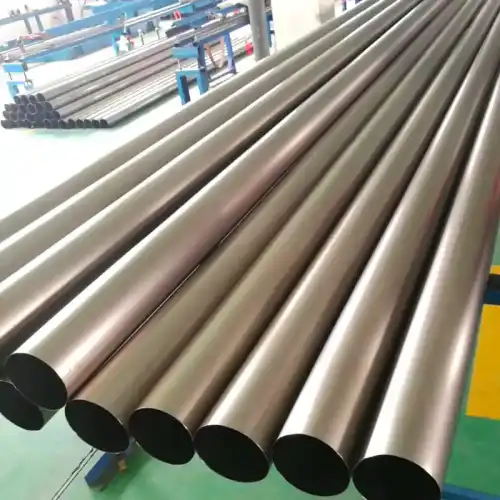
Understanding ASTM B862 Titanium Welding Pipe and Its Properties
What Defines ASTM B862 Standard
The ASTM B862 standard sets clear guidelines for the chemical makeup and engineering features of welded Titanium Welding Pipe made from ASTM B265-grade titanium strip. The standard lets you use Grades 1 through 12. Class 1 lets you use filler metal, but Class 2 requires autogenous welding with no filler material. This standard makes sure that all makers follow the same rules while still letting application-specific needs be met.
Superior Material Characteristics
Titanium welding pipe has a density of 4.51 g/cm³, which is about 45% lighter than 316L stainless steel. It also has a tensile strength that ranges from 240 MPa (Grade 1) to over 830 MPa (Grade 5). A passive titanium dioxide (TiO2) film forms on its own on these pipes, protecting them from pitting and crevice corrosion in chloride-rich conditions up to 300°C. These pipes are very good at moving heat in exchangers because they have a modulus of flexibility between 105 and 120 GPa and a thermal conductivity of about 17 W/m·K. From our experience at LINHUI TITANIUM, we know that after stress-relief annealing, parts that were properly welded often have mechanical qualities that are the same as or better than the base metal. The microstructure of the joint zone is still very important. Shielded welds that stop alpha-case formation (oxygen embrittlement) make sure that the flexibility is the same as the parent material. Over the past 21 years, we've improved post-weld processes like stress-relieving annealing, precision cutting, and surface passivation to make them even more resistant to rust than the minimum requirements.
Advantages Over Alternative Materials
It's easy to see the difference in performance between titanium welding pipe and other materials when you compare them. Stress corrosion cracking happens in chloride conditions above 60°C in stainless steel, but carbon steel needs expensive coatings or linings that break down over time. Copper-nickel metals can withstand seawater, but within 7–10 years, they will fail due to microbiologically affected corrosion (MIC). Titanium is resistant to MIC, and because it is stronger, it can have thinner wall schedules (Schedule 5S or 10S). This lowers the cost of materials and the need for structural support. Even though the initial costs were higher, the lifecycle cost study typically shows 20–30% lower total ownership costs over a 25-year service life.
Primary Applications of ASTM B862 Titanium Welding Pipe
Chemical Processing Infrastructure
The main material used to move wet chlorine gas, oxidizing acids, and toxic solvents in chlor-alkali plants and pure terephthalic acid (PTA) production facilities is Titanium Welding Pipe. In chlor-alkali reactors, high levels of sodium hydroxide and chlorine gas make the climate unfriendly to most metals. However, titanium keeps its shape without breaking down. Engineers can specify thinner wall schedules because the material is resistant to acidic acids. This makes the gross pipe rack weight 40–50% less than in rubber-lined carbon steel systems. We've sent thin-wall, large-diameter titanium weld pipes to chlor-alkali plants in North America and the Gulf region, where regular pipes would have broken after three to five years. Our clients said they no longer had to deal with Titanium Welding Pipe's unexpected shutdowns caused by piping problems. This saved them more than $2 million a year because their facilities were up and running more often and needed less upkeep.
Power Generation and Desalination
Titanium welding pipe is used for most surface condenser retubing work in coastal nuclear and steam power plants. The pipe doesn't rust when it comes into contact with microbes that cause rusting in raw seawater cooling systems. This stops leaks that are common in copper-nickel alloy condensers. Titanium is the only material used for evaporator shells and brine heaters in multi-stage flash (MSF) desalination plants that work with brine concentrations of up to 70,000 ppm and temperatures close to 120°C. Over 500 tons of Grade 2 titanium welding pipe have been sent by LINHUI TITANIUM to desalination projects in the Middle East. Other materials would be destroyed in 8 to 10 years by the harsh salty conditions and changing temperatures there. After 15 years of constant use, our pipes have never broken. This proves that the materials we used were the right ones and that our manufacturing quality controls are up to par, as confirmed by DNV, ABS, and Lloyd's Register.
Offshore Oil and Gas Systems
Titanium is very resistant to pitting, which is important for subsea pipeline systems and handling equipment on land that is exposed to sour gas (H2S) and high-chloride formation water. Biofouling and erosion-corrosion kill most materials in platform seawater cooling systems. Titanium's smooth oxide surface stops biofilm from sticking to it. Small-diameter titanium welding pipe is used in hydraulic control lines that work at pressures above 10,000 psi because it is strong for its weight and doesn't wear down easily.
Aerospace and Medical Applications
Titanium is used in aircraft hydraulic systems and fuel transfer lines because it is light and doesn't react with additives in flight fuel. Titanium welding pipe made to ASTM B862 Grade 9 (Ti-3Al-2.5V) is perfect for complicated routes because it can be shaped easily and still withstand pressures up to 3,000 psi. When biocompatibility and corrosion resistance in body fluids are important, medical device makers only use thin-wall precision tubes for implantable parts and moving sterile fluids. Advanced TIG welding technology is used in our two specialized production sites to make aerospace-grade metals. Helium leak testing and 3D laser measurement make sure that the dimensions are accurate to within ±0.05mm. This level of accuracy helps mission-critical apps that can't fail because the results would be terrible.
Titanium Welding Pipe Welding Techniques and Process Overview
TIG Welding Methodology
Gas Tungsten Arc Welding (GTAW/TIG) is still the most common way to join Titanium Welding Pipe because it allows for exact heat control and a low risk of contamination. Tungsten electrodes and argon shielding gas are used in the process. Trailing shields that are 6 to 12 inches beyond the weld pool protect the metal from infection from the air while it cools. When welding, the settings are usually between 80 and 150 amps at 10 to 15 volts, and the speed is between 4 and 8 inches per minute, based on how thick the wall is.
Contamination Prevention Protocols
Titanium reacts strongly with oxygen, nitrogen, and hydrogen at high temperatures, so strict pollution controls are needed. During the whole heating cycle, welding tanks or purge boxes keep the oxygen level below 50 ppm. Oxidation on the root side of the weld can be stopped by cleaning it internally with argon or helium. Solvent degreasing, mechanical grinding, and acid pickling are all parts of pre-weld cleaning that get rid of surface contaminants that could weaken the weld. At LINHUI TITANIUM, our more than 30 dedicated production lines have protected welding areas that are constantly monitored for gas leaks. As part of the post-weld check, the oxide coloration is looked at visually. Welds that are okay have silver to light straw colors, while blue or gray discoloration means that the metal was exposed to too much oxygen and needs to be removed and reworked.
Advanced Joining Technologies
Laser welding is better at controlling penetration for thin-wall uses (0.5–2.0 mm), creating small heat-affected zones that keep warping to a minimum. Electron beam welding in vacuum settings gets rid of all contamination, making welds that have the same mechanical properties as the source material. These advanced methods help with Titanium Welding Pipe-specific tasks in the nuclear and aircraft industries, where the quality of the welds needs to be higher than usual.
Common Welding Challenges and Solutions
Titanium has a low thermal conductivity (17 W/m·K) compared to aluminum (205 W/m·K), which leads to distortion during welding. This is because titanium heats up in spots and creates thermal gradients. Fixture designs that use heat sinks and uniform welding processes help keep parts from warping. Because of porosity caused by wetness, wires need to be baked at 150°C for two hours and then kept in desiccators. Ultrasonic or X-ray inspection can show that lack of fusion flaws are caused by not enough heat input or bad joint preparation, which means that parameters need to be changed and operators need to be retrained.
Decision Factors for Choosing ASTM B862 Titanium Welding Pipes
Material Grade Selection
When choosing a grade, you have to weigh the need for corrosion resistance against functional qualities and cost. Grade 2 (commercially pure) titanium is the least expensive and has the best corrosion protection for most chemical and saltwater uses. Grade 7 (Ti-0.12Pd) is more resistant to reducing acids and settings with high temperatures that oxidize things. Grade 9 (Ti-3Al-2.5V) is stronger and is used in pressure tanks and aerospace uses where saving weight is worth the extra cost. Managers in charge of buying things should look at the conditions of contact, such as the pH range, the amount of salt present, the temperature, and the level of mechanical stress. At LINHUI TITANIUM, our expert team helps customers choose materials for Titanium Welding Pipe based on decades of field performance data collected in more than 60 countries.
Cost-Performance Analysis
Titanium welding pipe costs three to five times more than stainless steel, but when you look at the long-term costs, you can see that it is much more cost-effective. A study of a 12-inch seawater cooling system over 25 years shows that titanium lowers the total cost of ownership by 28% by eliminating the need for replacements, lowering the amount of work needed for upkeep, and increasing the system's uptime. The thinner wall plans (Schedule 10S vs. Schedule 40) helped to lower the cost of materials while also making the work lighter and requiring less support structure.
Supplier Certification and Quality Assurance
Making sure that sellers have all the necessary foreign certifications protects both the quality of the products and the stability of the supply chain. The pressure equipment made by LINHUI TITANIUM is certified under PED 2014/68/EU. It is also approved by DNV and ABS for use in ships, and it is certified under TUV Nord AD2000-W0 for German building standards. Our ISO 9001:2015 quality management system is checked by SGS, Bureau Veritas, and Lloyd's Register every year by a third party. This makes sure that every heat of material can be tracked. When you use our 800-ton annual production capacity to place bulk orders, you can get savings of 8–15% and make sure you get your titanium sponge during times when supplies are limited. Customization choices, such as non-standard sizes, special length needs, and faster delivery, help meet project-specific deadlines without lowering quality standards.
Ensuring Quality and Safety in Titanium Pipe Welding Projects
Metallurgical Considerations
The composition of widely pure titanium grades changes from alpha phase to alpha-beta structures in Grade 5 and Grade 9 alloys. This changes how well they can be welded and what treatments they need after the welding process. If cooling rates are not managed properly, heat-affected zone (HAZ) grain growth can make the material less flexible. To get the right mechanical qualities, solution treating and aging processes for beta-stabilized alloys need to be carefully controlled at temperatures within ±10°C.
Non-Destructive Testing Protocols
Radiographic screening can pick up on internal cavities, lack of fusion, Titanium Welding Pipe, and tungsten inclusions as small as 2% of the wall thickness. Ultrasonic testing with phased array technology creates a map of the whole weld volume and finds laminar flaws that can't be seen on X-rays. A liquid penetrant test shows cracks that break the surface and incomplete entry on root passes. We use helium leak testing for important tasks, and we can pick up leak rates as low as 1×10⁻⁹ mbar·L/s, which is higher than what is needed for an API 598 hydraulic test.
Preventive Maintenance Strategies
Weld discoloration changes that show oxide film breakdown should be checked for on a regular basis, especially in heat-affected areas that are subject to reducing acids. Cathodic protection systems need to be watched over to make sure they don't absorb hydrogen and become weak. Stress doesn't build up at welds when the right support space allows for thermal expansion. Our field service data from sites in Southeast Asia and Africa shows that titanium piping systems can last more than 30 years without any pressure-retaining parts failing if they are properly kept.
Safety Protocols for Handling and Storage
Titanium is very flammable when it is broken up into small pieces like chips or powder, so Class D fire extinguishers and explosion-proof work areas are needed. To keep hydrogen from absorbing during welding, storage places must stay dry. Respirators are part of personal safety equipment (PPE) because titanium ions can be harmful to the lungs. To keep people from suffocating in tight areas during argon purging operations, welding zones need to have oxygen tracking with alarms set at 19.5%.
Conclusion
ASTM B862 Titanium Welding Pipe is the best choice for industrial fluid systems that need to be completely resistant to rust, have reliable structures, and have low lifecycle costs. The material is chosen over other options because it is lightweight, doesn't break down when exposed to salt, and has been used successfully in harsh settings like desalination plants and offshore platforms. Choosing the right material grade, using the right welding method, and making sure the supplier is qualified will guarantee the success of the job and years of trouble-free use. Titanium welding pipe use is growing quickly in the chemical processing, power production, and marine engineering fields. This is because businesses around the world are moving toward more environmentally friendly infrastructure with longer service lives.
FAQ
1. Can ASTM B862 titanium welding pipe be used in chemical processing environments?
Yes, titanium welding pipe works great in chemical plants that use nitric, chromic, and chloric acids, as well as wet chlorine gas and high-concentration brines. Adding palladium to grade 7 titanium makes it more useful in reducing acids and high-temperature oxidation situations. The material's passive oxide film grows back on its own, protecting against rust in a way that stainless steels can't.
2. What welding technique is recommended for titanium pipe?
For outdoor applications and small-diameter tubes, TIG welding (GTAW) with argon shielding and trailing gas protection is still the standard. Automated circular TIG systems make sure that the roots are penetrated consistently and eliminate the need for human error. Laser welding is good for making a lot of thin-wall precision tubes. To keep the metal from getting dirty, all of these methods need oxygen levels below 50 ppm and humidity control.
3. How does titanium welding pipe compare economically to stainless steel?
Lifecycle cost studies always show savings of 20 to 30 percent over 25 years, even when the starting prices of materials are 3 to 5 times higher. Titanium lasts 30+ years, while stainless steel only lasts 7–12 years in salt water. This means that replacement processes are removed, upkeep work is cut down, wall schedules can be made thinner, and system uptime is improved. Value is maximized by buying in bulk and choosing the right grade.
Partner with LINHUI TITANIUM for Your Critical Piping Projects
LINHUI TITANIUM has been a trusted maker of Titanium Welding Pipe for more than 21 years, providing approved, high-performance solutions to the aircraft, chemical, and energy industries around the world. Our two specialized plants with more than 30 production lines make Grade 1-12 metals that meet ISO, PED, DNV, and ABS standards and are backed by those standards. Our annual capacity of 800 tons provides a steady supply for big EPC projects, and our customization options meet specific dimensional and metallurgical needs. We've worked on projects in more than 60 countries with CEFC, PETRONAS, PEMEX, and global companies. Get in touch with our technical team at linhui@lhtitanium.com right away to talk about your needs and get engineering help from titanium welding pipe suppliers who are dedicated to making your project a success.
References
1. American Society for Testing and Materials. (2019). ASTM B862-17: Standard Specification for Titanium and Titanium Alloy Welded Pipe. West Conshohocken: ASTM International.
2. Boyer, R., Welsch, G., & Collings, E.W. (2021). Materials Properties Handbook: Titanium Alloys. Materials Park: ASM International.
3. Donachie, M.J. (2018). Titanium: A Technical Guide, 3rd Edition. Materials Park: ASM International.
4. Peters, M., Kumpfert, J., Ward, C.H., & Leyens, C. (2020). Titanium and Titanium Alloys: Fundamentals and Applications. Weinheim: Wiley-VCH.
5. Schutz, R.W. & Thomas, D.E. (2017). Corrosion of Titanium and Titanium Alloys in Industrial Applications. Corrosion Engineering Handbook, CRC Pess.
6. Welding Technology Institute of Australia. (2020). Best Practices for Welding Titanium in Critical Service Applications. Sydney: WTIA Technical Note 38.