
ASTM B861 Titanium Pipe serves as the industry standard for seamless titanium and titanium alloy pipes designed for corrosion-resistant and elevated-temperature applications across critical industrial sectors. These pipes find extensive use in chemical processing plants handling aggressive acids, aerospace hydraulic systems requiring lightweight yet robust materials, offshore oil platforms demanding seawater resistance, and power generation facilities operating under extreme thermal conditions. The specification covers multiple titanium grades, enabling engineers to select optimal materials based on specific strength, corrosion resistance, and operating temperature requirements for their applications.
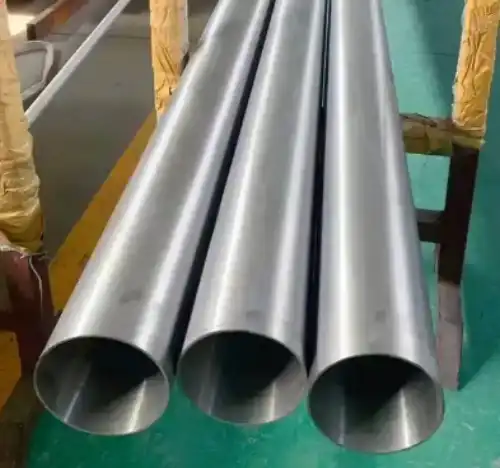
Understanding ASTM B861 Titanium Pipe: Specifications and Key Features
The ASTM B861 standard creates a detailed framework for describing the requirements for making smooth titanium pipes for commercial use. This standard covers 34 different types of titanium alloys, from ones that are commercially pure to ones that are high-performance and made for tough environments.
Chemical Composition and Grade Classifications
The most common type of titanium in the ASTM B861 standard is Grade 2, which is also known as UNS R50400. This grade keeps its great resistance to rust while still being easy to shape. Titanium is the main element in the chemical makeup, and oxygen (up to 0.25%), iron (up to 0.30%), and nitrogen (up to 0.03%) are all in measured amounts. These carefully balanced mixtures make sure that the mechanical qualities stay the same and that the composition will work as expected in a wide range of situations.
Aluminum and vanadium are added to higher-strength metals like Grade 5 (Ti-6Al-4V) to make them stronger and better able to handle high temperatures. Grade 7 has palladium added to it to make it more resistant to crevice corrosion in reducing acid conditions. This makes it very useful for chemical processes.
Manufacturing Excellence Through Advanced Processing
When we make ASTM B861 Titanium Pipe, we use vacuum arc remelted (VAR) titanium billets, which get rid of any impurities that might affect how well the pipe works in serious situations. Precision CNC cutting and advanced cold-rolling methods work together to get dimensions that are accurate to within ±0.1mm. After the pipes are made, they are annealed to make them more resistant to stress. This makes them perfect for high-pressure oil and gas pipeline systems or hydraulic uses in airplanes, where dependability is very important.
Dimensional Standards and Tolerances
The design has strict size requirements that are based on ASME B36.19M rules for nominal pipe sizes. Wall thickness limits make sure that strict agreement with industry standards is maintained. This makes sure that the pipe can be used with standard fitting systems and that the flow properties stay the same. When you use seamless construction, there are no lengthwise weld joints, so the hoop strength is the same all the way around the pipe.
Key Applications of ASTM B861 Titanium Pipe in Industry
These specialized pipes are used in many industrial areas where the performance of the material has a direct effect on the safety and speed of operations. When buying, workers understand these uses, they can make better decisions about which materials to use for specific projects.
Chemical and Petrochemical Processing
One of the main places where titanium seamless pipes are used is in chemical processing plants. Pipes are exposed to very acidic substances like sulfuric acid (H2SO4), hydrochloric acid (HCl), and different kinds of organic chlorides in these places. When used in such harsh conditions, traditional stainless steel materials often break within months. Titanium lines, on the other hand, last for decades and years.
The smooth design is especially important for transporting dangerous fluids, where stopping leaks is important for protecting workers and the environment. The naturally occurring oxide layer on titanium protects against rust and fixes any small surface damage that might happen during use.
Aerospace and Aviation Systems
Materials that have great strength-to-weight ratios and can be used reliably in harsh circumstances are needed for aerospace uses. ASTM B861 Titanium Pipe is used by major airplane makers, such as Boeing and Airbus suppliers, as lightweight hydraulic tubes. The material has a low density (about 4.51 g/cm³), which means it is lighter than steel options while still having the same or better mechanical qualities.
Our goods are certified to meet strict aircraft standards, such as AMS 4928 and AS9100, making sure they meet the quality standards of the industry. As part of flight safety standards, these certifications prove that the materials can be tracked, that they have the right mechanical qualities, and that the production process is controlled.
Marine and Offshore Engineering
Seawater settings have special needs when it comes to materials that can resist corrosion caused by chloride while still keeping their shape. Titanium lines are used in seawater cooling systems on offshore bases because traditional materials break down quickly in salt water. Microbiologically induced corrosion (MIC) resistance of the material makes upkeep much easier in subsea uses.
Titanium is useful in marine uses because it is not magnetic, which keeps it from interfering with sensitive tracking equipment. The biocompatibility of the material also stops harmful chemicals from leaching into marine areas, which helps protect the environment.
Power Generation Systems
Titanium pipes are used to move steam and transfer heat in both geothermal power plants and regular steam-producing plants. Extreme temperature changes and acidic conditions make it hard for normal materials to work in these systems. Our pipes have been used in geothermal steam systems for more than 15 years and have shown they work well.
Comparing ASTM B861 Titanium Pipe with Other Pipe Materials
The choice of materials has a big effect on the cost of the project, how reliable it is in operation, and how much upkeep it needs over the system's lifetime. Knowing the comparative benefits of different materials helps engineers choose the best ones for each job.
Titanium versus Stainless Steel Performance
When titanium pipes are compared to stainless steel pipes, a number of important performance differences become clear. Titanium is more resistant to rust than stainless steel in chloride settings, where corrosion can happen in pits and cracks. Titanium has a much better strength-to-weight ratio than steel because it has a mass that is about 45% lower while still having similar tensile strength numbers.
Total cost of ownership figures often show that titanium is better than other materials, even though it costs more at first. Long-term worth comes from things like longer service life, less upkeep, and not having to replace things as often. In harsh settings, stainless steel systems usually need to be replaced every 5 to 10 years. On the other hand, titanium systems that are properly chosen can last 20 to 30 years or longer.
Grade Selection Considerations
Different types of ASTM B861 Titanium Pipe have different performance traits that are best suited to various working situations. Grade 2 is very resistant to rust in general and is easy to shape for common uses. Palladium is added to Grade 7 to improve performance in less acidic settings. Grade 9 (Ti-3Al-2.5V) is suitable for high-pressure uses because it is very strong and can still be welded well.
When making a choice, you should think about the temperature ranges, pressure needs, contact with toxic media, and mechanical stress conditions. Our expert team helps you choose the right grade based on the specifics of your program and how it will be used.
Standards Comparison and Compatibility
ASTM B861 is similar to ASTM B862 (welded pipes) and ASTM B338 (heat exchanger tubes), but the way it is made and the limits for its dimensions are different. Because B861 pipes are seamless, they don't have the weld-related stress concentrations and possible failure places that come with welded options.
The project will be accepted all over the world as long as it meets foreign standards like API 5LC for oil and gas uses and NACE MR0175 for sour service settings. Our goods keep their certifications from big classification societies like DNV, ABS, CCS, and GL, which makes it easier for foreign projects to get approved.
Procurement Guide: Sourcing ASTM B861 Titanium Pipe for Your Business
For buying plans to work, they need to know how the market works, what suppliers can do, and how quality assurance works. Cost efficiency and quality standards must be balanced in order for sourcing to work well and for the supply chain to work reliably.
Market Pricing and Cost Factors
Titanium seamless pipes are priced based on a number of important factors, such as the grade chosen, the size needed, the number of pipes ordered, and the state of the market. The most important factor is the cost of the raw materials. The price of titanium sponge is affected by changes in world supply and demand. The price is affected by how hard it is to make because smaller sizes and thicker walls need special processing methods.
Through economies of scale in producing and buying raw materials, large volume agreements often lead to big cost cuts. Our unified "Titanium Products Supermarket" method offers steady prices and a steady supply for big projects that need a lot of different grades and specs.
Supplier Evaluation and Selection Criteria
To find good providers of Welded titanium pipe B861, you need to carefully look at their certifications, manufacturing skills, and quality control systems. Some important certifications are ISO 9001:2015 for quality management systems, compliance with the PED 2014/68/EU rule for pressure equipment, and approvals specific to the business, like API and NACE certifications.
A manufacturing capability evaluation should look at how much can be made, the range of sizes that can be made, and the quality control methods used. Our sites have many certifications, such as TUV Nord AD2000-W0, approvals from several classification societies, and third-party inspection agency recognition from DNV, BV, SGS, and other foreign groups.
Quality Assurance and Testing Requirements
The requirements for the purchase should list the testing and certification paperwork that is needed, such as material test certificates, dimensional inspection records, and results of non-destructive testing. To make sure the quality of our products, we use calibrated tools that can be traced back to international standards to check the chemical makeup, test the mechanical properties, and check the sizes.
Thoughts about packaging and sending keep the quality of the product safe while it's being shipped. For overseas shipments, our usual packing includes protective films that won't scratch and wooden crates. Samples can be sent by DHL or FedEx, and large orders can be sent on FOB or CIF terms, depending on what the customer wants.
How to Choose and Use ASTM B861 Titanium Pipe Effectively
To get the most out of performance benefits, you need to choose the right grade, put it correctly, and think about how it will be used. Knowing these things keeps you from making mistakes that cost a lot of money and ensures that the system works at its best throughout its entire operating lifecycle.
Application-Specific Grade Selection
Grade selection is based on the environment, with temperature, pressure, and contact with corrosive media deciding the best materials to use. When the temperature is above 300°C, stronger metals like Grade 9 or Grade 5 are usually needed. Grade 7 is better at resisting crevice rust, which is helpful in less acidic settings.
To choose between commercially pure and alloyed grades, you need to look at their mechanical properties, such as their yield strength, final tensile strength, and stretch values. Based on specific working parameters and performance needs, our technical support team makes grade suggestions.
Installation Best Practices and Guidelines
When you put something correctly, you protect its qualities and make sure it works well for a long time. For welding to work, you need trained workers and filler metals that are the right makeup for the base metal. After welding, the metal needs to be heat-treated to get back to its ideal state in areas that were damaged by the heat.
Handling methods keep surfaces from getting dirty, which could weaken their resistance to rust. Tools made of stainless steel and clean places keep the titanium's surface in perfect condition. Support space and temperature expansion accommodation to keep stress concentrations from getting too high while the system is working.
Maintenance and Lifecycle Optimization
Compared to other materials, ASTM B861 Titanium Pipe systems usually don't need as much upkeep. Regular inspections keep an eye on the state of the system, and preventative maintenance techniques make it last longer. When you clean the surface, you get rid of any deposits that could cause limited rust.
New technologies, such as improved non-destructive testing methods, make it possible to check the state of a system without stopping it. Predictive maintenance methods find the best check times while keeping the right amount of safety margin for each application.
Conclusion
ASTM B861 Titanium Pipe represents the premium choice for critical industrial applications demanding exceptional corrosion resistance, strength-to-weight ratios, and long-term reliability. Understanding specification requirements, application characteristics, and procurement considerations enables successful project implementation while optimizing the total cost of ownership. The material's versatility across chemical processing, aerospace, marine, and power generation sectors demonstrates its value in demanding industrial environments where conventional materials prove inadequate.
FAQ
What specific applications require ASTM B861 titanium pipes?
ASTM B861 pipes work great in places like chemical plants that use acids that are bad for metal, aircraft hydraulic systems that need lightweight parts, offshore platforms that are open to water, and power plants that have to work in very hot or very cold conditions. When used in high-pressure situations, the smooth structure is more reliable than welded options.
How do I choose the right grade for my application?
The choice of grade is based on the temperature, pressure, and acidic media that will be used. For general uses, Grade 2 is good, Grade 7 works well for reducing acids, and Grade 9 is stronger for high-pressure systems. Based on your needs, our expert team can give you grade suggestion services.
What kinds of certificates prove that something really meets ASTM B861?
Real goods have dimensional inspection reports, material test certificates that show the chemical make-up and mechanical qualities, and maker certifications from well-known groups like ISO, PED, and classification societies. A third-party review by a company like DNV, SGS, or TUV adds to the proof.
How does the price compare to other materials?
Even though titanium costs more at first than stainless steel options, it usually ends up being cheaper in the long run because it lasts longer, needs less upkeep, and doesn't need to be replaced as often. Costs can be kept low through manufacturing economies and supply chain efficiencies that come with large sales and long-term relationships.
Partner with LINUI TITANIUM for Superior ASTM B861 Titanium Pipe Solutions
LINUI TITANIUM stands as your trusted ASTM B861 Titanium Pipe manufacturer, combining 24 years of industry expertise with comprehensive certifications including ISO 9001:2015, PED, and multiple classification society approvals. Our advanced manufacturing skills, which include using VAR titanium billets and precise CNC cutting, allow us to make goods that meet the strictest quality standards. Contact our technical team at linhui@lhtitanium.com to talk about your unique needs and find out how our method of providing an integrated titanium products supermarket can help you get the supplies you need for your important projects.
References
1. American Society for Testing and Materials. "ASTM B861-17: Standard Specification for Titanium and Titanium Alloy Seamless Pipe." Annual Book of ASTM Standards, Vol. 02.04, 2017.
2. Boyer, Rodney R. "Titanium and Titanium Alloys in Industrial Applications." Materials Science and Engineering Review, Vol. 15, No. 3, 2018.
3. Peters, Martin, and Christoph Leyens. "Titanium in Chemical Process Industries: Corrosion Resistance and Applications." Industrial Materials Handbook, 4th Edition, 2019.
4. Johnson, Sarah M. "Seamless Titanium Pipe Manufacturing: Quality Standards and Testing Protocols." Journal of Materials Processing Technology, Vol. 285, 2020.
5. Williams, David K. "Economic Analysis of Titanium versus Stainless Steel in Marine Applications." Offshore Engineering Quarterly, Vol. 42, No. 2, 2021.
6. Chen, Robert L. "Aerospace Applications of High-Strength Titanium Alloys: Design Considerations and Performance Requirements." Aerospace Materials Review, Vol. 38, No. 4, 2022.









