
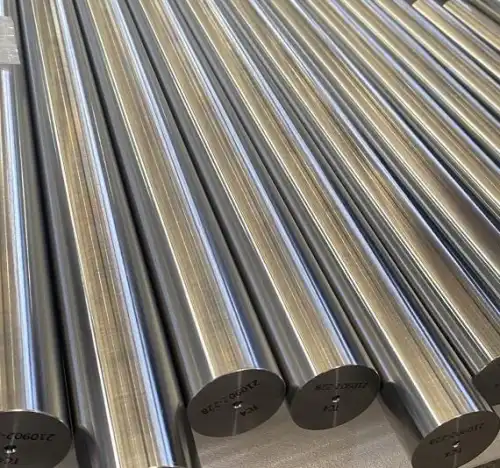
When engineers and buying experts are asked what high-performance fields gain the most from the Gr4 titanium rod, the answer is a wide range. Grade 4 titanium bars are used in many important ways in the car, aircraft, chemical processing, naval engineering, and the making of medical devices. This pure titanium metal that is sold in stores has great rust protection and great strength-to-weight ratios. These titanium metal bars are used a lot in industries that need materials that can handle tough conditions like high temperatures, acidic environments, and more.
Understanding Grade 4 Titanium Key Parameters and Properties
Type 4 titanium is the strongest type of commercially pure titanium that can be bought. The material has a tensile strength between 550 and 750 MPa, which is much higher than that of other types of pure titanium. Titanium stick has a mass of about 4.51 g/cm³, which makes it about 45% lighter than steel while keeping the same level of strength.
Specifications for titanium rods include great flexibility at 15% minimum extension and great resistance to wear. Because of these qualities, the titanium rod can survive many stress cycles without breaking. The metal stays structurally sound at temperatures ranging from -200°C to 400°C, which makes it perfect for use in harsh environments.
Titanium bars are very strong and don't rust, which makes them a unique material characteristic. The oxide layer forms spontaneously and protects against saltwater, acids, and chlorine conditions. This mix of mechanical qualities and chemical protection is what makes grade 4 titanium more valuable in many fields than other materials.
Core Benefits Driving Industrial Adoption
The best thing about using the Gr4 titanium rods is that they work better than anything else on the market. Most importantly, corrosion protection is a big plus, especially in chemical processes and coastal uses. Titanium, on the other hand, keeps its defensive qualities even in settings that are very acidic or chlorine-rich.
Another important benefit for medical grade titanium use is that it is biocompatible. The material blends in perfectly with human flesh and doesn't cause any bad reactions or refusal. Because of this, it is needed for surgical implants, oral fixings, and orthodontic devices.
The strength-to-weight ratio is very useful in the aircraft and automobile industries. Engineers can make lighter parts without affecting the strength of the structure. This decrease in weight directly leads to better fuel economy and better speed factors.
Temperature stability makes sure that performance stays stable in all kinds of weather. These qualities can be improved even more by heat treating titanium rods, which lets them be tailored to specific uses. Even when heated and cooled many times, the material keeps its shape and functional qualities.
LINUI TITANIUM's Grade 4 Titanium Rod Advantages
Our company makes high-quality grade 4 titanium goods by using strict quality control measures and thorough certification programs. LINUI TITANIUM has certificates from DNV, ABS, CCS, and GL, which means that our goods meet foreign standards in all of the businesses we want to sell them to.
Our offers are different from those of our rivals because we use a combined titanium products store method. We keep a large stock of titanium rods with diameters ranging from 3 mm to 150 mm, and we can cut them to any length up to 6 meters. This large inventory makes sure that urgent project needs are met quickly.
Surface finishes like polished, turned, and "as-drawn" can be used on titanium rods that we machine. There are full mill test records (MTR) and ISO 9001 approval papers for every product. RoHS compliance makes sure that everyone in the supply chain is responsible for the environment.
Our history of working with big energy companies like PEMEX, PETRONAS, and LUKOIL shows that we can meet the needs of large businesses. These relationships prove that our quality standards and ability to produce on time for important purposes are sound.
Maximizing Benefits Through Proper Selection and Usage
To get the best results from the Gr4 titanium rods, you need to carefully think about the needs of your individual application. Engineers need to look at the working area, which includes temperature ranges, chemical exposure, and how much the machine is being loaded. This study helps figure out what kind of titanium rod is best for each job.
Correct titanium rod welding methods keep the joint's structure and keep its ability to fight rust. To keep the material from getting dirty during welding, a harmless gas cover is needed. Using special soldering techniques to keep the good qualities in all the parts that are made.
The choice of surface finish affects both efficiency and cost. For medical uses, polished surfaces are better at resisting rust, while turned finishes work best for most industry uses. As-drawn surfaces are cheaper for uses where the finish of the surface is not very important.
Strategies for managing inventory should take into account the higher cost of titanium rods compared to other materials. Making deals with qualified titanium rod suppliers to buy in bulk can cut costs and make sure that materials are always available for production.
Primary Industries Leveraging Grade 4 Titanium Rods
These titanium metal bars are used a lot in heat exchangers, reactor tanks, and pipe systems in the chemical processing industry. Because it can handle acids, chlorides, and high temperatures, the material is essential for petroleum processes. Grade 4 titanium is used in equipment at large chemical plants that has to stay strong for decades of use.
For important parts in aerospace uses, lightweight, high-strength materials are needed. Titanium rods are used to make motor parts, bolts, and structural parts where reducing weight has a direct effect on speed. For safety-critical uses, the aircraft industry likes how the material doesn't wear down easily and stays stable at high temperatures.
Pure titanium bars are used in marine engineering for propeller shafts, seawater pipes, and parts of offshore platforms. Because the material doesn't rust in salt water, it doesn't need to be maintained as regular steel parts do. The mix of strength and rust protection is especially useful in submarine uses.
For implants, surgery instruments, and monitoring tools, medical device makers need medical-grade titanium. Because it is biocompatible and radiolucent, it is perfect for long-term devices. The measure of flexibility of the material is very close to that of human bone, which makes it useful for orthopedic uses.
Conclusion
Gr4 titanium rods serve as critical materials across industries demanding exceptional performance characteristics. The combination of high strength, corrosion resistance, and biocompatibility makes these materials indispensable for aerospace, chemical processing, marine, and medical applications. LINUI TITANIUM's comprehensive product portfolio and extensive certifications ensure a reliable supply of premium-grade 4 titanium rods for your most demanding projects. The proven track record with global energy companies and industrial contractors demonstrates our commitment to quality and reliability. Investing in Grade 4 titanium rods provides long-term value through reduced maintenance, extended service life, and superior performance in challenging environments.
FAQ
Q1: What makes Grade 4 titanium different from other titanium grades?
A: Grade 4 titanium offers the highest strength among commercially pure titanium alloys, with tensile strength up to 750 MPa. It maintains excellent corrosion resistance while providing superior mechanical properties compared to Grades 1, 2, and 3.
Q2: Can Grade 4 titanium rods be machined using conventional equipment?
A: Yes, grade 4 titanium can be machined using standard equipment with proper tooling and techniques. Sharp cutting tools, adequate cooling, and appropriate speeds and feeds are essential for successful machining operations.
Q3: What certifications should I look for when purchasing Grade 4 titanium rods?
A: Essential certifications include mill test reports (MTR), ASTM B348 compliance, and ISO 9001 quality management certification. Industry-specific certifications like PED, API, or aerospace standards may be required for certain applications.
Partner with LINUI TITANIUM for Superior Grade 4 Titanium Solutions
LINUI TITANIUM stands ready as your trusted Gr4 titanium rod supplier, delivering premium materials backed by comprehensive certifications and proven industry experience. Our extensive inventory and custom processing capabilities ensure rapid fulfillment of your project requirements. With over two decades of expertise serving major energy companies and industrial contractors worldwide, we understand the critical nature of your material specifications. Contact us atlinhui@lhtitanium.com to discuss your Grade 4 titanium rod requirements and experience our commitment to excellence.
References
1. American Society for Testing and Materials. "Standard Specification for Titanium and Titanium Alloy Bars and Billets." ASTM B348-19, 2019.
2. Donachie, Matthew J. "Titanium: A Technical Guide, 2nd Edition." ASM International Materials Engineering, 2000.
3. Boyer, Rodney R. "An Overview on the Use of Titanium in the Aerospace Industry." Materials Science and Engineering Research Journal, Vol. 213, 1996.
4. Rack, Henry J. "Titanium Alloys for Biomedical Applications." Materials Science and Engineering Clinical Applications, Vol. 26, 2006.
5. Schutz, Roger W. "Corrosion of Titanium and Titanium Alloys in Industrial Applications." Corrosion Engineering Handbook, NACE International, 2003.
6. Peters, Manfred. "Titanium Alloys for Aerospace Applications: Processing and Properties." Advanced Engineering Materials Manufacturing Review, Vol. 5, 2003.