
ASTM B550 defines three primary grades of zirconium alloy bars that serve critical industrial applications: Grade R60702 (unalloyed zirconium), Grade R60704 (zirconium-tin alloy), and Grade R60705 (zirconium-niobium alloy). Each grade within the ASTM B550 Zirconium Alloy Bars specification offers distinct mechanical properties and corrosion resistance characteristics, making them suitable for specialized applications in chemical processing, marine environments, and high-performance industrial sectors.
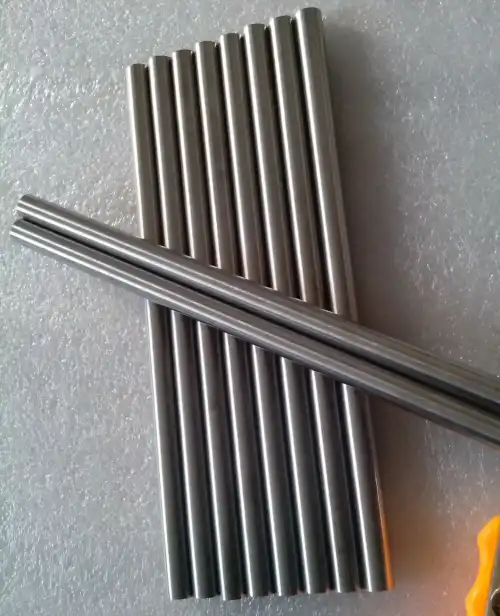
Understanding ASTM B550 Zirconium Alloy Bars: Grades and Specifications
ASTM B550 Zirconium Alloy Bars are a detailed standard for zirconium and zirconium-alloy semi-finished goods that are made to work well in a wide range of industries without rusting. This standard includes three different types, each designed to meet specific performance needs in tough working settings.
Grade R60702: Unalloyed Zirconium Excellence
Grade R60702 is the basis of the ASTM B550 standard. It is made of commercially pure zirconium that is very flexible and easy to shape. This grade has a minimum tensile strength of 380 MPa (55 ksi) and is very resistant to reducing conditions like hydrochloric acid, sulfuric acid, and organic acids, which is something that stainless steels usually fail in. Grade R60702 has very strict quality standards for its chemicals. The maximum amount of carbon is 0.05%, the maximum amount of nitrogen is 0.025%, and the maximum amount of hydrogen is 0.005%. These strict chemical rules keep the material from becoming weak and make sure that it works the same way in all kinds of situations. The grade keeps up to 4.5% of its natural hafnium content, which makes it different from nuclear-grade materials while still being affordable for commercial uses.
Grade R60705: Enhanced Strength Through Niobium Alloying
Niobium content in Grade R60705 ranges from 2.0% to 3.0%. Niobium acts as a beta-stabilizer, improving mechanical qualities while keeping excellent rust resistance. This method of alloying almost doubles the tensile strength compared to Grade R60702, reaching minimum values of 550 MPa (80 ksi) and much higher yield strengths. The addition of niobium improves the microstructure of Grade R60705 so it can handle higher stress uses. This makes it very useful for pump shafts, valve stems, and other high-torque parts that are used in acidic environments. The alloy retains its self-healing oxide film formation, which protects against corrosion in low-oxygen conditions and provides better mechanical performance for tough tasks.
Dimensional Tolerances and Quality Standards
All types in the ASTM B550 Zirconium Alloy Bars standards meet very strict requirements for surface finish and size variations. Standard bar diameters range from 6 mm to 200 mm, and lengths can be changed to fit the needs of a particular job. Surface treatments can be descaled, sandblasted, or ground to stop localized rust and make sure the best performance in service settings. To make sure that set mechanical property standards are met, the specification calls for a wide range of tests, such as tensile testing, hardness verification, and grain size analysis. Each production lot goes through strict quality control steps, such as ultrasound testing and checking the chemical makeup. These steps make sure that the materials are correct and that they can be tracked all the way through the supply chain.
Performance and Application-Based Comparison of ASTM B550 Grades
The effectiveness of zirconium alloy bars that meet the ASTM B550 standard depends a lot on the alloying elements they contain and what they are meant to be used for. By knowing these differences, procurement experts can choose the best materials for each operation's needs while also making sure they are reliable and cost-effective in the long run.
Mechanical Property Analysis
Grade R60702 is great for uses that need the most shapeability and ductility. In normal tension tests, it usually goes over 20% longer. Because it is so flexible, it is perfect for complicated shaping tasks and uses that need a lot of cutting or manufacturing. The grade's mechanical traits stay the same across a wide range of temperatures, so the structure stays strong in both normal and high temperatures. Through its niobium alloying, Grade R60705 has much higher strength qualities, with yield strengths that often reach 400 MPa while still being sufficiently flexible for most industrial uses. This grade is especially good for aircraft and high-performance car uses, where weight reduction is still important because it has a higher strength-to-weight ratio.
Corrosion Resistance in Aggressive Environments
Both types are very resistant to stress corrosion cracks caused by chloride, which is a big plus for marine and offshore uses. Even if there is mechanical damage or surface scratches, the self-healing oxide film development protects against chemical attack all the time. Because of this, ASTM B550 Zirconium Alloy Bars work better in some corrosive settings than regular stainless steels and a lot of other exotic metals. In the lab, tests show that this material works better in hot hydrochloric acid amounts of up to 37%, where other materials quickly break down. Because these grades don't rust in organic acids, they are very useful in pharmaceutical and chemical processing settings where product contamination must be avoided.
Heat Treatment Effects and Processing Considerations
Grade R60702 doesn't need much heat treatment because its qualities are best when it is annealed, which is the case for most uses. Stress relief techniques at temperatures between 550°C and 650°C, on the other hand, can improve the stability of the dimensions and lower the leftover stresses from the forming process. Heat treatment after construction is good for Grade R60705, especially after welding. The recommended heat treatment at 550-600°C helps relieve residual stresses and prevents delayed hydride cracking, ensuring long-term structural integrity in high-stress applications.
How to Choose the Right ASTM B550 Zirconium Alloy Grade for Your Needs
When choosing a grade from the ASTM B550 Zirconium Alloy Bars standard, it's important to take into account the needs of the job, the surroundings, and the budget. When making a choice, one has to think about the mechanical property needs, the corrosion protection needs, and the long-term performance standards.
Application-Specific Selection Criteria
Chemical processing usually chooses Grade R60702 for parts that need to be shaped or machined a lot, while Grade R60705 is used for parts that need to be stronger mechanically. Choosing between grades is often based on the specifics of the toxic climate and the mechanical loads that will be applied during service. Both grades are resistant to chloride stress corrosion cracking, which makes them good for marine and coastal uses. The main thing that determines which grade to use is the mechanical property needs. The higher strength of Grade R60705 is usually needed for high-pressure uses or parts that are put under a lot of mechanical stress.
Comparison with Alternative Zirconium Alloys
ASTM B550 Zirconium Alloy Bars are cheaper than ASTM B551 reactor-grade zirconium because they keep more of the hafnium material. They also have the same level of corrosion protection for non-nuclear uses. Because these materials are industrial-grade, they can be used in more business situations without costing more than nuclear-grade materials. When compared to Grade 2 titanium, it shows that titanium is better at resisting rust in reducing settings than it is in oxidizing ones. Because of this, zirconium metals are better than titanium when used with hydrochloric acid, sulfuric acid, and other reduction agents.
Supplier Certification and Quality Assurance
To judge a supplier's skills, you need to check that they have several different certifications, such as ISO 9001 quality management systems, PED compliance for pressure equipment uses, and appropriate classification society approvals for naval uses. The supplier's ability to provide full test paperwork and full material traceability has a big effect on the success of the project and on meeting legal requirements. Inspection of arriving materials, testing during production, and verification of the finished product should all be part of quality assurance processes to make sure that materials have consistent properties and work consistently. Third-party inspections and access to approved testing laboratories give extra peace of mind for important uses where a material failing could have major safety or practical effects.
Manufacturing and Supply Chain Insights for ASTM B550 Zirconium Alloy Bars
To make sure that the material features and dimensions are always the same, high-quality zirconium metal bars need to be made using complex manufacturing methods and thorough quality control systems. Knowing about these manufacturing factors helps procurement pros figure out what suppliers can do and set reasonable delivery goals.
Advanced Production Methodologies
The process starts with high-purity zirconium sponge, which is vacuum arc remelted to get a uniform chemical makeup and get rid of any flaws that might affect how well the material works. This remelting process usually takes more than one pass to make sure that all of the alloying elements are gone and the ingot is evenly distributed.
Hot forging processes carefully control the temperature to improve the microstructural development and mechanical qualities of the cast ingot, turning it into rough bar forms. To keep the process of forging from burning, which could cause grains to grow and lower mechanical performance, the temperature must be carefully monitored. Cold finishing operations, including drawing and machining, achieve final dimensional tolerances and surface finish requirements. These operations must be carefully controlled to prevent work hardening that could affect subsequent forming operations or service performance.
Certification and Compliance Standards
ASTM B550 Zirconium Alloy Bars production requires compliance with multiple international standards, including ASTM specifications, ISO quality management requirements, and different pressure equipment directions. As part of the certification process, detailed records of the producing method, quality control rules, and test results must be kept. Material tracking systems keep track of each production lot from the time the raw materials are received until the finished product is delivered. This makes sure that the full history of production and test results is recorded. This ability to track back is important for important uses where the performance history of a material might be needed for failure analysis or to show that it meets legal requirements.
Supply Chain Optimization Strategies
Lead times for zirconium metal bars are usually between 8 and 16 weeks, but they depend on the grade chosen, the size requirements, and the amount needed. Delivery times may be longer if you need custom sizes or special testing, so planning is very important for the success of the job. Bulk ordering efficiencies can significantly reduce unit costs while ensuring material availability for extended production campaigns. However, inventory management considerations must balance cost savings against storage requirements and potential material degradation during extended storage periods.
Cost Efficiency and Value Proposition of ASTM B550 Zirconium Alloy Bars
The economic analysis of ASTM B550 Zirconium Alloy Bars looks at more than just the original cost of the materials. It also looks at how well they perform over the course of their useful lives, how much upkeep they need, and how reliable they are in the workplace. This in-depth cost study shows that zirconium alloys are more valuable in certain situations, even though they require a bigger starting investment than other materials.
Life-Cycle Cost Analysis
Due to their high corrosion resistance, zirconium alloys have longer service lives and require less upkeep than regular stainless steels or other corrosion-resistant metals. Less downtime for equipment and lower upkeep costs often make up for the higher cost of the materials within the first operating cycle. Case studies from chemical processing plants show that switching from stainless steel to zirconium metal parts can increase the service life of equipment by 300% to 500%. Because of shorter repair times, less inventory of spare parts, and better production continuity, these changes save a lot of money on running costs.
Market Positioning and Competitive Analysis
The way zirconium alloys are priced puts them in the middle of regular stainless steels and high-end, unusual alloys like Hastelloy or Inconel. This placement makes it possible to find cost-effective solutions in situations where stainless steel doesn't work well enough, but the costs of unusual alloys are too high. Recent market trends show that the prices of zirconium raw materials will stay stable, which makes long-term planning for purchases easier. Zirconium goods don't have a very big market, but that means there are chances for smart supplier relationships that can save money and ensure supply.
Reliability and Performance Benefits
ASTM B550 Zirconium Alloy Bars have a self-healing oxide film that keeps them from rusting even if they get cuts or other damage on the outside. This feature gets rid of the worst kinds of failures that happen with passive film breakdown in regular stainless steels, making them more reliable in use. When performance stays the same in different working situations, there is less need for lengthy testing and qualification processes for materials. This speeds up the procurement process and lowers the costs that come with it. The predictable performance features let you choose a material with confidence for new uses based on facts about how it has worked in the past.
Conclusion
ASTM B550 Zirconium Alloy Bars come in three grades: R60702, R60704, and R60705. These grades offer complete solutions for tough industrial uses that need high rust protection and reliable mechanical performance. Each grade has its own benefits. For example, R60702 is great for shaping and resisting rust in general, while R60705 is stronger thanks to its niobium alloying. The standard covers a lot of ground when it comes to chemical makeup, mechanical qualities, and dimensional tolerances. This makes sure that the material works the same way in all kinds of situations. Knowing about these grade differences helps you choose materials that work best for you in harsh industrial settings in terms of performance, cost, and dependability.
FAQ
What distinguishes Grade R60705 from Grade R60702 in mechanical properties?
Grade R60705 contains 2.0–3.0% niobium, which works as a beta-stabilizer to make the tensile and yield strengths much higher than those of the widely pure R60702. This combination makes R60705 almost twice as strong and very resistant to rust, which makes it perfect for high-stress uses like pump shafts and valve stems.
Can ASTM B550 materials be used in nuclear applications?
The ASTM B550 standards keep the natural hafnium level at about 4.5%. Hafnium has a high neutron absorption rate that makes nuclear reactors less efficient. For nuclear uses, you usually need ASTM B351 nuclear-grade materials that have had the hafnium taken out through special processes.
What are the machining considerations for zirconium alloy bars?
Because zirconium fines are pyrophoric, they tend to work-harden during machining. To keep chips from igniting, cutting speeds must be slow, feed rates must be high, and flood cooling must be used. To keep measurement limits and stop too much heat from building up during machining processes, cutting tools must be very sharp.
What is the maximum service temperature for these alloy bars?
While zirconium has a high melting point of 1852°C, ASTM B550 Zirconium Alloy Bars shouldn't be used above 400°C (750°F) in air because oxygen and nitrogen cause oxidation processes that make brittle diffusion layers. This makes the bars less strong and less resistant to rust.
Is post-weld heat treatment required for Grade R60705?
Grade R60705 usually needs to be heated at temperatures between 550°C and 600°C after welding to get rid of any remaining loads and stop delayed hydrogen cracking. This process is especially important for high-stress situations where leftover welding stresses could weaken the structure over time.
Partner with LINHUI TITANIUM for Superior Zirconium Alloy Solutions
LINHUI TITANIUM stands as your trusted ASTM B550 Zirconium Alloy Bars supplier, delivering certified materials that meet the most stringent international quality standards. Our comprehensive certification portfolio, including PED 2014/68/EU, ISO 9001:2015, and multiple classification society approvals, ensures complete compliance with your project requirements. As a leading manufacturer with over two decades of experience, we provide customized solutions, global logistics support, and expert technical consultation to optimize your material selection and procurement processes. Contact our engineering team at linhui@lhtitanium.com to discuss your specific requirements and discover how our proven track record with major international corporations can benefit your next project.
References
1. American Society for Testing and Materials. "Standard Specification for Zirconium and Zirconium Alloy Bars, Rod, and Wire for Nuclear Application." ASTM International, West Conshohocken, PA.
2. Lustman, Benjamin, and Frank Kerze. "The Metallurgy of Zirconium." McGraw-Hill Book Company, New York, 1955.
3. Cox, Bryan. "Zirconium in the Nuclear Industry: Proceedings of the International Symposium." American Society for Testing and Materials, Philadelphia, PA.
4. Northwood, Donald O. and Uwe Kosasih. "Hydrides and Delayed Hydrogen Cracking in Zirconium and Its Alloys." International Materials Reviews, Volume 28, Issue 1.
5. Whitwham, Douglas, and Clayton Clayton. "Corrosion Resistance of Zirconium and Zirconium Alloys." Materials Performance, NACE International, Houston, TX.
6. International Atomic Energy Agency. "Zirconium in the Nuclear Industry: Properties and Applications." Technical Reports Series, Vienna, Austria.









