
Different grades of ASTM B861 titanium consistent pipe are suited for demanding mechanical applications. Grades 1, 2, 5, 7, 9, 12, and 23 have diverse mechanical qualities and erosion resistance. Titanium pipe grades are basic in oil and gas, chemical processing, aviation, and marine businesses. Understanding ASTM B861 titanium consistent pipe review characteristics makes a difference for acquisition specialists to select the best materials for their operations, guaranteeing long-term execution and cost-effectiveness. ASTM B861 Titanium Seamless Pipe is imperative to deciding the titanium channeling framework quality around the world. When procurement directors and engineers get the review contrasts, they make educated choices that influence project success and operational security. This careful design meets the needs of B2B acquisition specialists, engineers, wholesalers, and OEM clients who require dependable titanium channeling for mechanical applications.
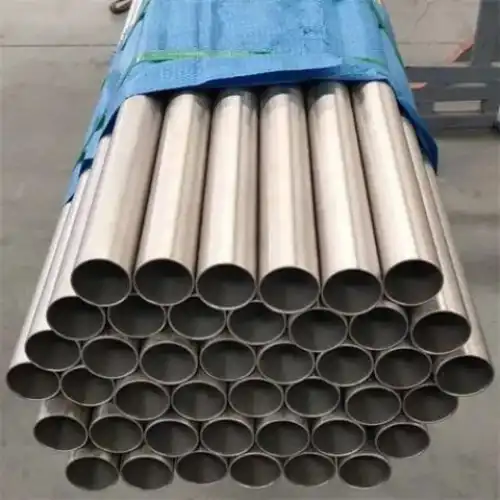
Understanding ASTM B861 Titanium Seamless Pipe Grades
ASTM B861 sets up total criteria for consistent and welded titanium pipe grades that are industry benchmarks across segments. Review 1, Review 2, Review 5, and Review 7 have diverse chemical compositions and mechanical properties that influence execution and application compatibility. Obtainment directors and engineers utilize review qualifications to select materials that meet operational criteria, including quality, erosion resistance, and creation ease.
Overview of Grades Covered by ASTM B861
ASTM B861 Titanium Seamless Pipe is divided into seven grades for various industrial uses. Grade 1 titanium is economically pure, corrosion-resistant, and formable, making it appropriate for chemical processing. Its strength and corrosion resistance make Grade 2 the most popular grade across industries. Grade 5, an aluminum-vanadium alpha-beta alloy, has outstanding strength-to-weight ratios for aerospace and high-performance applications.
Grade 7 contains palladium to improve corrosion resistance in reducing conditions, useful in chemical processing. Grade 9 contains aluminum and vanadium for moderate strength, while Grade 12 contains molybdenum and nickel for corrosion resistance. Grade 23 is extra-low interstitial Grade 5 with increased ductility and fracture toughness. Material composition affects applications, with each grade addressing industrial operational issues.
Chemical and Mechanical Properties of Each Grade
Chemical composition varies greatly between titanium pipe grades, affecting mechanical attributes and performance. Grade 1 has tensile strength of 35 ksi and elongation surpassing 24% due to 99.5% titanium and a regulated oxygen level below 0.18%. Grade 2 has similar purity but stronger strength, reaching 50 ksi and excellent corrosion resistance.
Grade 5 has 130 ksi tensile strength and 120 ksi yield strength due to 6% aluminum and 4% vanadium. It is excellent for high-stress applications. Grade 7 adds 0.12-0.25% palladium for corrosion resistance and tensile strength equal to Grade 2. These mechanical characteristic changes affect pipe performance in harsh operational settings, directing material selection based on application requirements.
Common Heat Treatment Processes by Grade
Titanium pipe grades have different heat treatment temperatures and cooling methods to maximize mechanical attributes and corrosion resistance. Stress reduction annealing at 1000-1100°F and air cooling removes residual tensions from manufacturing operations in Grade 1 and Grade 2. Grade 5 needs solution treatment at 1750°F and aging at 900-1000°F for maximum strength.
Proper thermal processing ensures uniform mechanical qualities and corrosion resistance across pipe wall thickness. Grade 7 maintains palladium benefits while annealing like Grade 2. These thermal treatments improve microstructural stability and meet ASTM B861 standards.
Comparison of ASTM B861 Grades with Other Titanium Pipe Standards
ASTM B861 differs from comparable standards like B338 and B862 in grade coverage, material attributes, and application applicability. ASTM B861 offers seamless pipe quality and consistency, while other standards may offer different grades or production parameters. Understanding these differences helps procurement managers choose the best standard and grade for manufacturing, cost, and end-use.
ASTM B861 vs ASTM B338 and B862: Grade Differences
The ASTM B861 covers seamless and welded pipes for structural applications, whereas the B338 covers heat exchanger and condenser tubes. Welded pipe applications with varying dimensional tolerances and mechanical property requirements are covered by ASTM B862. These standards have similar grade coverage, but mechanical qualities and dimensional specifications differ per application.
In heat transfer applications, ASTM B338 grades excel, whereas ASTM B861 grades offer better pressure ratings and structural stability. While project requirements vary, ASTM B861 performs best in high-pressure pipe systems and structural applications.
Seamless vs Welded Titanium Pipes within ASTM B861 Grades
Seamless and welded pipes differ in manufacturing, affecting grade performance and application compatibility. Continuous titanium pipes perform better in high-pressure and corrosive conditions due to their consistent wall thickness and lack of weld seams. Modern welding procedures reduce property differences around weld zones in welded pipes.
For important applications requiring reliability and pressure resistance, seamless pipes are used. Welded pipes meet ASTM B861 criteria and are cheaper for less demanding applications. Both technologies create pipes that fulfill industrial-grade standards.
Performance and Cost Comparison of Grades and Pipe Types
For most industrial applications, Grade 2 balances performance and price well. Due to alloying and mechanical improvements, Grade 5 is priced higher for high-performance applications. For applications requiring the highest corrosion resistance without high strength, Grade 1 is cheaper.
Budget-constrained procurement decisions benefit from grade selection based on performance needs, not over-specification. In rigorous service conditions, higher-grade materials may justify the initial premium due to maintenance, replacement frequency, and operating reliability.
Applications of ASTM B861 Titanium Seamless Pipes by Grade
ASTM B861 Titanium Seamless Pipes are used in medical device manufacture, aerospace, chemical processing, desalination, and maritime environments. Material selection is based on corrosion resistance, strength, and operational environment. These applications show how grade-specific qualities meet strict corrosive or high-stress performance and durability criteria.
Industry Use Cases Based on Grade Requirements
Grade 1 and Grade 2 are used for biocompatible implant components and surgical equipment that need corrosion resistance and biocompatibility. Grade 5 is preferred for aerospace structural components requiring excellent strength-to-weight and temperature resistance. Grade 7 is used in chemical processing to reduce acids and corrosives.
Grade 2 is used in desalination facilities' seawater handling systems for corrosion resistance and reliability. Marine applications use grades based on mechanical and environmental criteria. Different grades are used in oil and gas depending on fluid properties, pressure, and environment.
Corrosion Resistance and Durability by Grade
Alloying and microstructural features affect corrosion resistance mechanisms across grades. Oxidizing conditions and seawater cannot penetrate Grade 1 and Grade 2 oxide coatings. Grade 5 has better mechanical qualities and corrosion resistance in high-temperature applications.
Palladium additions improve passive film stability and resilience to reducing acid conditions in Grade 7. Proper grade selection extends service life and reduces maintenance in severe conditions. These features reduce pipe system lifespan and running costs significantly.
Procuring ASTM B861 Titanium Seamless Pipes: What Buyers Need to Know
Buyers of titanium seamless pipes must evaluate suppliers, comprehend market trends, and follow international standards. Buyers must check certifications, manufacturing capabilities, and quality assurance to establish trusted supply chain partnerships. This guidance aids procurement professionals in making difficult supply chain decisions while ensuring quality and efficiency.
Supplier Selection and Quality Assurance of ASTM B861 Pipes
ISO 9001, PED, and ASTM certifications should be considered while evaluating suppliers. Quality assurance requires material traceability, dimensional verification, mechanical testing, and chemical analysis. Manufacturing facilities should have adequate equipment, technical expertise, and quality control.
Material test certificates, dimensional inspection reports, and third-party inspection agency compliance certifications are essential certification documents. To achieve long-term collaboration success, supplier assessment should evaluate manufacturing capacity, delivery reliability, and technical assistance.
Pricing, Lead Times, and Minimum Order Quantities by Grade
Grades 1 and 2 offer competitive pricing for conventional applications, but market cost varies greatly. Grade 5 is expensive due to alloying and sophisticated manufacturing. Grade 7 prices reflect palladium additions and customized processing.
Industry lead times vary by grade, size, and order quantity from 8 to 16 weeks. Seamless pipes have higher minimum order quantities than welded ones to reflect economic manufacturing runs. Scheduling procurement around these lead times assures project timeline compliance.
Export and Logistics Considerations
Maintaining pipe integrity during international shipping requires adequate paperwork, packing criteria, and handling. Country-specific export and import standards must be met. Packaging prevents handling and transit harm.
Protection from contamination, support to prevent deformation, and environmental controls to maintain surface condition are storage suggestions. These techniques maintain pipe quality from manufacturing to installation, reducing quality issues and project delays.
LINHUI TITANIUM: Your Trusted ASTM B861 Titanium Seamless Pipe Partner
Linhui Titanium is a prominent maker of ASTM B861-compliant titanium seamless pipes. Our comprehensive titanium products marketplace serves global industrial markets from Xi'an, China, founded in 2000. Our wide titanium grade and pipe configuration portfolio serves oil and gas, chemical processing, aerospace, and marine industries.
Certified by PED 2014/68/EU, ISO 9001:2015, DNV, ABS, CCS, GL, and renowned third-party inspection organizations, we are committed to quality. Custom manufacturing, certification support, and procurement-related technical assistance are our added services. We sell to over 60 countries and work with CEFC, PTT, PDVSA, PETROECUADOR, and major EPC contractors.
Conclusion
Knowledge of ASTM B861 titanium seamless pipe grades helps buyers maximize performance, affordability, and reliability. This standard covers seven classes with different benefits for different applications, ensuring project success with the right selection. Mechanical properties, corrosion resistance, and operational environment affect grade selection. Assessing suppliers, understanding market trends, and meeting international quality standards are essential for successful procurement. These elements produce durable titanium piping solutions that meet rigorous industrial requirements at a great value and performance.
FAQ
Q: What are the main differences between Grade 1 and Grade 5 titanium pipes under ASTM B861?
A: Grade 1 represents commercially pure titanium with excellent corrosion resistance and formability, offering tensile strength of 35 ksi and superior ductility. Grade 5 is an alpha-beta alloy containing 6% aluminum and 4% vanadium, providing tensile strength exceeding 130 ksi with an enhanced strength-to-weight ratio. Grade 1 is ideal for chemical processing applications requiring maximum corrosion resistance, while Grade 5 serves high-performance applications demanding superior mechanical properties.
Q: How does heat treatment affect the mechanical properties of ASTM B861 titanium seamless pipes?
A: Heat treatment significantly influences the mechanical properties and microstructural characteristics of titanium pipes. Annealing processes relieve manufacturing stresses and optimize ductility, while solution treatment and aging enhance strength properties in alloy grades. Proper thermal processing ensures uniform properties throughout pipe wall thickness and maintains compliance with ASTM B861 specifications for mechanical performance and corrosion resistance.
Q: Can ASTM B861 titanium pipes be used in highly corrosive chemical environments?
A: Yes, specific ASTM B861 grades excel in corrosive chemical environments. Grade 7 incorporates palladium additions that provide exceptional resistance to reducing acid environments. Grade 2 offers outstanding performance in oxidizing environments and general chemical processing applications. Grade selection depends on specific chemical exposure conditions, with proper material choice ensuring long-term reliability and corrosion resistance.
Partner with LINHUI TITANIUM for Premium ASTM B861 Solutions
LINHUI TITANIUM delivers exceptional ASTM B861 titanium seamless pipe solutions backed by over two decades of manufacturing expertise and global market presence. As a certified ASTM B861 titanium seamless pipe manufacturer, we provide comprehensive grade selections, technical support, and quality assurance services tailored to your specific project requirements. Our extensive certification portfolio and proven track record with world-renowned companies ensure reliable partnerships and superior product quality. Contact us at linhui@lhtitanium.com to discuss your titanium seamless pipe requirements and receive expert guidance on grade selection, specifications, and competitive pricing for your next project.
References
1. American Society for Testing and Materials. "Standard Specification for Seamless and Welded Titanium and Titanium Alloy Pipe." ASTM B861-12, West Conshohocken, PA, 2012.
2. Boyer, Rodney R. "An Overview on the Use of Titanium in the Aerospace Industry." Materials Science and Engineering: A, vol. 213, 1996, pp. 103-114.
3. Schutz, R.W. "Corrosion of Titanium and Titanium Alloys in Industrial Applications." Industrial Corrosion and Materials Selection, ASM International, 2001.
4. Peters, M., Kumpfert, J., Ward, C.H., and Leyens, C. "Titanium Alloys for Aerospace Applications." Advanced Engineering Materials, vol. 5, no. 6, 2003, pp. 419-427.
5. Donachie, Matthew J. "Titanium: A Technical Guide, 2nd Edition." ASM International Materials Park, Ohio, 2000.
6. Craig, Bruce D. "Handbook of Corrosion Data for Titanium and Titanium Alloys." ASM International, Materials Park, Ohio, 1995.