
These are the guidelines for welding Titanium Pipe For Aerospace. When it comes to aerospace components, the manufacturing process is extremely important and requires a particularly high level of precision and competence. The distinctive characteristics of titanium tubing designed for aerospace applications necessitate the utilization of specialist welding processes in order to preserve the structural integrity and performance standards. Assuring optimal joint strength, corrosion resistance, and dimensional correctness is vital for aviation engines, fuel systems, and spacecraft structures, which are all areas in which failure is not an option. Understanding proper welding techniques ensures that these things are achieved.
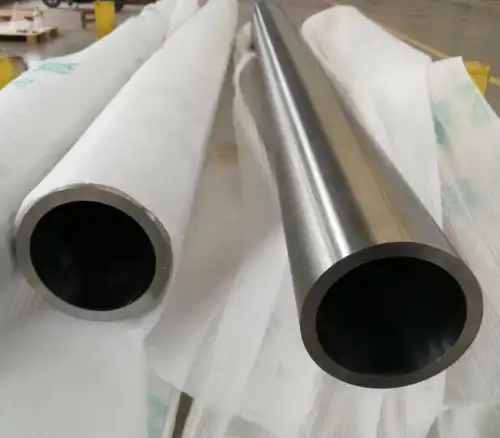
Understanding Titanium Pipes in Aerospace Applications
Titanium tubing used in aerospace is subjected to harsh conditions, where the performance of the material has a direct influence on the success of the mission and the safety of the flight. Ti-6Al-4V alloy is the material of choice for aerospace applications because of its remarkable strength-to-weight ratio and resilience to deterioration caused by conditions in the environment. In order to ensure that these pipes continue to maintain their dimensional consistency and mechanical qualities, they are required to comply with stringent criteria such as AMS 4928, ASTM B338, and MIL-T-9046 standards.
Critical Material Properties
There is a direct correlation between the mechanical properties of Titanium Pipe For Aerospace and the welding techniques and joint performance. The combination of a tensile strength that ranges from 130 to 140 ksi and an outstanding fatigue resistance makes these materials appropriate for use in areas that are subject to high levels of stress. For the purpose of preventing grain structure changes that could jeopardize component dependability, thermal conductivity qualities necessitate careful regulation of heat input throughout the welding process.
Standards and Specifications
Ensuring that worldwide supply chains are in compliance with aeronautical standards guarantees that quality and performance are uniform across the board. The creation of complete oversight frameworks that certify manufacturing processes is accomplished through the implementation of AS9100D quality management systems, NADCAP accreditation, and PED certification. These certifications ensure that welded titanium assemblies are up to the rigorous standards that are required for applications such as aircraft engines, hydraulic systems, and spacecraft.
Challenges in Welding Titanium Pipes for Aerospace
The metallurgical issues that titanium welding offers are distinct from those that are associated with welding ordinary materials. At high temperatures, the reactive nature of titanium increases the danger of contamination, which can have a significant impact on the quality of the weld as well as the mechanical qualities of the material.
Contamination Control
During the welding process, the presence of oxygen and nitrogen can lead to the formation of brittle intermetallic compounds, which in turn reduces ductility and fatigue life. For the purpose of preventing contamination of the atmosphere, protective atmospheres can be created through the utilization of high-purity argon or helium for protective gas covering. Back-purging techniques guarantee that the weld root zone is completely protected, which is especially important for thin-walled aircraft tubes.
Hydrogen Embrittlement Prevention
When welding, the absorption of hydrogen can result in delayed cracking and a reduction in the mechanical properties of the material. An elimination of hydrocarbon contamination, which is a factor in hydrogen pickup, can be accomplished through surface preparation that includes mechanical cleaning and chemical etching. A reduction in hydrogen-related flaws can be achieved through the use of controlled welding settings and post-weld heat treatment.
Step-by-Step Welding Process for Titanium Aerospace Pipes
A methodical approach to preparation and execution, in accordance with established protocols, is required for successful welding of Titanium Pipe for Aerospace. To get aerospace-quality joints that are able to fulfill stringent performance standards, each stage contributes to the overall process.
Pre-Welding Preparation
The process of surface preparation begins with mechanical cleaning, which involves the removal of oxide layers and contamination by the use of carbide burrs or brushes made of stainless steel. Additional surface activation can be achieved by the use of nitric-hydrofluoric acid solutions during chemical cleaning procedures. Environmental controls include humidity monitoring and oxygen level assessment ensure optimal welding conditions.
Welding Technique Selection
Welding with tungsten inert gas (TIG) provides accurate heat control and good weld quality for applications in the aerospace industry. When it comes to thick-section joints, electron beam welding offers extensive penetration capabilities while simultaneously reducing the amount of heat-affected zones. It is necessary to develop the parameters of both procedures with great attention in order to achieve optimal penetration, fusion, and mechanical properties.
Post-Weld Processing
At temperatures ranging from 1000 to 1100 degrees Fahrenheit, stress relief heat treatment can minimize residual stresses without adversely compromising mechanical qualities. Validating the integrity of the weld can be accomplished by non-destructive testing methods such as radiography inspection, ultrasonic examination, and liquid penetrant testing. Through the use of dimensional verification, welded assemblies are guaranteed to conform to the geometric tolerances that are necessary for aeronautical installations.
Material Selection and Welding Compatibility
The foundation of successful titanium welding programs in the aerospace industry is composed of the appropriate selection of materials. The optimization of joint qualities and performance is made possible by an understanding of welding metallurgy and the characteristics of alloys.
Alloy Grade Considerations
Ti-6Al-4V ELI, which stands for "Extra Low Interstitial," is a valuable material for essential aerospace applications because it offers improved ductility and fracture toughness. Titanium that is not only commercially pure but also grade 2 offers exceptional resistance to corrosion for fuel system components. It is necessary to have appropriate welding conditions and post-weld treatment for each grade to produce the best possible qualities.
Filler Material Selection
The qualities of the base metal are preserved, and the possibility for galvanic corrosion is reduced when filler compositions are matched. When it comes to welding operations involving Ti-6Al-4V, ERTi-5 filler offers outstanding strength matching. The use of autogenous welding procedures eliminates issues regarding filler contamination while also retaining joint strength and resistance to corrosion.
Best Practices and Quality Assurance in Aerospace Titanium Pipe Welding
Implementing comprehensive quality assurance programs ensures consistent weld quality and regulatory compliance. These practices create traceable documentation and validation protocols essential for aerospace certification.
Dimensional Control
Maintaining precise dimensional tolerances requires careful fixturing and welding sequence planning. Distortion control techniques, including balanced welding sequences and proper heat input distribution, minimize dimensional changes. Post-weld machining capabilities restore critical dimensions when required.
Testing and Validation
Our weld performance is validated under service conditions through the use of comprehensive testing methods. The joint's durability under cyclic loads, which is characteristic of aircraft operations, is demonstrated through fatigue testing. The ability to contain pressure is ensured through leak testing for applications involving the fuel system and hydraulic pressure.
LINHUI TITANIUM: Your Trusted Aerospace Partner
With more than 21 years of specialized knowledge, LINHUI TITANIUM has established itself as a leading manufacturer and supplier of titanium tubing that is suitable for aerospace applications. In order to guarantee a supply that can be scaled up to accommodate projects of any size, our two specialized facilities operate thirty production lines with an annual capacity of eight hundred tons. ISO, SGS, and TUV certifications, in conjunction with AS9100D quality management systems, ensure that the product quality is consistent and that it complies with all applicable regulations.
In order to achieve the highest possible levels of performance and dependability, our aircraft's titanium tubing is subjected to cutting-edge production techniques. While solution treatment boosts the strength characteristics of Ti-6Al-4V ELI, cold pilger rolling contributes to the enhancement of grain structure, which results in higher fatigue resistance. The capabilities of autogenous welding avoid filler contamination in situations with narrow walls, and eddy current testing ensures that important fuel line systems receive zero defects in their delivery.
Customers located in North America, Europe, and the Asia-Pacific regions can receive their orders promptly thanks to the capabilities of global logistics, which include the use of DHL, FedEx, air freight, and sea transport opportunities. End-to-end traceability documentation and 3D laser inspection reports contribute to the fulfillment of essential application criteria while simultaneously ensuring that material batch tracking is comprehensive.
Conclusion
Successful welding of Titanium Pipe For Aerospace components requires a comprehensive understanding of material properties, contamination control, and quality assurance protocols. The unique challenges of titanium welding demand specialized expertise and proven procedures to achieve reliable joints that meet stringent aerospace standards. Proper technique selection, environmental control, and post-weld processing create the foundation for durable, high-performance assemblies. As aerospace applications continue evolving toward more demanding performance requirements, mastering these welding guidelines becomes increasingly critical for manufacturers and suppliers serving this vital industry sector.
FAQ
Q: What are the most critical factors for successful welding of titanium pipes in aerospace applications?
A: Successful welding relies on comprehensive contamination control through proper shielding gas coverage, meticulous surface preparation to remove oxides and hydrocarbons, and precise heat input control to prevent grain structure degradation. Environmental controls, including humidity and oxygen monitoring, ensure optimal welding conditions.
Q: How does the welding process affect the mechanical properties of titanium pipes?
A: Welding directly influences tensile strength, ductility, and corrosion resistance through thermal cycling effects on microstructure. Proper heat input control and post-weld heat treatment maintain base metal properties while achieving full joint penetration and fusion.
Q: What are typical lead times and minimum order quantities for aerospace-grade titanium pipes?
A: Lead times typically range from 4-8 weeks, depending on specification complexity and order size. Minimum order quantities vary based on dimensional requirements but remain flexible for established aerospace customers with recurring demands.
Partner with LINHUI TITANIUM for Aerospace Excellence
Seeking a reliable Titanium Pipe For Aerospace supplier with proven manufacturing expertise and comprehensive quality credentials? LINHUI TITANIUM delivers precision-engineered solutions backed by 21 years of aerospace industry experience and globally recognized certifications. Our technical team provides comprehensive welding support, material selection guidance, and custom manufacturing capabilities to meet your most demanding requirements. Ready to discuss your aerospace titanium needs? Contact us at linhui@lhtitanium.com for immediate consultation and competitive pricing on your next project. Limited production capacity means quick response is essential – get your detailed quote within 24 hours.
References
1. American Welding Society. "Welding Handbook Volume 4: Materials and Applications, Part 2." 10th Edition, 2021.
2. Boyer, R.R.. "Titanium and Titanium Alloys: Fundamentals and Applications." ASM International Handbook Committee, 2019.
3. Society of Automotive Engineers. "Aerospace Material Specification AMS 4928: Titanium Alloy Tubing." SAE International, 2020.
4. American Society for Testing and Materials. "ASTM B338: Standard Specification for Seamless and Welded Titanium Alloy Tubes." ASTM International, 2021.
5. National Aerospace and Defense Contractors Accreditation Program. "NADCAP AC7004: Heat Treatment Aerospace Accreditation Criteria." Performance Review Institute, 2022.
6. International Aerospace Quality Group. "AS9100D: Quality Management Systems for Aerospace Applications." SAE International, 2020.