
When choosing between Titanium Welding Pipe and seamless options, welding titanium pipes is often the better option for jobs with big diameters and limited budgets. Welded pipes come in a huge range of sizes, from small instrumentation tubes to large process pipes with diameters of more than 48 inches. They are also very strong and don't rust, which are important qualities for harsh industrial settings. Welded titanium pipes are very useful in heat exchangers where thermal efficiency is very important because the production process lets you precisely control the wall thickness and improve concentricity compared to smooth versions.
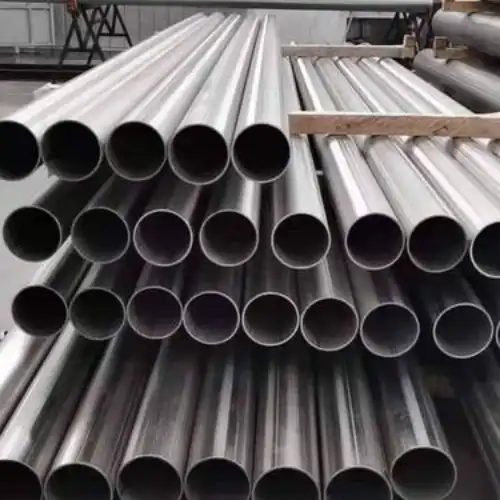
Understanding Titanium Welding Pipes and Seamless Pipes
The main difference between these two types of pipes is how they are made and the way their structures are made. When engineers and procurement workers understand these differences, they can make choices that are in line with the needs of the project and the budget.
Manufacturing Processes and Core Properties
To make titanium welding pipes, flat-rolled titanium products are shaped into tubes. These flat-rolled products are usually strip coils or plates that meet ASTM B265 standards. Advanced laser welding, Gas Tungsten Arc Welding (GTAW/TIG), or Plasma Arc Welding (PAW) are used to join the joint. This process follows strict rules, like ASTM B862 and ASTM B338, which ensure that the quality and performance are the same in all situations. Depending on the needs of the application, the welding method uses either commercially pure titanium grades or titanium alloys running from Grade 1 to Grade 12. ERTi-1 welding wire is widely used in situations where chemical resistance and temperature stability are very important. It is known for being very resistant to rust and very tough when hit. Seamless titanium pipes are made by extruding or cutting the metal, which makes a structure that is smooth and regular without any welds. This way of making pipes gives them uniform wall thickness and higher pressure ratings, which makes them perfect for high-pressure uses where structural stability is very important.
Key Applications Across Industries
Both types of pipes are very important in many different industries. In coastal nuclear and thermal power plants, Titanium Welding Pipe is used extensively in surface condensers and secondary heat exchanges. Copper-nickel metals often leak, but these pipes don't leak when they're exposed to microbiologically influenced corrosion (MIC) in raw saltwater cooling systems. Welded titanium pipes are used in the chemical processing industry to move wet chlorine gas and pure terephthalic acid (PTA). Because it doesn't react badly with oxidizing acids, the wall schedules can be made thinner. This lowers the total system weight and helps with the building needs of big petrochemical plants.
Titanium Welding Pipe vs Seamless Pipe — Dimensional and Performance Comparison
Different types of titanium pipes, welded and seamless, have different performance qualities that can be useful in different situations. A full analysis of these differences helps choose the best option for different commercial uses.
Structural Integrity and Mechanical Performance
Because they are made up of one continuous piece, seamless pipes are more regular, which means they are more resistant to stress and can handle higher pressures. The lack of soldered gaps means that there are no possible weak spots. This makes seamless pipes ideal for uses that involve heavy loads or changing pressures. On the other hand, performance differences are much less noticeable now that current welding methods are used to make Titanium Welding Pipe. When you combine advanced TIG welding technology with precise cutting and annealing to relieve stress after the weld, you can make welded pipes that work almost as well as smooth pipes in many situations. The corrosion protection of both types of pipes is still very high, but welded pipes often perform better in harsh settings. Titanium can be welded, which makes it possible to make changes and fixes in the field that might be hard to do with seamless materials. This gives businesses more operating freedom in complex industrial settings.
Cost Implications and Market Availability
Welded titanium pipes are often better than seamless ones from an economic point of view, especially for large-diameter uses where making smooth pipes would be too expensive. Welding methods can be scaled up to make pipes with diameters from 1/2 inch to over 48 inches. This solves the "Corrosion-Cost Paradox," which says that smooth pipes get more and more expensive as their sizes grow. Due to the freedom of the manufacturing process and the lack of need for specialized extrusion tools, welded pipes usually meet delivery deadlines better. When custom specs or pressing project needs mean that standard seamless pipe measurements may not be easy to find, this benefit becomes even more important.
How to Choose Between Titanium Welding Pipe and Seamless Pipe — Decision Support Approach
To choose the best pipe type, you need to carefully look at factors that are specific to the application, as well as compliance standards and long-term operating concerns. This organized method makes sure that technical needs and real limitations are in line with each other.
Critical Selection Factors
When choosing a pipe, weight is often a factor. This is especially true in aircraft and marine uses, where every pound counts. Welded pipes can be made with wall sizes that keep the structure strong while minimizing weight, which is helpful in uses that need to keep weight to a minimum. Different types of pipes are installed in different ways. Welded pipes, like Titanium welded tubes, often offer more options for changes and unique fits in the field. Welded titanium systems can be fixed, which lets you use cost-effective care plans to make them last longer and lower your total cost of ownership.
Practical Recommendations for Procurement
During the planning process, procurement managers should work with suppliers early on to use their knowledge of how to choose the best materials and make the best specifications. Because LINHUI TITANIUM has been in business for more than 21 years, they can work with you to find options that meet both performance needs and price constraints. It's easier to get a full picture of a supplier's skills when you ask for specific quotes that include material approvals, testing methods, and delivery schedules. Customization choices, such as special welding methods and post-processing treatments, can improve the performance and effectiveness of the supply chain.
Advantages of Titanium Welding Pipes Over Seamless Pipes — Value Elaboration
Welded titanium pipes have benefits that go beyond their low cost. They also offer manufacturing freedom, improved performance, and supply chain benefits that help with complex industrial uses.
Superior Manufacturing Flexibility and Cost-Effectiveness
Titanium Welding Pipe manufacturing methods allow precise control over dimensional characteristics, such as the regularity and concentricity of wall thickness, that often go beyond what is required for seamless pipes. In important heat exchanger uses, cold-rolled strip forming improves the efficiency of heat transfer, leading to measured performance gains. Welding processes can be scaled up or down to meet the needs of large-scale production while keeping quality standards high. With more than 30 specialized production lines and a yearly output capacity of 800 tons, LINHUI TITANIUM can reliably support the supply chain for both large-scale projects and ongoing business needs.
Real-World Performance Advantages
The Multi-Stage Flash (MSF) distillation plants show how useful welding titanium pipes can be in harsh conditions. When you mix high temperatures with concentrated salt solutions, you need materials that will stay strong in harsh circumstances. Titanium pipes with a thin wall and a large diameter that have been soldered together are used to make evaporator shells and brine heaters. These pipes have a much longer life and cost much less to maintain than lined carbon steel pipes. Titanium pipes in seawater cooling systems and subsea tubes are good for oil and gas uses offshore because they don't rust and can be welded. Being able to join and make changes in the field gives operations more freedom than seamless lines can offer.
Ensuring Quality and Safety in Titanium Pipe Welding and Use
In the use of titanium pipes, quality control and safety rules are very important because failure can have terrible effects and cost a lot of money. Full quality control systems make sure that performance is always the same and that regulations are followed.
Industry-Compliant Welding Techniques and Best Practices
Advanced TIG welding technology is what makes it possible to make high-quality Titanium Welding Pipe. To get the best weld quality and corrosion protection, the process needs exact control of welding factors such as heat input, travel speed, and the makeup of the shielding gas. After welding, steps like stress-relieving annealing, precision machining, and surface passivation processes make the metal more resistant to rust and improve its accuracy in measurements. In nuclear power plants, where safety and performance standards are very high, these processes are very important for making reactor water pipes and steam engines work properly.
Quality Control Measures and Certification Requirements
Comprehensive testing procedures make sure that the pipes are safe and that they meet foreign standards. Helium leak testing finds tiny flaws that could weaken the system, and 3D laser measurement makes sure that the sizes are correct to the very high standards needed for precise uses. LINHUI TITANIUM has a number of certificates, such as ISO 9001:2015 QMS, PED 2014/68/EU, and approvals from DNV, SGS, and TUV, which are third-party inspection bodies. These badges show a dedication to quality excellence and give procurement workers peace of mind when choosing materials for important projects.
Conclusion
Whether to use Titanium Welding Pipe or a seamless option relies on the needs of the application, the cost, and the level of performance that is most important. Welded titanium lines have clear benefits in cases where size matters, when costs are tight, or when manufacturing needs to be flexible. For many important uses, welded titanium pipes are the best option because they are made with advanced welding technology, go through strict quality control, and have been shown to work well in harsh industrial settings. A lot of certifications and a track record show that LINHUI TITANIUM knows how to make high-quality welded titanium pipes. This gives procurement workers faith in the materials they choose.
FAQ
Can welded and seamless titanium pipes be used interchangeably in demanding applications?
Both types of pipes are very good at resisting rust and having good mechanical qualities, but they may not be able to be used together, depending on the needs of the application. Welded titanium pipes made to ASTM B862 standards can often be used instead of smooth pipes in most situations, especially when the pressure needs are within the range of welded pipe values. Some important factors are pressure rates, tiredness requirements, and code compliance requirements.
What are typical lead times for custom titanium welding pipe orders?
Lead times for custom Titanium Welding Pipe orders are usually between 4 and 8 weeks, but they can be longer or shorter based on the specs, amount, and production plans at the time. Because LINHUI TITANIUM has specific production capacity, urgent projects can get their parts faster, and common configurations may be in stock and ready to ship right away.
How do titanium welding pipes compare cost-wise to stainless steel or carbon steel alternatives?
Titanium pipes cost more up front than stainless steel or carbon steel pipes, but in situations where metals rust, the total cost of ownership often works out better for titanium. Because they last longer, need less upkeep, and don't need protected coatings or linings, they save a lot of money over their lifetime, and the initial investment is usually paid back within three to five years of operation.
Partner with LINHUI TITANIUM for Premium Titanium Welding Pipe Solutions
LINHUI TITANIUM is ready to help you with your titanium pipe needs with our wide range of manufacturing skills and technical know-how. Because we've been a top Titanium Welding Pipe maker for more than 21 years, we can give you unique solutions that meet your exact application and performance needs.
We are your reliable source for titanium welding pipe for important industrial uses because we have ISO/SGS/TUV certifications and a supply chain that has been tested and proven to work. Email our expert team at linhui@lhtitanium.com to talk about your project needs and find out how our high-quality titanium welding lines can improve your operations while lowering your total cost of ownership.
References
1. American Society for Testing and Materials. "Standard Specification for Titanium and Titanium Alloy Welded Pipe." ASTM B862-14, 2014.
2. Boyer, Rodney R. "An Overview on the Use of Titanium in the Aerospace Industry." Materials Science and Engineering: A, vol. 213, 1996.
3. Donachie, Matthew J. "Titanium: A Technical Guide, Second Edition." ASM International, 2000.
4. Lutjering, Gerd and James C. Williams. "Titanium: Engineering Materials and Processes." Springer-Verlag, 2003.
5. Schutz, R.W. and H.B. Watkins. "Recent Developments in Titanium Alloy Application in the Energy Industry." Materials Science and Engineering: A, vol. 243, 1998.
6. Welding Research Council. "Recommended Practices for Welding of Titanium and Titanium Alloys." WRC Bulletin 487, 2003.