
When engineering teams have to make tough material choices for high-stress uses, Titanium Tube Wholesale stands out as the best option because it matches performance, sturdiness, and cost-effectiveness. In businesses where failure of materials is not an option, like airplane hydraulic systems, chemical processing plants, nuclear reactors, and medical device makers, our wholesale titanium tubes are used. With a density of 4.51 g/cm³ and resistance to corrosion in chloride settings, these tubes are stronger than stainless steel, even though they are lighter. They also keep their shape under high temperatures. Since 2000, LINHUI TITANIUM has sent tubes that meet ASTM B338, API 5CT, and AMS 4928 standards to more than 60 countries.
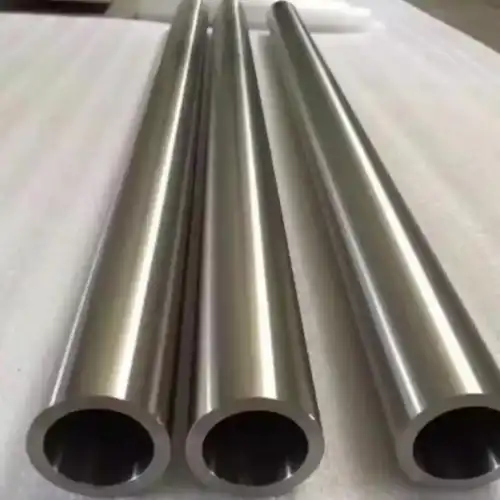
Understanding Titanium Tubes Wholesale: Specifications, Types, and Benefits
Technical Specifications That Define Quality
Specifications for the material are the first step in building the mechanical basis of Titanium Tube Wholesale. The tubes in our collection are made according to ASTM B338 and have sizes from 6mm to 219mm and wall thicknesses from 0.5mm to 25mm. Tensile strength varies by grade. Grade 2 industrial pure titanium has a minimum tensile strength of 345 MPa and is very easy to shape. Grade 5 (Ti-6Al-4V) has a minimum tensile strength of over 895 MPa and is used in aircraft. With a melting point of 1668°C, it can be used in places where aluminum would fail horribly. In high-performance engineering, margins for dimensions are very important. As required by ASME SB338, we keep the outer diameter errors at ±0.05mm for precision-drawn tubes and the wall thickness differences at ±10%. This level of consistency makes sure that joints in heat exchanger setups and hydraulic manifold systems don't leak. After cold rolling, the surface gets a sharpness equal to 0.8µm, which gets rid of tiny cracks where rusting could start.
Seamless vs. Welded: Manufacturing Methods Compared
Knowing the difference between seamless and welded titanium tubes helps buying teams find the right goods for the job. Seamless tubes made by extrusion and pilgering have higher pressure ratings—up to 25 MPa working pressure—which makes them essential for fuel lines in airplanes and oil recovery systems deep underwater. Since there are no horizontal welds, there are no weak spots that could form when the load is changed. For large-diameter uses like heat exchanges in desalination plants, welded tubes made from rolled strip are cheaper. Our laser welding method makes full-penetration joints with weld zones that have the same mechanical qualities as the base material. Ultrasonic testing, which can find flaws as small as 0.3mm, makes sure that every part is completely solid. Welded tubes are most common in the power generation industry, which needs thousands of meters per project. They are cheaper to buy than smooth tubes, which are the other option. Both ways of making things go through the same heat treatment steps—relieving stress at 540°C for two hours—to improve the microstructure and get rid of any remaining stresses. This keeps the dimensions stable during manufacturing and installation, which stops the system from twisting and lowering its performance.
Grade Classifications and Industrial Applications
The success of a job is directly affected by the quality of materials used. Four main grades make up the wholesale market:
- Grade 2 Commercial Pure Titanium is mostly used in chemical processes and on ships. It can handle sulfuric acid, hydrochloric acid, and seawater without pitting erosion because it has a yield strength of 275 MPa and an oxygen level of no more than 0.25%. Grade 2 tubes from us have been sent to chlor-alkali plants, where wet chlorine gas would kill stainless steel pipes in months.
- Grade 5 Ti-6Al-4V Alloy is used by aircraft and defense companies that need the highest levels of strength-to-weight ratios. Its minimum strain strength of 828 MPa supports hydraulic systems working at 21 MPa, and its 60% lighter weight than steel means it can carry more on an airplane. The dynamic properties of the alpha-beta nanostructures stay the same at temperatures up to 400°C.
- Grade 9 Ti-3Al-2.5V is in the middle of the performance range. It can be shaped better than Grade 5 and is stronger than Grade 2. Medical device makers use Grade 9 for surgery tools and orthopedic implants because it is biocompatible and lasts for a long time through sterilization cycles.
- Grade 12 Ti-0.3Mo-0.8Ni is more resistant to reducing acids, which is useful in petrochemical refineries that work with sour crude oil. The nickel and molybdenum additions make the protective oxide film more stable in places where hydrogen sulfide is present.
These grades meet a wide range of industrial needs, and our collection of more than 200 size-grade pairs that are ready to ship right away backs this up.
Economic Advantages of Bulk Procurement
Strategies for buying in bulk have clear cost benefits that go beyond lowering unit prices. Orders of 500kg or more usually get rid of mill fees that can add 15 to 20 percent to the price of a small batch. Our clients in the oil industry in the Gulf region use yearly blanket orders to lock in set prices, even when the titanium sponge market changes. This keeps project budgets from going over budget because of rising raw material costs. Consolidating inventory cuts down on buying costs by a large amount. Instead of keeping track of many purchase orders at different stages of a project, engineering procurement construction firms set up framework agreements that cover project timelines for two years. This method lowers the cost of administration while making sure that materials can be tracked back to a single source, which is important for quality checks and failed reviews. Another strategy benefit is that lead time saving. Standard mill production takes 10 to 14 weeks from order to delivery, which can cause problems with the schedule of a project. Our warehouse inventory, which is kept in two factories in Xi'an, allows stock sizes to be shipped within 72 hours. This speeds up project start-up and lowers the cost of workers on-site that would have been needed to wait for materials. The aerospace industry really values relationships with wholesale suppliers that offer material test report packages, heat lot tracking, and positive material identification certificates. Creating these kinds of documents takes a lot of technical know-how. Because we've worked with PTT, PEMEX, and PDVSA for 21 years, we've honed our documentation processes to meet the strictest standards of DNV, SGS, and TUV inspectors.
How to Choose the Right Titanium Tubes for High-Performance Engineering Projects
Defining Performance Requirements by Industry Sector
To choose the right material, you must first understand the performance requirements for the unique purpose. Strength-to-weight ratios and wear resistance are important to aerospace engineers. For example, Grade 5 tubes are used in landing gear hydraulic actuators, which need a maximum tensile strength of 1380 MPa and a variation of less than 10% in length. According to AMS 4928, the tubes must be able to withstand more than 50,000 rounds of increasing pressure without cracks spreading. This is shown by rotating beam fatigue tests. In chemical production plants, corrosion protection is important in pH ranges from 0 to 14. Our Grade 2 tubes in nitric acid concentrators show rust rates of less than 0.01 mm/year at 80°C, while 316L stainless steel shows rates of 5 mm/year in the same settings. The stable titanium dioxide passive film grows back right away, even if it is broken mechanically. This provides failsafe security that justifies a higher initial investment. For implanted parts, medical device makers need ISO 10993 biocompatibility approval and surface finishes that are less than 0.4μm. Our electropolished tubes get rid of surface flaws that could cause inflammatory reactions. This helped us get FDA approval for cardiovascular stent delivery systems and arthroscopic surgery tools. Cryogenic liquefied natural gas ports (which work at -162°C), and Titanium Tube Wholesale geothermal heat exchangers (which deal with 240°C brines) are both used in the energy sector. The material has to stay flexible at temperatures upto 400°C without turning rigid, which is something that only titanium alloys can do and not stainless steels.
Critical Selection Criteria Matrix
When considering Titanium Tube Wholesale choices, purchasing teams should look at eight technical factors:
- Material Grade Alignment: Make sure that the ASTM standards match the chemistry and temperature of the service area. Grade 2 is enough for saltwater that is at room temperature; Grade 5 is needed above 300°C or when the strength is more than 550 MPa.
- Dimensional Precision: Choose tolerance classes based on how the parts are joined. For example, welded joints can handle variations of up to 0.2mm in the outer diameter, but compression fits need variations of up to 0.05mm in order to keep the seal.
- Surface Condition: Pickled surfaces (Ra 3.2μm) work well for welding, and cold-rolled bright annealed finishes (Ra 0.8µm) cut fluid friction in hydraulic circuits by 12–15%.
- Manufacturing Method: For pressure tanks with a working pressure of more than 15 MPa, they are made with a seamless construction. For uses involving heat transfer at normal pressure, the tubes are welded.
- Quality Documentation: Ask for EN 10204 3.1 mill test certificates that include chemical analysis, mechanical test results, and records of non-destructive examinations that can be linked to heat lot numbers.
- Certification Portfolio: Make sure the seller has PED 2014/68/EU for pressure equipment, API 5CT for oil country tube goods, and ISO 13485 for medical device parts, if needed.
- Delivery Lead Time: Look at how long it takes for warehouse stock to become available (2–3 weeks) compared to mill direct sales (12–16 weeks) and how it affects the project's critical path.
- Total Cost of Ownership: Figure out the total cost, which should include not only the price of the base tube but also the cost of material waste from cutting, welding supplies, post-weld heat treatment, and non-destructive testing. By using this analytical framework, you won't make the common mistake of going with the cheapest sellers whose goods don't pass dimensional inspection or don't have the right certification, which can cause expensive project delays.
Performance Comparison: Titanium vs. Alternative Materials
Comparing numbers makes the value of engineering clear. 316L stainless steel tubes weigh 8.0 g/cm³, which is almost twice as much as titanium's 4.51 g/cm³. This has a direct effect on how much weight is calculated for offshore platforms and airplane parts. A 10-meter tube with a diameter of 50mm weighs 7.3kg in Grade 2 titanium and 12.6kg in 316L stainless steel. This means that less base is needed and the structure is more resistant to earthquakes. In chloride settings, corrosion behavior is very different. Titanium has general weathering rates of less than 0.01mm per year in saltwater up to 90°C, while 316L stainless steel has pitting attacks that happen at rates higher than 1mm per year in the same conditions. This makes the heat exchanger last much longer, from 8–10 years for stainless steel to 25–30 years for titanium. This greatly improves the lifecycle economics, even though the initial investment is higher. Even though aluminum alloys are lighter (2.7 g/cm³), they can't handle being processed chemically. Aerospace aluminum 7075-T6 has a tensile strength peak of 480 MPa, which is not enough for high-pressure hydraulic systems that need Grade 5 titanium's 900+ MPa strength. Aluminum's melting point of 660°C limits its use in thermal applications, while titanium can withstand constant service at 550°C without breaking. The data shows that titanium tubes have a special set of properties that no other materials can match: they are very strong, have a low density, and are very resistant to rust. When buying things, choosing cheaper options often leads to problems early on, having to replace them, and production delays that cost more than 300% of the initial material savings.
Titanium Tube Manufacturing and Quality: From Production to Wholesale Supply
Raw Material Sourcing and Extrusion Process
The sponge titanium stage is where great manufacturing starts. We get Grade 1-4 sponge that meets ASTM B299 standards from reputable companies that use the Kroll method, which mixes magnesium with titanium tetrachloride to make it 99.5% pure. Spectrographic analysis is part of the incoming checking process. It checks that the levels of aluminum, vanadium, iron, oxygen, nitrogen, and hydrogen are all within the acceptable ranges. This is very important because oxygen levels above 0.4% make the material much less flexible. Three times of vacuum arc remelting (VAR) are used to even out the chemistry and get rid of segregation in the sponge. This makes blocks with a width of 800mm that have an even grain structure and few holes. Ultrasonic screening creates a map of the whole ingot and throws away any material that has flaws bigger than a 2mm flat-bottom hole. These flaws would spread during the next hot working process. When the temperature is between 950°C and 1050°C, the ingot is pushed through cone-shaped dies to make initial tube hollows that are 150–200mm in diameter. There are more than 30 production lines at our company, and some of them have 12,000-ton horizontal extrusion presses that can make the high reduction ratios (7:1) needed to break up the cast structure and create fine-grained microstructure. Keeping the temperature within ±15°C stops the formation of alpha case, an oxygen-rich surface layer that would need a lot of work to be removed.
Cold Rolling and Precision Dimensioning
Pilger mill cold rolling is used to keep making seamless tubes. This process lowers the tube's width and wall thickness, makes it longer, and improves the surface finish. Multiple passes over mandrels are needed to get the end sizes, which can be within ±0.025mm of the actual size. The work hardening that happens during cold bending makes the metal 20–30% stronger but less flexible, so it needs to go through several annealing processes in between. Our laser welding cells take a precision-slit coil and turn it into soldered tubes. The titanium strip is fed through making rolls that gradually shape the flat material into a tube-like shape. The edges meet at exact angles to allow the best weld penetration. High-power fiber lasers (10–15 kW) can make full-penetration autogenous welds at up to 8 meters per minute. Real-time weld seam tracking systems keep the location accuracy within ±0.1mm, which stops flaws caused by incomplete fusion. A 540°C post-weld heat process reduces stress in the weld area and the material around it, making the mechanical properties the same all the way around the tube. Controlled cooling rates stop the growth of grains that would weaken the structure. At this stage, laser micrometers are used to check the dimensions by measuring 360° curves every 10mm. This creates statistical data that shows the product meets the ASTM B338 limits.
Quality Control Testing Protocol
Our Titanium Tube Wholesale product goes through more thorough checking steps than the industry standard. Tests that don't damage things include: Ultrasonic Testing (UT): By using immersion or rotating probe methods for a 100% volumetric inspection, ultrasonic testing (UT) can find internal laminations, inclusions, and porosity. The acceptance criteria don't accept signals that are stronger than 20% of the reference standard amplitude, which is equal to 0.8mm diameter flat-bottom holes. Eddy Current Testing (ET): This uses high-frequency electromagnetic induction to find cracks that break the surface that are as little as 0.3mm deep and 3mm long. This is very important for cold-worked tubes because leftover stresses can cause microcracks to form during storage. Hydrostatic Testing: For at least five minutes, each tube is put under pressure at 1.5 times its original pressure. Ultrapure water under 30–40 MPa of pressure checks for leaks and makes sure the structure is strong enough. Porosity values that are suitable are shown by pressure decay rates below 0.5%. Mechanical testing confirms the qualities of a material. Tensile specimens made from tube ends are tested according to ASTM E8. The yield strength, final tensile strength, and stretch are all measured. Flattening tests according to ASTM E8 squeeze tube parts to check how flexible the material is. The material must flatten to 90% of its original width without breaking. These results are written on mill test papers that can be linked to specific heat lots. Chemical composition verification involves using optical emission spectrometry and neutral gas fusion analysis to confirm the amount of titanium, aluminum, vanadium, iron, oxygen, nitrogen, carbon, and hydrogen. Positive material identification (PMI) with portable X-ray fluorescence testers adds another layer of security. This is especially helpful for customers who receive mixed-grade packages, and mistakes in sorting them could put safety at risk.
Certification and Compliance Framework
LINHUI TITANIUM keeps up-to-date certification packages that meet the needs of the world market. Our PED 2014/68/EU certification lets us supply tubes for European pressure equipment up to Category IV (the highest risk level). This is confirmed by TUV Nord's yearly checks. Many of our rivals can't get this certification because it needs documented quality management systems, the ability to track materials, and qualification of production procedures. Our tubes can be used in oil country, Titanium Tube Wholesale tubular goods for research and production, because they have API 5CT approval. The guideline calls for strict limits on chemical composition, more frequent mechanical testing (one test per 100 tubes instead of ASTM's one per heat), and 50% tighter tolerances on dimensions than what is required by industry standards. Getting API monogram permission shows that you can make things and that your quality system is mature, which is something that energy sector buying teams value. Customers in the aerospace industry need Ti-6Al-4V seamless tubes that meet the standards set by AMS 4928. This includes requirements for makeup, cleanliness (low interstitial content), mechanical qualities, and microstructural requirements that are specific to airplane hydraulic systems. Our license includes details on how to treat materials with heat, test them without damaging them, and clean them in a way that keeps contamination from lowering their fatigue life. With ISO 13485 medical device quality management system approval, you can sell to companies that make orthopedic implants and surgical instruments. This standard focuses on risk management, design control, and traceability, which means being able to connect finished products to the sources of their raw materials. This is possible thanks to approved processes and computer data management systems that keep track of every step of the production process. These qualifications make a big difference in the job market. Projects only work with approved providers to keep liability to a minimum and meet insurance standards. Our certification collection lets big EPC contractors like those that work for CEFC, KOC, KNPC, and PETRONAS come in. These contractors need recorded quality systems as a requirement for getting bids.
Comparing Titanium Tube Wholesale Options: Suppliers, Pricing, and Delivery
Global Supplier Landscape Analysis
There are two types of companies in the Titanium Tube Wholesale market: main makers who run integrated mill sites and specialty distributors who manage inventory but don't make anything themselves. Primary makers like LINHUI TITANIUM are in charge of the whole value chain, from melting the sponge to making the finished tube. This makes sure that the quality is always the same and that wait times are cut down. Our two factories in Xi'an are spread out over 50,000 square meters and can make more than 5,000 tons of titanium tubes every year. This makes us one of China's top three producers of titanium tubes. Regional market dynamics have a big effect on buying strategy. North American wholesalers usually charge 25–35% more than the mill price, but they have stock nearby and can send quickly if needed. European providers stress PED and DNV approval for offshore and pressure vessel uses, and because they are so good at following the rules, they get paid more. Asian makers, like the ones we work with, offer reasonable base prices and the ability to ship directly, which helps cost-conscious projects that are ready to deal with longer supply chains. Supplier review should examine manufacturing depth beyond simple product supply. Can the seller make custom sizes within a fair amount of time? Do they have specific quality assurance staff, or do they rely on inspections by a third party? Which portion of production goes through non-destructive testing? Is it just samples or the whole thing? LINHUI TITANIUM's integrated method gives quality control a level of visibility and responsiveness that trading businesses alone can't match.
Price Structure and Volume Economics
Many things affect wholesale prices besides the cost of raw materials. Titanium sponge prices change from $8 to $15/kg based on world capacity usage and cycles in aircraft demand. Costs of manufacturing change add $12 to 18 kg for seamless tubes (because extrusion is more complicated) and $8 to 12 kg for welded goods. The base price of $20 to $30/kg sets the floor price before seller margins, transportation, and certification costs are added in. At 500kg, 2000kg, and 5000kg, volume breaks usually happen. Because of setup costs and the need to make sure production runs smoothly, a procurement manager who orders 400kg pays 20 to 25 percent more than a peer who orders 600kg. Framework deals that last a year and cover 10 to 20 tons give you access to an extra 8 to 12 percent savings and protect your prices against market increases every three months. Specifications for grade and size have a huge effect on prices. Standard sizes (25mm, 38mm, and 50mm OD) that are kept in stock in the building don't cost much more. Custom sizes that need specific mill runs come with higher tooling costs and longer wait times. Commercial Grade 2 pure titanium costs about 15% less than Grade 5 mixture because it is easier to melt (no aluminum or vanadium added) and more of it is made, which leads to economies of scale. Certification standards raise costs that can be measured. For example, PED compliance paperwork adds $300 to $500 to each shipment, and API 5CT monogram permission raises costs by 8 to 10 percent per tube by increasing the number of times it is tested. When projects need approved materials, these investments pay off because they keep projects from being held up by rejected shipments that don't meet standards.
Logistics and International Shipping Considerations
When things are delivered depends a lot on how they are sourced. US wholesalers ship within three to five working days, but they only have a small selection of items in stock. For direct imports from Asian manufacturers, the ocean freight from Shanghai or Qingdao ports to Houston or Los Angeles takes 4 to 6 weeks, plus an extra 5 to 7 days for customs clearance. Air freight cuts travel time to 7–10 days, but it also raises handling costs by 300–400% and should only be used in emergencies. Pay close attention to the paperwork you need to export. At the very least, you need a business invoice, a packing list, a certificate of origin, mill test certificates, and material safety data sheets. In the Middle East and Latin America, projects often need to be legalized by an ambassador or get a certificate of compatibility from an inspection agency like CCSI or VELOSO. This can take an extra two to three weeks if it wasn't planned. With 21 years of experience exporting to more than 60 countries, LINHUI TITANIUM takes care of these needs ahead of time, so building crews don't have to wait for customs delays. The packaging has a big effect on the state of the goods when you get them. Our tubes come in bundles in wooden boxes with steel strapping and polyethylene end caps that keep moisture out. Each tube is individually wrapped to keep it from getting scratched. This safety makes sure that the tubes come clean and ready to be installed, without any surface contamination that could hurt the quality of the weld or start crevice corrosion. Payment terms show how risky the deal is and how strong the supplier's finances are. A letter of credit at sight gives the buyer the most safety, but it takes longer to send because of the time it takes for banks to process documents. Net 30 to 60-day deals are good for customers who have been a good credit risk for a while. For first-time purchases, especially for sales over $100,000, progress payments (30% deposit, 60% pre-shipment, and 10% post-delivery) are a good way to balance risk.
Leveraging Titanium Tubes in High-Performance Engineering Applications
Aerospace Industry Integration
Manufacturers of airplanes use titanium tubes in the airframe and propulsion systems because they are lighter, which directly improves fuel economy and cargo capability. The hydraulic systems on the Boeing 787 Dreamliner use Grade 5 smooth tubes that work at 21 MPa pressure instead of steel parts that would add 340kg to each plane. This weight loss means that the plane can carry 12 more people or 1800kg of extra goods over its 8000km range, which is a real increase in income that justifies the higher cost of titanium. Thin-walled titanium tubes are used in engine bleed air systems to carry hot compressed air (250–400°C) from the turbine sections. These tubes can handle temperature cycles without deforming or creeping. The melting point of 1668°C gives enough of a safety cushion, and the resistance to corrosion keeps it from oxidizing, which would weaken aluminum options. Fatigue testing shows that the system can handle more than 100,000 pressurization cycles, which is the same as the 30-year service life standards for an airplane. Landing gear hydraulic actuators have to work in tough conditions with high pressure (28 MPa), shaking, and the chance of rust from de-icing fluid getting into the actuators. Our Grade 5 tubes have a wall thickness of 0.89mm and give the necessary 1380 MPa burst pressure. They also have less unsprung weight, which makes them better at handling the ground. The application shows titanium's unique ability to improve several performance factors at the same time.
Chemical Processing Infrastructure
Chlor-alkali plants that make chlorine gas and sodium hydroxide, Titanium Tube Wholesale create very toxic conditions that break down most types of pipe materials in just a few months. Our Grade 2 seamless tubes can carry wet chlorine gas at temperatures between 60°C and 80°C without breaking down. They can keep 0.008mm/year rust rates for more than 25 years of service. The passive titanium dioxide film stays steady from pH 0 to 14, so it protects against corrosion even when the process goes wrong or amounts go above what was intended. Fertilizer factories that use concentrated phosphoric acid (54–70% H3PO4) need titanium heat exchanger tubes that don't rust or wear down from solid particles in the fluid. Shell-and-tube exchanges with welded 19mm OD Grade 2 tubes last 20 years or more, while glass-lined steel or fluoropolymer-lined options only last 5 to 7 years. The better thermal conductivity (17 W/m-K) compared to plastic linings keeps heat transfer efficiency high, which has a direct effect on the speed of production.
Medical Device Manufacturing
Grade 5 and Grade 23 (extra-low interstitial Grade 5) tubes are used by companies that make orthopedic implants for intramedullary rods, spinal fusion bars, and external fixation frames. The biocompatibility of the material and its modulus of elasticity (110 GPa), which is lower than that of 316L stainless steel (200 GPa), makes it less likely for stress buffering to happen, which can cause implants to come free. Our tubes are made to meet the standards set by ASTM F136 and ISO 5832-3 for surgical implants. They have an oxygen level of less than 0.13%, which makes them very flexible for loading after insertion. Our tubes are turned into laparoscopic graspers, arthroscopic shavers, and microsurgical retractors by companies that make surgical instruments. The 1.5–3.0mm inner diameter tubes stay rigid for exact manipulation while cutting the weight of the tools by 60% compared to stainless steel ones. This keeps surgeons' hands from getting tired during 4- to 6-hour treatments, which is better for patients. Repeated autoclave sterilization processes (134°C, 30 minutes) don't damage the mechanical qualities or surface finish, so they can be used over 100 times before they need to be replaced.
Energy Sector Critical Systems
Titanium condenser tubes are used in secondary cooling circuits at nuclear power plants. These circuits use seawater or salty water to remove heat. Titanium is the only metal that can safely meet this requirement: the tubes must last 40 years in moving seawater at 32°C without breaking. Our 22mm OD, 1.0mm wall Grade 2 welded tubes are placed in 1200 MWe reactors. There are more than 150,000 individual tubes, which add up to more than 80 kilometers, and they offer huge chances for bulk purchases. Geothermal power plants get their energy from deep pools that hold 180–240°C brine with dissolved silica, hydrogen sulfide, and carbon dioxide. These are the kinds of conditions that quickly rust stainless steel. Titanium tubes in downhole heat exchangers keep their structural integrity and thermal performance over 20-year service intervals. This makes it possible to get power from geothermal resources that aren't very profitable. The use shows that titanium can make technologies possible that would not be possible with other materials.
Conclusion
When looking for Titanium Tube Wholesale providers, you need to weigh technical requirements, approval portfolios, delivery reliability, and the overall cost of ownership. Over the past 21 years, LINHUI TITANIUM has supplied major energy companies, aerospace makers, and chemical processors in more than 60 countries. This shows that they have the manufacturing skills and quality systems that high-performance engineering needs. Our Grade 2 and Grade 5 tubes, which meet ASTM B338, AMS 4928, API 5CT, and ISO 13485 standards, have the right amount of corrosion protection, strength-to-weight ratios, and precise dimensions to make systems work better. Partnering with integrated manufacturers gives procurement workers a competitive edge because they control the whole process, from sourcing raw materials to delivering finished products. This ensures uniform quality and quick expert help throughout the lifecycle of a project.
FAQ
1. What minimum order quantities apply for wholesale titanium tubes?
For stock sizes, the minimum order size is usually 100kg. For special sizes, the minimum order size is 500kg because of the costs of setting up the mill and making sure that production runs smoothly. Framework deals that cover 5 to 10 tons every year unlock volume prices and make sure that materials are available on time for projects.
2. How do I verify product authenticity and certification compliance?
You should ask for EN 10204 3.1 mill test records that show the results of chemistry tests, mechanical tests, and heat lot tracking. Use portable XRF analyzers for sure material identification to check grade requirements. Reliable sellers let SGS, TUV, DNV, or BV check their products as a third party to make sure they meet standards before they are shipped.
3. Can you provide custom tube fabrication for specialized requirements?
Our manufacturing capabilities include custom diameters from 6.219mm, wall thicknesses from 0.5mm to 25mm, and lengths up to 12 meters. We produce special geometries, including oval, square, and rectangular cross-sections for unique engineering applications. Custom production takes 8 to 12 weeks, based on how complicated the specifications are and how many items are ordered.
4. What quality control measures ensure dimensional accuracy?
Laser micrometers are used to measure 360° tube lengths every 10mm, which creates statistical evidence of ASTM B338 tolerance compliance. Every tube undergoes ultrasonic thickness verification and 100% visual inspection before packaging. Dimensional reports accompany shipments, providing objective evidence of conformance to purchase order specifications.
Partner With LINHUI TITANIUM for Reliable Wholesale Supply Solutions
Engineering teams requiring dependable titanium tube wholesale supplier relationships benefit from LINHUI TITANIUM's integrated manufacturing capabilities spanning raw material processing through finished tube production. Our Xi'an facilities house 30+ production lines delivering Grade 2 and Grade 5 tubes certified to ASTM B338, AMS 4928, API 5CT, and ISO 13485 standards, supporting aerospace, energy, chemical processing, and medical device industries globally. The combination of two decades of expertise serving major corporations like PEMEX, PTT, and PDVSA with comprehensive international certifications, including PED, DNV, ABS, and CCS, positions us as your strategic materials partner. Contact our technical team at linhui@lhtitanium.com to discuss project-specific requirements, request volume pricing quotations, or arrange third-party inspection protocols. We deliver the quality assurance documentation, responsive engineering support, and logistics reliability that complex projects demand.
References
1. Boyer, R., Welsch, G., and Collings, E.W. (1994). Materials Properties Handbook: Titanium Alloys. ASM International, Materials Park, Ohio.
2. Schutz, R.W. and Watkins, H.B. (1998). "Recent Developments in Titanium Alloy Application in the Energy Industry," Materials Science and Engineering A, Volume 243, Issues 1-2, Pages 305-315.
3. Donachie, M.J. (2000). Titanium: A Technical Guide, 2nd Edition. ASM International, Materials Park, Ohio.
4. American Society for Testing and Materials (2021). ASTM B338-21: Standard Specification for Seamless and Welded Titanium and Titanium Alloy Tubes for Condensers and Heat Exchangers. ASTM International, West Conshohocken, Pennsylvania.
5. Peters, M., Kumpfert, J., Ward, C.H., and Leyens, C. (2003). "Titanium Alloys for Aerospace Applications," Advanced Engineering Materials, Volume 5, Issue 6, Pages 419-427.
6. Sedriks, A.J. (1996). Corrosion of Stainless Steels, 2nd Edition. John Wiley & Sons, New York. (Comparative corrosion performance analysis including titanium alloys)