
Titanium Round Tube and titanium pipe are two different products that buyers in the aerospace, chemical, and energy industries need to know. Both goods are made with high-quality titanium metals, but they are used for very different things in industry. For structural uses, round tubes are made with very tight limits on their dimensions, while pipes are mostly made for moving fluids. There are big differences between these two goods in how they are made, how thick the walls must be, and the quality standards. This detailed guide looks at these important differences to help B2B buyers make smart choices when choosing titanium materials for important industry projects that need high strength-to-weight ratios and resistance to rust.
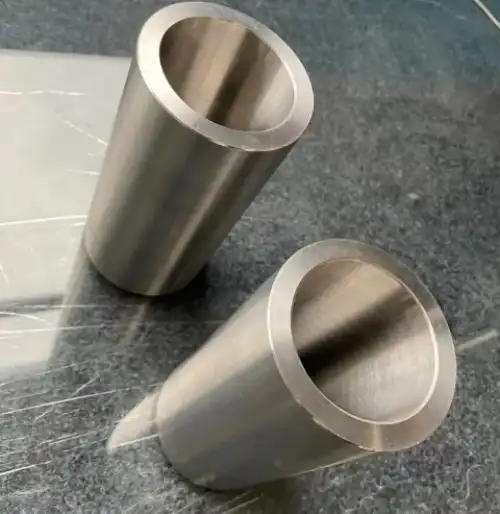
Understanding Titanium Round Tubes and Titanium Pipes
These are the main differences between titanium round tubes and pipes: what they are used for and how they are made. These differences have a big effect on how well they work and whether they are suitable for different business uses.
Defining Titanium Round Tubes
Titanium Round Tube is a hollow, precisely designed cylinder made from available pure titanium (Grades 1-4) or titanium alloys (Grades 5, 9, 23). Following the guidelines set by ASTM B338, B861, and B862, these items are made by cold rolling, smooth extrusion, or welding. The most important thing about round tubes is that they are very accurate in terms of their dimensions. For important uses, the margins can reach ±0.05mm. The round tubes made by LINHUI TITANIUM are very precise because they are made using 30 different production lines that use advanced cold rolling and smooth extrusion techniques. Our way of making things guarantees even wall thickness and a high-quality surface finish, which is important for hydraulic systems in spacecraft and medical devices, where steadiness in size is very important.
Titanium Pipe Specifications and Standards
Titanium pipes are mostly made to move fluids, and they are made to meet standards like ASME SB338 and ASTM B861. Pipes, unlike round tubes, care more about flow rates and pressure grades than exact measurements. Pipes with different wall thicknesses are made to handle fluid dynamics and pressure differences that are common in chemical processing and sea uses. The process of making titanium pipes focuses on making them resistant to rust and able to withstand pressure. These items usually have slightly thicker walls than round tubes of the same diameter. This gives them higher burst pressure ratings, which are necessary for oil and gas activities that use high-pressure fluid systems.
Core Differences Between Titanium Round Tubes and Pipes
There are more technical differences between these goods than just their names. There are important engineering factors that affect how well they work in certain situations.
Manufacturing Process Variations
The ways that Titanium Round Tube and pipes are made are very different in how they achieve the desired material qualities. Precision cold rolling is used to make round tubes. This gives them better physical accuracy and better mechanical qualities through work hardening. This process makes the grain structure of the tube wall the same all the way through, which makes the strength qualities stable. LINHUI TITANIUM makes round tubes using modern seamless extrusion technology, which gets rid of weld gaps that could weaken the structure. Our laser-guided precision cutting makes sure that the lengths are exactly what you need, and our specialized surface treatments, such as electropolishing and pickling, make them more resistant to rust in harsh settings. When making pipes, scalability and cost-effectiveness are given top priority while still making sure the pipes work well enough for fluid movement uses. In the process of making pipes, welding creates strong enough properties to control pressure while also being cost-effective for large-diameter uses.
Dimensional Tolerances and Quality Standards
The tolerances for round tubes and pipes are different because they are used for different things. Titanium Round Tube has tighter size controls, with differences in the outer diameter being less than 0.1 mm and variations in the wall thickness being less than 5%. These strict requirements are necessary for things that need to fit and be put together perfectly, like aircraft structure parts. Titanium lines have less strict tolerances because they are used to move fluids, where flow capacity and pressure resistance are more important than exact measurements. Pipe wall thickness limits can go up to ±10%, which is still fine for most industrial fluid systems and lowers the cost of making them.
Mechanical Properties and Performance Characteristics
The mechanical qualities of these items change depending on how they were made and what they will be used for. Because they are made with more precision and have a core that has been work-hardened, round tubes usually have better wear resistance. Because of this, they are perfect for uses that need to handle cyclic loading, which is popular in the aircraft and automobile industries. Pipes are very good at keeping pressure inside and distributing stress evenly when they are under pressure. The ways pipes are made improve their hoop strength and burst pressure rates, which means they can be used in high-pressure chemical handling.
Application-Based Comparison and Use Cases
The choice between titanium round tubes and pipes is heavily based on the performance standards and application needs of different industries.
Aerospace and Precision Applications
Titanium Round Tube is mostly used in aircraft, where reducing weight and maintaining structural stability are very important. These tubes are used in hydraulic systems on airplanes because they can handle extreme changes in pressure and keep their shape over a wide range of temperatures. Precision production makes sure that hydraulic fittings and cables fit correctly, which stops leaks in important flying systems. LINHUI TITANIUM's round tubes are compatible with major aircraft makers' specs because they meet strict flight standards like AMS 4928 and MIL-T-9047. Our Grade 9 (Ti-3Al-2.5V) tubes are very easy to shape so they can fit into complicated routing needs. They also have high fatigue resistance, which is important for airplane service life.
For medical devices, titanium round tubes are useful because they are biocompatible and accurate. Precision tube production methods are needed to get the surface quality and size accuracy needed for surgical implants, parts of MRI machines, and diagnostic tools.
Chemical Processing and Marine Applications
Titanium pipes work really well in places where chemicals are processed, and keeping the fluids moving is very important. In desalination plants, these lines handle large amounts of seawater and don't let biofouling or crevice corrosion happen. The design of the wall thickness takes into account the pressure changes and thermal growth that happen a lot in large fluid systems. Pipes made of titanium are used in heat exchangers in chemical plants because they don't rust when exposed to harsh chemicals. Chlorinated chemicals, acids, and high-temperature process fluids would quickly break down other materials, but the pipes' structure stays strong.
Titanium pipes are used in marine applications like subsea cables and offshore platform systems because they don't rust in seawater and don't break apart when they get acidic. The pressure grades and corrosion limits built into pipe designs make sure that they will work for a long time in harsh naval settings.
Procurement Insights – Choosing Between Titanium Round Tubes and Pipes
To make smart choices about what to buy, you need to know how much each type of product will cost, what suppliers can do, and what the quality standards are.
Cost Analysis and Economic Considerations
The way the Titanium Round Tube is priced represents the fact that it needs to be made with more precision and is subject to stricter quality controls. Because they go through more steps of processing, like precision cutting and better quality checking, each unit usually costs more than pipes of the same size. An economic study should look at the total cost of ownership, which includes how hard it is to install, how much upkeep it needs, and how long it is expected to last. When precise assembly is needed, round tubes are often the best choice because they cut down on installation time and repair costs.
Titanium pipes are more cost-effective for projects with big diameters and lots of them. Pipes are a cost-effective way to move fluids in systems where tight standards are not necessary because they can be made more efficiently.
Supplier Evaluation and Quality Assurance
When choosing between round tubes and pipes, procurement workers need to look at the skills of suppliers in a number of different areas. LINHUI TITANIUM has been making things for more than 21 years and has many foreign certifications, such as ISO 9001:2015, TUV Nord AD2000-W0, and PED 2014/68/EU. These show that we are dedicated to quality greatness. Modern quality control methods in our factories let DNV, BV, SGS, and other well-known third-party testing agencies check the products. Our 30 production lines use a variety of production technologies together, which lets us respond quickly to different customer needs while keeping quality standards high.
When materials fail in key uses, where terrible things could happen, supply chain reliability is very important. Our global shipping partnerships with DHL, FedEx, Maersk, and COSCO make sure that projects all over the world get their supplies on time, which helps with strategies for just-in-time buying.
Decision Criteria and Best Practices for Procurement
For procurement plans to work, they need to carefully look at technical needs, supplier skills, and expected long-term performance.
Technical Specification Matching
The first step in the decision process is a careful look at the application needs, such as the required pressure, temperature ranges, rust environment, and size limits. The specs for the Titanium Round Tube should match the accuracy needs, the way the structure will be loaded, and the limits for assembly that are needed for the particular job. Environmental factors are very important when choosing materials. Circular titanium tubes are better for applications that need to handle changing temperatures, harsh chemicals, or changing loads because they have better mechanical qualities and are more stable in their dimensions.
The standards for quality certification are very different between businesses and places. LINHUI TITANIUM's extensive certification portfolio makes sure that they meet foreign standards like ASME SB338, NACE MR0175, and ASTM F136. This makes it easier to get approvals for purchases in a wide range of regulatory settings.
Long-term Performance and Value Assessment
Life-cycle cost analysis should be used when making purchasing choices, taking into account the need for upkeep, the regularity of replacement, and the loss of performance over time. Round tubes usually have better resistance to stress and better dimensional stability, which could mean longer service times and lower upkeep costs. The evaluation should look at how well the provider can provide technical help, how flexible they are with custom manufacturing, and how quickly they can adapt to changes in specifications. Our engineering team offers full technical support throughout the whole buying process, making sure that the best materials are chosen and that the right specifications are created.
As part of their plans to lower risks, companies should make sure that their supply chains stay up and running and that they have access to technology help. LINHUI TITANIUM has built ties with big foreign projects and EPC contractors that show we can meet the most difficult procurement needs in markets around the world.
Conclusion
When deciding between a titanium round tube and titanium pipe, you need to carefully think about the needs of your product, quality standards, and cost. Round tubes work best in precise tasks that need tight standards and high-quality mechanical qualities. Pipes, on the other hand, are more cost-effective for moving fluids. LINHUI TITANIUM can meet a wide range of buying needs in the aircraft, chemical, and energy sectors thanks to its wide range of industrial skills and large certification portfolio. Our dedication to quality excellence, along with our global logistics skills and technology know-how, makes sure that we can build reliable supply chain partnerships for important commercial uses all over the world.
FAQ
What are the main differences between titanium round tubes and titanium pipes?
Titanium Round Tube goods are made with very tight tolerances (±0.05mm) for structural uses, but lines are made with looser tolerances so they can move fluids more easily. Cold working methods improve the mechanical qualities of round tubes, while pipes focus on resistance to corrosion and keeping fluid systems' pressures in check.
Can titanium round tubes and pipes be used interchangeably?
When two things can be switched, it depends on the performance and needs of the program. In fluid applications, round tubes can often be used instead of pipes. However, pipes might not be able to meet the exact size requirements for structural uses. When making a choice, the cost, tolerance standards, and pressure grades should all be taken into account.
Which titanium grades are suitable for round tubes versus pipes?
Grade 2 commercially pure titanium is mostly used for pipes because it is very resistant to rust and easy to shape. For better strength and resistance to fatigue, Grade 5 (Ti-6Al-4V) or Grade 9 (Ti-3Al-2.5V) metals are often used in Titanium Round Tube applications. LINHUI TITANIUM offers grades Gr1 through Gr23 that are custom-made to meet the needs of each application.
How do manufacturing processes affect product performance?
For round tubes, the seamless extrusion and cold rolling methods make them more accurate in size and improve their mechanical properties by work hardening them. Welded pipe production focuses on keeping costs low while still providing good performance for fluid transport uses.
What quality certifications should I look for in suppliers?
Some important certifications are ISO 9001:2015 for quality control, PED 2014/68/EU for pressure equipment, and standards related to the business like ASME SB338, ASTM B861, and AMS 4928. Third-party testing services from companies like DNV, BV, and SGS make sure that quality standards are always met.
Partner with LINHUI TITANIUM for Your Titanium Round Tube Requirements
LINHUI TITANIUM stands ready to support your precision Titanium Round Tube procurement needs with 21+ years of manufacturing excellence and global supply chain expertise. Our advanced production capabilities across two facilities and 30 production lines ensure consistent quality and timely delivery for aerospace, medical, and energy applications. As a trusted titanium round tube manufacturer, we provide custom solutions from Grades Gr1 to Gr23, along with tight tolerances and a wide range of foreign certifications. Contact our technical team at linhui@lhtitanium.com to discuss your specific requirements and experience the reliability that has earned the trust of big international projects around the world.
References
1. ASTM International. "Standard Specification for Seamless and Welded Titanium and Titanium Alloy Tubes for Condensers and Heat Exchangers." ASTM B338-21.
2. American Society of Mechanical Engineers. "Specification for Titanium and Titanium Alloy Seamless Tubes." ASME SB-861-2019.
3. Aerospace Material Specification. "Titanium Alloy Tubing 3Al-2.5V Annealed." AMS 4928G-2018.
4. Association of Corrosion Engineers. "Metallic Materials for Use in H2S-Containing Environments in Oil and Gas Production." NACE MR0175-2021.
5. International Organization for Standardization. "Implants for Surgery - Metallic Materials - Part 2: Unalloyed Titanium." ISO 5832-2:2018.
6. European Committee for Standardization. "Pressure Equipment Directive - Titanium and Titanium Alloy Requirements." EN 10204:2004 Type 3.1 Certification Standards.