
Titanium rectangular tube is the best option when industry settings call for materials that can survive harsh chemicals, high temperatures, and mechanical stress. These precision-engineered parts blend titanium's high resistance to corrosion with the structural benefits of a rectangular shape. They offer unmatched sturdiness in chemical processing, marine, and aerospace uses. Normal materials break down in tough conditions, but titanium rectangular tubing stays structurally sound for decades with little upkeep. This makes it the best choice for mission-critical industrial operations around the world.
Understanding Titanium Rectangular Tubes: Properties and Manufacturing
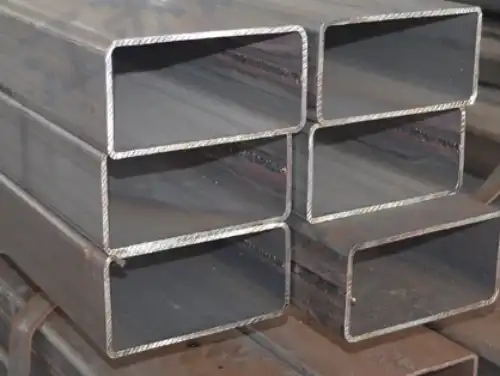
Titanium rectangular tubing is a customized metal product that blends the unique geometric benefits of rectangular cross-sections with the exceptional qualities of titanium. When compared to round or square profiles, the rectangular profile has unique structural benefits. It has a bigger surface area for mounting purposes and better strength-to-weight ratios, which are important for industrial projects that need to be lightweight.
Core Material Properties That Define Excellence
Titanium is special as a technical material because of its basic properties. With a mass of 4.51 g/cm³, titanium is about 45% lighter than steel but has the same level of strength. The melting point of the material is higher than 1,660°C, which makes it stable in high-temperature situations where aluminum would fail horribly. Titanium's high ratio of strength to weight makes it especially useful in aircraft applications. Grade 5 titanium metal (Ti-6Al-4V) has tensile strengths higher than 895 MPa while still being lightweight, which is important for saving fuel. With this combo, builders can make structures that can hold a lot of weight without breaking weight limits. The heating qualities of the material make it very useful in industry. Titanium doesn't let heat pass through it easily, which makes it perfect for uses that need thermal shields or controlled heat transfer. Its coefficient of thermal expansion stays the same across a wide range of temperatures, which keeps its shape even when working conditions change.
Manufacturing Processes and Quality Standards
Advanced manufacturing methods are used to make sure that the quality and dimensions of modern titanium rectangular tubes are always the same. ASTM B861 standards control the seamless extrusion process, which makes tubes without longitudinal welds. This gets rid of possible weak spots in high-stress situations. Vacuum arc remelting (VAR) technology is used by LINHUI TITANIUM to get 99.6% pure titanium material. This method gets rid of impurities that might weaken the resistance to rust or the mechanical qualities. The factory has 30 specialized production lines that allow it to make more than 800 tons of goods every year while following strict quality control rules. Cold-rolling methods give precise measurements within narrow ranges, making them compatible with precise production needs. The method also improves the quality of the surface finish. There are different types of finishes, from A1 matte finishes for commercial uses to A2 semi-gloss finishes that can be used for architectural projects.
Titanium Grades and Their Specific Applications
Choosing the right titanium types has a direct effect on how well they work in certain situations. Titanium that is grade 2 commercially pure is the most resistant to corrosion. This makes it perfect for chemical processing equipment and sea settings where purity is very important. Grade 5 titanium alloy has higher strengths and can be used for structural purposes in the car and aircraft industries. The additions of aluminum and vanadium make the material stronger in tension while also making it very resistant to wear, which is very important for parts that are loaded and unloaded many times. Grade 9 (Ti-3Al-2.5V) is the best combination of strength and formability. This grade has a modest amount of alloying, which makes it ideal for uses that need complex shaping while still having better mechanical qualities than commercially pure grades.
Corrosion Resistance and Durability: Why Titanium Excels
Titanium is resistant to corrosion because it can make a solid, self-healing oxide layer (TiO₂) that protects against all kinds of damage from the environment. When titanium comes into contact with oxygen, titanium rectangular tubes this passive film forms right away, making a barrier that can't be broken through by further oxidation or chemical attack.
The Science Behind Superior Corrosion Protection
Titanium's inactive oxide layer is very stable in pH levels from 2 to 12, which is a wide range that includes most chemical environments in industry. In chloride settings, stainless steel can experience pitting rust, but titanium is completely resistant to degradation caused by chloride. This trait is very useful in marine settings where the material is always exposed to saltwater. The oxide layer can repair itself, so it keeps protecting even if it gets broken physically. Microscopic scratches or abrasions re-passivate as soon as they come into contact with air. This keeps the corrosion resistance high without the need for protective coats or upkeep. Titanium doesn't rust in seawater up to 260°C, according to research done by the Titanium Development Association. This performance is better than any other common material, even high-grade stainless steels, which show measurable rust rates in the same settings.
Performance Comparison with Traditional Materials
In corrosive conditions, steel parts usually need protective coatings, cathodic protection, or replacement frequently. These upkeep needs add up to big lifetime costs that often go over the original premium for titanium. A comparison shows that titanium rectangular tubing gets rid of coating failures, galvanic rust, and the costs that come with them for downtime. Even though aluminum is light, it doesn't work well in acidic settings and can rust when mixed with metals that aren't the same. Titanium is galvanically compatible with most materials, which means that design limits are removed and system complexity is lowered. Different types of stainless steel, like 316L, work fine in mild settings but completely break down in high-chloride ones. Titanium doesn't get pitting or crevice rust as stainless steel does, so it has an expected service life even in harsh settings like the ocean or chemical processing plants.
Real-World Durability Evidence
Titanium is very durable in harsh settings, as shown by case studies from offshore oil platforms. PETRONAS said that the titanium heat exchanger tubes that were put in place in 1995 are still working fine, but the stainless steel parts that were put in place in 1995 had to be replaced after seven years because they were cracking from stress corrosion. Chemical processing plants that use titanium tools say that their machines have worked without any problems for decades. Since they were installed, DuPont's chlor-alkali plants have used titanium electrolyzer parts nonstop without any visible wear and tear. Other materials had to be replaced on a regular basis because they were being attacked by chemicals.
Comparing Titanium Rectangular Tubes with Other Materials
When picking a material for rectangular tubes, you need to think carefully about its mechanical qualities, how well it resists the environment, and how much it will cost you in the long run. When you compare titanium to other materials, you can see that it has clear performance benefits that make it worth the higher price in difficult situations.
Mechanical Properties Assessment
The strength-to-weight ratio of titanium trapezoidal tubes is better than that of any other material. Steel is very strong, but because it is so dense, it can't be used for things that need to be light. Aluminum is great for making things light, but it's not strong enough for high-stress structural uses. Titanium is three to four times more resistant to wear than aluminum under the same stress situations. This benefit means that the product will last longer in situations where it is loaded and titanium rectangular tubes are unloaded over and over again, like in flight structures or equipment supports that vibrate. Titanium has a modulus of elasticity (114 GPa) that is between those of aluminum and steel. This makes it the perfect material for many construction uses because it is stiff. This feature stops the material from deflecting too much while keeping the stress levels at a safe level under design loads.
Environmental Performance Advantages
Titanium rectangular tube is the most temperature-stable material when it comes to oxidizing conditions. Titanium stays strong and doesn't rust at temperatures close to 600°C, while aluminum starts to break down at temperatures above 200°C in air. Chemical stability is another important benefit. Titanium is completely unaffected by most acids, bases, and chemical solvents that would break down stainless steel or aluminum parts very quickly. Because of this flexibility, chemical processing systems don't have to limit the materials they can use. Titanium's non-magnetic qualities make it useful in situations where magnetic resonance imaging, electromagnetic compatibility, or compass accuracy are important. Because of these qualities, titanium is the only material that can be used for certain specific tasks.
Cost-Benefit Analysis for Long-Term Value
Even though titanium costs more at first than other materials, lifetime cost analysis always shows that it is better in harsh settings. When you get rid of the costs of repairs, replacement, and downtime, you usually get your money back within 5 to 7 years of installing it. Insurance and safety concerns are making metal more and more popular. Titanium parts are less risky and cost less to insure because they work reliably and don't break down. This is especially true in chemical processing or remote uses where failure can have very bad results.
Procurement Insights: Sourcing and Customization Options
To buy titanium rectangular tubing effectively, you need to know how the market works, what suppliers can do, and what customization options are available to meet the needs of your project. The global titanium market offers many ways to find suppliers, but choosing the right one has a big effect on the quality of the work and the success of the project.
Supplier Evaluation and Selection Criteria
Certification compliance is the best way to tell how reliable a company is and how good the product is. Some of the most important certificates that top makers keep up to date are ISO 9001:2015 for quality management, AS9100 for aerospace uses, and ISO 13485 for making medical devices. For important uses, these certificates make sure that the product can be tracked, that it meets quality standards, and that it follows all the rules. As part of a production capability review, manufacturing capacity, wait times, and technical know-how are all looked at. With two dedicated buildings and 30 specialized production lines, LINHUI TITANIUM can handle large-scale projects and still keep normal configuration lead times as low as 15 days. Processes for quality control tell the difference between good sources and average ones. Advanced testing methods, such as hydraulic testing above 3000 PSI, eddy current inspection, and chemical analysis, make sure that goods are defect-free and meet strict application requirements.
Customization Capabilities and Options
These days, companies that make titanium tubes give customers a lot of ways to change them to fit their needs. Cut-to-length services get rid of waste and speed up the building process. Titanium rectangular tubesand precision cutting keep measurements within ±0.1mm of accuracy. Standard mill finishes are one type of surface finishing. Other types, like electropolishing for better biocompatibility in medical uses, are also available. These finishing choices make the surface's properties work best in certain environments or for certain looks. Beveling and end-forming are examples of welding preparation services that speed up the installation process and make sure the best quality joints. These services are especially helpful for big building projects where making changes to the ground would take a long time and cost a lot of money.
Logistics and Supply Chain Considerations
With global shipping capabilities, projects can be completed all over the world with full packing and transportation services. Professional packing with anti-static foam, moisture-proof wrapping, and QR codes that can be used to track packages ensures that goods are safe during foreign shipping. Help with clearing customs and real-time tracking makes things clear and lowers the risk of delivery confusion. Logistics partners with a lot of experience can offer air freight for pressing needs or sea freight for moving large amounts cheaply. The best use of operating capital and supply of materials can be achieved with inventory management services. Just-in-time delivery programs keep projects on track while cutting down on the amount of storage space and costs associated with it.
Why Choose Titanium Rectangular Tubes for Your Industrial Needs
The choice to use titanium rectangular tubing shows a dedication to long-term performance, operating dependability, and lowering costs overall. The material has a special mix of qualities that make it useful for solving many technical problems at once, which other materials can't do.
Long-Term Economic Benefits
Lifecycle cost research always shows that titanium is more cost-effective in tough situations. When you get rid of corrosion-related maintenance, replacement plans, and operating downtime, you save a lot of money, which more than covers the original material prices. Titanium is lightweight, which makes it useful in shipping, and it has good thermal properties, which make it useful in heat transfer tools. These improvements in speed save money on operations for as long as the equipment is in use. Getting rid of risk is an economic gain that is often ignored. Titanium's reliable performance and ability to work without problems reduce the risk of responsibility, insurance costs, and unexpected repair costs that can destroy project budgets.
Industry Versatility and Applications
Titanium is used in aerospace for structural parts, engine parts, and landing gear systems because it is strong for its weight. The material is resistant to wear and stable at high and low temperatures, so it works well even in harsh circumstances. Titanium is used in reactors, heat exchangers, and pipe systems in the chemical processing industry because it doesn't rust. Because the material is chemically compatible, there is no chance of contamination, and tools will last for a long time in harsh chemical settings. Titanium doesn't react with saltwater, which is good for offshore bases, desalination plants, and military ships. The material works better than any other option in saltwater settings, and it won't need to be maintained for decades.
Supplier Partnership Importance
Building relationships with qualified titanium providers guarantees access to technical know-how, high-quality goods, and on-time delivery. Long-term relationships allow engineers to work together to provide support for titanium rectangular tubes and create unique solutions. Leading sellers are different from commodity companies because they offer technical help. Having access to mechanical knowledge, application engineering help, and problem-solving help is very helpful during the design and implementation stages. Global service networks keep quality standards uniform while providing local assistance for international tasks. This feature is very important for international companies that need to use the same specs in different places.
Conclusion
Titanium rectangular tubes are the best choice for businesses that need to perform at their best in harsh and corrosive conditions. The material's high resistance to rust, high strength-to-weight ratio, and proven stability give it long-term value that makes the higher initial investment costs worthwhile. Titanium's special qualities make it reliable in many fields, from aircraft to chemical processing. They also keep lifecycle costs low. Titanium rectangular tube is a useful material for many industrial uses because it can be easily customized, is available all over the world, and comes with full technical support from qualified makers. When the success of a project rests on how well the materials work, titanium rectangular tubes are the best choice because they are reliable and last a long time.
FAQ
1. Why does titanium offer superior corrosion resistance compared to stainless steel?
Titanium has a steady, self-healing titanium dioxide (TiO₂) oxide layer that protects it from all chemicals. On the other hand, the chromium oxide layer in stainless steel can break down in chloride conditions, causing pitting and crevice rust. Because of this basic difference, titanium can't rust in the ocean or most chemical conditions that would rust stainless steel.
2. How customizable are titanium rectangular tubes when it comes to meeting specific industry needs?
Modern makers offer a wide range of customization options, such as exact dimensional tolerances, different surface finishes (A1 matte to A2 semi-gloss), cut-to-length services, and specialty treatments like electropolishing for medical uses. Custom metal grades, ranging from Grade 2 (commercially pure) to Grade 9 (Ti-3Al-2.5V), make sure that the qualities are just right for each job.
3. What weight savings can be achieved using titanium rectangular tubes versus steel alternatives?
When compared to steel parts of the same size and shape, titanium rectangular tubes are about 45% lighter while still having the same or higher strength. For example, this weight savings means better fuel economy in aircraft, lighter structures in marine settings, and easier portability for medical gear.
Partner with LINHUI TITANIUM for Premium Rectangular Tubing Solutions
You can trust LINHUI TITANIUM as your supplier of titanium rectangular tubes. We have been making high-quality products for over 20 years and have many industry certifications, such as AS9100, ISO 13485, and API 5CT. Our 30 specialized production lines and advanced production facilities with vacuum arc remelting technology ensure consistent quality and quick delivery for your important projects. Our engineering team can make solutions that are exactly what you need, whether you need Grade 2 commercially pure titanium for the best corrosion protection or high-strength Grade 5 alloys for use in flight. Get in touch with our technical experts at linhui@lhtitanium.com to talk about your needs for titanium rectangular tubes and find out how our experience working with big names in the industry, like PETRONAS, Boeing, and Siemens, can help your next project.
References
1. Boyer, R., Welsch, G., & Collings, E.W. "Materials Properties Handbook: Titanium Alloys." ASM International Materials Park, Ohio, 1994.
2. Titanium Development Association. "Guidelines for Design with Titanium." Technical Report TDA-2018, Titanium Development Association, 2018.
3. Schutz, R.W. & Thomas, D.E. "Corrosion of Titanium and Titanium Alloys in Industrial Applications." Corrosion Engineering Science and Technology, Vol. 42, No. 3, 2007.
4. ASTM International. "Standard Specification for Seamless Titanium and Titanium Alloy Tubes for Condensers and Heat Exchangers." ASTM B861-15, West Conshohocken, PA, 2015.
5. Peters, M., Kumpfert, J., Ward, C.H., & Leyens, C. "Titanium Alloys for Aerospace Applications: Advanced Materials and Processes." Advanced Engineering Materials, Vol. 5, No. 6, 2003.
6. Donachie, Matthew J. "Titanium: A Technical Guide, Second Edition." ASM International Handbook Committee, Materials Park, Ohio, 2000.