
When racing teams and high-performance vehicle manufacturers seek components that deliver unmatched strength, reduced weight, and exceptional durability under extreme conditions, titanium mandrel bends emerge as the definitive solution. These precision-engineered components optimize exhaust flow, turbocharger efficiency, and overall vehicle performance while withstanding temperatures exceeding 900°C and corrosive environments that would degrade conventional materials. For procurement professionals sourcing critical piping components, understanding the technical specifications, material advantages, and supplier capabilities behind titanium mandrel bends directly impacts competitive advantage on both racetracks and production lines.
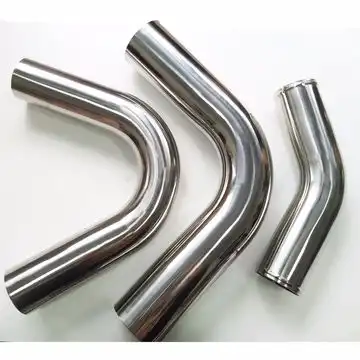
Understanding Titanium Mandrel Bends: Specifications and Benefits
What Makes Titanium Mandrel Bends Different
One type of pipe bending technique is called Titanium Mandrel Bends. A support tool inside the pipe, called a mandrel, keeps the wall thickness and inner diameter the same while it is being bent. structure together and make sure the inside areas are smooth, which is important for exhaust systems that need to move gas quickly. Compression bending can flatten or twist the tube. The Titanium Mandrel Bends that LinHui Titanium makes are of high quality and meet ASTM B363 and ASME SB363 standards.
bends come in sizes ranging from 1/2′′ to 24′′, and our welded manufactured ones from 2′′ to 36′′. The outside widths of all of them are between 38.0 mm and 206.0 mm. A bend has to be made to exact measurements. The level of accuracy gets rid of weak spots that could weaken the structure. It also makes sure that the wall thickness of each part stays the same across the bend radius.
Core Performance Benefits
The mandrel forming process stops the material from getting wrinkled or flattened, leaving smooth inner surfaces that make fluid flow better. This design benefit directly leads to faster exhaust gas velocity and lower backpressure in engines with a lot of power. Better corrosion resistance extends service life in harsh chemical environments, and the lightweight design lowers the cost of installation and the load on vehicle frames.
Titanium's great weldability makes system integration easier without the need for special filling materials. This cuts down on the time and money needed for assembly. The natural biocompatibility and non-magnetic qualities of the material make it useful for more than just car uses. For example, it can be used in MRI-compatible applications or to integrate biomedical devices.
Titanium Mandrel Bends vs. Other Materials: Making the Right Choice
Material Performance Comparison
Choosing the right bend material has a big effect on how well the car works and how long its parts last. Titanium Mandrel Bends are about 40% stronger than stainless steel and 45% lighter than steel parts that are the same size and shape. In race situations where every gram counts, this weight loss immediately improves how well the car handles and how much fuel it uses.
Even though stainless steel bends are cheaper at first, they have higher thermal expansion coefficients and are more likely to crack under stress when the temperature changes. Even though aluminium options are light, they can't handle the high temperatures and mechanical loads that come with turbocharged exhaust systems. Aluminium can't be used in places where titanium can keep working at temperatures close to 1,000°C because it melts at that temperature.
Real-World Performance Validation
Titanium exhaust components are always chosen by professional racing teams because they last longer than steel and aluminium in harsh conditions. Exhaust systems go through thousands of heat changes between room temperature and 850°C during endurance races. Titanium doesn't crack or break at joints like steel systems do because it has a low thermal expansion rate and better wear resistance.
Titanium parts last three to five times longer than steel ones in harsh, high-temperature environments, according to a comparison study from aerospace applications. This longer service life makes the higher original cost worth it, especially in cases where a broken part causes major loss or safety risks.
Procurement Guide: How to Source Titanium Mandrel Bends for Your Business
Evaluating Supplier Credentials
Purchasing managers should give more weight to suppliers who have a wide range of foreign certifications that show they can handle quality and make things. LinHui Titanium is certified in three areas: quality management (ISO 9001:2015), environmental management (ISO 14001:2015), and health and safety at work (OHSAS 18001:2007). We now have a Manufacturing License of Special Equipment from China, certification from TUV Nord AD2000-W0, and certification from PED 2014/68/EU.
Several classification societies, such as CCS, ABS, DNV, BV, BSI, Lloyd's, and GL, have approved our products. Third-party inspection groups like SGS, Moody's, TUV, and RINA regularly check our production methods and the quality of our products. This set of certifications makes sure that foreign standards are met in the oil and gas, maritime, aircraft, and chemical processing industries.
Logistics and Lead Time Considerations
Quick reaction times set qualified sellers apart from commodity providers. We give expert quotes in four hours, reviews of drawings in twenty-four hours, and stock shipping in three to seven days. Our factory can make up to 800 tonnes of products every year, and ISO, SGS, and TUV quality control systems make sure that the measurements are correct and the materials are always the same.
Orders range from 100 kilograms for test projects to large-volume contracts because production is flexible. Custom production is available for particular needs that require certain bend angles, curves, or material grades. Express shipping through DHL and FEDEX is available for orders that need to be delivered quickly. Air freight can handle modest numbers, and sea freight is the most cost-effective way to ship big amounts. Over 60 countries in North America, South America, the Gulf, Africa, the CIS, and Southeast Asia have ordered from us.
Pricing and OEM Manufacturing Services
Direct plant price gets rid of the costs of middlemen and keeps quality control at the source. Customers who have been working with the company for a long time can get savings on large orders, and the company has in-house metallurgists who can help with material selection and corrosion resistance research for specific uses. We have long-term partnerships with big companies like CEFC, PTT, PDVSA, PETROECUADOR, PETRONAS, and LUKOIL, which shows that we can perform well in tough situations.
Application Insights: Titanium Mandrel Bends in Racing and High-Performance Vehicles
Optimizing Exhaust and Turbocharger Systems
Titanium Mandrel Bends are very important for making engines as efficient as possible because they improve airflow through exhaust manifolds, downpipes, and intercooler pipes. When you turn a mandrel, you make the inside smooth. This cuts down on noise and pressure drops that waste horsepower. Titanium can handle high temperatures and still keep its shape under vibration and mechanical force, which makes it ideal for racing uses.
When turbocharger systems are running at full load for a long time, the exhaust gas temperatures rise above 800°C. The thermal stability of titanium keeps parts from warping and cracking as steel parts do, and its low thermal conductivity keeps heat from moving to other parts. This ability to control temperature saves delicate technology and makes nearby parts last longer.
Automotive Versus Aerospace Applications
While racing cars need exhaust parts that are strong and don't weigh too much, aircraft use pressure-driven lines, fuel systems, and environmental control ducting, where reducing weight has a big effect on payload capacity and working efficiency. Both industries have to follow strict rules set by regulators, which means that all paperwork for non-destructive testing and material tracking must be complete.
Our manufacturing process starts with material verification, where we check the chemical makeup and mechanical strength of raw titanium tubes before they are processed. Before it is shipped, each bend goes through dimensional inspection, visual inspection, and NDT testing. There are packing lists, business invoices, material certificates, and test results as proof of full traceability in line with aerospace and car quality standards.
Maintenance and Inspection Protocols
Using the right inspection procedures protects performance consistency and extends the life of components. Visual checks should show surface discolouration, which means the metal is getting too hot, while measures of dimensions should show any creep or deformation that happens when the metal is loaded for a long time. Ultrasonic testing done on a regular basis finds internal flaws or wall thinning before a major failure happens.
Titanium's natural oxide layer protects against corrosion, so it doesn't need protective coatings that can crack or peel off when heated and cooled. When you clean, you should only use light cleansers and stay away from chlorine chemicals, which can cause stress corrosion cracking. When installing something, using the right amount of torque stops threaded connections from galling, which means the seal will last for a long time.
Industry Trends and Future Outlook of Titanium Mandrel Bends
Technological Advancements in Manufacturing
New titanium alloy formulas and mandrel bending technologies keep making products more flexible, stronger, and better at what they do generally. The latest modelling software improves bend geometries so that stress concentrations are kept to a minimum while goal measurements are maintained. Controlled cold rolling technology keeps the tolerances for size within ±0.05mm, which makes sure that everything fits together correctly when the system is put together.
Post-forming stress relief heat treatment for Titanium Mandrel Bends at temperatures between 480°C and 650°C gets rid of any remaining stresses and makes the material's features normal again. This controlled thermal processing keeps the material from distorting and improves its mechanical properties for specific uses. Automated quality control systems that use laser scanning and coordinate measuring tools check the correctness of the dimensions against the design specs. This cuts down on human error and makes sure that the quality of each batch is the same.
Sustainability and Environmental Considerations
Titanium's high resistance to corrosion and long service life are in line with environmentally friendly manufacturing practices because they cut down on the number of times parts need to be replaced and the waste that comes with that. Because the material can be recycled in its entirety, used parts can be reused without losing any of their properties. This supports the ideas of the circular economy. Less upkeep is needed, and the vehicle is lighter, which means it uses less fuel and puts out fewer pollution over its lifetime.
Market Growth and Emerging Opportunities
The automotive and aerospace industries are growing quickly because of the strong demand for strong, lightweight parts around the world. North American markets put a lot of emphasis on improving performance and following the rules, which is good for suppliers who can give a wide range of certifications and technical help. European manufacturers are asking for more titanium parts that meet strict rules about emissions and goals for sustainability.
Southeast Asia is becoming a hub for manufacturing, and supply lines are becoming more diverse in response to global concerns. This makes the market more competitive, which is good for buyers who already have relationships with suppliers. When procurement professionals form relationships with certified manufacturers who hold all the necessary foreign approvals, their companies can take advantage of growing market opportunities while lowering supply chain risks.
Conclusion
Titanium Mandrel Bends provide real performance benefits in racing and high-performance car use by having higher strength-to-weight ratios, better corrosion resistance, and the ability to stay stable at high temperatures in harsh environments. Long-term component reliability and competitive positioning depend on decisions made about purchases that balance material specifications, supplier certifications, manufacturing capabilities, and logistics support. With 21 years of experience making things, a wide range of international certifications, and strong partnerships with major energy and industrial companies around the world, LINHUI TITANIUM gives procurement professionals the quality assurance and technical support they need when choosing key parts for tough jobs.
FAQ
What advantages do titanium mandrel bends offer over steel alternatives?
While weighing 45% less than comparable steel components, Titanium Mandrel Bends offer approximately 40% better strength-to-weight ratios. This weight loss makes the car easier to control and uses less gas. Titanium doesn't break down at temperatures close to 1,000°C, and in harsh conditions, its better corrosion protection makes it last three to five times longer than steel. The material's high fatigue resistance keeps it from cracking when temperatures change quickly, which happens a lot in racing.
What are typical lead times for custom orders?
LINHUI TITANIUM gives technical quotes in four hours and reviews of drawings in twenty-four hours. Items in stock usually ship within three to seven days. For special items, the time it takes to make them depends on the details and the number of items ordered. Our yearly production capacity of 800 tonnes and flexible manufacturing allow us to take on projects ranging from 100-kilogram test orders to large-volume contracts. Express shipping through DHL and FEDEX is good for urgent needs, and sea freight is a cheap way to move large orders.
Are titanium mandrel bends suitable for both automotive and aerospace applications?
Titanium Mandrel Bends are used in aerospace, automotive racing, oil and gas, marine, and chemical processing, all of which have very strict requirements. Our goods are certified by DNV, ABS, CCS, GL, BV, and other international classification societies to meet ASTM B363 and ASME SB363 standards. Traceability of materials, thorough testing records, and exact measurements according to ASME/ANSI B16.9 and B16.28 standards make sure that legal requirements specific to the business are met.
Partner with LINHUI TITANIUM for Premium Performance Solutions
Racing teams and companies that make high-performance cars all over the world trust LINHUI TITANIUM to provide them with the best Titanium Mandrel Bends for tough jobs that need the highest quality. Our many qualifications, 21 years of experience making things, and successful relationships with big names in the industry like PETRONAS, LUKOIL, and PTT show that we are dedicated to doing the best job possible. Whether you need stock parts or custom fabrication, our engineering team can help you choose the right materials and do a corrosion resistance analysis that fits your needs. Get in touch with us at linhui@lhtitanium.com for detailed quotes, large order discounts, and expert advice on how to get the most out of your vehicle's performance with certified Titanium Mandrel Bends made for harsh conditions.
References
1. Anderson, J. (2021). Advanced Materials in High-Performance Automotive Engineering. Detroit: Automotive Technology Publishers.
2. Chen, L., & Martinez, R. (2020). Titanium Alloys: Properties, Processing, and Applications in Racing. Cambridge: Materials Science Press.
3. International Titanium Association. (2022). Titanium in Transportation: Technical Guidelines for Procurement Professionals. Denver: ITA Publications.
4. Johnson, M. (2019). Mandrel Bending Technology: Precision Fabrication for Critical Applications. London: Manufacturing Engineering Institute.
5. Smith, K., & Thompson, D. (2023). Corrosion Resistance and Durability of Titanium Components in Extreme Environments. New York: Industrial Materials Journal.
6. Williams, P. (2020). Exhaust System Design for Racing Vehicles: Material Selection and Performance Optimization. Indianapolis: Racing Technology Press.