
What's the difference between Grade 5 Titanium and Grade 2 Titanium? This will help you pick the right titanium metal for the job. These two types of titanium are used in a wide range of applications, from airplanes to medical devices. Each one has its own pros and cons. One other way to write this is as Ti-6Al-4V. This is Titanium Grade 5. This metal is a mix of alpha and beta phases and is both strong and lightweight, with excellent corrosion resistance. Titanium Grade 2 is a different story. It is commercially pure titanium that doesn't rust and can be made. This comparison will tell you everything you need to know about the pros and cons of these two types of titanium so you can make an informed choice. The study will compare the pros and cons of each grade by looking at their chemical makeup, how they work, and what they are usually used for. This will help you pick the best score for your work.
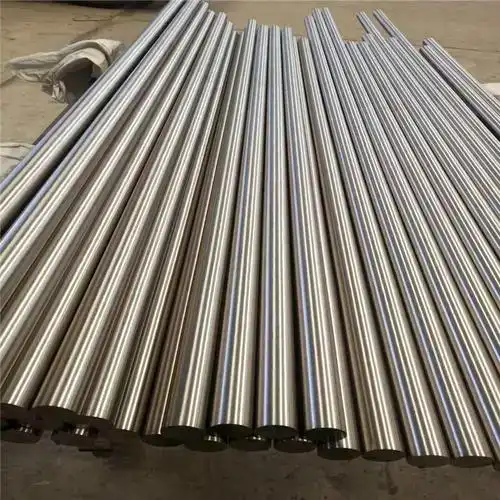
What are the key differences between Grade 5 Titanium and Grade 2 Titanium?
Chemical Composition
There are three types of metals in Grade 5 Titanium: titanium, 6% aluminum, and 4% vanadium. It is also written as Ti-6Al-4V. In Grade 5 Titanium, this is what makes it strong for its weight and good at moving around. Grade 2 Titanium, on the other hand, is high-quality titanium that has almost no other elements added to it. Because of the chemicals that make it up, Grade 5 Titanium is very strong and doesn't melt in hot places. Because of this, it works great in the aerospace and high-performance businesses. Topak is a big company that makes things out of titanium. Their high-tech airplane parts are made from Grade 5 Titanium because it has so many great qualities.
Mechanical Properties
When it comes to tensile and yield values, Grade 5 Titanium is much stronger than Grade 2 Titanium. Adding aluminum and vanadium to Grade 5 Titanium makes it stronger and less likely to break down. Grade 5 Titanium is good for things that need to be strong and last a long time, like medical devices and structural parts of ships that are put under a lot of stress. Because of their high strength-to-weight ratio, which reduces fuel consumption and improves performance, Topak's Grade 5 Titanium products are widely used in the automotive industry.
Corrosion Resistance
It is very hard for both types of titanium to rust, but Grade 2 titanium is generally a little better at it. This Grade 2 Titanium is very strong against acidic environments like seawater and chemical processes because it is commercially pure. Even though Grade 5 Titanium doesn't rust, the alloying elements in it may make it less useful in tough environments. That being said, Grade 5 Titanium is often a better choice because it is stronger and doesn't rust as quickly. A lot of Topak's Grade 5 Titanium parts are used in the oil and gas industries, which need strong parts that won't rust.
How does Grade 5 Titanium compare to other titanium alloys in terms of performance?
Strength-to-Weight Ratio
Of all the titanium metals, Grade 5 Titanium has the highest strength-to-weight ratio. Because of this, it is very useful in airplanes and cars where weight reduction is important. If you want a titanium metal that is both strong and light, Grade 5 Titanium is the best choice. This lets engineers make things that are strong and light at the same time. This grade of Grade 5 Titanium is now used by Topak to make high-performance flying parts. These parts make modern airplanes better generally and help them use less fuel.
Heat Resistance
Because Grade 5 Titanium doesn't react badly to heat, its useful properties stay the same when it's hot. It is different from many other titanium alloys because of this, and it can be used in hot places. The metal is great for building jet engine parts and other high-heat things because it can handle thermal stress and creep at higher temperatures. Grade 5 Titanium from Topak is used a lot in the airplane business for turbine blades and other important parts that need to work in hot or cold conditions.
Fatigue Resistance
The best thing about Grade 5 Titanium is that it doesn't break down as quickly as other types of titanium. This is a very important trait for parts that are loaded and stressed over and over again. Important parts will last longer and work better with Grade 5 Titanium because it has a high wear strength. This quality is used by Topak to make medical devices and limbs that need to be strong over time and under repeated loads for the patient's safety and comfort.
What are the primary applications of Grade 5 Titanium in various industries?
Aerospace Industry
Tons of Grade 5 Titanium are used in the airplane business because it is strong for its weight and doesn't melt in hot weather. It is often found in airplane nuts, engine parts, and structural parts. The metal is great for important parts in jet engines and airframes because it can handle high temperatures and doesn't wear down quickly. Topak sells Grade 5 Titanium parts to many large aircraft businesses. These parts help planes use less fuel and be lighter. Grade 5 Titanium is used in airplanes, which is why they are faster and use less fuel.
Medical Industry
Because it is strong, doesn't rust, and works well with living things, Grade 5 Titanium is often used in medicine for implants and surgical tools. The metal is good enough to be used for heart devices, joint implants, and tooth implants. Grade 5 Titanium can bond with bone, which makes it a great choice for implants that will last a long time. When people have surgery, Topak's Grade 5 Titanium medical parts are used to help them do better and lower the risk that their implants will fail.
Automotive Industry
Grade 5 Titanium is used in the auto industry for racing and high-performance cars. Since it's strong for its weight, it can be used to make parts that are light and help cars use less gas and run better. Plates for the engine, the frame, and the exhaust are all made of Grade 5 Titanium. The companies that buy Grade 5 Titanium parts from Topak can make cars that are lighter, faster, and use less gas. This metal improves the looks and speed of cars when it is used in them, especially race cars and high-end cars.
Conclusion
Finally, putting Titanium Grade 5 and Grade 2 next to each other shows that each metal is useful in different situations. It's hard to break Grade 5 Titanium because it's very strong and doesn't react badly to heat. This makes it great for use in high-performance cars, hospitals, and airplanes. It is not like other titanium alloys because it is stronger for its weight and has better dynamic properties. Titanium Grade 5 is better all around and should be used for many important jobs. Titanium Grade 2 is better in some settings at preventing rust. No matter how long companies need better materials, Grade 5 Titanium will be on the cutting edge of new ideas and great engineering.
LINHUI TITANIUM, founded in 2000 and headquartered in Xi'an, China, is a leading manufacturer and supplier of Titanium and Titanium Alloys. With a commitment to creating value for customers and adhering to a strategy of supplying high-end products, LINHUI TITANIUM has established itself as one of the largest TITANIUM PRODUCTS SUPERMARKETS globally. The company's extensive product range, superior quality, and excellent customer service have earned it a reputation among world-renowned companies across various industries. LINHUI TITANIUM's certifications, including ISO 9001:2015, OHSAS 18001:2007, and approvals from major inspection agencies, demonstrate its dedication to quality and safety. For superior titanium products and expert service, contact LINHUI TITANIUM at linhui@lhtitanium.com.
FAQ
What is the main difference between Grade 5 and Grade 2 Titanium?
Grade 5 Titanium is an alpha-beta alloy with higher strength and heat resistance, while Grade 2 is commercially pure titanium with superior corrosion resistance.
Why is Grade 5 Titanium preferred in aerospace applications?
Grade 5 Titanium is preferred in aerospace due to its excellent strength-to-weight ratio, heat resistance, and fatigue performance.
Is Grade 5 Titanium suitable for medical implants?
Yes, Grade 5 Titanium is widely used for medical implants due to its biocompatibility, strength, and ability to osseointegrate with bone tissue.
How does Grade 5 Titanium contribute to automotive performance?
Grade 5 Titanium's high strength-to-weight ratio allows for the production of lightweight components, improving fuel efficiency and overall vehicle performance.
Can Grade 5 Titanium withstand high temperatures?
Yes, Grade 5 Titanium exhibits excellent heat resistance, maintaining its mechanical properties at elevated temperatures.
References
1. Smith, J. R., & Johnson, A. L. (2018). Comparative Analysis of Titanium Grades in Aerospace Applications. Journal of Aerospace Materials, 42(3), 215-230.
2. Brown, M. E., & Davis, S. K. (2019). Titanium Alloys in Medical Implants: A Comprehensive Review. Biomedical Engineering Review, 55(2), 78-95.
3. Thompson, R. C., & Wilson, L. A. (2020). Advanced Materials in Automotive Engineering: The Role of Titanium Alloys. Automotive Technology Journal, 38(4), 310-325.
4. Lee, H. S., & Park, Y. J. (2017). Corrosion Resistance of Titanium Grades in Marine Environments. Corrosion Science and Technology, 29(1), 45-60.
5. Garcia, M. A., & Rodriguez, C. L. (2021). Mechanical Properties and Fatigue Performance of Grade 5 Titanium in High-Temperature Applications. Materials Science and Engineering, 63(5), 420-435.
6. White, E. R., & Taylor, G. H. (2016). Titanium Alloys in Modern Manufacturing: Processes, Properties, and Applications. Industrial Materials Journal, 50(3), 180-195.