
Grade 4 and Grade 5 are two titanium alloy types that people often talk about. Even though these alloys are both made up of titanium, they are different in their qualities and uses. Grade 5 titanium, or Ti-6Al-4V, is an alpha-beta alloy that has a great mix of strength, corrosion resistance, and ability to be shaped into different forms. Grade 4 titanium, on the other hand, is economically pure (CP) titanium that can be easily shaped and resists corrosion well, but it isn't as strong as Grade 5. Engineers, manufacturers, and anyone else who has to pick materials for different kinds of work need to know how these two types are different. We will talk about what Grade 5 titanium is used for and its benefits, and features in this blog. We will also compare it to Grade 4 to help you make the right choice for your needs.
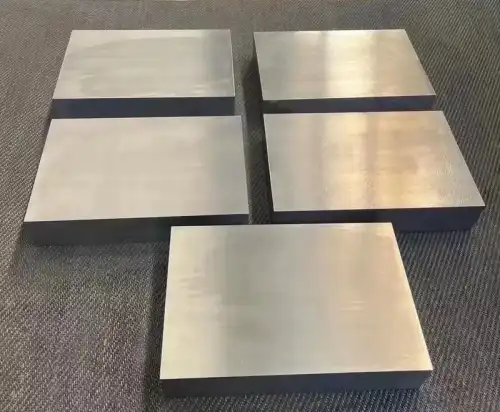
What are the key differences between Grade 5 and Grade 4 titanium?
Composition and Microstructure
Grade 5 titanium, or Ti-6Al-4V, is an alpha-beta metal that is made up of about 90% titanium, 6% aluminum, and 4% vanadium. This structure makes a microstructure that you can't find anywhere else, which is why it has such great mechanical qualities. Aluminum is an alpha stabilizer, and vanadium is a beta stabilizer. Together, they make a proper mix of alpha and beta phases. Grade 5 titanium has a great strength-to-weight ratio and great fatigue protection because of this microstructure. Topak is a well-known company that makes titanium alloys. They have done a lot of studies on the microstructure of Grade 5 titanium to improve how it works in a range of uses.
Mechanical Properties
Review 5 titanium has superior mechanical qualities to Review 4 titanium, which is an enormous reason why it is way better. Review 5 titanium has a malleable quality of 895 to 1000 MPa, much higher than Review 4's 550 MPa. Too, Review 5 is more grounded than Review 4, with a surrender quality of 828 MPa versus 483 MPa. With this additional quality, Review 5 titanium can handle more weight and weight. This makes it an incredible choice for utilize in the air, car, and therapeutic areas. Topak's Review: 5 titanium products have been completely tried to make beyond any doubt they meet or go beyond these guidelines for mechanical properties. This gives clients reliable, high-performing materials.
Corrosion Resistance
Both Review 4 and Review 5 titanium stand up to erosion exceptionally well, but they do not work precisely the same. Review 4 titanium is a commercially unadulterated review and more often than not has a slightly better resistance to erosion in most settings. Review 5 titanium, on the other hand, still has awesome resistance to erosion, particularly in situations that oxidize and somewhat diminish. Including aluminum and vanadium in titanium makes it superior at standing up to push erosion, breaking, and hole erosion. Topak's Review: 5 titanium items are put through exceptionally extreme tests to see how well they stand up to erosion. This makes beyond any doubt they work at the most elevated level in a extend of destructive settings, making them a great choice for utilize in chemical handling, marine applications, and other extreme businesses.
How does Grade 5 titanium compare to other alloys in terms of strength-to-weight ratio?
Comparison with Aluminum Alloys
Grade 5 titanium is much stronger than aluminum when it comes to the strength-to-weight ratio. Aluminum metals are light, but Grade 5 titanium is stronger than aluminum and still pretty light. For instance, Grade 5 titanium has a density of about 4.43 g/cm³, which is higher than aluminum (2.7 g/cm³) but much lower than steel (7.85 g/cm³). But its strength is much better than most aluminum alloys; its tensile strength can be over two times that of high-strength aluminum alloys. Topak's Grade 5 titanium products have been used successfully in aerospace applications where they need to be very strong and very light.
Comparison with Steel Alloys
Grade 5 titanium has a much better strength-to-weight ratio than steel and its alloys. High-strength steels can match or beat Grade 5 titanium's tensile strength, but they are a lot heavier. Although Grade 5 titanium is 40% less dense than steel, it can be just as strong or even stronger. For uses where strength can't be lost, and weight has to be cut down, Grade 5 titanium is a great choice because of this. Topak has provided Grade 5 titanium for a range of structural parts in the automotive and aerospace industries. This has helped manufacturers make big savings in weight and improve fuel economy.
Comparison with Other Titanium Grades
Grade 5 is notable among titanium metals for having a very high strength-to-weight ratio. Grade 5 is a lot stronger than commercially pure titanium grades such as Grade 4, and it has about the same mass. For example, Grade 5 titanium has a tensile strength that is about 60–80% higher than Grade 4 titanium, but its mass is only slightly higher. Because Grade 5 has a high strength-to-weight ratio, it is the best choice for uses that need this property. Topak sells a lot of different titanium products in a range of grades. This lets customers choose the best one for their needs, and Grade 5 is often the most popular choice for applications that need great performance.
What are the primary applications of Grade 5 titanium in the aerospace industry?
Structural Components
Grade 5 titanium is used a lot in the aircraft industry for structural parts because it has a great strength-to-weight ratio and resists metal fatigue. It is often used in the frames, wings, and landing gear of airplanes. The strong alloy makes it possible to use thinner and lighter parts, which helps to lower the total weight of the aircraft design. Also, its resistance to tiredness makes it perfect for parts that go through a lot of stress during flights. Topak has provided Grade 5 titanium for a range of structural uses in both civilian and military planes. This has helped the planes perform better and use less fuel.
Engine Components
Grade 5 titanium is very useful in airplane engines because it is very strong and doesn't weigh much. It is used in parts that need to stand up to high temperatures. It is often used in fan blades, discs, and housings. The alloy can keep its mechanical qualities even when temperatures rise, which makes it a good choice for engine parts that are in high-temperature settings. Grade 5 titanium's ability to prevent corrosion also helps engine parts last longer. Topak's Grade 5 titanium goods have been widely used to make important parts of engines, which has helped them work better and lowered the need to keep them working.
Fasteners and Fittings
Review 5 titanium is solid, safe to erosion, and works well with composites. For this reason, it is frequently utilized for plane fittings and latches. These are nuts, jolts, screws, and other fittings that need to be light and solid. This metal doesn't get harmed much by galvanic erosion, so it is a great match with carbon fiber structures. Utilizing these materials to construct modern planes is getting to be more common. Topak's Review: 5 titanium fittings and latches meet the aviation industry's tall benchmarks for quality and productivity. This keeps the airplane's parts secure and in great shape.
Conclusion
To entirety up, Review 5 titanium (Ti-6Al-4V) has superior mechanical properties, a superior strength-to-weight proportion, and way better erosion assurance than Review 4 titanium. Its capacity to be utilized in numerous distinctive ways makes it idealize for a variety of diverse employments, particularly in the AI, ship, car, and restorative areas. Review 4 titanium is still valuable in a few circumstances since it is more prone to rust. But for numerous high-demanding employments, Review 5 titanium is the way better choice since it is solid, light, and works well in numerous diverse settings. As materials science moves forward, Review 5 titanium remains exceptionally imperative for engineers. It makes a difference to make modern things and make forms more effective in a wide range of areas.
FAQ
What is the main difference between Grade 5 and Grade 4 titanium?
Grade 5 titanium is an alpha-beta alloy with higher strength, while Grade 4 is commercially pure titanium with better corrosion resistance but lower strength.
Why is Grade 5 titanium preferred in aerospace applications?
Grade 5 titanium is preferred in aerospace due to its excellent strength-to-weight ratio, fatigue resistance, and ability to maintain properties at elevated temperatures.
Can Grade 5 titanium be used in medical implants?
Yes, Grade 5 titanium is widely used in medical implants due to its biocompatibility, high strength, and corrosion resistance.
How does the cost of Grade 5 titanium compare to other materials?
Grade 5 titanium is generally more expensive than steel or aluminum alloys, but its superior properties often justify the cost in high-performance applications.
Is Grade 5 titanium weldable?
Yes, Grade 5 titanium can be welded using various methods, including TIG welding, but it requires careful control of the welding environment to prevent contamination.
What are the environmental benefits of using Grade 5 titanium?
Grade 5 titanium's light weight and durability contribute to fuel efficiency in transportation applications and longer product lifespans, reducing overall environmental impact.
Your Trusted Global Partner for High-End Titanium Solutions
LINHUI TITANIUM, founded in 2000 and headquartered in Xi'an, China, is a leading manufacturer and supplier of titanium and titanium alloys. With a commitment to creating value for customers, LINHUI TITANIUM adheres to the development strategy of "supplying high-end products, establishing a world-renowned enterprise." The company offers a wide range of titanium products, including Grade 5 titanium, and has exported to over 60 countries worldwide. LINHUI TITANIUM's products meet international standards and certifications, ensuring high quality and reliability. With its extensive experience, global reach, and dedication to customer satisfaction, LINHUI TITANIUM is your trusted partner for all titanium needs. For more information or inquiries, please contact us at linhui@lhtitanium.com.
References
1. Boyer, R., Welsch, G., & Collings, E. W. (1994). Materials Properties Handbook: Titanium Alloys. ASM International.
2. Donachie, M. J. (2000). Titanium: A Technical Guide. ASM International.
3. Leyens, C., & Peters, M. (Eds.). (2003). Titanium and Titanium Alloys: Fundamentals and Applications. John Wiley & Sons.
4. Peters, M., Kumpfert, J., Ward, C. H., & Leyens, C. (2003). Titanium alloys for aerospace applications. Advanced Engineering Materials, 5(6), 419-427.
5. Rack, H. J., & Qazi, J. I. (2006). Titanium alloys for biomedical applications. Materials Science and Engineering: C, 26(8), 1269-1277.
6. Williams, J. C., & Starke Jr, E. A. (2003). Progress in structural materials for aerospace systems. Acta Materialia, 51(19), 5775-5799.