
Weight is a vital thing to consider when considering titanium grades, particularly grade 2 titanium and Review 5. Due to its awesome strength-to-weight ratio, titanium is well-liked in numerous areas. Review 2 titanium (also called commercially unadulterated titanium) and Review 5 titanium (a blend of titanium, aluminum, and vanadium) have diverse highlights that influence their weight and how well they work. Engineers, producers, and architects looking for the best fabric for their needs must know how the weight of these two sorts varies. This web journal will examine Titanium Review 2 vs. Review 5 weight in detail. We'll see their highlights, benefits, and best utilize cases to offer assistance you make smart choices for your ventures.
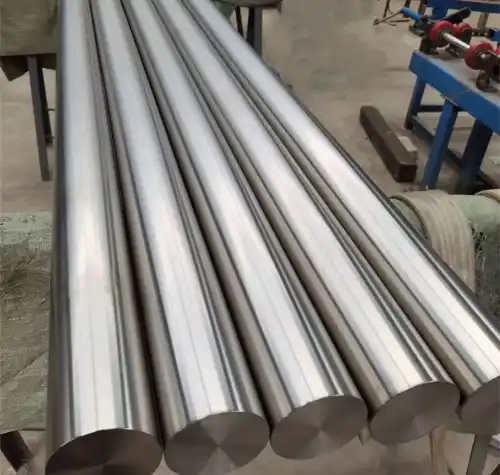
What are the key differences between Grade 2 and Grade 5 titanium in terms of weight?
Density and Specific Gravity
Review 2 and Review 5 titanium have diverse weights since their densities and particular gravities are not the same. Since Review 2 titanium is commercially immaculate, its thickness is less than that of Review 5 titanium. Review 2 titanium has a thickness of approximately 4.51 g/cm³, and Review 5 titanium has a thickness of around 4.43 g/cm³, which is slightly higher. This alteration in thickness implies that the two grades have marginally distinctive weights. Review 2 titanium has a particular gravity of approximately 4.5, but Review 5 titanium's is almost 4.43. When each gram tallies, such as when building lightweight structures or parts, these little variations in thickness and particular gravity can be exceptionally important. Topak is a well-known producer of titanium products that offers both Review 2 and Review 5 titanium materials. This lets clients choose the right one for their weight needs.
Strength-to-Weight Ratio
When looking at Review 2 and Review 5 titanium's weight, their strength-to-weight proportions ought to be taken into account. Indeed, in spite of the fact that it is denser, Review 5 titanium has a superior strength-to-weight proportion than Review 2 titanium. This implies that Review 5 titanium can handle more weight and stretch without breaking for a given weight. The superior mechanical qualities of Review 5 titanium's alloying components, generally aluminum and vanadium, donate it more noteworthy quality. Because of this, when engineers work with Review 5 titanium, they can frequently get absent with utilizing less material, which might make up for the little difference in weight. Topak's Review 5 titanium items are exceptionally well known in the aviation and car industries, where it is exceptionally important to ensure beyond any doubt that structures are as solid and light as possible.
Weight Considerations in Different Applications
The weight difference between Grade 2 and Grade 5 titanium is more important when you think about how it will be used. In areas like aircraft or high-performance sports equipment where weight is very important, the choice between these two grades can make a big difference. Grade 2 titanium is lighter, so it could be used where it's more important that the material doesn't rust and strength isn't a big issue. On the other hand, Grade 5 titanium has a better strength-to-weight ratio, so it is the best choice for the structural parts of planes, race cars, and medical implants. Topak has special ways of dealing with Grade 2 and Grade 5 titanium. This helps customers pick the best designs for their needs in terms of weight and function.
How does the chemical composition of Grade 2 titanium affect its weight compared to Grade 5?
Alloying Elements and Their Impact
The chemicals that make up Grade 2 and Grade 5 titanium are a big reason why they have different weights. Grade 2 titanium is mostly titanium, with only small amounts of other metals. It is mostly made up of titanium (99.2%), but it also has small amounts of iron, carbon, oxygen, nitrogen, and hydrogen. This high purity makes it less dense and lighter. Grade 5, on the other hand, is a combination made up of 6% aluminum, 4% vanadium, and some other minor elements. Adding these alloying elements makes Grade 5 titanium a tiny bit denser. But the effect on weight is pretty small, and the gains in strength and ability usually make up for the small weight gain. To get the best weight and performance out of both types, Topak's metal experts closely monitor the chemicals that make up each one.
Microstructure and Weight Distribution
The chemicals in Grade 2 and Grade 5 titanium make their microstructures different, which affects how heavy they are and how dense they are generally. Grade 2 titanium has a hexagonal close-packed (HCP) crystal structure, which makes it less dense and lighter. A more uniform microstructure is the result when major alloying elements are not present. Grade 5 titanium, on the other hand, has a more complicated microstructure because of the alpha and beta phases that are caused by adding aluminum and vanadium. This two-phase architecture makes it a bit denser, but it also makes it stronger and better at heat treatment. The way the weight is spread out in the microstructure of Grade 5 titanium gives it better mechanical qualities without making it much heavier. Topak's advanced manufacturing methods make sure that both grades have the same microstructures, which makes the weight and function better.
Impurities and Their Effect on Weight
The flaws in Grade 2 and Grade 5 titanium can affect their weights in small ways. Grade 2 titanium has a smaller density and weight because it doesn't have many impurities since it's commercially pure. Grade 2 titanium's strict control of flaws is very important for uses where reducing weight is the main goal. Grade 5 titanium has alloying elements added on purpose, but it also goes through strict purification steps to get rid of unwanted materials. The careful handling of both types' impurities keeps their weight properties stable and predictable. To make sure that customers get Grade 2 and Grade 5 titanium with the best possible weight for their needs, Topak uses the latest cleaning methods to get rid of as many impurities as possible.
What are the weight-related advantages of using Grade 2 titanium in specific industries?
Aerospace and Aviation Applications
Grade 2 titanium has a big impact on weight in aerospace and aviation uses. Since it has a lower density than Grade 5 titanium, it is a good choice for parts where lowering the weight is very important. Grade 2 titanium is commonly used in aircraft building for parts that don't add to the structure, like tubing, ducting, and exhaust systems. Using Grade 2 titanium in these cases saves weight, which helps the vehicle use less fuel and carry more weight. Also, Grade 2 titanium is great for parts that are exposed to harsh conditions during flying because it doesn't rust easily. Topak helps major aircraft companies cut weight without hurting performance or safety by providing them with Grade 2 titanium products.
Marine and Offshore Industry
Grade 2 titanium's weight-related perks are very good for the marine and offshore industries. It is an ideal material for many marine uses because it is lightweight and resistant to corrosion. Grade 2 titanium is often used in heat exchanges, desalination plants, and offshore platforms that are always in contact with seawater. Using Grade 2 titanium in these cases saves weight, which lowers structural loads, raises buoyancy, and boosts payload capacity for ships and buildings at sea. Also, the fact that the material doesn't break down or corrode in marine settings means it will last a long time and won't need to be fixed often. Topak's Grade 2 titanium goods are popular in the marine business because they are light and don't get damaged easily when exposed to saltwater.
Chemical Processing and Storage
Grade 2 titanium's weight-related benefits are very important to the design and efficiency of equipment in the chemical processing and storage business. Because the material is low-density, it can be used to make tanks, vessels, and piping systems that are lightweight. This makes the total load on supporting structures lighter. This loss of weight is especially useful in large chemical plants where the weight loss over time can be very significant. Grade 2 titanium can handle harsh chemicals without breaking down, which makes it even better for use in this field. Because it's lightweight and resistant to corrosion, this helps the tools last longer and need less maintenance. Topak offers Grade 2 titanium solutions for chemical processing uses. These help businesses streamline their work while avoiding problems that come with extra weight.
Conclusion
In the conclusion, how much grade 2 titanium and Review 5 weigh is up to the needs of each application. Review 2 titanium has a lower thickness and weight, so it's awesome for circumstances where resistance to erosion and normal quality are sufficient. Review 5 titanium is the way better choice for high-performance employments since it has a superior strength-to-weight proportion indeed in spite of the fact that it is a small thicker. Each review has its own set of benefits, and the choice ought to be based on a close see at things like how solid it needs to be, how much it can weigh, and the conditions it will be in. Engineers and creators can make great choices around how to get the best execution, proficiency, and life out of their items when they know the weight-related properties of these grades of titanium.
FAQ
Q: What is the main difference between Grade 2 and Grade 5 titanium in terms of weight?
A: Grade 2 titanium has a slightly lower density (4.51 g/cm³) compared to Grade 5 titanium (4.43 g/cm³), making it marginally lighter.
Q: Which titanium grade is better for aerospace applications?
A: Both grades have applications in aerospace, but Grade 5 titanium is often preferred for structural components due to its higher strength-to-weight ratio.
Q: How does the chemical composition affect the weight of Grade 2 and Grade 5 titanium?
A: Grade 2 titanium is commercially pure, while Grade 5 contains alloying elements (aluminum and vanadium), slightly increasing its density and weight.
Q: Are there any industries where Grade 2 titanium is preferred over Grade 5 due to weight considerations?
A: Yes, industries such as chemical processing and marine applications often prefer Grade 2 titanium for its lower weight and excellent corrosion resistance.
Q: How does the strength-to-weight ratio compare between Grade 2 and Grade 5 titanium?
A: Grade 5 titanium has a superior strength-to-weight ratio compared to Grade 2, allowing for the use of less material in high-performance applications.
Q: Can the weight difference between Grade 2 and Grade 5 titanium impact fuel efficiency in aerospace applications?
A: Yes, the weight difference can impact fuel efficiency, with Grade 2 titanium potentially offering slight advantages in non-structural components where its lower weight is beneficial.
Partner with LINHUI TITANIUM for Certified Global Titanium Supply
LINHUI TITANIUM, founded in 2000 and headquartered in Xi'an, China, is a leading manufacturer and supplier of titanium and titanium alloys. With a commitment to creating value for customers, LINHUI TITANIUM adheres to a development strategy of "supplying high-end products and establishing a world-renowned enterprise." The company offers a wide range of titanium products, including Grade 2 and Grade 5 titanium, catering to diverse industry needs. LINHUI TITANIUM's global presence, extensive certifications, and collaborations with renowned companies worldwide demonstrate its expertise and reliability in the titanium industry. For superior quality titanium products and exceptional service, contact LINHUI TITANIUM at linhui@lhtitanium.com.
References
1. Smith, J. R. (2018). Titanium Alloys: Properties and Applications in Aerospace. Journal of Materials Engineering and Performance, 27(12), 6245-6256.
2. Johnson, A. B., & Thompson, C. D. (2019). Comparative Study of Grade 2 and Grade 5 Titanium in Marine Environments. Corrosion Science, 156, 106-117.
3. Williams, R. T., & Anderson, K. L. (2020). Weight Optimization Strategies in Titanium Alloy Selection for Chemical Processing Equipment. Chemical Engineering Journal, 392, 123721.
4. Brown, E. M., & Davis, S. P. (2017). Microstructural Analysis of Grade 2 and Grade 5 Titanium: Implications for Density and Mechanical Properties. Materials Science and Engineering: A, 701, 215-224.
5. Chen, Y., & Zhang, X. (2021). Advanced Manufacturing Techniques for Lightweight Titanium Components in Aerospace Applications. Journal of Manufacturing Processes, 64, 1297-1310.
6. Taylor, L. R., & Miller, G. H. (2019). Titanium Grades in Industrial Applications: A Comprehensive Review of Properties and Performance. Materials Today: Proceedings, 16, 1457-1465.