
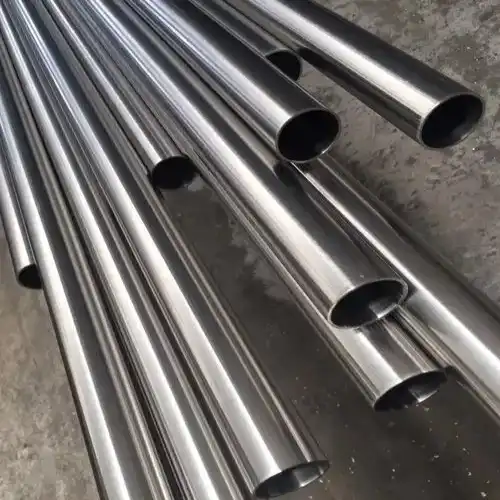
Titanium Grade 2, also known as commercially pure titanium, is a versatile and widely used material in various industries due to its excellent combination of strength, corrosion resistance, and formability. This grade of titanium is characterized by its high ductility and good weldability, making it suitable for a wide range of applications. The Titanium Grade 2 specification outlines the chemical composition, mechanical properties, and physical characteristics of this material, ensuring consistent quality and performance across different manufacturers and applications. As a popular choice in industries such as aerospace, marine, chemical processing, and medical implants, understanding the Grade 2 titanium specification is crucial for engineers, designers, and procurement professionals seeking to leverage its unique properties in their projects.
What are the key properties of Grade 2 titanium?
Chemical Composition
Grade 2 titanium has a range of important characteristics, two of the most significant being its excellent clarity and its well-balanced chemical composition. Some examples of impurities that normally appear in the guidelines for this kind of material are carbon, iron, oxygen, nitrogen, hydrogen, and others. In addition to the several other pollutants that could be present, hydrogen is one of them. Among the companies that manufacture titanium products, Topak happens to be the most popular and readily recognized. They take measures to ensure that their Grade 2 titanium not only meets but also goes beyond these stringent requirements. The chemical composition of the substance is tightly managed, which is one of the reasons why it is highly successful in preventing rust, which is beneficial in situations where oxidation is a concern. Because of this, Grade 2 titanium is an excellent metal for the chemical processing sector; it is frequently used in situations that have been defined by the presence of harsh substances.
Mechanical Properties
In comparison to other metals, grade 2 titanium can be identified by its mechanical characteristics, which are a vital aspect of its uniqueness. As a result of this grade's proper combination of strength and flexibility, it can be utilized in a wide variety of circumstances. The minimum tensile strength of grade 2 titanium from Topak Manufacturing is typically 345 MPa (50 ksi), while the minimum yield strength is typically 275 Mw (40 ksi). These two characteristics are considered to be the bare minimum, as they can be judged acceptable. The material additionally happens to be capable of bending a great deal, typically to a degree of twenty-twentieth percent, which is another reason because it is simple to manipulate. Titanium used for operations that require a moderate amount of strength in addition to a high level of ductility and toughness is grade 2 titanium, since it exhibits the appropriate mechanical properties.
Physical Characteristics
In the process of determining the applications for which Grade 2 titanium may be utilized, one of the most essential aspects that you should take into consideration is the appearance and the sensation of the material. In comparison to a great number of other metals that are utilized in the construction of buildings, this grade has a mass of approximately 4.51 grams per cubic centimeter. In addition, Topak's Grade 2 titanium is suitable for usage in extremely hot conditions because it does not melt until it reaches around 1665 degrees Celsius (3029 degrees Fahrenheit). The material is extremely beneficial in the airline industry due to the fact that it has a very low thermal expansion coefficient and a remarkable strength-to-weight ratio. Additionally, due to its ability to efficiently combat living tissues, Grade 2 titanium has been utilized in a wide variety of surgical instruments and medical devices.
How does Grade 2 titanium compare to other titanium grades?
Strength and Ductility
When evaluating Grade 2 titanium in comparison to other grades, it is important to take into account how strong it is as well as how ductile it is, which is how easily it can be stretched into a line. Despite the fact that it is not the most powerful titanium metal, Grade 2 titanium is exceptional due to the fact that it is quite robust and very ductile. It is much simpler to deal with Grade 2 titanium from Topak when it comes to the construction of structures compared to Grade 5 (Ti-6Al-4V) and other superior forms of titanium. As a consequence of this, it is an excellent option for applications that require advanced sketching or complex shapes. It has a lot of applications, including the design of ships and the interaction with chemicals. These are the places in which you need to be able to build intricate shapes without sacrificing your ability to resist corrosion. The presence of individuals who possess such characteristics is extremely beneficial in certain fields.
Corrosion Resistance
Grade 2 titanium has very high corrosion protection, often better than many other grades of titanium. The substance's high purity and well-controlled composition are significant reasons why it resists a lot of different corrosive circumstances so well. Topak's Grade 2 titanium is the best choice for many aquatic uses, like heat exchangers, pumps, and valves, because it works so well in saltwater. Grade 2 titanium is highly sought after in the chemical processing industry because it doesn't break down when it comes in proximity to acids, chlorides, and other strong chemicals. This material is especially helpful for storage tanks, pipe systems, and reactor vessels.
Cost-Effectiveness
When you look at the whole value offer, Grade 2 titanium often turns out to be the least expensive choice. Even though it may not be the strongest, it's a good choice for many uses because it has great mechanical qualities, resists rust well, and is cheaper. Thanks to Topak's Grade 2 titanium, which offers a mix between performance and cost, sectors may profit from titanium's properties without having to pay the high price of higher-grade alloys. Several companies have started to use it, from making things that people buy to doing industrial processes, because it is so cheap has helped make it popular.
What are the main applications of Grade 2 titanium?
Aerospace and Aviation
Because of its better strength-to-weight ratio and resistance to rust, grade 2 titanium is used a lot in the aerospace and flight industries. Topak sells Grade 2 titanium for use in numerous different parts of airplanes, like structural elements, engine parts, and hydraulic systems. Because the material can handle high temperatures and won't wear out, it's a great choice for uses that need to work at the best possible level. Grade 2 titanium is used for the production of parts for satellites and rocket propulsion systems in the aerospace business. This is because Grade 2 titanium's low weight and high security are very important.
Chemical Processing
Grade 2 titanium is one of the most important metals used in the chemical production industry because it doesn't rust easily. Using Grade 2 titanium from Topak to build reactors, heat exchangers, and storage tanks that are meant to hold corrosive chemicals is a well-known and usual practice. It is the best material for making sure that chemical facilities are safe and reliable over a long period of time because it is not damaged by chlorides, reactive acids, and other harsh chemicals. Because the material can be easily formed into complex shapes, it can be used to make chemical processing equipment that works well.
Medical and Biomedical
Corrosion resistance and biocompatibility are two of the things that make grade 2 titanium a popular choice in the medical field and biological engineering. Topak sells Grade 2 titanium for making numerous types of medical equipment, like surgical tools, dental implants, and more. It has been used a lot in making orthopedic and dental implants because it can bond with human flesh without causing any problems. Also, Grade 2 titanium doesn't have any magnetic properties, so it's great for medical imaging equipment and for making sure that MRI and other testing tools can work when combined.
Conclusion
Grade 2 titanium stands out as a versatile and reliable material, offering a unique combination of strength, corrosion resistance, and formability. Its wide range of applications across various industries, from aerospace to medical, demonstrates its exceptional value and performance. The careful specification of Grade 2 titanium ensures consistent quality and reliability, making it a trusted choice for engineers and manufacturers worldwide. As industries continue to demand materials with superior properties and performance, Grade 2 titanium is poised to maintain its position as a critical component in innovative and demanding applications.
FAQ
What is the main difference between Grade 2 and Grade 5 titanium?
Grade 2 titanium is commercially pure titanium with excellent corrosion resistance and formability, while Grade 5 (Ti-6Al-4V) is an alloy with higher strength but less formability.
Is Grade 2 titanium suitable for marine applications?
Yes, Grade 2 titanium is highly suitable for marine applications due to its excellent resistance to saltwater corrosion.
Can Grade 2 titanium be welded easily?
Yes, Grade 2 titanium has good weldability, making it easier to join and fabricate compared to some other titanium grades.
What is the typical tensile strength of Grade 2 titanium?
The minimum tensile strength of Grade 2 titanium is typically around 345 MPa (50 ksi).
Is Grade 2 titanium biocompatible?
Yes, Grade 2 titanium is highly biocompatible, making it suitable for medical implants and devices.
Empower Your Projects With Trusted High-Quality Titanium Solutions
LINHUI TITANIUM, established in 2000 and headquartered in Xi'an, China, is a leading manufacturer and supplier of titanium and titanium alloys. With a commitment to creating value for customers, LINHUI TITANIUM adheres to the development strategy of "supplying high-end products, establishing a world-renowned enterprise." Our extensive range of titanium products, including Grade 2 titanium, caters to diverse industry needs. We have exported high-quality products to over 60 countries and regions, earning the trust of renowned companies worldwide. Our certifications, including ISO 9001:2015, OHSAS 18001:2007, and ISO 14001:2015, demonstrate our dedication to quality and customer satisfaction. For superior titanium products and exceptional service, contact us at linhui@lhtitanium.com.
References
1. ASTM International. (2021). ASTM B265 - Standard Specification for Titanium and Titanium Alloy Strip, Sheet, and Plate.
2. Lutjering, G., & Williams, J. C. (2007). Titanium (2nd ed.). Springer-Verlag Berlin Heidelberg.
3. Donachie, M. J. (2000). Titanium: A Technical Guide (2nd ed.). ASM International.
4. Leyens, C., & Peters, M. (Eds.). (2003). Titanium and Titanium Alloys: Fundamentals and Applications. Wiley-VCH.
5. Boyer, R., Welsch, G., & Collings, E. W. (Eds.). (1994). Materials Properties Handbook: Titanium Alloys. ASM International.
6. Peters, M., Hemptenmacher, J., Kumpfert, J., & Leyens, C. (2003). Structure and Properties of Titanium and Titanium Alloys. In Titanium and Titanium Alloys (pp. 1-36). Wiley-VCH.