
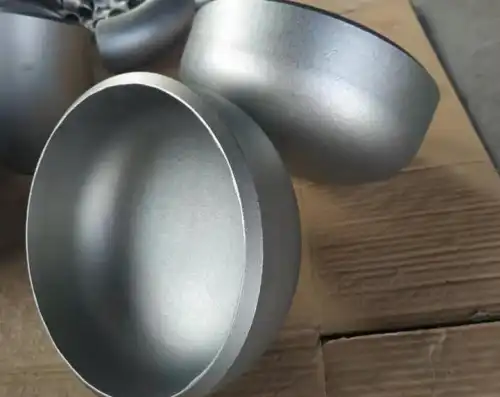
To choose the correct Titanium End Caps Gr2 Gr5 for commercial use, you need to know about the material's qualities, the required size, and the performance standards. In the oil and gas, chemical processing, aircraft, and marine industries, these specific titanium parts play very important roles. Grade 2 titanium is very resistant to rust and easy to shape, while Grade 5 titanium is stronger and lasts longer for tough jobs that need better mechanical qualities.
Understanding Titanium End Cap Fundamentals
Titanium end caps are important parts of pipe systems that need to be able to connect well and prevent rust. Choosing between Grade 2 and Grade 5 titanium has a direct effect on how well it works in industrial settings.Grade 2 titanium, which is also called "commercially pure titanium," is made up of 99.2% titanium. This type is very resistant to rust in salt settings and doesn't change much when it comes to welding. Chemical processing companies often pick Grade 2 for moderate-pressure uses where rust resistance is more important than strength.Ti-6Al-4V, which is another name for grade 5 titanium, has 6% aluminum and 4% vanadium in it. While still being very resistant to rust, this titanium metal is twice as strong as Grade 2. Grade 5 is used for important construction purposes by aerospace makers and high-pressure industrial systems.The ASTM B363 and ASME SB363 manufacturing rules say how titanium pipe end caps should be made. These guidelines make sure that all makers meet the same quality, size, and material requirements. Following these guidelines will make sure that the new system works with current pipe systems and meets all legal standards.
Core Industrial Applications and Use Cases
Titanium End Caps Gr2 Gr5 are used by Oil and Gas Pipeline Systems in underwater tools and offshore drills. Because chlorine is so active in the ocean, materials need to be able to fight pitting and fissure corrosion. Titanium End Caps Gr2 Gr5 made of Grade 2 work great in seawater, and Grade 5 can handle high pressures in offshore drilling sites. These parts close the ends of pipelines and make entry places for repair work possible. Chemical Processing Equipment needs materials that can handle harsh chemicals and high temperatures. Titanium End Caps Gr2 Gr5 are made of titanium metal and work great in heat exchanges, distillation columns, and reactor tanks. The inertness of the material keeps chemical products from getting into it and keeps the structure intact. Titanium End Caps Gr2 Gr5 are highly valued by pharmaceutical companies for being biocompatible and easy to sterilize. Aerospace Propulsion Systems need lightweight parts that stay strong in harsh circumstances. Titanium End Caps Gr2 Gr5, and other parts made of titanium are used in fuel systems, hydraulic lines, and engine units. Grade 5 titanium has a high strength-to-weight ratio, which makes airplanes lighter while still providing extra safety in serious situations. Titanium End Caps Gr2 Gr5 are naturally resistant to rust in seawater, which is useful in marine and shipbuilding uses. Titanium End Caps Gr2 Gr5 are used in rescue gear, cooling circuits, and ballast systems on naval ships, industrial ships, and offshore platforms.
Material Properties and Performance Characteristics
Titanium doesn't rust because it forms a solid oxide layer that fixes itself when it gets broken. In most places, this inactive covering keeps chemicals from attacking the metal below. When it comes to lowering acids and salt solutions, Grade 2 titanium works better than Grade 5, and Grade 5 keeps its rust protection while adding mechanical strength. The two grades are very different in terms of their mechanical features. The tensile strength of grade 2 titanium is 345 MPa, and the yield strength is 275 MPa. Strong enough to pull apart 895 MPa, grade 5 titanium has a yield strength of 828 MPa. Because of these changes, they can be used for different pressure levels and structural needs. Temperature resistance varies by grade, but in most cases, both classes can keep their qualities up to 300°C. Titanium's qualities can be changed by heat treatment, but the choice of base grade is still the most important factor in determining efficiency. The coefficients of thermal expansion stay low, which lowers stress in uses that change temperatures. Welding features that help Grade 2 titanium because it has less metal and is less sensitive to heat-affected zones. Grade 5 welding needs to be done with more care, but the results are great when it's done right. Both types can be joined in some ways, such as by fusion welding, friction welding, or mechanical binding.
Size Specifications and Technical Standards
For example, NPS 1/2" through 24" standard pipe sizes are equal to DN15 to DN600 sizes. This wide range of sizes can be used for a wide range of tasks, from small instrument lines to large pipeline systems. Standard wall widths are based on pipe plan numbers, but unique thicknesses can be made to fit specific needs.The size tolerances are within the limits set by ASTM B363, which makes sure that they fit correctly with normal pipe parts. Titanium End Caps Gr2 Gr5 can be supplied with different ways to prepare the ends, such as leaving them plain, beveling them for welding, or making them threaded. Titanium can be machined to precise measurements and with special features that are needed for certain uses.There are different types of surface finishes for Titanium End Caps Gr2 Gr5, from mill finish for everyday use to polished surfaces for hygiene and looks reasons. Electropolished surfaces are often needed in pharmaceutical and food processing uses to keep germs from sticking and make cleaning easier.Material test certificates, measurement inspection records, and, if needed, third-party proof are some of the things that are usually needed for certification. International classification groups like DNV, ABS, and Lloyd's Register say that titanium end caps can be used in marine and ocean settings.
Manufacturing Excellence at LINHUI TITANIUM
The first thing that is used to choose the raw materials is a fresh titanium sponge and approved alloys. Quality control starts with the inspection of the raw materials and goes on through all the steps of production. Vacuum arc remelting is used in melting processes to make sure that the chemicals are all the same and to get rid of any flaws that could hurt performance.Forging methods change the initial shape of the material into near-net shapes, which improves the structure of the grains and the material's dynamic properties. Microstructures that are wanted are made with controlled cooling rates and intermediate annealing processes. The forging method gets rid of flaws in casting and gives the metal better functional qualities than casting options.Titanium welding end caps go through specific rounds of heat treatment to make their features work best for certain uses. By solution treating and aging Grade 5 titanium, its peak strength is reached while its flexibility is maintained. Stress relief annealing is used on grade 2 titanium to get rid of any remaining pressures from the forming process.For machining, special tools and cutting settings are used that are best for titanium alloys. Coolant systems keep heat from building up, which could damage the surface or change its features. The final sizes are very close to what is needed for pressure vessels and pipes.When needed, non-destructive testing methods like ultrasound examination, liquid penetrant examination, and radiography inspection are all part of quality inspection. Chemical research makes sure that the makeup meets the standards, and mechanical testing makes sure that the strength and flexibility standards are met.
Competitive Advantages and Industry Benefits
Lifecycle cost study always favors titanium parts, even though they cost more at first. Longer service lives, less upkeep, and not having to use sealing systems all save a lot of money over the course of an operation. Titanium End Caps Gr2 Gr5 are very reliable, which is especially helpful in industries with high downtime costs. In aircraft and naval uses, Titanium End Caps Gr2 Gr5's light weight lowers structure loads. Less weight means better fuel economy, more payload space, or better performance in certain situations. In challenging situations, the strength-to-weight advantage of Titanium End Caps Gr2 Gr5 stands out more. Environmental benefits include getting rid of harmful coats and reducing waste from replacing parts. Titanium End Caps Gr2 Gr5 can be recovered, which helps with green goals and keeps the material's qualities in recycled goods. Because Titanium End Caps Gr2 Gr5 are harmless, they keep dangerous chemicals from leaking into the environment. Their design freedom lets you make shapes and features that aren't possible with traditional materials. Custom Titanium End Caps Gr2 Gr5 can have fixing holes, access ports, and special closing surfaces built in. This merging makes the assembly simpler and cuts down on possible leak lines. Regulatory compliance makes approval processes easier in businesses with a lot of rules. Permitting and approval can be done more quickly when material specs are clear and there is a long history of service. Biocompatibility and safety records that are well-documented for Titanium End Caps Gr2 Gr5 are helpful in nuclear, pharmaceutical, and food processing uses.
Selection Criteria and Decision Framework
The minimum strength needed for safe operating is set by the pressure number. Up to ANSI Class 300, Grade 2 titanium can handle modest pressures. Grade 5 titanium can handle higher pressures up to ANSI Class 600. Temperature changes and possible pressure changes must be taken into account in safety factors. A corrosion environment study finds specific threats like chlorides, acids, or oxidizing conditions. Material selection charts can help, but testing in real-world service situations is the only way to be sure that performance forecasts are correct. Accelerated rusting can be stopped by materials that are galvanically compatible with each other. The frequency of temperature changing affects wear resistance and thermal stress factors. Materials that don't expand or contract much and conduct heat well are better for high-frequency thermal cycle. For steady-state high-temperature operation, protecting against creep and rust is very important. For some uses, regulations require particular material grades, testing methods, and paperwork. For nuclear uses, you need things that are made for nuclear use and can be tracked more easily. For medical uses, you need materials that have been cleared by the FDA and have been tested for biocompatibility. An economic review looks at the original cost, the cost of installation, the cost of upkeep, and the expected service life. Even though titanium costs more at first, it usually ends up being cheaper in the long run. Studies from the energy business show that titanium used in ocean uses has 20-year payback times.
Quality Assurance and Global Certification
International licensing groups use strict testing methods to make sure that manufacturing processes and product quality are correct. Quality management systems that follow ISO 9001:2015 make sure that output methods and paperwork techniques are always the same. Getting environmental certificates shows that you are committed to using safe production methods.Independent laboratories test the material to make sure it meets the specifications and is the right size. Accredited testing centers check the claims about a product's performance and specs without bias. Shipments come with test results to help with quality programs for customers and to meet government standards.Systems for tracking materials keep track of them from the providers of raw materials to the time they are shipped. Full paperwork chains are kept up with heat numbers, procedure records, and test findings. When needed, this paperwork helps with failure analysis, insurance claims, and governmental probes.Managing the global supply chain makes sure that deliveries to customers around the world are always on time. Express messenger, air freight, and sea freight are just a few of the delivery choices that can be used to meet different time and cost needs. Systems for packaging keep goods safe while they are being shipped internationally and through customs.
Conclusion
When choosing the right Titanium End Caps Gr2 Gr5, you need to carefully think about the performance requirements, the surroundings, and the needs of the application. Grade 2 titanium works best in acidic places that don't need a lot of pressure, while Grade 5 titanium is stronger and better for demanding structural uses. Because LINHUI TITANIUM can make a lot of different things, has foreign certifications, and has worked with world leaders in many industries, you can be sure that your important uses will be reliable and of high quality. Our dedication to quality, along with our professional know-how and quick customer service, ensures that the right parts are chosen and projects are completed successfully in a wide range of industry sectors around the world.
Partner with LINHUI TITANIUM for Premium Titanium End Cap Solutions
LINHUI TITANIUM stands as your reliable Titanium End Caps Gr2 Gr5 manufacturer with over two decades of specialized experience in titanium component production. Our comprehensive manufacturing capabilities span two advanced facilities featuring 30 dedicated titanium production lines, delivering exceptional quality and consistent supply reliability for global industrial applications. Our manufacturing excellence reflects in every titanium end cap we produce, utilizing state-of-the-art processes that ensure superior performance and longevity. From raw material selection through precision machining and quality inspection, each step adheres to ISO standards and industry best practices. Our annual production capacity of 800 tons ensures reliable supply for large-scale projects while maintaining the flexibility to accommodate urgent requirements. Ready to enhance your project with superior titanium end cap solutions? Our technical specialists await the opportunity to discuss your specific requirements and provide expert guidance on material selection, sizing, and application optimization. Contact us at linhui@lhtitanium.com to begin your partnership with LINHUI TITANIUM and experience the difference that quality, expertise, and dedicated service make in your industrial operations.
FAQ
Q: What are the key differences between Grade 2 and Grade 5 titanium end caps?
A: Grade 2 titanium offers excellent corrosion resistance and formability with moderate strength (345 MPa tensile), making it ideal for chemical processing and marine applications. Grade 5 titanium provides superior mechanical strength (895 MPa tensile) due to aluminum and vanadium alloying, preferred for high-pressure aerospace and industrial applications requiring enhanced structural performance.
Q: How do I determine the correct size specifications for my piping system?
A: Size selection depends on your pipe nominal diameter, pressure rating, and end connection requirements. Our available range covers DN15-DN600 (NPS 1/2"-24") with various wall thicknesses. Provide your system specifications including pressure class, temperature range, and connection type, and our engineering team will recommend the optimal configuration for your application.
Q: What certifications and quality standards do LINHUI TITANIUM end caps meet?
A: Our titanium end caps comply with ASTM B363/ASME SB363 standards and carry certifications from major classification societies including DNV, ABS, CCS, GL, and BV. We maintain ISO 9001:2015 quality management certification, PED 2014/68/EU compliance for pressure equipment, and undergo regular third-party inspections by SGS, TUV, and other recognized agencies to ensure consistent quality and regulatory compliance.
References
1. ASTM International. "ASTM B363-20 Standard Specification for Seamless and Welded Unalloyed Titanium and Titanium Alloy Welding Fittings." Annual Book of ASTM Standards, Vol. 02.04, 2020.
2. Boyer, R.R., and Briggs, R.D. "The Use of β Titanium Alloys in the Aerospace Industry." Journal of Materials Engineering and Performance, Vol. 14, No. 6, 2005, pp. 681-685.
3. Schutz, R.W., and Thomas, D.E. "Corrosion of Titanium and Titanium Alloys in Marine Environments." ASM Handbook Volume 13A: Corrosion: Fundamentals, Testing, and Protection, ASM International, 2003, pp. 252-299.
4. Peters, M., Kumpfert, J., Ward, C.H., and Leyens, C. "Titanium Alloys for Aerospace Applications." Advanced Engineering Materials, Vol. 5, No. 6, 2003, pp. 419-427.
5. American Society of Mechanical Engineers. "ASME SB-363 Specification for Seamless and Welded Unalloyed Titanium and Titanium Alloy Welding Fittings." ASME Boiler and Pressure Vessel Code Section II Part B, 2021.
6. Donachie, M.J. "Titanium: A Technical Guide, 2nd Edition." ASM International Materials Park, Ohio, 2000, pp. 405-458.