
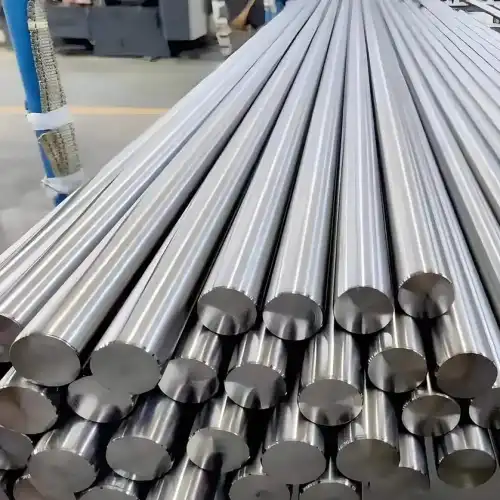
Most titanium is Ti-6Al-4V, which is also known as Grade 5 titanium. It is known for being very strong for its weight and not rusting. It is made up of titanium, vanadium (4%), and aluminum (6%). Ti-6Al-4V is a unique metal that is used in many areas, such as aircraft, cars, and medical tools, because it is the most durable, flexible, and easy to shape. Its adaptability comes from the fact that it stays strong at high temperatures and is also resistant to wear and breakage of many kinds. Because of how it is made, the metal can be made even better by heating it and working with it mechanically. There are many times when this is useful. This post will talk about Ti-6Al-4V in more depth. We are going to talk about how it is made, what mechanical properties it has, and all the different ways it can be used.
What are the key mechanical properties of Ti-6Al-4V?
Strength and Durability
Ti-6Al-4V is known for being very strong for how light it is. For this reason, it's often chosen when losing weight is important, but structural stability can't be sacrificed. If you heat the metal in different ways, its tensile strength can be between 900 and 1200 MPa. Because it is strong and doesn't weigh too much (about 4.43 g/cm³), it can be used to make parts that are both light and strong. Ti-6Al-4V is used a lot in important airplane parts by Topak, a big aerospace company, because it is harder than other materials of the same type. The metal is also very good at not wearing down. This thing is very strong against fatigue—about 510 MPa at 10^7 cycles—so it will work well for a long time even after being loaded and emptied many times.
Corrosion Resistance
That Ti-6Al-4V doesn't rust is one of its best qualities. This metal is very resistant to rust compared to many others. It makes a stable, continuous, and quickly renewing oxide film on its surface when it comes into contact with oxygen. This protects it from many things that could hurt it. For this reason, Ti-6Al-4V is great for use in chemical plants, biological implants, and the ocean. To show that Ti-6Al-4V doesn't rust in saltwater, the marine engineering department at Topak has used it successfully in buildings that are out at sea. The metal also doesn't crack or rust under stress, which makes it even more durable in harsh work settings. Because of this, it will last longer and need less care.
Temperature Performance
Ti-6Al-4V works well in a lot of different temperature ranges. It keeps its mechanical qualities up to about 400°C (752°F) even when it's very cold outside. Jet engine parts that need to deal with heat will like it because it doesn't change much when the temperature does. When heated up, a lot of other things lose their strength faster than metal. When the temperature goes up, the mechanical strength slowly goes down. This property has been used by Topak's aerospace business to make turbine blades, where the alloy's ability to keep its shape at high temperatures is essential. Ti-6Al-4V doesn't change size much when it's hot or cold, either. This helps it keep its shape even when the temperature changes, and strict standards need to be met.
How is Ti-6Al-4V manufactured and processed?
Primary Production Methods
To make Ti-6Al-4V, the titanium must first be taken out of its ores, which are mostly celite and rutile. Metal sponge made with the Kroll method is used a lot. The Ti-6Al-4V metal is made when this sponge is mixed with aluminum and vanadium. Most of the time, vacuum arc remelting (VAR) is used to make sure that the metal is pure and straight. With the help of modern VAR tools, Topak's metallurgy section makes high-quality Ti-6Al-4V ingots. A lot of different shaping methods are used to almost finish turning lumps into bars, plates, and sheets. Some of these are forging and rolling. The way a metal is made has a big effect on its microstructure and, by extension, how well it works on its own.
Heat Treatment Processes
Heat treatment is a must if you want Ti-6Al-4V to work at its best. Ashing, solution treatment, and aging are a few of the most common ways that heat is used to change metals. A temperature range of 700°C to 785°C (1292°F to 1445°F) is common for annealing. This gets rid of any remaining stresses in the metal and makes it more flexible. Putting things through solution treatment and then aging (STA) makes them stronger. To age the metal, it is first heated to about 955°C (1751°F), then cooled to between 480°C and 595°C (896°F and 1103°F). Some of Topak's materials engineers have come up with their own unique ways to heat treat alloys so that they can be used for different things. This makes certain that it works well in many spots.
Machining and Forming Techniques
Ti-6Al-4V is good for mechanics, but it's hard to work with because it's strong, doesn't let heat pass through it well, and reacts quickly with chemicals. To work with this metal well, you need to know how to cut it and use certain tools. Cutting quickly with carbide or polycrystalline diamond (PCD) tools is often the best way to get the right size and finish on the surface. The companies that make things for Topak are very good at making Ti-6Al-4V parts. These companies have high-tech CNC machines that use these brand-new tools. For form, it's best to work hot. This is done when it's 870°C to 980°C, or 1598°F to 1796°F, hot. That is tough to shape this metal in the cold because it is very strong and gets hard quickly when used. On the other hand, it is possible to fix slight flaws.
What are the main applications of Ti-6Al-4V in various industries?
Aerospace and Defense
It's used by many planes and the military because it's strong for how light it is, and it works well in hot places. It's used to make a lot of important parts, like the motor mounts, landing gear, and wing spars. It doesn't break down quickly, which makes it great for parts like flight bolts and chopper rotor hubs that get loaded and unloaded a lot. A lot of work has been done in Topak's aerospace area to find ways to use Ti-6Al-4V in new planes to make them lighter and use less fuel. The metal is strong and doesn't rust, so the military uses it a lot. It is used to make armor plates, rocket cases, and power systems for ships.
Medical and Biomedical Applications
Ti-6Al-4V is a strong metal that doesn't rust and is safe for living things. It's used to make tools and equipment for medicine. It is often used to fix knees and hips because it can stick to bone. Bone plates, pins, and tooth implants are also often made from it. Topak was the first company to use Ti-6Al-4V when they made custom implants in 3D. Because of how the metal is made, they can make each choice fit the needs of each patient. These parts need to be strong, light, and easy to move around in for the people who wear them. Ti-6Al-4V is used to make these parts. The normal use of these parts won't break them.
Automotive and Racing
Most of the time, Ti-6Al-4V is used in race cars and high-performance cars that need to lose weight. The metal can be used to make compressor wheels, connecting rods, and valves for engines because it is strong for its weight and doesn't melt at high temperatures. Formula 1 and other races use Ti-6Al-4V a lot to make parts for the engine, brakes, and chassis. The people at Topak who work on cars have found new ways to use Ti-6Al-4V in the batteries for electric cars. The metal here is strong and won't catch fire, so these spots are safer. Ti-6Al-4V is used in speed exhaust systems to make them lighter and easier for heat to escape. This helps the engine run better overall.
Conclusion
Ti-6Al-4V is a great metal that helps material science and industry make even more progress. It's strong, light, doesn't rust, and is safe for living things, so it can be used in many places. One thing that shows that Ti-6Al-4V is stable and flexible is that it is used in many things, from medicine to airplanes. This metal could be used in even more creative ways if better tools for making things are made, especially ones that use additive manufacturing. The best ways to process and heat Ti-6Al-4V are still being looked into and improved. We hope that this will give this information even more uses, which will make it even more important in future technical issues.
FAQ
What kinds of things does Ti-6Al-4V contain?
Steel (66%), aluminum (6%), and vanadium (4%) make it up.
In what fields does Ti-6Al-4V get used a lot?
Ti-6Al-4V is used in lots of different areas, like medicine, cars, boats, and space travel.
What changes when you heat Ti-6Al-4V?
It can change how strong, flexible, and rough Ti-6Al-4V is when it's hot. This means that the traits can be improved for various uses.
Is Ti-6Al-4V safe for living things?
Because it is safe, Ti-6Al-4V can be used to make tools and medical products.
How hard is it to cut Ti-6Al-4V?
Things that are added to Ti-6Al-4V respond quickly and are very strong. It's not good at letting heat pass through. It's hard to work with and needs special tools and methods because of this.
Discover Premium Titanium Solutions for Global Industries Today
Linhui Titanium, which was formed in 2000 and has its main office in Xi'an, China, is one of the biggest companies that makes and sells titanium and titanium alloys. The goal of LINHUI TITANIUM is to create value for customers by following the strategy of "supplying high-end products, establishing a world-renowned enterprise." We are one of the biggest TITANIUM PRODUCTS SUPERMARKETS because we serve people from over 60 countries and have a wide range of products. Our foreign certifications, such as ISO 9001:2015, OHSAS 18001:2007, and ISO 14001:2015, make us proud and make sure we meet the highest quality standards. Because we know a lot about Ti-6Al-4V and other titanium alloys and have state-of-the-art facilities, we are the best choice for companies that need high-quality titanium products. For more information, contact us at linhui@lhtitanium.com.
References
1. Leyens, C., & Peters, M. (Eds.). (2003). Titanium and titanium alloys: fundamentals and applications. John Wiley & Sons.
2. Lutjering, G., & Williams, J. C. (2007). Titanium (engineering materials and processes). Springer.
3. Donachie, M. J. (2000). Titanium: a technical guide. ASM International.
4. Boyer, R., Welsch, G., & Collings, E. W. (1994). Materials properties handbook: titanium alloys. ASM International.
5.Peters, M., Kumpfert, J., Ward, C. H., & Leyens, C. (2003). Titanium alloys for aerospace applications. Advanced Engineering Materials, 5(6), 419-427.
6. Rack, H. J., & Qazi, J. I. (2006). Titanium alloys for biomedical applications. Materials Science and Engineering: C, 26(8), 1269-1277.