
Thick-walled titanium tubes and thin-wall titanium tubing are different in how their walls are thick compared to their diameters and how they work as a result. Thick-walled tubes usually have walls that are more than 10% of their outer diameter thick. This gives them better structural integrity and resistance to pressure. Thin-wall versions keep ratios below 5%, putting weight loss and flexibility first. This difference in dimensions has a direct effect on pressure ratings, resistance to corrosion, mechanical strength, and suitability for use in the energy, chemical processing, and aerospace industries.
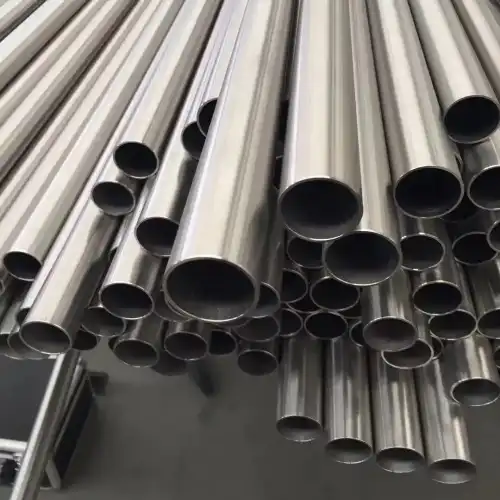
Understanding Wall Thickness Classifications in Titanium Tubing
The types of titanium tubes are based on industry standards that tell us what they can be used for and how strong they are. It is easy for engineers to choose the right materials with the help of the wall thickness classification system.
Standard Classification Parameters:
- The wall is heavy if it is thicker than 15% of the outer diameter.
- Wall Thickness: 10 to 15 percent of the outer diameter
- Light Wall: Wall thickness 5 to 10 percent of the outside diameter
- The wall is thin if it's less than 5% of the outer diameter.
Manufacturers of aerospace parts have found that titanium alloy tubes with walls thicker than 12mm can withstand burst pressures of up to 15,000 PSI, compared to 3,500 PSI for tubes with walls as thin as 2mm. The material can spread stress over larger cross-sectional areas, which is what makes this a big difference.
The structural integrity of both types of tubes is greatly affected by the heat treatment processes. Solution annealing at 900°C followed by controlled cooling improves the uniformity of the grain structure. This is especially helpful for thick-walled applications that need to keep their strength as long as possible.
Key Engineering Considerations:
- Wall thickness is directly related to how well it can resist pressure.
- Corrosion resistance gets better as the material thickness goes up.
- Because they are lighter, thin-wall designs are better for aerospace parts.
- Making things is more difficult when walls are thicker.
There are better performance and safety factors with thick-walled versions if you need to contain the most pressure for chemical processing.
Performance Characteristics: Strength and Durability Analysis
Titanium tubing's mechanical properties change a lot depending on how thick the walls are, which can affect how well it works in harsh industrial settings. A lot of testing shows that thick- and thin-wall configurations behave in different ways.
Comparison of Mechanical Properties:
Yield strengths for thick-wall titanium tubes are between 550 and 750 MPa, while yield strengths for thin-wall tubes are usually between 400 and 600 MPa. This difference happens because larger cross-sections of materials make structures more stable.
Different service life expectations are shown by fatigue resistance testing in very clear ways. Thick-walled samples can withstand 2.5 million cycles at 70% yield stress, while thin-walled samples can only handle 1.2 million cycles under the same loading conditions.
Structural Integrity Factors:
- Stress Distribution: Loads are spread out better when walls are thicker.
- Resistance to Crack Propagation: More material volume stops failure from spreading.
- Stable Temperature: More thermal mass lowers the stress of thermal cycling
- Vibration Damping: More mass makes the system more stable in dynamic situations.
The requirements for precision machining are very different depending on the wall thickness. More aggressive machining parameters can be used on thick-walled tubes while still keeping their dimensions within ±0.1mm of accuracy.
The bond strength for protective treatments is better when the substrate is thicker, which is good for surface coating applications. Titanium's excellent heat transfer properties are maintained as thermal conductivity measurements show little difference between wall thicknesses.
Thick-walled titanium tubes are the most durable and reliable way to make parts that can handle a lot of mechanical stress and long service cycles.
Application-Specific Requirements Across Industries
Based on their operational environments and performance needs, different industries need titanium tubes with different properties. Understanding these application-driven needs helps you choose the best materials.
Applications in aerospace:
For hydraulic systems in airplanes, tubes must be made without any seams and with exact measurements. Thin-wall tubing makes planes lighter while still meeting the pressure needs of up to 5,000 PSI. For engine manifolds, thick-walled designs that can handle operating pressures of 12000 PSI and temperature changes of -55°C to 650°C are preferred.
Chemical Processing Business:
Titanium tubes with thick walls are used in reactor piping systems to handle corrosive media under high pressure. Wall thicknesses between 8 and 25 mm allow for enough corrosion while still keeping the structure strong. Non-destructive testing protocols make sure that the material is the same thickness all the way through the wall.
Uses in the energy sector:
Components of nuclear reactors need thick-walled tubing that meets strict nuclear grade standards. For geothermal well casings to withstand high temperatures of up to 350°C and hydrogen sulfide corrosion, the walls need to be thicker.
Engineering for the sea:
Titanium tubes with thick walls are used for deep-water installations where the outside pressure is higher than 500 bar for submarine pipeline applications. Titanium is great for desalination systems that need to be resistant to seawater for a long time because it is biocompatible.
Making medical equipment:
Thin-wall tubing is useful for surgical instruments because it lets them be formed in complex ways while still meeting biocompatibility standards. To get the best strength-to-weight ratios, implantable devices need precise control over the thickness of their walls.
If you need tubing for high-pressure chemical processing environments, thick-walled options are the best way to keep the pressure inside and prevent corrosion.
Manufacturing Processes and Quality Control Standards
Modern manufacturing methods make sure that the quality of both thick-wall and thin-wall titanium tubes is always the same. To meet the standards for international certification, modern facilities use complex quality control methods.
Main ways of making things:
Vacuum arc remelting (VAR) makes titanium billets that are very pure and have few impurities. This process makes the base for both types of wall thickness while making sure that the chemical composition is the same.
Cold pilgering technology lets you precisely control the dimensions of a tube as it is being made. With this method, wall thickness tolerances of ±0.05mm are reached for thin-walled products and ±0.1mm for thick-walled ones.
Protocols for quality assurance:
- Ultrasonic Testing: Finds flaws inside the wall throughout its thickness
- Dimensional Inspection: Checks the diameter and wall thickness requirements
- Chemical analysis: makes sure the alloy's composition is correct
- Mechanical testing confirms the properties of strength and ductility
- Surface Inspection: Makes sure that both the outside and inside surfaces are free of flaws
Thick-walled titanium tubes can withstand multiple welding passes, ensuring complete penetration and structural integrity, while thin-walled tubes typically require a single pass to minimize heat input and restrict the expansion of the heat-affected zone.
The steps used to shape metal are very different depending on the wall thickness. It takes more force to shape thick-walled tubes, but they can be shaped more easily. To keep thin-wall variants from buckling or collapsing, the forming parameters must be carefully controlled.
International Certification Standards:
- ISO 9001:2015 Quality Management Systems
- AS9100 Aerospace Quality Standards
- API 5L Pipeline Transportation Systems
- ASTM B338 Seamless and Welded Titanium Alloy Tubes
Certified manufacturing processes make sure that industry-specific standards are met, so you can be sure that you can track down materials and get full quality documentation.
Cost Considerations and Economic Factors
A study of the economy shows that thick-wall and thin-wall titanium tubes have different cost structures. Total ownership costs are affected by how much material is used, how hard it is to make, and how valuable something is in a certain application.
Cost Analysis of Materials:
The cost of raw materials goes up directly with volume, so thick-walled tubes are more expensive per linear foot by nature. Cost-per-application analysis, on the other hand, usually favors thicker walls because they last longer and need to be replaced less often.
- Machining Time: Processing cycles are longer for thick walls.
- Tooling costs: To make thick walls, you need heavy-duty tools.
- Quality Control: More thorough inspections are needed for important applications
- Yield Rates: Production yields are usually higher where walls are thicker.
Thick-walled titanium tube incurs higher transportation costs due to their greater weight, which significantly affects the total delivery expense; in contrast, thin-wall tubes are easier and cheaper to ship, a factor that is especially critical for international shipments to distant project sites.
Evaluation of Lifecycle Costs:
To figure out the total cost of ownership, you have to add up the costs of repairs, replacements, and lost work time. Even though they cost more at first, thick-walled tubes often offer better economic value in high-stress situations.
In the energy sector, projects often call for thick-walled tubing to keep the costs of maintenance and replacement in hard-to-reach places as low as possible over the course of the tube's lifetime. The higher price is worth it because the longer durability means lower operating costs.
Chances for value engineering:
- Standardizing specs cuts down on inventory costs.
- Material prices go down when you buy in bulk.
- Buying locally cuts down on transportation costs.
- Costs for quality assurance go down when certifications are merged.
If you need cheap solutions for projects that need to stick to a budget, thin-wall tubing gives you all the benefits of titanium while lowering the cost of the material.
Conclusion
The choice between thick-walled and thin-walled titanium tubing is based on the needs of the application, performance standards, and cost factors. Thick-walled versions work best in high-pressure, corrosive environments that need the strongest structure, while thin-walled versions save weight and money for less demanding uses. By understanding these basic differences, you can choose materials that meet performance needs while also being cost-effective for the project. Professional advice from titanium suppliers with a lot of experience makes sure that the best specifications are chosen for important industrial uses in the marine, aerospace, chemical processing, and energy sectors.
LINHUI TITANIUM: Your Trusted Thick-Walled Titanium Tube Manufacturer
Leading companies around the world choose LINHUI TITANIUM as their first choice for getting thick-walled titanium tubes for important industrial uses. Our reliable supply chain partnerships are backed by 21 years of manufacturing experience and a wide range of international certifications, such as ISO, PED, and API standards. With the ability to produce 800 tons per year and established partnerships with major companies like PETRONAS, LUKOIL, and PEMEX, we offer top-notch titanium solutions all over the world. Contact linhui@lhtitanium.com for technical specifications and competitive pricing.
References
1. Boyer, R., Welsch, G., & Collings, E.W. (2019). Materials Properties Handbook: Titanium Alloys. ASM International Press.
2. Lutjering, G. & Williams, J.C. (2018). Titanium: Engineering Materials and Processes. Springer-Verlag Manufacturing Sciences.
3. American Society for Testing and Materials. (2020). ASTM B338-20: Standard Specification for Seamless and Welded Titanium Alloy Tubes for Condensers and Heat Exchangers.
4. Peters, M., Kumpfert, J., Ward, C.H., & Leyens, C. (2017). Titanium Alloys for Aerospace Applications: Processing and Properties. Advanced Engineering Materials Journal.
5. Donachie, M.J. (2021). Titanium: A Technical Guide for Manufacturing and Engineering Applications. ASM International Technical Publications.
6. International Organization for Standardization. (2019). ISO 5832-2:2019 Implants for Surgery: Metallic Materials - Unalloyed Titanium Specifications and Testing Methods.