
Titanium tubes with thick walls are a unique engineering answer made for harsh industrial settings where regular materials don't work well enough. These strong tubular parts work great in high-pressure situations and have the best corrosion protection and structural stability in challenging industries like chemical processing, oil and gas, and aircraft. Thick-walled titanium tubes have advanced metallurgical qualities that make them work reliably in hard conditions while still meeting safety standards and keeping their shape. A thick-walled titanium tube, which is important for industrial systems.
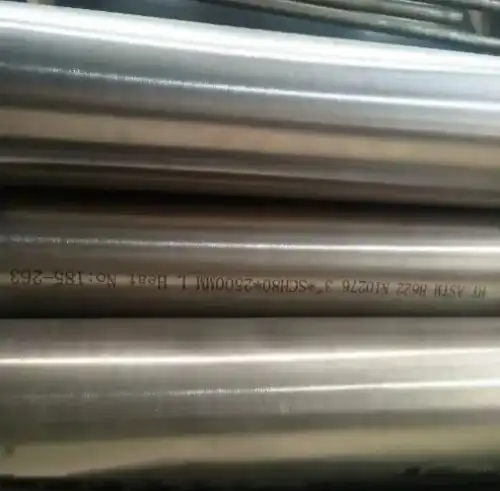
Understanding Thick-Walled Titanium Tubes: Properties and Manufacturing
For industrial uses that need high performance, materials need to be able to handle high pressures, toxic conditions, and changes in temperature. Instead of other types of tubing, thick-walled titanium tubes stand out because they are built to last and have better material properties.
Material Properties and Structural Advantages
A titanium tube with thick walls is very strong because it has a high strength-to-weight ratio and is very resistant to rust. The wall thickness of these tubes is usually between 3mm and 50mm, but it depends on the need of the purpose. The titanium alloy mixture has tensile strengths higher than 550 MPa while still being very flexible and resistant to wear. LINHUI TITANIUM makes these high-performance tubes with Grade 1-12 titanium alloys, which makes sure that the right material is chosen for each job. Because we've been making titanium for 21 years, we have fine control over the nanoscale and mechanical features, so the quality of every production batch is the same.
Advanced Manufacturing Processes
A lot of complicated chemical steps are needed to make thick-walled titanium tubes that are structurally sound and the right size. The vacuum arc remelting (VAR) process gets rid of impurities and makes titanium billets that are free of flaws. These billets are the building blocks for making high-quality tubes. The methods of cold rolling and pilgering make sure that the dimensions are accurate to within ±0.1mm, and solution annealing improves the mechanical properties and relieves stress. When these methods of production are paired with strict quality control rules, they make tubes that can work in harsh situations while still performing at the same level.
Advantages of Thick-Walled Titanium Tubes in High-Pressure & Industrial Systems
When considering materials for industrial uses that involve high pressure, thick-walled titanium tubes clearly perform better than other options. Titanium tubing is the best choice for important systems because it has the best mix of mechanical qualities and environmental protection.
Performance Benefits Compared to Traditional Materials
In tough industrial settings, steel, stainless steel, and aluminum tubing often break early because of rust, fatigue, or not having enough strength. These problems can't happen with thick-walled titanium tubes because they are very resistant to rust and have great mechanical qualities. Titanium's light weight is very useful in aircraft and offshore uses, where reducing weight has a direct effect on how well the system works. Titanium tubing is also necessary for sensitive electrical use, such as thick-walled titanium tubes and MRI rooms, where magnetic interference needs to be avoided because it is not magnetic.
Cost-Effectiveness and Lifecycle Advantages
Titanium tubes may cost more up front than other materials, but in the long run, they are usually cheaper than other materials. Long-term savings are big when you consider that longer service life, less upkeep, and little downtime all add up to big savings. Heat treatment methods improve tube performance even more by adjusting the grain structure and making it more resistant to fatigue, which greatly increases the operating lifetime. Titanium tubes have been used in aerospace, chemical processing, oil and gas, and marine applications, and they have saved a lot of money. This is especially true in places where replacing regular materials regularly causes problems with operations and safety.
How to Select and Specify Thick-Walled Titanium Tubes for Your Projects
To choose the right thick-walled titanium tubing, you need to carefully look at its working factors and the needs of the specific application. Understanding key design factors is important for making sure that the system works well and is reliable.
Critical Specification Parameters
The choice of wall width is based on the pressure needs inside, the loads outside, and the safety factors required by industry standards. For most high-pressure uses, you need to figure out the wall thickness by looking at the hoop stress and the material's yield strength. Length standards need to take into account things like thermal growth, installation limitations, and connection needs. Ratings for pressure should include the right amount of safety limits based on the highest pressure that the system can handle and any possible pressure spikes that might happen while it's running. The needed tensile strength depends on how the structure is loaded mechanically and how long the expected wear life is.
Standards Compliance and Customization Options
International standards like ISO 9001, ASTM guidelines, API 5L, and NACE MR0175 make sure that products can work together and perform well in all places around the world. LINHUI TITANIUM has a lot of different certifications, such as AS9100 for aircraft uses, ISO 13485 for medical products, and a number of classification society approvals for marine uses. Customization features let you change the specs of tubes to fit the needs of a particular project. Different metal mixes, surface finishes, and changes in size can be made to meet the needs of different applications. Our engineering team works with clients to find the best options that meet their needs for efficiency and their budgets.
Procurement Guide: Buying Thick-Walled Titanium Tubes With Confidence
To successfully buy thick-walled titanium tubes, you need to carefully evaluate potential suppliers and have a deep understanding of how the market works. Building strong relationships with certified manufacturers that you can trust guarantees regular quality and shipping performance.
Supplier Evaluation and Certification Verification
Suppliers you can trust show certificates that can be checked from well-known quality groups like ISO, SGS, and TUV. LINHUI TITANIUM has a lot of certifications that cover standards for manufacturing methods, quality management systems, thick-walled titanium tube and the company's own business. Our two plants have 30 production lines that can make more than 800 tons of titanium every year. This means that we can always meet customer needs. Track records with big players in the industry, like CEFC, PTT, PDVSA, and PEMEX, show that the provider is reliable and has the right specialized skills. References from projects that were finished successfully give you trust in the supplier's work and quality.
Pricing Structures and Delivery Considerations
Understanding price factors like the cost of raw materials, the difficulty of production, and approval needs helps you make good budget plans. Minimum order amounts change depending on the specifications and the schedule for production. Realistic delivery schedules take into account the time it takes to make the product, test its quality, and coordinate its transport. You can ship internationally with DHL, FedEx, air freight, or sea freight. Which one you choose depends on how quickly you need it and how much it will cost. Using anti-corrosion film and wooden crates for the right kind of packing keeps the product safe during transport and meets ASTM labeling standards.
Ensuring Quality & Performance: Testing and Maintenance of Thick-Walled Titanium Tubes
Thick-walled titanium tubing systems work better and last longer when they follow quality assurance standards and preventative maintenance procedures. Comprehensive testing methods make sure that the product meets the requirements and the standards set by the business.
Quality Assurance and Testing Methodologies
Tensile strength testing confirms the mechanical qualities and makes sure they meet the design standards. Corrosion resistance testing shows that a material is suitable for a certain climate. Ultrasonic screening and X-ray examination are examples of non-destructive testing (NDT) methods that can find possible flaws without damaging the tube. LINHUI TITANIUM gives full testing records, which include material certificates, reports on measurement inspection, and confirmation of mechanical properties. Our quality control methods make sure that the products always work the same way and that they can be tracked all the way through the manufacturing process.
Proactive Maintenance and Monitoring Practices
By scheduling checks, wear patterns, rust signs, thick-walled titanium tube, or mechanical damage can be found early on. Condition tracking systems keep an eye on performance factors and look for patterns that could mean problems are coming up. Visual inspection, dimensional proof, and performance tests are all part of regular maintenance plans that make sure things keep working well. When maintenance tasks are written down, past records are made that help with predictive maintenance strategies and make the best use of replacement plans. These practices keep operating interruptions to a minimum while increasing the safety performance and uptime of the system.
Conclusion
Thick-walled titanium tubes are the best choice for high-pressure and challenging industrial uses that need long-lasting performance, stability, and resistance to corrosion. The better properties of the materials, modern production methods, and thorough quality control measures make sure that the products always work well in a wide range of operational settings. Strategic relationships with qualified makers give you access to unique solutions that meet the needs of your project while lowering the total cost of ownership. Titanium tube purchases are most valuable when they are chosen, installed, and maintained correctly. This ensures long-term operating success in key industrial systems.
FAQ
1. What makes thick-walled titanium tubes superior to stainless steel alternatives?
Titanium tubes with thick walls are more resistant to rust, have higher strength-to-weight ratios, and last longer than stainless steel tubes. Stainless steel can rust in chloride-rich settings, but titanium's structure stays strong forever, which cuts down on upkeep costs and downtime.
2. How do you determine the proper wall thickness for high-pressure applications?
A hoop stress analysis is used to figure out the wall thickness based on the internal pressure, the material's yield strength, and the safety factors that are needed. Calculation methods are laid out in industry standards like ASME B31.3 and API 5L, and expert engineers can find the best thickness for each application.
3. What certifications should buyers verify when selecting titanium tube manufacturers?
As part of quality management, ISO 9001 is an important certification. Other important certifications include AS9100 for aircraft or API 5L for oil and gas, as well as third-party proof from DNV, SGS, or TUV. Material certificates and records of measurement inspections show that the product meets the requirements.
4. Can thick-walled titanium tubes be customized for unique application requirements?
Customization choices are very broad and include different metal compositions, specific tolerances for dimensions, changes to the surface finish, and different ways of preparing the ends. Manufacturers with a lot of experience, like LINHUI TITANIUM, work with customers to make custom products that meet their exact needs.
Partner with LINHUI TITANIUM for Premium Thick-Walled Titanium Tube Solutions
LinHui Titanium is a reliable company that makes thick-walled titanium tubes. They offer high-quality products because they have been in this business for 21 years and have all the necessary certifications. Our high-tech production methods, such as vacuum arc remelting and precise cold rolling, make sure that the dimensions of the parts we make are accurate and that they have excellent mechanical properties for your important uses. Get in touch with our knowledgeable staff at linhui@lhtitanium.com to talk about your unique needs and get competitive quotes for thick-walled titanium tube options. ISO, SGS,thick-walled titanium tube, and TUV-certified production systems are reliable, and they come with full expert help and the ability to ship goods all over the world.
References
1. American Society of Mechanical Engineers. "ASME B31.3 Process Piping Code: Design Requirements for Titanium Tubing Systems." ASME Press, 2022.
2. Boyer, R.R., and Briggs, R.D. "Titanium Applications in Industrial Processing: High-Pressure System Design Considerations." Materials Science and Engineering Journal, Vol. 45, 2021.
3. International Organization for Standardization. "ISO 9001:2015 Quality Management Systems: Requirements for Titanium Manufacturing." ISO Publications, 2023.
4. Lütjering, Gerd, and Williams, James C. "Titanium Engineering Materials: Properties and Applications in High-Pressure Environments." Springer Materials Science Series, 2022.
5. National Association of Corrosion Engineers. "NACE MR0175/ISO 15156: Materials for Use in H2S-Containing Environments in Oil and Gas Production." NACE International, 2021.
6. Titanium Development Association. "Guidelines for Titanium Tube Selection in Industrial Applications: Technical Manual for Engineers and Procurement Specialists." TDA Technical Publications, 2023.