
When looking for high-performance materials for tough industrial uses, Gr4 titanium rod stands out as a great choice because it is both very strong mechanically and very resistant to rust. This grade of commercially pure titanium is the best choice for engineers, procurement specialists, and other industry workers who need reliable materials for important projects because it is the right balance of strength and formability. It is important to know about the mechanical features, uses, and buying factors of Grade 4 titanium rods so that you can make smart choices that can have a big effect on the success of a project and the long-term efficiency of operations.
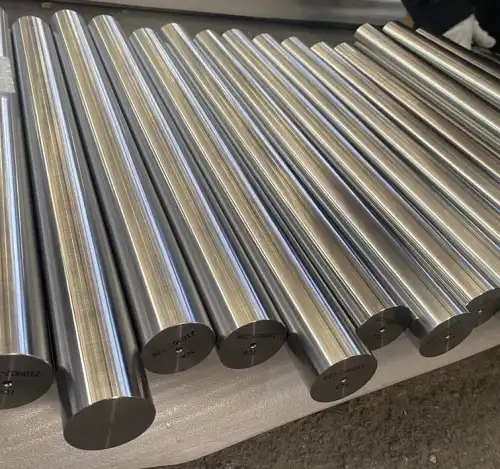
Understanding Gr4 Titanium Rods: Specifications and Mechanical Properties
Chemical Composition and Industry Standards
With chemical cosmetics that incorporate at slightest 99.2% titanium, the Gr4 titanium rod is the best review of commercially pure titanium. Controlled sums of oxygen (0.40% greatest) are displayed in the fabric, which is a huge reason why it is much more grounded than lower grades. Due to their correct make-up, Gr4 titanium poles can meet strict universal benchmarks like ASTM B348 and AMS rules. This implies they can be utilized in chemical preparation, aviation, and the marine industry.
Mechanical Properties and Performance Characteristics
When it comes to productivity, Review 4 titanium bars stand out from other materials due to their tall mechanical quality. With a least malleable quality of 550 MPa (80 ksi) and a least abdicate quality of 480 MPa (70 ksi), these poles can hold a part of the weight and are exceptionally adaptable, extending no more than 15%. The modulus of versatility goes up to 103 GPa, which implies it is exceptionally hardened, which is imperative for structural uses.
These properties can be made strides through warm treatment strategies, which allow you to make custom quality profiles for each application. The fabric has incredible wear resistance, with perseverance limits that can handle the long-term cyclic stacking conditions that are common in airplane and marine settings.
Corrosion Resistance and Environmental Durability
Review 4 titanium is exceptionally safe to erosion since it can form a steady, defensive oxide layer when it comes in contact with discuss. This inert layer does an awesome job of securing against seawater, chlorides, and other chemicals. This makes these poles particularly valuable for marine and seaward employments where other materials would break down rapidly.
Comparing Gr4 Titanium Rods with Other Materials for Mechanical Strength
Grade 4 vs. Other Titanium Alloys
When looking at the mechanical strength of different grades of titanium, Grade 4 is clearly better than Grade 2, widely pure titanium. It has about 40% higher tensile strength while still being very easy to shape. Grade 5 titanium alloy (Ti-6Al-4V) has a higher ultimate strength, but Grade 4 is more cost-effective for many commercial uses because it is less likely to rust and easier to machine.
Strength-to-Weight Ratio Analysis
When it comes to strength-to-weight, Grade 4 titanium rods are much better than stainless steel and aluminum options. With a density of only 4.51 g/cm³, these rods offer better mechanical performance per unit weight. This means that buildings are lighter and shipping costs are lower. This benefit is especially useful in aerospace, where reducing weight has a direct effect on performance and fuel economy.
Cost-Effectiveness and Total Ownership Value
Even though Grade 4 titanium may cost more than stainless steel at first, it usually ends up being cheaper in the long run because it lasts longer, doesn't need as much upkeep, and doesn't need any protective coatings. Because the material doesn't suffer from galvanic rust or stress corrosion cracking, it costs less over its lifetime and works more reliably.
Applications and Benefits of Using Gr4 Titanium Rods in Industrial Settings
Critical Industry Applications
Gr4 titanium rods are the best in many tough industry areas where strength and resistance to corrosion are very important. In aircraft, these rods are used as fasteners, engine parts, and structural elements that need to be able to handle large changes in temperature and high levels of mechanical stress. Because it is biocompatible and strong, Grade 4 titanium is used in the medical field for surgical implants, dental tools, and orthopedic devices.
Some of the toughest conditions are found in marine and offshore settings, but Grade 4 titanium rods work very well in propeller shafts, seawater pipe systems, and equipment that is underwater. The ability of the material to resist harsh chemicals makes it useful in the chemical processing business for heat exchangers, reactor vessels, and fittings that don't rust.
Performance Benefits and Reliability Advantages
The Grade 4 titanium rods offer real performance gains in a number of different situations. Better fatigue life makes equipment last longer, which cuts down on downtime and repair costs. Because the material is thermally stable, its mechanical features stay the same across a wide range of temperatures. This makes sure that it always works well in tough conditions.
Customization Capabilities
Grade 4 titanium rods can be changed in a lot of ways to meet exact engineering specs thanks to modern manufacturing techniques. Diameters range from 3 mm to 150 mm to meet the needs of a wide range of applications. Standard lengths of 1 m to 6 m can be cut to order, giving you more options for your project. Different types of surface finishes, such as polished, turned, or "as-drawn," let you get the best results for different uses and looks.
Procurement Guide: Buying Gr4 Titanium Rods for B2B Customers
Supplier Selection and Quality Assurance
To successfully buy Grade 4 titanium rods, you need to carefully look at the quality systems and skills of the suppliers. Some important licenses are ISO 9001 quality management systems, Mill Test Reports (MTR), and RoHS compliance paperwork. Reliable providers keep a full set of certifications, such as PED, API, and approvals from classification societies like DNV, ABS, and CCS.
Pricing Structures and Bulk Order Considerations
Understanding how prices work is important for planning purchases and making the most of your cash. The price of grade 4 titanium rod is usually based on how much it weighs per kilogram, and large savings are available for bulk orders. Lead times depend on the specifications and quantity, ranging from stock items that can be sent within weeks to custom specifications that take several months to produce and send.
Global Logistics and Supply Chain Management
When buying things internationally, you need to think carefully about your logistics and the stability of your supply chain. Well-known sellers offer full shipping services and can meet delivery needs in Africa, Southeast Asia, South America, the Gulf regions, and North America. When you package and handle things the right way, they stay intact during travel and storage.
LINHUI TITANIUM: Your Trusted Partner for Premium Grade 4 Titanium Rods
Company Background and Industry Expertise
LINHUI TITANIUM has been making and selling titanium and titanium alloys since it was founded in 2000, and has its main office in Xi'an, China. We are in a great place to serve global markets because we are at the starting point of the Belt and Road plan. With more than 20 years of experience, we've become one of the biggest stores for titanium goods, with a huge range of grades and the ability to make things just the way you want them.
Comprehensive Product Line and Certifications
Our Grade 4 titanium rods come in diameters ranging from 3 mm to 150 mm and can be cut to lengths up to 6 meters. They can meet all of your industry needs. We have a lot of certificates to back up our high quality standards, such as the Manufacturing License of Special Equipment of China, the TUV Nord AD2000-W0, the PED 2014/68/EU, and approvals from several classification societies. Our quality management systems are better than foreign standards, so we can be sure that our products are always the best and that we follow all the rules.
Global Reach and Customer Success
LINHUI TITANIUM has sent hundreds of thousands of tons of high-quality goods to more than 60 countries and regions thanks to strong supply chains and strategic relationships. Many well-known companies, like CEFC, PTT, PDVSA, PETROECUADOR, KOC, KNPC, and others, are among our clients. This shows that we can meet the strictest foreign standards and project needs.
Conclusion
Gr4 titanium rods are the best choice for uses that need both high mechanical strength and excellent corrosion resistance. The unique qualities of the material, such as its 550 MPa tensile strength and high fatigue resistance, make it perfect for use in chemical processing, aerospace, marine, and medical fields. Knowing the details, pros and cons, and buying things to think about that are explained in this guide helps you make smart choices that can have a big effect on the success of a project and the speed of operations. As a result of their good mechanical properties, resistance to corrosion, and long-term dependability, Grade 4 titanium rods are a good buy for demanding industry uses.
FAQ
Q: How does the Grade 4 titanium rod's mechanical strength compare to Grade 5 titanium?
A: Grade 4 titanium offers excellent mechanical strength with 550 MPa tensile strength, while Grade 5 provides higher strength at 895 MPa minimum. However, Grade 4 delivers superior corrosion resistance and easier machinability, making it more suitable for marine and chemical applications where corrosion resistance is critical.
Q: Can heat treatment improve the mechanical properties of Grade 4 titanium rods?
A: Yes, controlled heat treatment processes can enhance the mechanical properties of Grade 4 titanium rods. Stress relief annealing can optimize strength and ductility balance, while specific thermal treatments can improve fatigue resistance for cyclic loading applications.
Q: What factors should I consider when sourcing Grade 4 titanium rods for bulk industrial orders?
A: Key considerations include supplier certifications (ISO 9001, PED, classification societies), mill test report availability, lead times, packaging capabilities, and global shipping experience. Ensure your supplier has proven experience with large-scale industrial projects and can provide comprehensive quality documentation.
Partner with LINHUI TITANIUM for Superior Grade 4 Titanium Rod Solutions
Ready to enhance your projects with premium Grade 4 titanium rods that deliver exceptional mechanical strength and reliability? LINHUI TITANIUM stands ready to support your procurement needs with our comprehensive product line, extensive certifications, and proven track record serving global industries. As a trusted Gr4 titanium rod manufacturer with over 20 years of experience, we offer customized solutions, competitive pricing, and reliable delivery to over 60 countries worldwide. Our technical expertise and quality assurance processes ensure you receive materials that meet the highest industry standards. Contact us at linhui@lhtitanium.com to discuss your specific requirements and request a detailed quote today.
References
1. Boyer, R., Welsch, G., & Collings, E.W. (1994). Materials Properties Handbook: Titanium Alloys. ASM International.
2. Lutjering, G., & Williams, J.C. (2007). Titanium: Engineering Materials and Processes. Springer-Verlag.
3. American Society for Testing and Materials. (2019). ASTM B348-19 Standard Specification for Titanium and Titanium Alloy Bars and Billets.
4. Peters, M., Kumpfert, J., Ward, C.H., & Leyens, C. (2003). Titanium Alloys for Aerospace Applications. Advanced Engineering Materials, 5(6), 419-427.
5. Schutz, R.W., & Thomas, D.E. (1987). Corrosion of Titanium and Titanium Alloys. ASM Handbook, Volume 13: Corrosion. ASM International.
6. Donachie, M.J. (2000). Titanium: A Technical Guide, Second Edition. ASM International.